
Metal-Clad vs Metal-Enclosed Switchgear: What's the Difference?
"Metal-clad" and "metal-enclosed" get used loosely in conversation, but they describe two distinct construction standards with different safety implications.
Introduction
“Metal-clad” and “metal-enclosed” sound like they might just be two ways of describing the same thing — switchgear housed in a metal cabinet. They’re not. Each term refers to a specific construction classification with its own compartmentalization and safety requirements, and mixing them up in a specification can mean ordering equipment that doesn’t meet your project’s actual safety standard. If you haven’t yet, it’s worth reading our switchgear basics guide first for general background.
What "metal-enclosed" means
Metal-enclosed is the broader category — it simply means the switchgear assembly is housed within a grounded metal enclosure, as opposed to open-type switchgear with exposed live parts. Metal-enclosed switchgear can be built to various levels of internal compartmentalization, and doesn’t by itself guarantee the strict segregation between components that metal-clad construction requires.
What makes switchgear "metal-clad" specifically
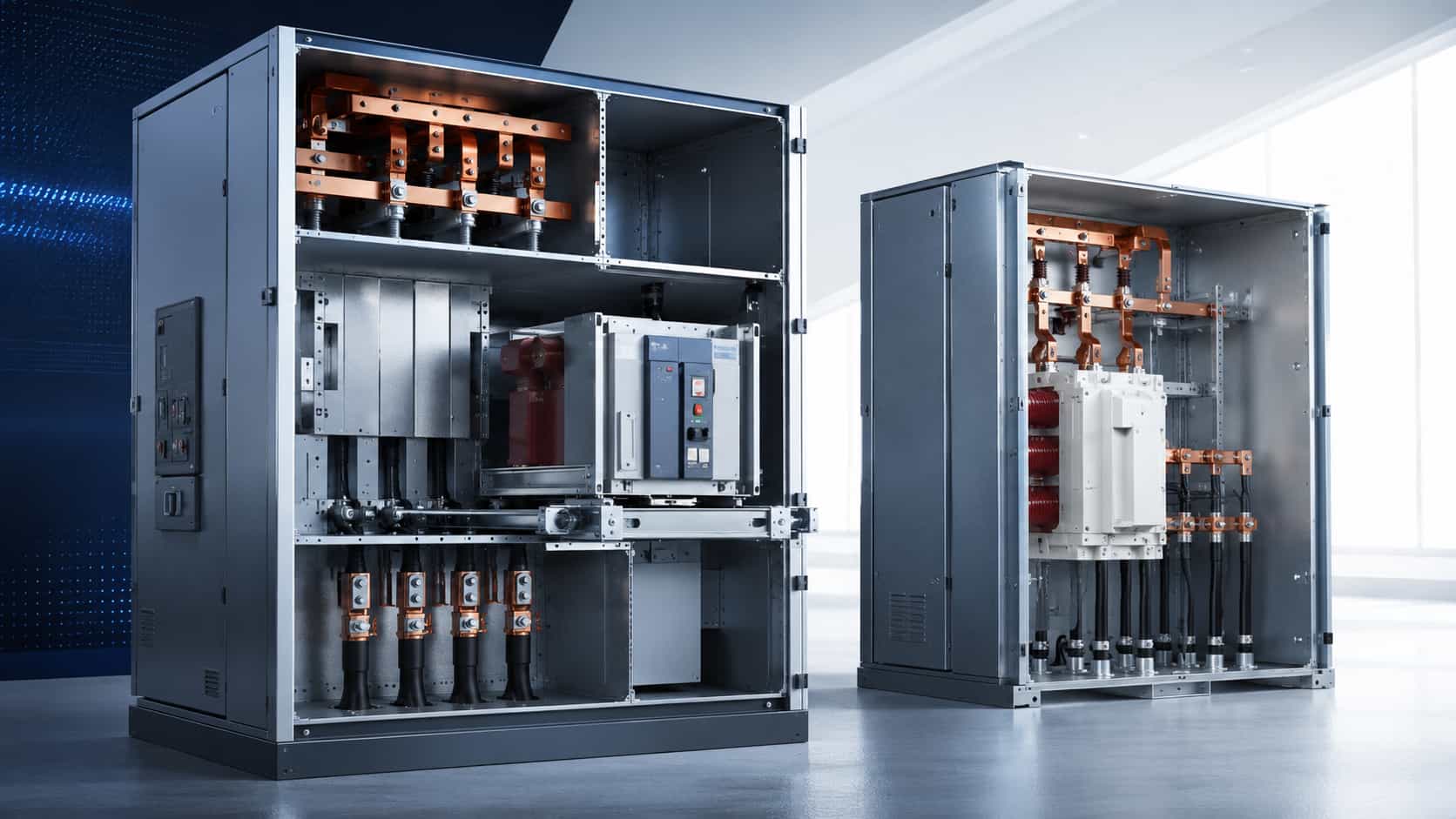
Metal-clad switchgear is a more specific and more rigorously defined category, governed by standards such as IEC 62271-200. It requires the major components — the circuit breaker, busbar, and cable termination compartments — to be separated from each other by grounded metal barriers, each within its own compartment. This compartmentalization is the defining feature that distinguishes metal-clad from general metal-enclosed construction.
Key construction differences
In metal-clad switchgear, the circuit breaker is typically a separate, withdrawable unit housed in its own compartment, with automatic safety shutters that close over the busbar connections when the breaker is withdrawn — preventing accidental contact with live conductors during maintenance. Metal-enclosed switchgear that doesn’t meet the metal-clad classification may house these components with less strict physical separation, which is a meaningful difference from a personnel safety standpoint, not just a construction detail.
Safety implications for personnel
The compartmentalization required for metal-clad classification exists specifically to protect personnel during operation and maintenance — if a fault occurs in one compartment, the barriers are designed to contain the event and limit exposure to adjacent compartments and to anyone working on the equipment. This is why metal-clad switchgear is frequently mandated for facilities with higher safety requirements or more frequent maintenance access, such as utility substations and industrial plants with on-site electrical staff.
When metal-clad is required vs when metal-enclosed is sufficient
Many utility, substation, and larger industrial specifications explicitly require metal-clad construction and reference the relevant standard directly. For smaller or less critical applications, general metal-enclosed switchgear may be an acceptable and more economical choice — but this should be confirmed against your project’s actual specification rather than assumed. This decision often overlaps with the fixed vs withdrawable choice covered in our switchgear selection guide, since metal-clad construction is built around withdrawable breaker design by definition.
Where Kexingyu Power fits in
We manufacture metal-clad switchgear to IEC 62271-200 alongside general metal-enclosed configurations, so the classification can be matched to what your project specification actually requires. Browse the full range on our Switchgear & Distribution page.
Metal-Clad vs Metal-Enclosed Switchgear
Common questions from engineers and project buyers confirming which switchgear construction, compartmentalization and maintenance features their application requires.
01 Is metal-clad switchgear more expensive than metal-enclosed switchgear?
Generally yes. Metal-clad switchgear normally includes greater internal compartmentalization, drawout switching devices, automatic shutters and additional isolation features. These requirements add manufacturing complexity and cost, but they can provide valuable maintenance, operational-continuity and personnel-safety benefits for utilities, substations and critical industrial facilities.
02 How do I determine which switchgear classification my project requires?
Start with the project specification, governing standard, utility requirements and required maintenance philosophy. Under IEEE-based specifications, metal-clad switchgear is commonly defined through IEEE C37.20.2. IEC 62271-200 uses classifications such as loss of service continuity, partition class and internal arc classification for metal-enclosed medium-voltage switchgear. These requirements should be stated clearly in the enquiry rather than relying only on a general product label.
03 Can metal-enclosed switchgear be upgraded to metal-clad construction later?
Usually not in a practical or economical way. Compartmentalization, shutters, breaker mounting, busbar separation and internal barriers are fundamental parts of the original switchgear design and testing. Adding individual components later does not automatically change the equipment's tested classification. A change in construction class will normally require replacement with a purpose-designed assembly.
04 Does metal-clad switchgear use withdrawable circuit breakers?
Under the IEEE metal-clad classification, the main interrupting and switching devices are typically drawout or withdrawable, with automatic shutters covering the primary connections when the device is removed. Under IEC specifications, buyers should separately state whether withdrawable equipment is required and confirm the requested loss-of-service-continuity and partition classifications.
Recent Posts
What Is BESS? A Guide to Battery Energy Storage Systems for C&I Buyers
What Is BESS? A Guide to Battery Energy Storage Systems for C&I Buyers A clear explainer on what BESS systems actually are, how the pieces
Switchgear vs Transformer Lead Times: What EPC Contractors Need to Know
Switchgear vs Transformer Lead Times: What EPC Contractors Need to Know A practical breakdown of why these two equipment categories behave differently in procurement, and
Why Data Centers Are Facing a Switchgear and Transformer Shortage in 2026
Why Data Centers Are Facing a Switchgear and Transformer Shortage in 2026 Global lead times for switchgear and transformers now stretch 2-4 years — here’s