
How to Choose the Right Cable Size for Your Industrial Project
A practical walkthrough of the factors that actually determine cable size — beyond just matching amps to a chart.
Introduction
Switchgear is one of those terms that shows up constantly in facility and electrical discussions without always being clearly explained. If you manage a facility but don’t have an electrical engineering background, here’s what switchgear actually is, what it does, and why its condition is worth paying attention to.
What switchgear actually does
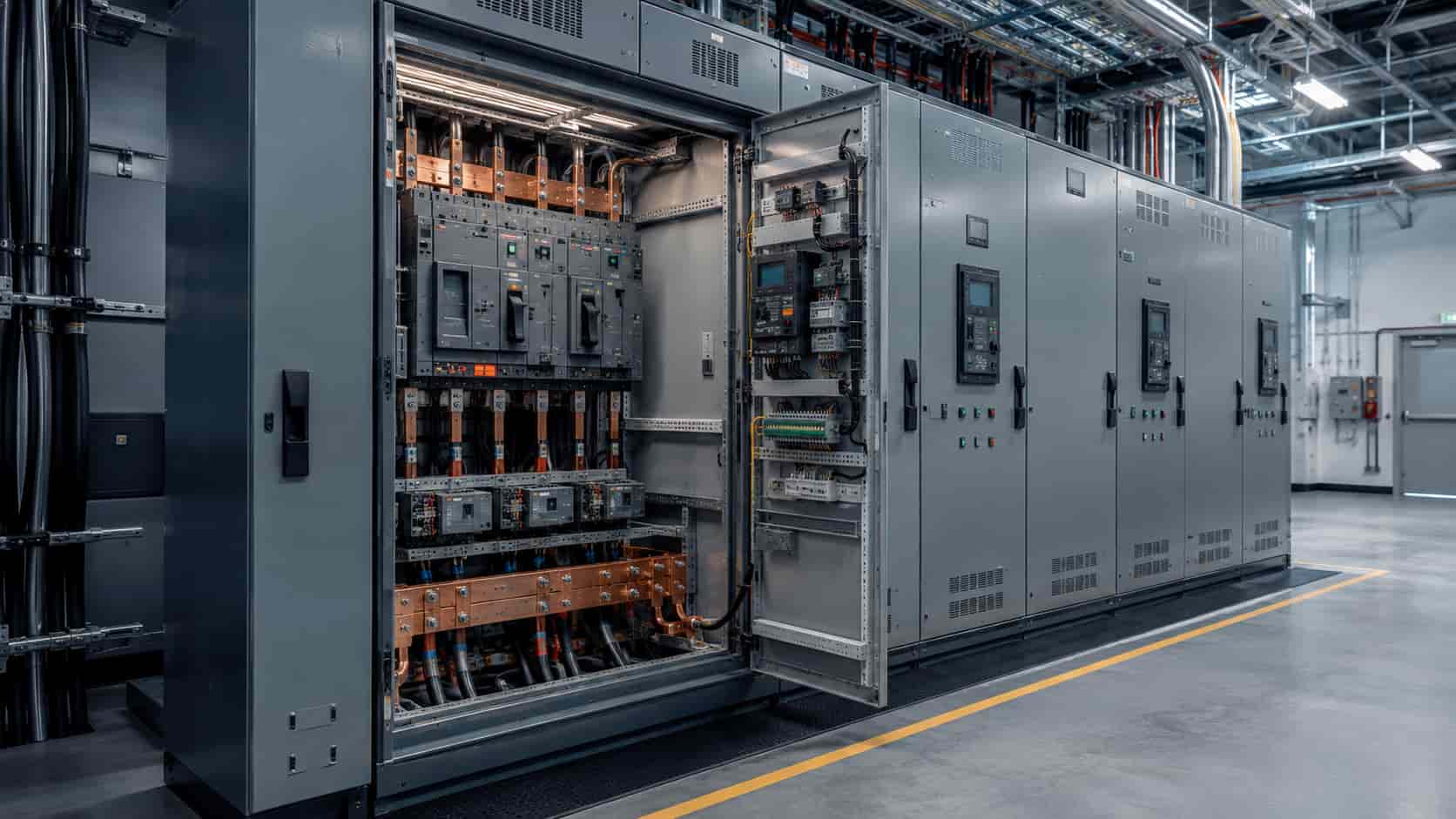
Switchgear is the equipment that controls, protects, and isolates electrical circuits within a power distribution system. In practical terms, it’s the collection of switches, circuit breakers, and protective devices — usually housed together in a metal cabinet — that lets you safely turn sections of an electrical system on or off, and that automatically disconnects power if something goes wrong, like a short circuit or an overload.
Core components
A typical switchgear assembly includes circuit breakers, which physically open and close a circuit and can trip automatically under fault conditions; protection relays, which monitor electrical conditions and signal a breaker to trip when something is outside safe limits; busbars, the conductive bars that distribute power within the switchgear assembly to the various circuits it feeds; and instrumentation, such as meters and indicator lights, that let operators see the current status of each circuit.
Low voltage vs medium voltage switchgear
Switchgear exists across a wide voltage range, from low voltage panels feeding building circuits to medium and high voltage equipment used in substations and large industrial or data center facilities. The construction, size, and safety requirements scale up significantly with voltage class — a topic worth its own dedicated explanation, which we’ll cover in a future article specifically comparing low and medium voltage switchgear.
Where switchgear sits in a power system
Switchgear typically sits between the incoming power source — a utility connection or a transformer — and the cable runs that carry power out to the loads it serves. The cable connecting into and out of switchgear needs to be sized and rated to match the switchgear’s capacity, which is why these two categories are almost always specified together on a project rather than independently.
Why facility managers should care about switchgear condition
Switchgear is often out of sight — installed in an electrical room and rarely thought about until something goes wrong. But it’s also one of the most safety-critical pieces of equipment in a facility: aging or poorly maintained switchgear is a recognized fire and arc-flash risk, and a failure can take down power to an entire section of a building or process line without warning.
Signs switchgear needs attention
Unusual heat, discoloration, or a burning smell near switchgear enclosures; visible corrosion or moisture ingress; breakers that trip repeatedly without an obvious cause; and switchgear significantly older than its manufacturer’s recommended service life are all signs worth having a qualified electrical contractor investigate rather than ignoring.
Where Kexingyu Power fits in
We manufacture low, medium, and high voltage switchgear, factory-tested before it ships. Browse the full range on our Switchgear & Distribution page.
Switchgear Basics
Common questions from facility managers and project buyers encountering switchgear terminology, maintenance and service-life requirements for the first time.
01 Is switchgear the same as a circuit breaker panel?
Not exactly. Both distribute electrical power and protect circuits, but a circuit breaker panel is generally a smaller and simpler assembly used for low-voltage building distribution. Switchgear typically includes more robust switching, protection, isolation, metering and control equipment for industrial facilities, utilities, substations and other higher-capacity applications.
02 How often should switchgear be inspected and maintained?
The inspection interval depends on the equipment type, operating environment, loading, age, duty cycle and importance of the connected facility. Many operators include visual inspection and thermal imaging in an annual maintenance program, with more frequent checks for older, heavily loaded or mission-critical equipment. The manufacturer's maintenance instructions should remain the primary reference.
03 What is the typical service life of switchgear?
Many switchgear assemblies are designed for approximately 25 to 30 years of service under normal operating and maintenance conditions. Actual service life can be shorter or longer depending on switching frequency, environmental contamination, humidity, temperature, fault history, component availability and the quality of preventive maintenance.
04 Can switchgear be repaired, or must the complete assembly be replaced?
Many faults can be addressed by repairing or replacing individual components such as circuit breakers, protection relays, meters, control devices or operating mechanisms. Complete replacement may be necessary when the enclosure, busbar system, insulation or multiple major components are damaged, obsolete or no longer supportable. A qualified switchgear specialist should assess the equipment before the repair scope is approved.
Recent Posts
Voltage Stabilizers vs UPS: Do You Need Both?
Voltage Stabilizers vs UPS: Do You Need Both? One device fixes how high or low the voltage is; the other fixes whether there is voltage
Energy Storage for Data Centers: A Growing Backup Power Option
Energy Storage for Data Centers: A Growing Backup Power Option Batteries have always backed up data centers in the form of UPS strings. Grid-scale BESS
Thermal Runaway in Lithium Batteries: What BESS Buyers Should Understand
Thermal Runaway in Lithium Batteries: What BESS Buyers Should Understand How thermal runaway starts, how it propagates, and which evidence buyers should require before approving