
Low Voltage vs Medium Voltage Switchgear: How to Know Which You Need
Most projects need both — the question is usually where the boundary between them sits in your specific system.
Introduction
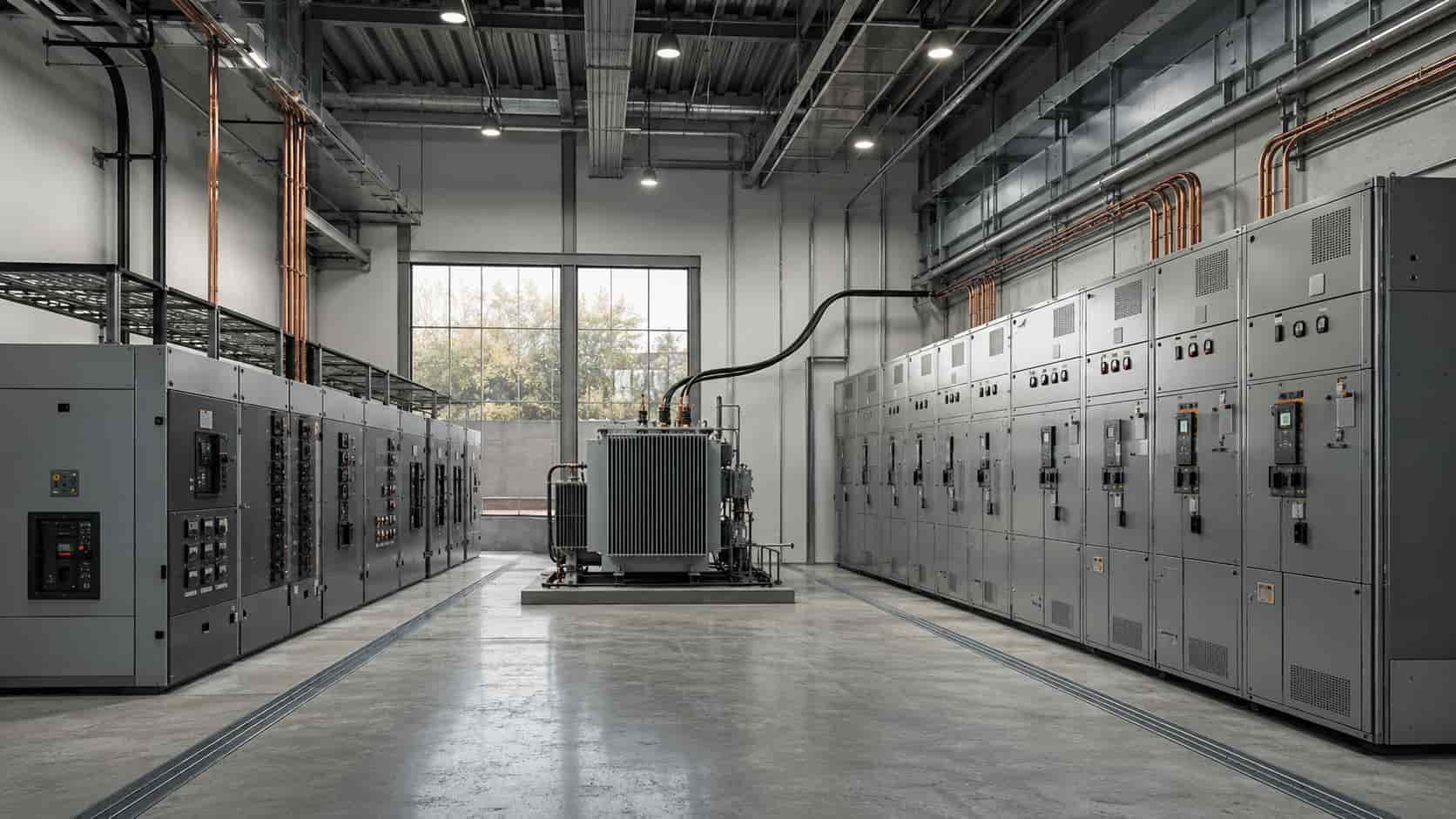
Most facilities with any meaningful electrical load actually need both low and medium voltage switchgear at different points in their system — the practical question is usually where the boundary sits and what equipment goes on each side of it. If you’re new to switchgear generally, start with our switchgear basics guide before working through this comparison.
What defines the voltage boundary
The precise voltage boundary between low and medium voltage varies slightly by standard and region, but low voltage is generally defined as up to 1kV, while medium voltage typically covers from around 1kV up to somewhere in the 33-40.5kV range depending on the classification system referenced. Above that sits high voltage, which is a separate equipment category for transmission-level applications most facility projects won’t encounter directly.
LV switchgear: characteristics and typical use
Low voltage switchgear distributes power at the final stage before it reaches end loads — building circuits, motors, lighting, and equipment panels. It’s generally more compact and less expensive per unit than medium voltage equipment, and includes the withdrawable panel types like GCK, GCS, and MNS covered in our comparison guide.
MV switchgear: characteristics and typical use
Medium voltage switchgear typically sits closer to the utility connection point or serves the primary distribution level within a larger facility, often just before or after a step-down transformer. This is where metal-clad construction and compact ring main units become relevant, since MV equipment generally carries stricter compartmentalization and safety requirements given the higher energy levels involved.
Where the transformer fits between them
In most facility power systems, a transformer sits between the MV and LV switchgear, stepping voltage down from the medium voltage distribution level to the low voltage level loads actually use. This means MV and LV switchgear specifications are rarely fully independent decisions — the transformer’s primary and secondary voltage ratings need to align with both switchgear specifications on either side of it.
How to determine which your project needs
Start from your utility connection point — if your facility receives power directly at medium voltage from the utility, you’ll need MV switchgear at the point of entry, stepping down through a transformer to LV switchgear for distribution. If your facility receives power already at low voltage from the utility or a nearby transformer, MV switchgear may not be part of your system at all. Larger industrial facilities, data centers, and campuses with their own on-site transformers almost always need both; smaller commercial buildings often only need LV switchgear.
Common specification mistakes
Specifying LV switchgear without confirming it matches the transformer’s actual secondary voltage and fault current rating, assuming MV switchgear isn’t needed without confirming the actual utility connection voltage, and failing to coordinate protection settings between MV and LV switchgear on either side of a transformer are among the more common and costly specification errors on projects spanning both voltage classes.
Where Kexingyu Power fits in
We manufacture both low and medium voltage switchgear, which means the two sides of your system can be specified and delivered as one coordinated order rather than sourced separately. Browse the full range on our Switchgear & Distribution page.
LV vs MV Switchgear
Common questions from engineers and project buyers determining whether their electrical distribution system requires low-voltage or medium-voltage switchgear.
01 Does every facility need medium-voltage switchgear?
No. The required voltage class depends on the facility's incoming supply and internal distribution architecture. Smaller commercial buildings may receive utility power directly at low voltage and therefore require only LV distribution equipment. Larger industrial plants, data centers, campuses and other high-demand facilities may receive power at medium voltage and use MV switchgear upstream of transformers that step the voltage down for LV distribution.
02 Where is the boundary between low-voltage and medium-voltage switchgear?
The terminology depends on the applicable standard and market. Under IEC practice, low voltage generally refers to equipment rated up to 1,000V AC, while switchgear above 1kV falls within the IEC 62271 high-voltage switchgear family. In industry, the term “medium voltage” is commonly used for distribution systems above 1kV and into the tens-of-kilovolts range. Buyers should therefore specify the actual rated voltage and governing standard rather than relying on the LV or MV label alone.
03 Do MV and LV switchgear need to come from the same supplier?
No. MV and LV switchgear can be supplied by different manufacturers provided the ratings, protection philosophy, transformer interfaces, communication requirements and project documentation are properly coordinated. Using one supplier for both voltage classes can simplify technical interfaces, documentation and delivery management, but it does not replace the system engineer's responsibility for overall electrical coordination.
04 What happens if MV and LV protection settings are not coordinated?
Poor protection coordination can cause unnecessary upstream trips, larger-than-needed outages or delayed fault clearing. The protection system should be designed so the device closest to a fault operates first where practical, while upstream protection provides backup. Relay and breaker settings should therefore be established through the project's short-circuit and protection-coordination studies and verified before commissioning.
Recent Posts
Energy Storage for Data Centers: A Growing Backup Power Option
Energy Storage for Data Centers: A Growing Backup Power Option Batteries have always backed up data centers in the form of UPS strings. Grid-scale BESS
Thermal Runaway in Lithium Batteries: What BESS Buyers Should Understand
Thermal Runaway in Lithium Batteries: What BESS Buyers Should Understand How thermal runaway starts, how it propagates, and which evidence buyers should require before approving

What Cables Does a Data Center Need? The Complete Cable List
What Cables Does a Data Center Need? The Complete Cable List Quick Answer: A data center needs eight cable families — medium voltage feeders, low