MCC Panels Explained: What Facility Managers Need to Know
A Motor Control Center groups the equipment that runs a facility's motors into one coordinated panel — here's what's actually inside it.
Introduction
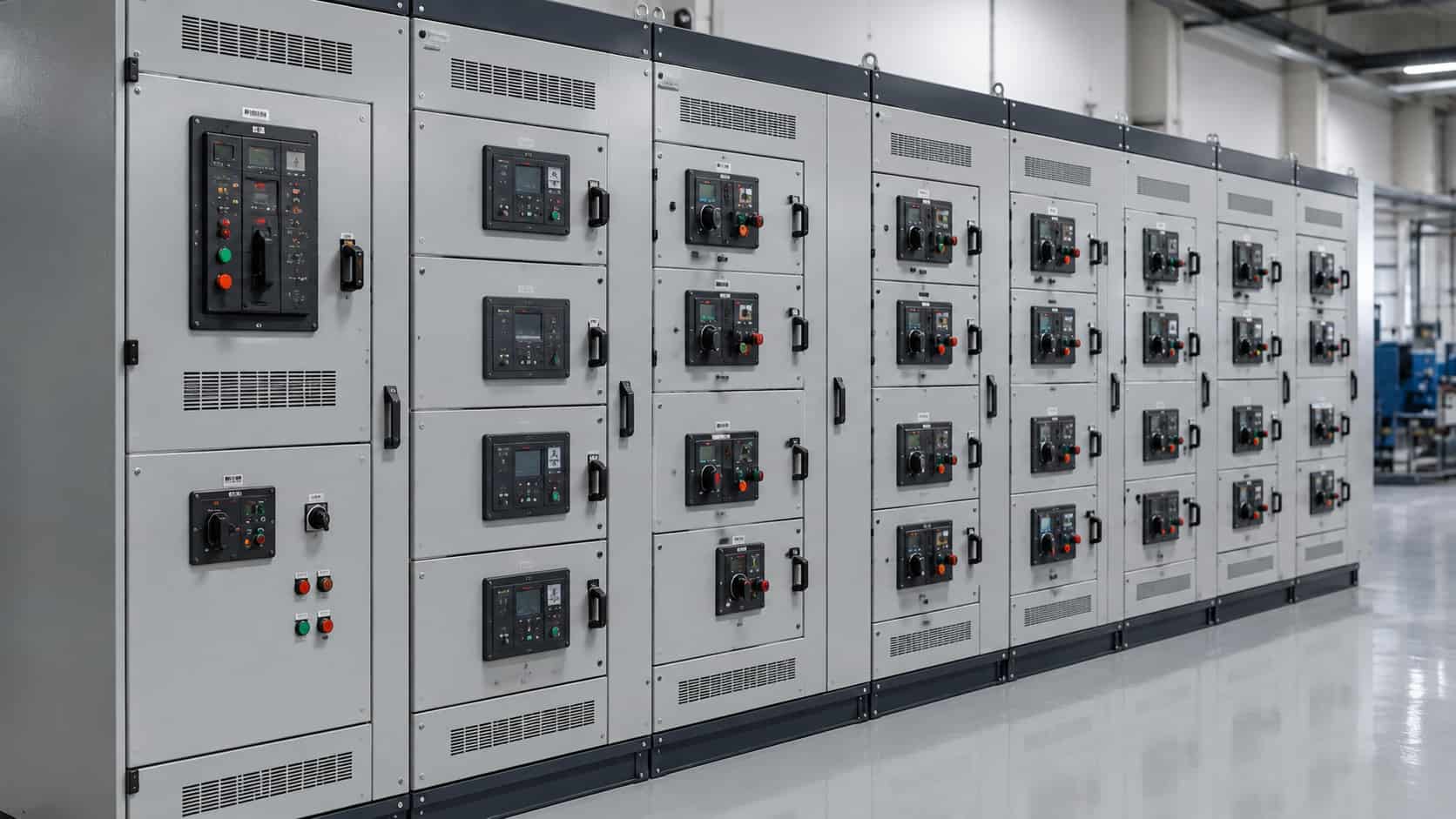
A Motor Control Center — almost always shortened to MCC — is a specific type of switchgear assembly built around one job: running and protecting a facility’s motors. If you’ve read our switchgear basics guide, think of an MCC as a specialized cousin to general distribution switchgear, purpose-built for motor loads rather than general circuit distribution.
What an MCC actually is
An MCC is an assembly of one or more enclosed sections housing multiple motor control units — each unit typically containing a motor starter, protective devices, and disconnect means for an individual motor. Rather than wiring each motor starter as a separate standalone panel scattered around a facility, an MCC consolidates them into a single, centrally located, more maintainable assembly.
How an MCC differs from general distribution switchgear
General distribution switchgear, of the type covered in our LV vs MV switchgear guide, distributes power broadly across a facility’s circuits — lighting, general power, and feeders to other panels. An MCC is more specialized: every unit within it is built specifically to start, run, protect, and stop a motor, with the specific overload and short-circuit protection characteristics motors require, which differ from the protection needs of general circuits.
Core components
Each motor control unit within an MCC typically includes a disconnect switch or circuit breaker for isolation, a contactor to switch the motor on and off (often with a starter arrangement, sometimes replaced by a variable frequency drive for speed control), and an overload relay to protect the motor from sustained overcurrent conditions that could cause thermal damage. Larger, more modern MCCs also frequently include communication modules allowing remote monitoring and control integration with a facility’s control system.
MCC vs standalone motor starters
For a facility with just one or two motors, standalone starter panels near each motor may be simpler and more economical. Once a facility has a meaningful number of motors — common in manufacturing plants, water treatment facilities, and HVAC-heavy commercial buildings — consolidating them into an MCC becomes more practical: centralized maintenance access, consistent protection coordination, and simpler future expansion generally outweigh the benefit of keeping starters distributed near individual motors.
Maintenance considerations
Because an MCC houses multiple motor circuits in one assembly, a well-organized maintenance approach matters — clear labeling of which unit serves which motor, a consistent testing schedule for overload relays and contactors, and thermal imaging inspection to catch developing connection issues before they cause a failure are standard practice for facilities that depend on MCC-driven equipment for continuous operation.
Where Kexingyu Power fits in
We manufacture MCC panels alongside general distribution switchgear, so motor control and facility distribution can be specified as part of one coordinated electrical package. Browse the full range on our Switchgear & Distribution page.
MCC Panel Basics
Common questions from facility managers, engineers and project buyers determining whether a Motor Control Center is the right solution for centralized motor control and protection.
01 How many motors justify using an MCC instead of standalone starters?
There is no fixed number. An MCC becomes attractive when centralized control, protection, maintenance and future expansion provide more value than installing individual starters throughout the facility. The decision usually depends on motor quantity, motor sizes, physical distribution, process criticality, available space, maintenance strategy and the need for integration with PLC, DCS or building management systems.
02 Can VFDs be integrated into an MCC panel?
Yes. Modern MCCs can include variable-frequency drives for motors that require adjustable speed, soft starting or process control. VFD sections should be designed with suitable protection, ventilation, heat dissipation, harmonic considerations and cable arrangements. Traditional contactor starters, soft starters and VFD feeders can also be combined within the same MCC lineup when the project design requires different motor-control methods.
03 Does an MCC require a dedicated motor protection scheme?
Each motor feeder should have protection appropriate to the motor, starting method and application. This commonly includes short-circuit protection and overload protection, with additional functions such as phase-loss, earth-fault, stall, undercurrent or temperature protection where required. Protection settings should be coordinated with motor starting characteristics, feeder cables and upstream protective devices as part of the overall electrical design.
04 How often should MCC overload relays be inspected or tested?
There is no universal testing interval for every MCC. Inspection and functional testing should follow the relay manufacturer's instructions, the facility's preventive-maintenance program and the importance of the motor circuit. Critical, heavily loaded or frequently operated equipment may justify shorter intervals. Maintenance should also verify relay settings, connections, contactor condition and signs of abnormal heating or mechanical wear.