
Switchgear Lead Times in 2026: A Buyer's Planning Guide
Realistic timelines vary significantly by voltage class and type — here's how to plan procurement without relying on outdated assumptions.
Introduction
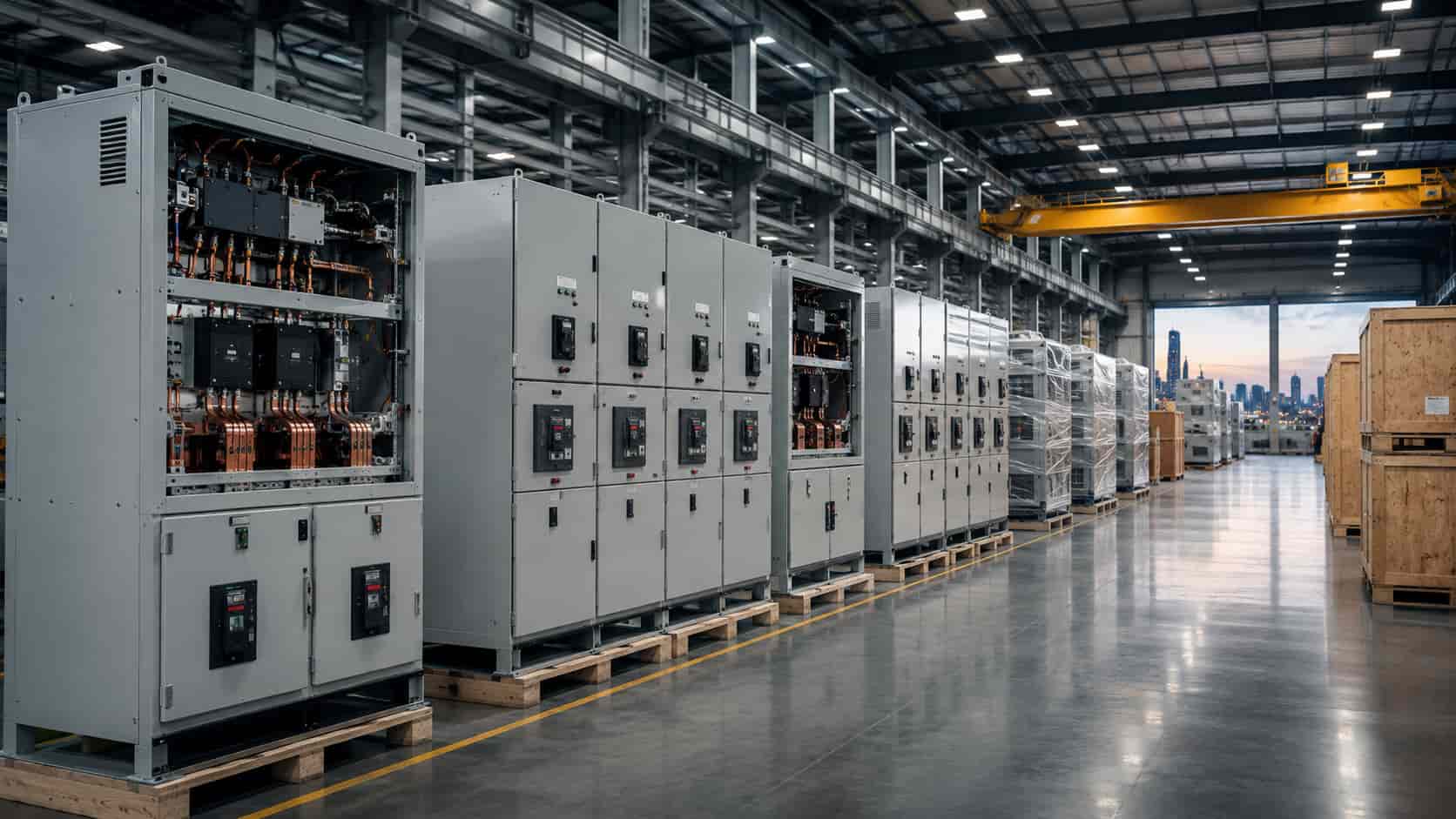
Switchgear lead times shifted significantly over the past several years, and a procurement schedule built on pre-2020 assumptions will run into real trouble in 2026. This guide breaks down what’s driving current timelines and how to plan around them realistically, rather than optimistically.
Why 2026 lead times matter more than usual
Global demand for medium voltage switchgear has surged, driven substantially by data center construction alongside continued industrial and utility infrastructure investment. Many channels for MV switchgear are already booked well past 2028, which means a project team that discovers a switchgear shortfall late in the schedule has very few fast options left to turn to.
What's driving the current backlog
Data center construction is the most visible driver, given the scale of MV switchgear each new facility requires, but it isn’t the only factor — general industrial capacity expansion, renewable energy interconnection projects, and grid infrastructure upgrades are all competing for the same manufacturing capacity simultaneously. Component-level constraints, particularly for circuit breakers and protection relays sourced from a concentrated set of global suppliers, compound the bottleneck beyond what switchgear assembly capacity alone would suggest.
How lead times vary by voltage class and type
Low voltage switchgear generally faces less severe delays than medium voltage equipment, since LV manufacturing capacity is more distributed globally and less concentrated among a small number of specialized producers — see our LV vs MV switchgear guide for how to determine which your project actually needs at each point in the system. Within MV switchgear, metal-clad construction with withdrawable breakers generally carries longer lead times than simpler ring main units, given the greater manufacturing and testing complexity involved.
How to plan procurement around these timelines
Order MV switchgear as early as the voltage class and general capacity are known, well before final protection relay settings or every detail of the electrical design is locked. Build lead time uncertainty into the overall project schedule as a defined risk item, not an assumption that standard timelines will hold. And evaluate more than one supplier in parallel early in the process, rather than committing to a single quote and only exploring alternatives if that supplier’s timeline falls through.
Manufacturer reliability matters more when timelines are tight
When lead times are already stretched, a supplier’s actual production capacity and transparency about their backlog becomes critical information, not a nice-to-have — see our switchgear manufacturer checklist for how to verify a quoted lead time is realistic rather than optimistic. A manufacturer that can’t clearly explain their current backlog and production schedule is a harder timeline to plan a project around, regardless of the number they initially quote.
Where this matters most: data center projects
Data center projects sit at the center of this demand surge, and switchgear lead time is frequently the single largest schedule risk on the electrical side of these projects — see our Data Center Power solution page for how a coordinated equipment package can help manage this risk across switchgear, transformers, and related equipment together.
Where Kexingyu Power fits in
We manufacture switchgear in-house with transparent production capacity and FAT scheduling, offering a shorter, more predictable alternative for projects facing the current backlog. Browse the full range on our Switchgear & Distribution page.
Switchgear Lead Time Planning
Common questions from EPC contractors and project teams planning switchgear procurement, design freeze dates and delivery schedules.
01 Are LV switchgear lead times always shorter than MV switchgear lead times?
Not always. Lead time depends on the manufacturer, equipment design, current production loading and availability of critical components. Standard LV assemblies may sometimes be produced faster than customized MV switchgear, but complex LV systems can also face long schedules. Buyers should therefore obtain a project-specific production schedule rather than assuming the voltage class alone determines delivery time.
02 Is it worth paying a premium for a shorter switchgear lead time?
It can be when the commercial cost of project delay is greater than the additional procurement cost. However, a premium only has value when the shorter schedule is supported by real manufacturing capacity, available components and a credible production plan. Ask the supplier to identify the basis of the accelerated schedule and the milestones they are committing to before relying on it.
03 Should I order switchgear before the electrical design is fully finalized?
Procurement can begin before every design detail is complete, but the critical parameters required for manufacturing should be sufficiently defined. These normally include voltage, current, fault rating, bus arrangement, feeder configuration, protection philosophy and major equipment interfaces. A practical approach is to establish formal design-freeze milestones so long-lead components can be released without exposing the project to uncontrolled late changes.
04 How can I verify that a supplier's quoted switchgear lead time is realistic?
Ask for more than a single delivery date. A credible supplier should be able to explain engineering approval, component purchasing, fabrication, assembly, wiring, testing, FAT and shipping milestones. Confirm whether critical breakers, relays and other components are already available or still need to be ordered, and ask how your project fits into the factory's existing production schedule. Detailed answers provide stronger evidence than a short lead-time promise alone.
Recent Posts

Energy Storage for Data Centers: A Growing Backup Power Option
Energy Storage for Data Centers: A Growing Backup Power Option Batteries have always backed up data centers in the form of UPS strings. Grid-scale BESS
Thermal Runaway in Lithium Batteries: What BESS Buyers Should Understand
Thermal Runaway in Lithium Batteries: What BESS Buyers Should Understand How thermal runaway starts, how it propagates, and which evidence buyers should require before approving

What Cables Does a Data Center Need? The Complete Cable List
What Cables Does a Data Center Need? The Complete Cable List Quick Answer: A data center needs eight cable families — medium voltage feeders, low