
Custom Control Cabinets: When Off-the-Shelf Switchgear Isn't Enough
Most projects fit a standard configuration — but when they don't, here's what a proper custom build process actually involves.
Introduction
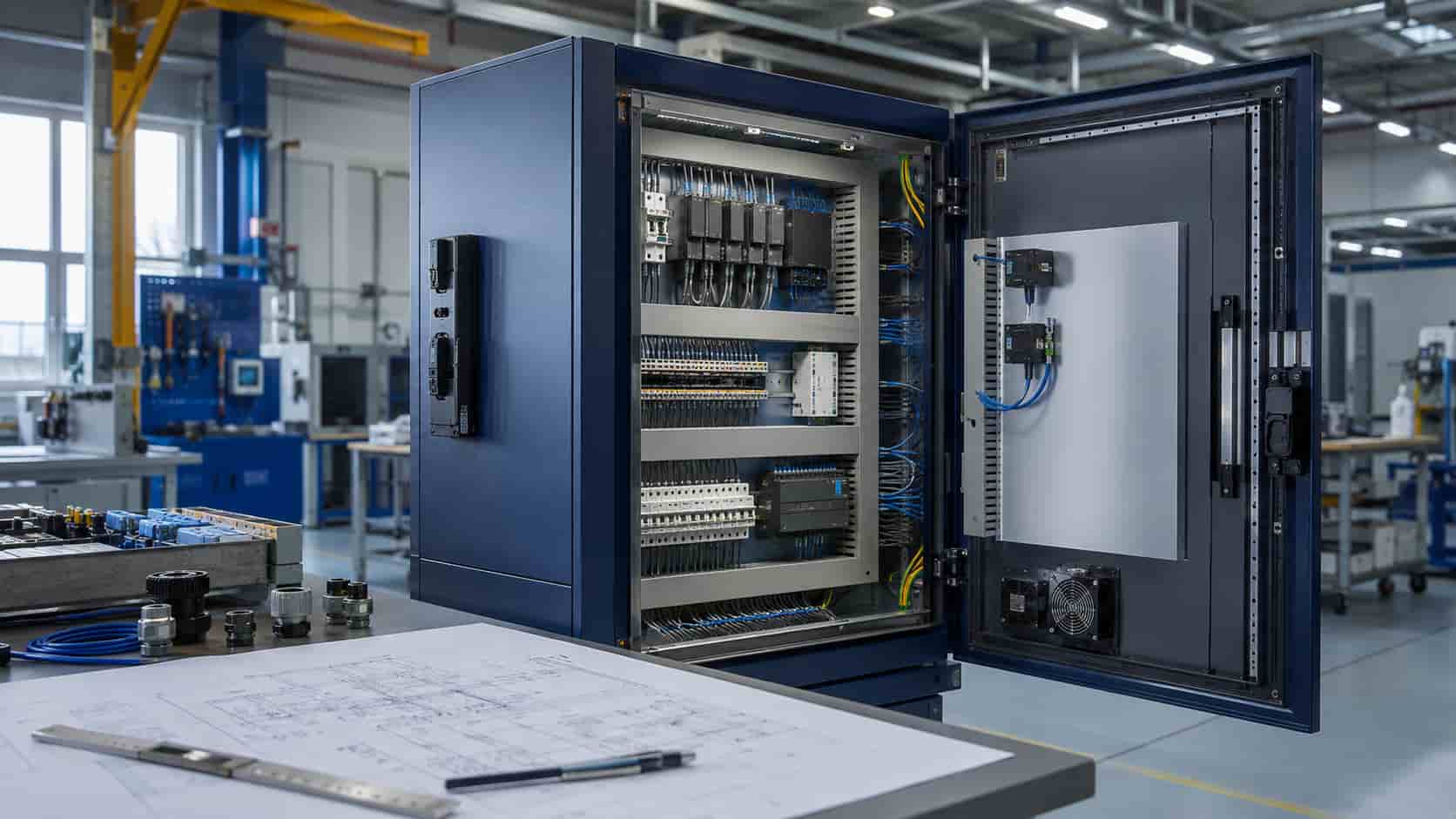
Most switchgear specifications fit comfortably within a manufacturer’s standard product range — the selection framework we’ve covered in earlier guides gets most projects to a workable configuration. But some projects have requirements standard catalog switchgear simply doesn’t accommodate, and that’s where custom control cabinets come in.
When standard switchgear doesn't fit the project
Unusual site constraints — an oddly shaped switchroom, non-standard cable entry positions, or specific seismic or environmental requirements — are common triggers for customization. So are integration requirements: projects needing specific SCADA or building management system communication protocols, non-standard metering configurations, or busbar arrangements dictated by an existing facility layout that a new switchgear order needs to match.
Common custom requirements
The most frequent custom requests involve non-standard cabinet dimensions to fit an existing or constrained installation space, custom busbar configurations to match specific load distribution needs, integration of third-party metering, protection, or communication equipment beyond a manufacturer’s standard offering, and special enclosure ratings or materials for unusual environmental conditions.
The engineering process for custom cabinets
A proper custom build starts with detailed technical discussion between your engineering team and the manufacturer’s engineers — not just a modified quote based on a standard model. This typically includes reviewing your single line diagram and site constraints in detail, producing preliminary general arrangement drawings for your approval before manufacturing begins, and confirming any non-standard components are sourced and tested to the same standards as the rest of the assembly.
Working with in-house engineering vs a trading company
Custom work is exactly where the difference between a genuine manufacturer and a trading company becomes most apparent — see our switchgear manufacturer checklist for the broader verification approach. A trading company routing custom requirements through to a factory with no direct relationship to your project introduces communication delays and misunderstanding risk at exactly the stage where precision matters most.
Cost and lead time implications
Custom cabinets generally cost more and take longer to deliver than standard configurations, given the additional engineering time and often non-standard component sourcing involved. This should be planned into the project schedule from the point a custom requirement is identified, not discovered after a standard-timeline quote turns out not to apply.
A checklist for briefing a custom cabinet request
Provide your full single line diagram and site constraints upfront rather than partial information; specify any third-party components (meters, relays, communication modules) that must be integrated; confirm environmental and enclosure rating requirements explicitly; and build in extra schedule time for engineering review and approval before manufacturing starts, similar to the general planning approach covered in our switchgear basics guide.
Where Kexingyu Power fits in
Our in-house engineering team works directly with project teams on custom control cabinet requirements, from initial drawing review through FAT. Browse the full range on our Switchgear & Distribution page.
Custom Control Cabinets
Common questions from engineers and project buyers considering a custom control cabinet or switchgear configuration for non-standard project requirements.
01 How much longer does a custom cabinet take compared with a standard design?
There is no fixed additional lead time because the impact depends on the level of customization. Non-standard dimensions, busbar layouts, special components, communication interfaces or enclosure requirements may add engineering, drawing approval, component sourcing and testing stages. Custom requirements should therefore be identified early and included in the project schedule before manufacturing dates are committed.
02 Can third-party metering and protection equipment be integrated into a custom cabinet?
Often yes, but compatibility should be confirmed during the engineering stage. The manufacturer needs to review mounting dimensions, auxiliary power, CT and VT requirements, communication protocols, wiring interfaces, heat dissipation and any certification implications. The exact manufacturer and model of third-party devices should ideally be approved before drawings and panel layouts are finalized.
03 Should drawings be approved before manufacturing a custom cabinet?
Yes. Formal drawing approval is an important control point for custom equipment. Depending on the project, the review may include general arrangement drawings, single-line diagrams, schematics, component schedules, terminal plans and cable-entry details. Manufacturing should normally begin only after the required drawings are approved or formally released, reducing the risk of expensive changes later in production.
04 Can a trading company handle custom switchgear requirements effectively?
It can, provided the trading company has a strong technical team and direct access to the factory's engineers. The key issue is not the business model itself but the quality of the engineering interface. For complex customization, buyers should confirm who is responsible for design decisions, drawing revisions, component selection, testing and technical approvals, and whether direct factory communication is available when necessary.
Recent Posts
Energy Storage for Data Centers: A Growing Backup Power Option
Energy Storage for Data Centers: A Growing Backup Power Option Batteries have always backed up data centers in the form of UPS strings. Grid-scale BESS
Thermal Runaway in Lithium Batteries: What BESS Buyers Should Understand
Thermal Runaway in Lithium Batteries: What BESS Buyers Should Understand How thermal runaway starts, how it propagates, and which evidence buyers should require before approving
Switchgear Lead Times in 2026: A Buyer’s Planning Guide
Switchgear Lead Times in 2026: A Buyer’s Planning Guide Realistic timelines vary significantly by voltage class and type — here’s how to plan procurement without