
Transformer Manufacturer China: A Buyer's Due Diligence Checklist
How to verify the legal entity, factory capability, design controls, test evidence, production schedule, and commercial protections before placing an order

This transformer manufacturer China checklist is designed for EPC contractors, utilities, distributors and industrial buyers evaluating a supplier for the first time. The goal is not to decide whether a company has an attractive website or the lowest quotation. It is to verify who is contractually responsible, where and how the transformer will be built, what evidence supports compliance, and which controls remain in place until delivery and warranty completion.
A transformer can pass a basic visual inspection and still be wrong for the network. Voltage ratio, vector group, impedance, insulation level, losses, temperature rise, sound, terminals, grounding, accessories and short-circuit duty all depend on controlled design and manufacturing. Due diligence should therefore connect commercial identity, engineering, production, testing and contract terms into one evidence trail.
Transformer Manufacturer China Checklist: Start with the Risk Model
Supplier risk is not a simple factory-versus-trader question. A factory may outsource tanks or specialized components; a group company may coordinate several qualified plants; an exporter may add useful project management. The real issue is whether the production route is disclosed, technically controlled and contractually accountable.
Before requesting documents, classify the purchase by transformer value, voltage class, customization, network criticality, destination regulation and consequence of failure. A small standard indoor unit and a custom substation transformer should not receive identical audit depth. Higher-risk orders justify a site audit, independent inspection, witnessed testing, stronger milestone controls and more detailed warranty terms.
1. Verify the Legal Entity and Payment Chain
Obtain the supplier’s Chinese legal name, business licence, unified social credit code, registered address, legal representative and authorized contract signatory. Translate names carefully: an English trading name may not identify the contracting entity. Check whether the licence status and business scope are consistent with the proposed transaction.
The sales quotation, contract, commercial invoice, beneficiary account and export documents should form a coherent chain. A different group-company account may be legitimate, but the relationship and responsibility must be documented before payment. Personal accounts, last-minute beneficiary changes and unexplained third-party payees are high-risk exceptions.
2. Confirm Who Designs, Builds, and Tests the Transformer
Ask for a process map showing which site performs design, winding, core cutting or assembly, insulation, tank fabrication, drying, oil processing, final assembly and testing. Require addresses and responsible companies for any outsourced stage. Subcontracting is not automatically unacceptable; undisclosed or uncontrolled subcontracting is.
A live video audit is more useful than a library of polished photos. Ask the supplier to move in real time from incoming materials to winding, assembly and test areas. Request equipment nameplates or serial references, current work orders and examples of units similar to your rating. A site visit should trace one job from drawing release to final test record.
Review the supplier’s claimed product range against the actual project. A company experienced in small dry-type voltage-matching units may not automatically be qualified for a high-voltage liquid-filled transformer. Browse the proposed manufacturer’s transformer and substation range as a starting point, then verify capability for the exact rating, voltage, duty and destination.
3. Test the Engineering Team Before You Test the Product
A capable engineering team should identify missing or conflicting inputs. Provide source and load voltages, phase, frequency, vector group, taps, impedance, insulation level, cooling, temperature rise, loss requirements, environment, terminals, accessories, protection interfaces, applicable standards and test scope. Observe whether the supplier asks technically relevant questions rather than accepting everything immediately.
Request an approved datasheet, general arrangement, terminal plan, foundation loads, nameplate schedule, control schematic and deviation list. For project-specific units, define design-review milestones and the data required before long-lead materials are released. Changes after drawing approval should carry written cost and schedule effects.
4. Separate Quality-System Certificates from Product Evidence
ISO 9001 certification can support confidence in documented processes, but it is not product certification. ISO states that it does not issue certificates; certification is performed by external certification bodies. Buyers should verify the exact legal entity, site, scope, standard edition, issuer, accreditation and validity instead of accepting a certificate image at face value.
Where available, use IAF CertSearch or contact the certification or accreditation body to confirm status. Even a valid management-system certificate does not prove that a specific transformer design meets IEC, IEEE, efficiency or destination-market requirements.
5. Build a Product Compliance Matrix
List every applicable requirement and the evidence that will close it. IEC 60076-1 is the general international power-transformer standard, with other parts covering subjects such as temperature rise, insulation and dielectric tests, short-circuit withstand, loading and dry-type transformers. The project may instead or additionally require IEEE/ANSI, utility, national or consultant specifications.
Do not accept a generic ‘IEC compliant’ statement. Record the standard edition, applicable clauses, deviations, design or type-test evidence, routine tests, special tests and responsible party. A report must match the relevant transformer family, voltage class, insulation system and test requirement; a report for a different product is not automatically transferable.
Destination rules can add obligations beyond the base transformer standard. For example, covered distribution transformers placed on the U.S. market must meet DOE energy-conservation, test-procedure and certification requirements. Buyers should assign responsibility for market eligibility, declarations, filings and labels instead of assuming an export supplier handles every local requirement.
6. Verify Materials, Components, and Traceability
Request the approved bill of materials or a controlled component schedule. Important items may include core material and grade, copper or aluminum conductor, insulation, fluid, bushings, tap changer, radiators, fans, temperature devices, pressure or gas devices, monitoring equipment, terminals and enclosure materials.
Define which brands, models or technical characteristics are fixed and which alternatives are permitted. Substitution should require documented equivalence and buyer approval before use. Traceability should connect incoming certificates, inspection records, batch or serial information and nonconformance disposition to the finished transformer serial number.
7. Review Manufacturing Controls, Not Only the Final Unit
Ask for the manufacturing route and inspection and test plan (ITP). Depending on the design, meaningful records may cover conductor and insulation receipt, winding dimensions, coil pressing, core assembly, tank weld and leak checks, active-part drying, moisture or vacuum records, oil processing, torque checks, wiring inspection, paint or coating and final assembly.
The ITP should identify manufacturer inspections, buyer witness points, hold points, required records and acceptance criteria. Also review the nonconformance process: who can accept a repair or deviation, how root cause is recorded and when the buyer must approve disposition.
8. Make FAT a Measured Test Program
Factory acceptance testing should follow the approved specification and applicable standard. The exact routine, type and special tests depend on the transformer. The program may include winding resistance, ratio and vector group, insulation resistance, no-load loss and current, impedance and load loss, dielectric tests, functional checks of accessories, leak or pressure checks and other agreed tests.
A useful report records serial number, test method, measured values, acceptance limits, tap position, temperature corrections where relevant, instrument identification, date and responsible signatures. A one-page sheet with ticks beside ‘pass’ provides weak evidence. Request a sample anonymized report before award and agree the final data-book index.
Witness arrangements must be set before production. State whether the buyer, consultant or independent inspector will attend in person or remotely, how much notice is required, what happens after a failed test, and whether shipment is blocked until reports and nonconformities are accepted.
9. Check Calibration and Laboratory Capability
Ask for the test equipment list, ranges, accuracy and calibration status. Calibration certificates should identify the instrument, laboratory, date, result and validity or due date. For specialized external tests, confirm the laboratory’s competence, scope and report traceability.
Do not assume a large test bay guarantees correct testing. Review procedures, operator authorization, raw measured data and calculation methods. Test capacity must also match the transformer’s voltage and MVA class.
10. Challenge the Lead Time and Production Slot
Break the quoted duration into technical clarification, drawing submission and approval, long-lead materials, manufacturing, drying, assembly, FAT, documentation, packing and ex-works readiness. Ask which event starts the clock and which buyer inputs are assumed.
Request the manufacturing site, planned slot, current factory loading, critical components and test-bay window. A short schedule is credible only when supported by a standard design, available materials, real capacity and fast approval assumptions. Contract dates should distinguish FAT, ex-works, shipment, site arrival and commissioning support.
11. Audit Export Packing, Logistics, and Site Handover
Define the Incoterm and its named place, packing method, moisture protection, impact or tilt monitoring, accessory separation, oil-shipping condition, transport dimensions, center of gravity and lifting points. Large units may need route studies, permits, disassembly and site oil processing.
Agree the shipping-document set, preservation instructions, arrival inspection, storage limits, installation supervision, field tests, commissioning assistance, spare parts and tools. Factory completion is not the same milestone as an energized transformer.
12. Put Warranty and Remedies into Operational Language
Define when the warranty begins and ends, especially when ocean transit, storage or delayed commissioning is expected. State covered defects, exclusions, response times, investigation steps, remote support, site attendance, parts, labor, freight and repair or replacement obligations.
Include a process for latent defects, repeated failures and disagreement over root cause. The contract should also address intellectual property, confidentiality, document ownership, change control, limitation of liability and governing dispute process with qualified legal advice.
Transformer Manufacturer China Checklist Table
| Review Area | Evidence to Request | Red Flag | Buyer Control |
|---|---|---|---|
| Legal entity & payment | Business licence, registered Chinese name, unified social credit code, registered address, authorized signatory, beneficiary-account details | Payee does not match contracting entity; unexplained personal or third-party account | Contract, invoice, bank account and export documents must identify the approved entity |
| Factory & product scope | Live factory tour, equipment list, site address, organization chart, comparable transformer records | Showroom-only evidence; product category appears outsourced but is described as in-house | Name approved manufacturing site and require written approval for subcontracting |
| Design capability | Approved datasheet, calculations or design review outputs, drawings, deviation list, vector group and impedance confirmation | Supplier accepts incomplete requirements without questions or offers one generic design for every duty | Use design-freeze milestones and written deviation/change control |
| Quality system | Current certificate showing exact legal entity, site, scope, issuing body and validity | Certificate is expired, altered, for another entity/site, or outside transformer manufacturing scope | Verify independently; treat QMS certification as process evidence, not product approval |
| Standards & compliance | Applicable IEC/IEEE/national requirements, destination rules, valid type/design test evidence, efficiency documentation | Generic “IEC compliant” or “CE certified” claim without product-specific scope | Attach a compliance matrix and responsibility schedule to the order |
| Materials & components | Approved bill of materials, core/conductor/fluid/bushing/tap-changer sources, certificates and traceability plan | Uncontrolled brand substitutions or refusal to identify critical components | Freeze critical makes/models and define an approval process for alternatives |
| Manufacturing control | ITP, process route, hold points, winding/core/tank/drying/oil records, nonconformance procedure | Only final inspection is described; no in-process records or serial traceability | Approve ITP and retain key manufacturing records in the data book |
| Testing & FAT | Routine/type/special test schedule, sample reports, instruments, acceptance criteria, witness access and final data-book index | FAT means visual inspection only; reports show pass/fail without measured results | Link payment and shipment release to accepted FAT records |
| Capacity & schedule | Factory loading, engineering dates, long-lead components, production slot, FAT date and ex-works milestone | Very short lead time with no slot, component or test-bay basis | Make milestone definitions, buyer inputs and delay notification contractual |
| Warranty & delivery | Incoterm, packing plan, transport limits, spares, installation support, warranty start/end and claim workflow | Warranty starts at ex-works regardless of transit/storage; no field-support responsibility | Define preservation, arrival inspection, commissioning and remedy obligations |
Use the table as a screening and contracting aid, not as a substitute for engineering judgment. For each row, record the evidence received, reviewer, status, open action and contractual closure. A supplier should not pass because the total number of documents looks impressive; each critical claim needs evidence that matches the correct entity, site, product and project.
A Practical Pre-Award Document Pack
Commercial and identity documents
Business licence, legal-name translation, organization and ownership explanation, authorized signatory, beneficiary confirmation, references for comparable projects and disclosed manufacturing sites.
Technical proposal
Completed datasheet, compliance and deviation matrix, preliminary drawings, component schedule, guaranteed losses and performance, service conditions, standards, test scope and interface responsibility.
Quality and manufacturing evidence
Verifiable management-system certificates, factory audit evidence, process map, ITP, traceability plan, sample in-process records, sample FAT report, calibration list and nonconformance procedure.
Schedule and delivery evidence
Milestone schedule, production-slot basis, critical-component plan, approval assumptions, FAT window, packing and Incoterm, logistics responsibility, documentation schedule, warranty and field-support plan.
Red Flags That Require Escalation
The supplier refuses a live factory view or repeatedly substitutes prerecorded media; the contracting company cannot be connected clearly to the factory; certificates belong to another entity or site; the quotation contains no deviations despite an incomplete specification; critical component sources are secret or may change without approval; and test reports cannot be matched to transformer serial numbers or relevant ratings.
Other warning signs include a delivery date with no engineering, material, factory-slot or FAT basis; a beneficiary change immediately before payment; pressure to ship before test reports are accepted; warranty language that excludes most practical remedies; and pricing far below comparable compliant offers without an explainable design, material or scope difference.
How to Make the Final Award Decision
Use a weighted evaluation rather than choosing the lowest initial price. Technical compliance and unresolved deviations should be gate criteria. Then score manufacturing capability, evidence quality, project controls, schedule credibility, lifecycle cost, warranty, field support and commercial risk. Keep assumptions consistent across bidders.
Complete the audit before paying a large deposit, but continue surveillance after award. Drawing approvals, material releases, progress records, inspection points, FAT and shipment documentation are part of the same due-diligence chain.
Conclusion
A strong transformer manufacturer China checklist verifies more than a factory address. It confirms the legal and payment entity, engineering competence, actual production route, quality-system scope, product compliance, material traceability, manufacturing records, measured test results, capacity, delivery obligations and warranty remedies.
KEXINGYU E-POWER GROUP provides transformer and substation solutions for utility, industrial and special-duty projects. Buyers can request project-specific technical review, manufacturing documentation, inspection planning and factory testing. Final configuration, evidence package and delivery commitments should be agreed against the actual specification and destination requirements before order.
Recent Posts

Energy Storage for Data Centers: A Growing Backup Power Option
Energy Storage for Data Centers: A Growing Backup Power Option Batteries have always backed up data centers in the form of UPS strings. Grid-scale BESS
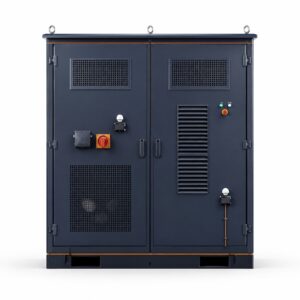
Thermal Runaway in Lithium Batteries: What BESS Buyers Should Understand
Thermal Runaway in Lithium Batteries: What BESS Buyers Should Understand How thermal runaway starts, how it propagates, and which evidence buyers should require before approving
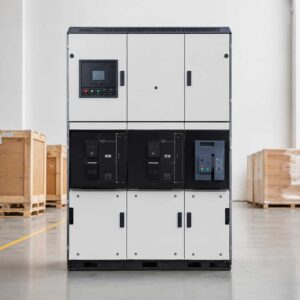
Switchgear Lead Times in 2026: A Buyer’s Planning Guide
Switchgear Lead Times in 2026: A Buyer’s Planning Guide Realistic timelines vary significantly by voltage class and type — here’s how to plan procurement without