Oil, Coolant and Chemical Resistance for Machine Cable
Quick Answer: Coolant emulsions, way oils and cleaning chemicals swell and soften ordinary PVC jackets within months; oil-resistant machine cable starts with a PUR or similarly resistant compound and a test certificate for the exact fluid it will meet.
Walk through any running machine shop and you will see the evidence before anyone explains it: cable jackets that have swollen soft at the machine base, jackets gone sticky where way oil mists settle, insulation that has hardened where coolant pools and dries in cycles. Fluids are the quiet destroyer of machine cable. Motion gets the attention because its failures are loud and immediate, but oil and coolant attack every hour the machine runs, and they attack the part of the cable that protects everything inside it. This guide covers what those fluids chemically do to jacket compounds, which materials resist which fluids, how the standard oil-resistance tests relate to what happens on an actual machine, and how to specify resistance so the cable you buy is rated for the liquids your shop actually runs.
Introduction
Every machining, forming and washing process surrounds its cabling with chemistry: neat cutting oils, water-miscible emulsions, hydraulic fluid, lubricants, degreasers, and the aggressive alkaline or acidic washes of cleaning stages. Cable jackets are polymer compounds, and polymers interact with these fluids through absorption, extraction and chemical attack. The interaction is slow, cumulative and rarely dramatic in any single week, which is exactly why it slips through procurement: a jacket that swells 30 percent over six months passes every incoming inspection and still fails within the first warranty year.
The economics make it worse. Fluid damage is concentrated at the lowest, wettest, least visible points of the harness, where replacement means downtime that was never budgeted. The engineering answer is not exotic: choose the jacket compound for the fluid environment as deliberately as you choose conductor count for the electrical one. The sections below give you the mechanism, the material map, the tests behind the ratings, and the specification language that makes suppliers prove the rating against your fluids rather than against an abstract standard oil.
What Oils and Coolants Actually Do to a Jacket
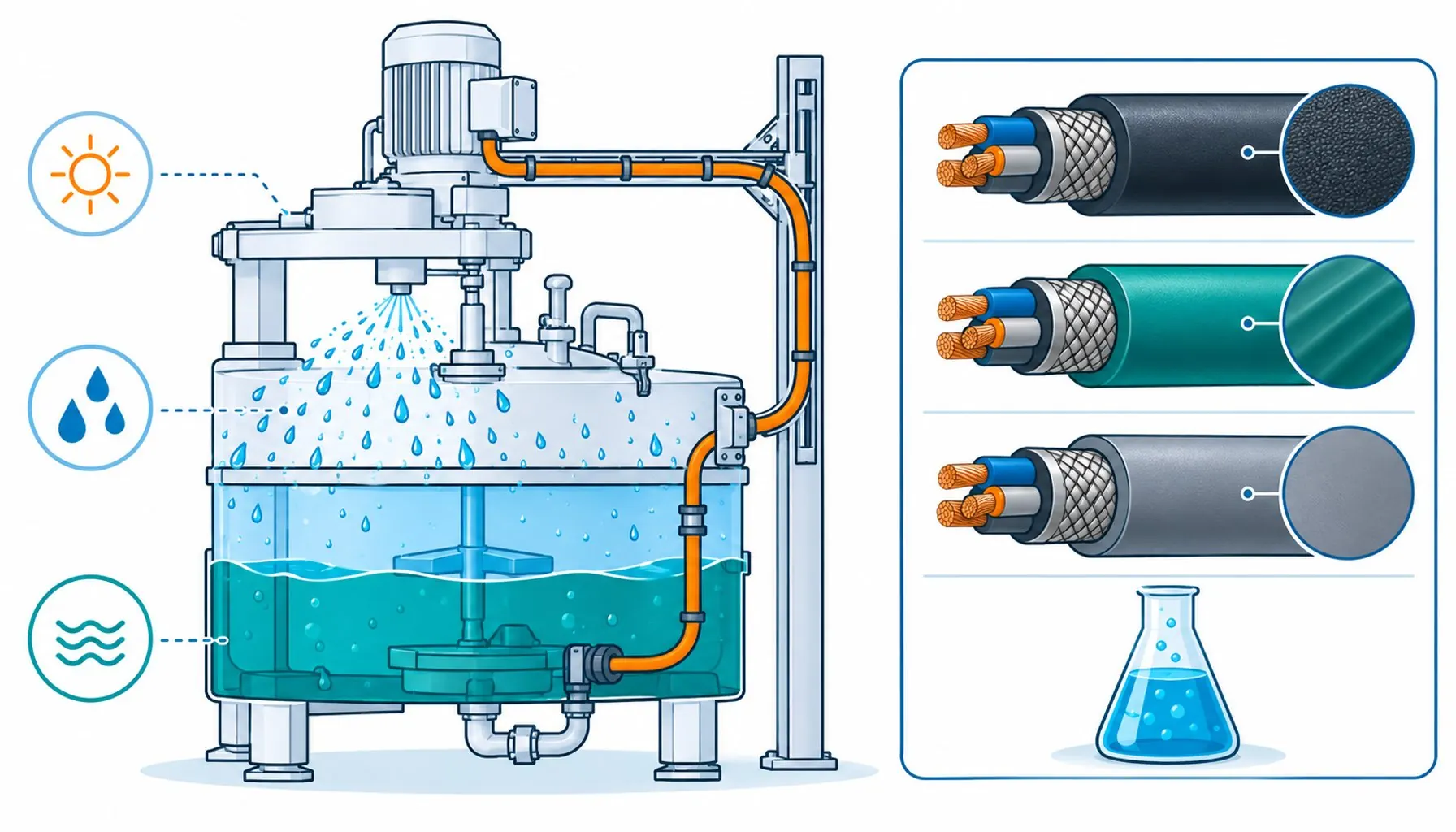
Three mechanisms do nearly all the damage. The first is swelling: the fluid absorbs into the polymer, plasticizing it and expanding the volume. A swollen jacket softens, loses abrasion resistance, and in bad cases swells enough to press the cable’s internal elements against each other or split the jacket outright. The second is extraction: the fluid leaches out the plasticizers and stabilizers that keep the compound flexible, so the jacket hardens and cracks instead of softening; PVC is especially vulnerable because its flexibility depends on plasticizers that oil readily pulls out. The third is hydrolysis and chemical attack, where water-based emulsions with extreme pH, or specific solvents, break the polymer’s molecular structure itself; some polyester-based PURs are famously vulnerable to hydrolysis in hot, wet conditions even though they shrug off mineral oil.
Each mechanism leaves a signature. Swollen jackets feel tacky and measure oversize. Extracted jackets feel hard and show fine surface cracking. Chemically attacked insulation discolors and becomes brittle through its thickness. Learning to read those signatures on a failed cable tells you which resistance property your replacement actually needs, which is more useful than any generic “chemical resistant” label on a datasheet.
The Material Map: Which Compound Resists What
Jacket compounds are not interchangeable, and the popular ones split clearly along fluid lines. PVC is economical and generally fine against water and many emulsions, but neat oils extract its plasticizers and it stiffens and cracks; it is the wrong default for machine tools. PUR is the workhorse of oil resistance: polyether and polyurethane compounds resist mineral oils, many emulsions and abrasion at once, which is why most genuine machine-tool and robot cable is PUR-jacketed, with the caveat about hydrolysis in permanently hot and wet positions. TPE and elastomer blends trade some oil resistance for better cold flex and wider chemical spread. Fluoropolymer and specialty compounds cover the extremes: hot oils, concentrated chemicals, washdown chemistry, at prices that reserve them for the positions that need them.
The practical pattern for machine builders is zoning: PUR where fluid contact is routine, PVC or TPE only in the dry cabinet interior, specialty compounds at known hot spots. Uniform specification either overspends or underprotects, and the zones are usually visible in the machine layout before the first cable is routed. The table below turns the map into a decision aid keyed to the environments a machine actually presents.
| Signature on the failed cable | Mechanism at work | Typical fluid culprits | What the replacement must specify |
|---|---|---|---|
| Jacket swollen, tacky, oversize at low points | Absorption and swelling | Neat mineral oils, hydraulic fluid, way oil mist | PUR or elastomer jacket with stated oil-immersion data; route away from pooling |
| Jacket hard, shrunken, fine cracking | Plasticizer extraction | Oils against PVC; heat accelerating the loss | Non-PVC-extracting compound; eliminate PVC from oil-wet positions |
| Jacket split longitudinally at machine base | Severe swelling with mechanical stress | Long-term emulsion ponding | Higher-swell-resistance compound plus drip routing and drainage |
| Insulation brittle through thickness, discolored | Chemical attack or hydrolysis | Extreme-pH emulsions, hot wet zones on hydrolysis-prone PUR | Hydrolysis-stable PUR or fluoropolymer at hot wet spots; verify pH range with supplier |
| Whitening and powdering where cable rubs a wet edge | Abrasion accelerated by softening | Any fluid weakening the jacket at a contact point | Oil-resistant plus abrasion-tested compound; fix the contact geometry too |
| Connector corrosion with jacket intact | Wicking through terminations | Water-based fluids entering at cable ends | Sealed terminations, drip loops, glands rated for the environment; the cable was never the leak path |
How Oil-Resistance Testing Works, and Where It Falls Short
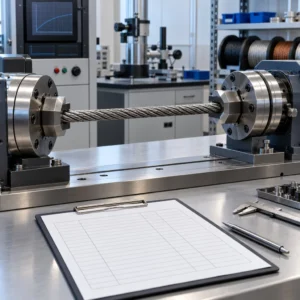
Standard tests immerse jacket samples in reference fluids at set temperatures for fixed durations, then measure volume swell, tensile change and elongation change against the unimmersed material. Oil resistance grades in cable standards derive from this family of tests, and they are genuinely useful as a material screening: a compound that survives immersion testing will not dissolve on contact with machine fluids.
The gap between test and service is the fluid itself. Reference oils are standardized mineral oils; your shop runs a specific emulsion concentrate at a specific dilution, with specific tramp oil contamination and a specific bacterial load that shifts pH over time. Coolant chemistry varies more between shops than any reference fluid varies between test labs. This is why the specification section later in this article insists on the exact fluid: a supplier willing to run immersion coupons in your coolant, or to state test data against a named fluid class, is offering evidence; a supplier offering only a generic oil-resistance grade is offering hope.
Reading the Failures: A Fluid Damage Field Guide
The table below maps the common fluid-related failure signatures to their mechanisms and to the specification response each one demands. It is written for the person holding a failed cable, because that moment is where most replacement purchases are made, and the wrong response, swapping in the same cable, guarantees a repeat.
| Environment | Default compound | Watch-outs | Evidence to demand |
|---|---|---|---|
| Dry cabinet interior, no fluid contact | Standard PVC or TPE | Heat rise inside the enclosure, not fluid | Normal compound datasheet |
| Mist and splash zones near machining | Hydrolysis-stable PUR | Edge rubbing accelerating softened jackets | Oil immersion data plus abrasion data |
| Ponding and sump-adjacent positions | High-swell-resistance PUR or specialty | Long-term emulsion exposure, pH drift | Immersion data against the named emulsion |
| Hot wet washdown stages | Hydrolysis-stable PUR or fluoropolymer | Hydrolysis of standard PUR, connector sealing | Hydrolysis evidence at the stage temperature |
| Concentrated chemicals, aggressive wash agents | Fluoropolymer or documented specialty | Cost; verify the exact agent, not a class | Immersion coupons in the actual chemistry |
Zoning the Machine: Where Each Compound Belongs
Fluid resistance costs money, so the disciplined approach assigns it where fluids actually live. Cabinet interiors and overhead runs stay in standard compounds. Chain and dress-pack runs near the process take PUR as the default. Splash zones, sump areas and washdown stages get the highest-grade compounds, and sometimes a simple mechanical shield, a smooth deflector or a drip edge, buys more years than a compound upgrade. The routing itself is part of the specification: cables that never hang below their own drip point, that leave wet zones through the driest available path, and that avoid resting on fluid-wetted surfaces, all last longer in the same compound. Machine builders who treat fluid management and cable specification as one design task consistently outlast those who treat the cable as the last line of defense.
Two adjacent disciplines complete the zoning. The sealed entries, glands and drip-loop hardware at cable ends are the accessories layer of the harness, and choosing them is its own checklist, covered in the guide to cable accessories selection. And where the same fluids reach the electrical room, the enclosure sealing and layout habits described in the guide to control cabinet construction extend the zoning from the harness into the cabinet.
It is worth placing this in the wider context of cable failure: fluid attack is one of the most common root causes catalogued in the standard review of why industrial cables fail, and the fluid signatures above are the machine-shop chapter of that review. For the insulation materials inside the jacket, the same chemistry logic that separates compounds in static power work is explained in the guide to XLPE versus PVC insulation, and motion cable inherits those distinctions with its own additives.
When Chemical Resistance Ratings Are Not the Answer
Honest limits: a resistance rating describes the tested fluid, the tested temperature and the tested duration, and no rating survives translation into an unlisted chemistry. New coolant formulations appear constantly, and a cable proven against last year’s emulsion may meet this year’s differently. There are also combinations no single test predicts: fluid plus heat plus flex cycling attacks faster than any single-factor test shows, and a cable that passes immersion while still may fail immersion while moving. And some environments defeat polymers entirely, where the honest answer is physical separation, sealed conduit or air purging rather than a better compound. The rating is a starting point for a conversation with your supplier about your fluids, not a substitute for it.
RFQ Checklist: Specifying Fluid Resistance
Bring the chemistry to the supplier in specifics:
- Fluid inventory: every oil, coolant, cleaner and wash the cable will contact, with brand or chemistry class
- Contact pattern: splash, mist, immersion, ponding, and which cable positions meet which fluid
- Temperature range at the wet positions, including dry-off heat after washdown
- Evidence required: immersion test data against the named fluid or fluid class, with swell and elongation numbers
- Jacket compound per zone, with the zoning drawing if the machine has one
- Termination sealing plan: glands, drip loops and connector protection at cable ends
Conclusion
Oils and coolants destroy machine cable slowly, at the least visible points, through mechanisms that no incoming inspection catches in time. The defense is material honesty: PUR where fluids are routine, specialty compounds where they are extreme, PVC only where the environment is genuinely dry, and test evidence against the actual fluids rather than a generic grade. The failed cable on your bench already told you which mechanism to defend against; the specification language above turns that diagnosis into a purchase that lasts.
Kexingyu Cable Group (KXYE) supplies machine cable with PUR and specialty jacket options and provides immersion test evidence against named fluid classes on request. Send your fluid inventory and machine layout through the RFQ page, and we will zone the specification to where the chemistry actually lives.