
Armored vs Unarmored Cable: Which One Do You Need?
When the extra steel protection layer is worth the added cost and weight — and when it's an unnecessary upgrade.
Introduction
Armored cable shows up on a lot of project specifications as a default choice, sometimes without much thought about whether it’s actually needed. It adds real cost, weight, and installation complexity — so it’s worth understanding exactly what the armor layer protects against, and whether your installation conditions actually call for it.
What armored cable actually is
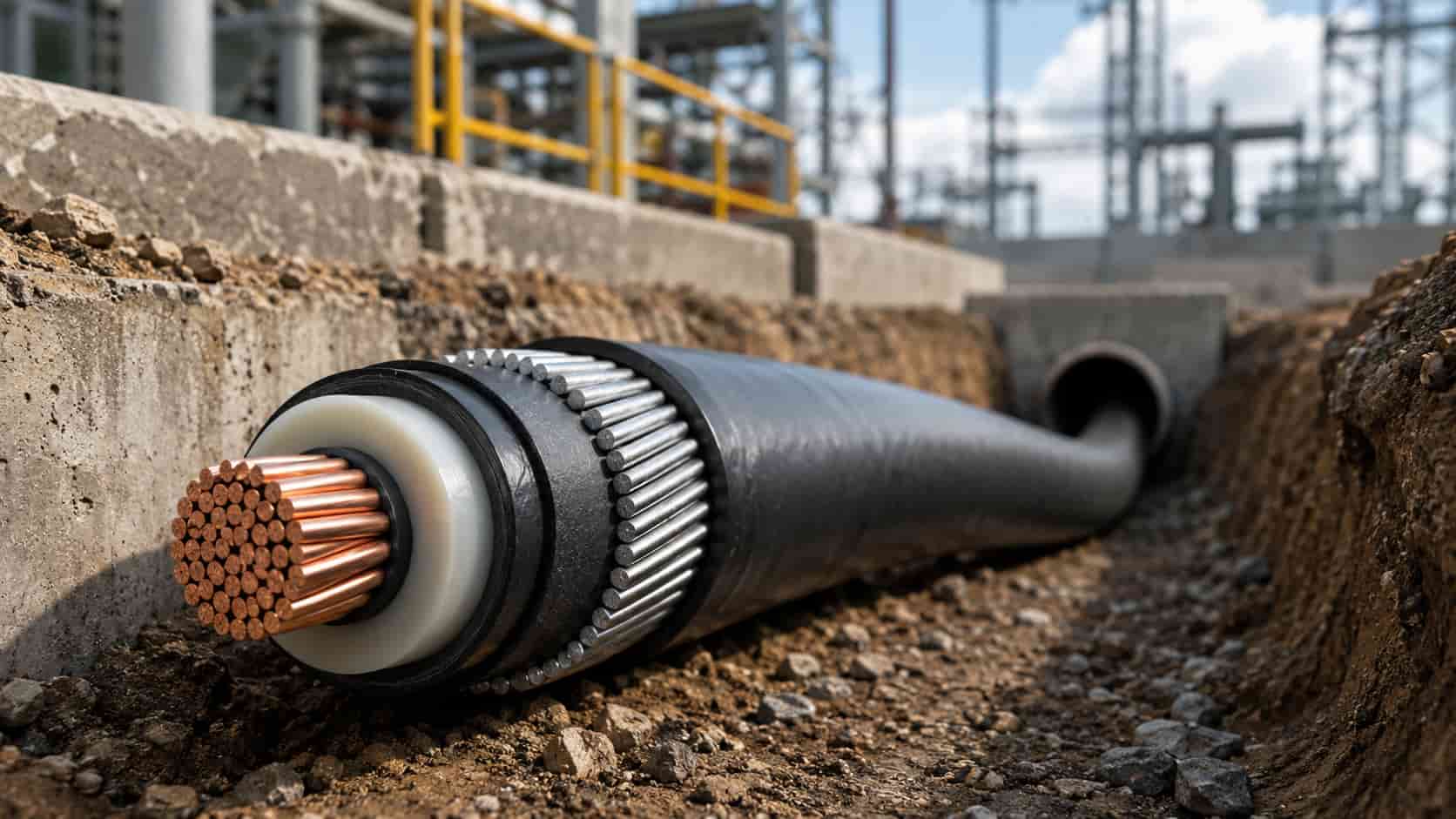
Armored cable has an additional protective layer — typically steel wire (SWA, steel wire armor) or steel tape (STA) — positioned between the inner insulation/bedding and the outer sheath. This layer is a mechanical protection feature, not an electrical one; it doesn’t change the cable’s voltage rating or current-carrying capacity on its own, though the added layer does affect overall cable diameter and weight.
Why the armor exists — mechanical protection
The steel armor layer protects the cable core against physical damage: impact, crushing, penetration from sharp objects, and in some cases rodent damage. It also provides a degree of protection against accidental digging strikes for buried cable, since the armor is more resistant to being cut through than the insulation alone.
When you need armored cable
Armored cable is generally the right choice for direct burial installations without additional conduit protection, cable routed through areas with vehicle traffic, construction activity, or other mechanical impact risk, outdoor installations exposed to physical damage or tampering, and sites with known rodent activity where gnaw-through risk is a real concern. Many utility and industrial specifications default to armored cable for any direct-burial run specifically because of this exposure.
When unarmored cable is the practical choice
Unarmored cable is generally sufficient for cable routed through conduit or protected cable tray, indoor installations with limited mechanical risk, and short runs within equipment enclosures or panels where physical damage exposure is minimal. Conduit itself provides mechanical protection, which is why armored cable inside conduit is often unnecessary — you’d effectively be paying for two layers of protection doing the same job.
Cost and installation differences
Armored cable costs more per meter than an equivalent unarmored cable, is heavier and less flexible — which affects installation labor and minimum bend radius — and requires the armor layer to be properly grounded and terminated at both ends using glands specifically designed for armored cable. Skipping proper armor termination and grounding is a common installation mistake that undermines both the mechanical and safety benefit of choosing armored cable in the first place.
Verifying what you're actually buying
As with any cable specification, confirm the armor type (steel wire vs steel tape), the base insulation and jacket materials, and any additional certifications like fire-retardant or LSZH ratings if the installation requires them — our cable certifications checklist covers how to verify these claims are backed by real test documentation. For critical facility installations that need both mechanical protection and fire safety performance, see our LSZH vs Fire-Retardant Cable guide as well.
Where Kexingyu Power fits in
We manufacture both armored and unarmored power cable across low and medium voltage classes, with armor type, insulation, and certifications specified to match your installation conditions. Browse the full range on our Cables & Wiring Systems page.
Armored Cable Basics
Common questions from project buyers deciding whether armored cable is required for underground, outdoor or industrial installations.
01 Does armor change a cable's voltage or current rating?
The armor layer does not determine the cable's voltage rating, which depends mainly on its insulation system and construction. However, armor can affect current-carrying capacity indirectly because it changes the cable's heat dissipation and may introduce magnetic losses in certain AC installations. Always use the manufacturer's ampacity data for the complete armored cable design.
02 Do I need armored cable if it is already installed inside conduit?
Usually not, because a correctly specified conduit system already provides mechanical protection. Installing armored cable inside conduit can add unnecessary cost, weight and installation difficulty. However, armored cable may still be required by the project specification, local code or installation conditions, so the complete cable-route design should be reviewed before ordering.
03 Does the armor layer need to be grounded or bonded?
Metallic armor normally requires an appropriate bonding and earthing arrangement using cable glands and accessories designed for the selected armor type. The correct method is not always identical for every installation: bonding at one end, both ends or through a specially designed arrangement may be required depending on cable type, voltage level and system design. Follow the project engineer's bonding plan and the manufacturer's instructions.
04 What is the difference between steel wire armor and steel tape armor?
Steel wire armor is commonly selected where the cable may experience pulling, tensile stress or demanding underground installation conditions. Steel tape armor primarily provides radial mechanical, crush and impact protection. The correct choice depends on the cable construction, installation method, expected mechanical loads, conductor arrangement and applicable project standard.
Recent Posts

Voltage Stabilizers vs UPS: Do You Need Both?
Voltage Stabilizers vs UPS: Do You Need Both? One device fixes how high or low the voltage is; the other fixes whether there is voltage

Energy Storage for Data Centers: A Growing Backup Power Option
Energy Storage for Data Centers: A Growing Backup Power Option Batteries have always backed up data centers in the form of UPS strings. Grid-scale BESS
Thermal Runaway in Lithium Batteries: What BESS Buyers Should Understand
Thermal Runaway in Lithium Batteries: What BESS Buyers Should Understand How thermal runaway starts, how it propagates, and which evidence buyers should require before approving