
How Cable Sourcing Delays Impact EPC Project Timelines
Cable rarely gets the procurement attention switchgear and transformers do — but a late cable order can hold up a project just as effectively.
Introduction
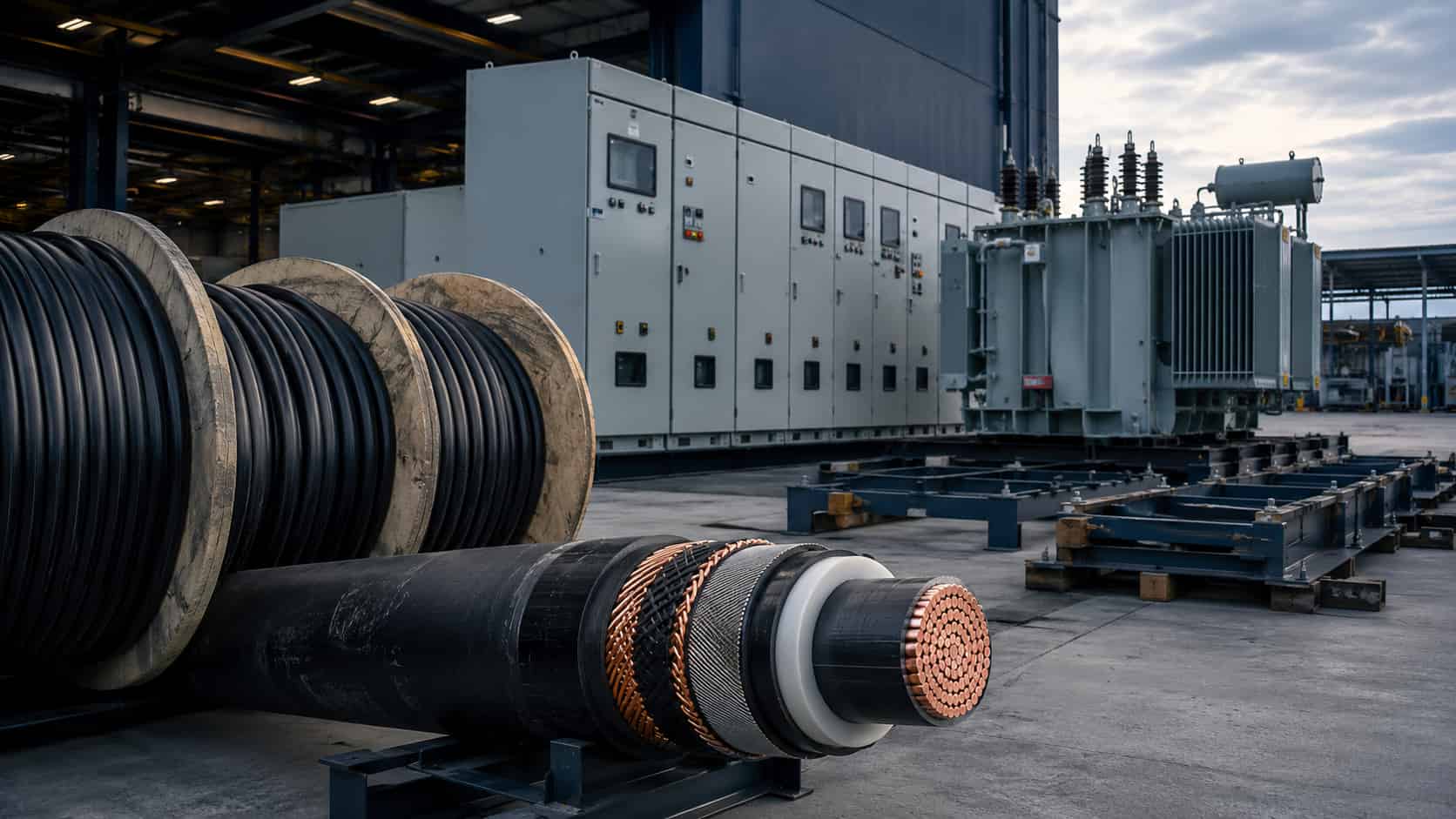
Most of the procurement attention on a large EPC project goes to switchgear and transformers, and for good reason — their lead times are longer and more visible in the schedule. Cable often gets treated as a lower-priority line item, ordered later, in smaller batches, or from whichever supplier happens to be fastest at the time. That assumption doesn’t always hold up, and cable delays can hold up a project just as effectively as a delayed transformer.
Why cable delays are often overlooked
Cable is manufactured faster than large equipment like transformers or switchgear under normal conditions, which creates an assumption that it can always be ordered later in the schedule without risk. That assumption breaks down when raw material costs spike, when a project needs a large volume of a specific specification simultaneously, or when the same global demand surge driving switchgear and transformer shortages also pulls on cable manufacturing capacity.
Common causes of cable supply delays
Copper and aluminum price volatility and availability directly affects cable manufacturing lead time and cost, since conductor material is often the single largest cost component and isn’t always held in large pre-purchased stock. Production backlog at cable manufacturers can build up during periods of high infrastructure and data center construction activity, the same way it does for switchgear and transformers. Customs clearance and shipping logistics add additional, sometimes unpredictable time on top of manufacturing lead time for international orders. And late finalization of cable specifications — waiting for full electrical design sign-off before ordering — pushes the cable order later in the schedule than the actual manufacturing lead time would require.
How cable delays cascade through a project schedule
Cable is typically one of the last major electrical components installed before a facility can be energized and tested — it connects the switchgear, transformers, and load equipment that were procured earlier in the schedule. A late cable delivery doesn’t just delay cable installation; it delays energization, commissioning, and ultimately project handover, even if every other piece of equipment arrived on time.
Why this matters especially for data center projects
Data center projects are particularly exposed to this risk because they combine large cable volumes, specific LSZH and fire-rated specifications, and schedules already under pressure from switchgear and transformer lead times covered in our Data Center Power solution page. A project team that carefully manages transformer and switchgear lead time but treats cable as an afterthought can still end up with a delayed energization date.
How to reduce cable sourcing risk
Order cable earlier in the project schedule rather than waiting for 100% design finalization — cable specifications for major runs are often stable well before every detail of the electrical design is locked. Confirm your supplier’s actual production capacity and current backlog rather than assuming standard lead times still apply, using the same verification approach covered in our cable manufacturer checklist. And where possible, source cable alongside switchgear and transformers from a single coordinated supplier, so cable delivery is scheduled against the same project timeline rather than managed as a separate, disconnected procurement track.
Where Kexingyu Power fits in
We manufacture cable alongside switchgear, transformers, and the other equipment in a typical data center or industrial power package, coordinated on a single delivery schedule rather than left to separate suppliers’ independent timelines. Browse the full range on our Cables & Wiring Systems page.
Cable Procurement Timing
Common questions from EPC contractors and project buyers managing cable procurement schedules, material risk and delivery deadlines.
01 Should cable be ordered at the same time as switchgear and transformers?
Major cable runs can often be ordered alongside switchgear and transformers once the voltage class, conductor size, routing, installation method and cable construction are reasonably stable. Waiting for every minor design detail to be finalized may remove useful schedule contingency. However, uncertain termination points, route lengths or equipment interfaces should be resolved before production quantities are confirmed.
02 Does copper price volatility affect cable pricing and lead times?
Yes. Copper or aluminum conductor material represents a significant share of the cable's total cost, so major raw-material price changes can affect quotation validity, purchasing terms and factory inventory decisions. For large orders, buyers should confirm how conductor pricing is calculated, how long the quotation remains valid and when raw materials will be secured after the order is placed.
03 Is a cable delay less critical than a switchgear or transformer delay?
Not necessarily. Cable installation, termination and testing are often completed close to energization and project handover. A late cable delivery can therefore delay equipment interconnection, commissioning and final acceptance even when transformers, switchgear and other major equipment have already arrived on site. Cable should be managed as a critical-path item when the installation sequence depends on it.
04 How early should cable be ordered for a large data center project?
Procurement should begin once the main cable schedule, voltage ratings, conductor sizes, routing quantities and fire-performance requirements are sufficiently defined for manufacturing. This may occur before the complete electrical design package reaches final issue. LSZH, fire-retardant, armored and large-cross-section cables should be identified early because specialized materials, testing requirements and large production quantities can extend the delivery schedule.
Recent Posts
Energy Storage for Data Centers: A Growing Backup Power Option
Energy Storage for Data Centers: A Growing Backup Power Option Batteries have always backed up data centers in the form of UPS strings. Grid-scale BESS
Thermal Runaway in Lithium Batteries: What BESS Buyers Should Understand
Thermal Runaway in Lithium Batteries: What BESS Buyers Should Understand How thermal runaway starts, how it propagates, and which evidence buyers should require before approving
Switchgear Lead Times in 2026: A Buyer’s Planning Guide
Switchgear Lead Times in 2026: A Buyer’s Planning Guide Realistic timelines vary significantly by voltage class and type — here’s how to plan procurement without