Machine Tending and Injection Molding Robots: Cable for Intermittent High-Cycle Motion
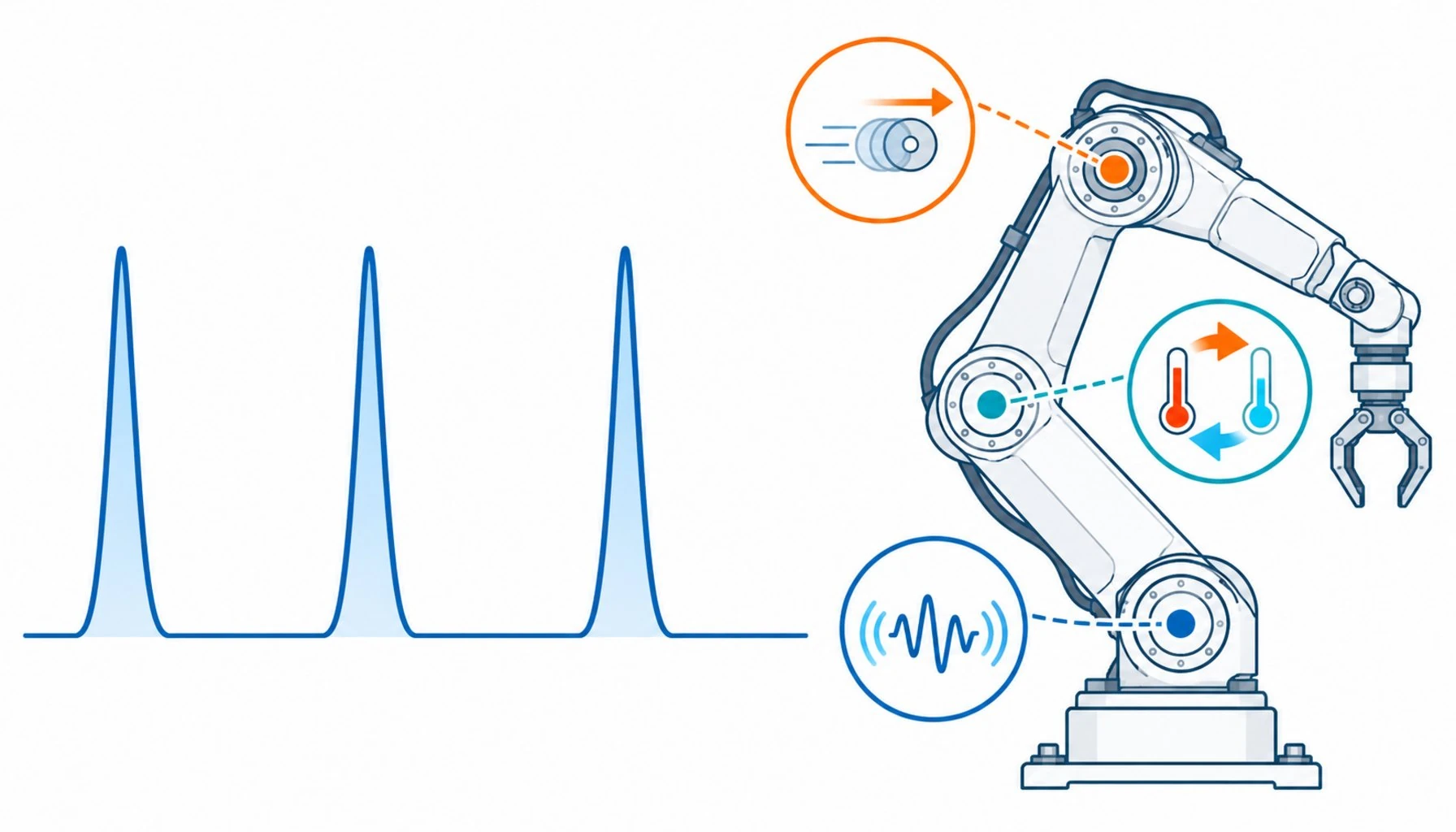
Quick Answer: Tending and take-out robots sprint through short violent cycles thousands of times a day, then idle — a duty profile that punishes cable through acceleration shocks and thermal cycling, not through long continuous flexing.
Not all robot motion is equal. A palletizing robot sweeps long, smooth arcs; a welding robot dances a programmed path. The machine tending robot and the injection molding take-out unit do something harder on cable: they sprint. Load a blank, sprint into the CNC, retract, sprint to the fixture — each stroke lasting seconds, each involving maximum acceleration and hard stops, repeated thousands of times per shift with idle gaps in between. Intermittent high-cycle duty breaks cable in ways that continuous motion does not, and the shops that spec tending robots from a general robot-cable quote discover it around month eight, when the axis that stops hardest starts faulting first. This guide covers what tending and take-out duty does to cable, what differs between CNC tending and molding take-out environments, and the specification lines that keep these workhorse robots earning instead of visiting the service bay.
Introduction
Machine tending is the volume application of industrial robotics: loading and unloading CNC lathes and mills, press tending, injection molding take-out, and the punch-press cells that feed stamping lines. The economics are built on cycle time — every second the robot spends entering and leaving the machine is a second the machine tool is not cutting or the mold is not closed. So the robot accelerates at the edge of its capability, stops hard at the edge of its stability, and repeats. The harness riding the arm sees that duty as acceleration loading on every stroke and thermal cycling on every idle: the cable warms during the sprint, cools during the wait, thousands of times per week. Neither load profile appears on a standard datasheet, which is exactly why the duty needs to be named in the specification rather than assumed.
The environments add their own flavor. CNC tending cells put the arm near chips and coolant; molding cells add mold-release mist, hot mold surfaces and — in take-out units — a vertical telescoping axis whose harness folds on itself every cycle. The failure habits behind all of these are the standard ones from the cable failure catalog, but the intermittent duty profile changes where and how fast they strike.
What Intermittent Duty Does Differently
Continuous motion fatigues cable by repetition of a gentle load. Intermittent high-cycle duty fatigues it by repetition of a violent one. Three mechanisms dominate.
Acceleration loading. Every sprint puts longitudinal force into the harness and every hard stop slams it. The cable’s strain-carrying core and its terminations take that load thousands of times per shift. Terminations — glands, clamps, connector backs — are where these loads concentrate, and they are the first thing to inspect when a tending robot starts faulting.
Thermal cycling. The warm-up and cool-down between strokes ages jackets and works connections loose over time. It is a slower killer than acceleration, but it compounds: a slightly loose gland that heats and cools daily becomes a wicking path, then a corrosion path, then a fault that moves around when you test it.
Micro-vibration at idle. Tending robots share their floor with the machine they tend — a machining spindle, a molding clamp, a press. The idle gaps are not electrically quiet: the robot sits in its host machine’s vibration field, and cable that is routed hard against structure converts that vibration into abrasion, thousands of hours at a time.
| Application | Cycle Character | Special Environment | Cable Response |
|---|---|---|---|
| CNC machine tending | Sprint-load-sprint, minutes per cycle, thousands per week | Chips and coolant near the machine door | Acceleration-rated terminations, coolant-resistant jackets, standoff routing |
| Injection molding take-out | Fixed vertical sprint every mold cycle, very high daily counts | Mold heat, release mist, telescoping fold axis | Heat-rated jackets near molds, fold-rated telescoping harness, mist-sealed ends |
| Press tending and stamping | Fast synchronized sprints, shock from the press itself | Press shock vibration, oil mist | Shock-tolerant routing, oil-resistant compounds, vibration-proof mounts |
| Palletizer-style continuous robots (comparison) | Long smooth arcs, continuous duty | Dust, ambient temperature | Standard motion construction with long-stroke routing |
CNC Tending: The Coolant Door Environment
The tending robot’s defining moment happens at the machine door: the arm reaches into the work envelope that was, seconds earlier, full of cutting fluid mist and chips. The harness sections nearest the door live with coolant mist and the occasional chip strike, which selects for jacket chemistry before it selects for anything else — the same compound logic that decides jacket material under chemical exposure, applied at robot scale. Routing does the rest: standoff clips that keep the bundle clear of the machine’s chip flow, abrasion protection at every predicted contact, and dress pack geometry that gives the wrist loop enough radius to flex without stretching. Shops that route tight to look tidy on delivery day convert their dress pack into a consumable; the robot does not care how neat it looks, only how freely it moves.
Molding Take-Out: The Telescoping Problem
Injection molding take-out units add a mechanical feature most robots do not have: a telescoping vertical axis whose harness folds and unfolds inside itself on every mold cycle. Fold cycles at molding cadence — often several thousand per day — concentrate all the flexing at the same few centimeters of harness, and the fold cavity also collects mold-release mist and heat rising off the mold. The cable specification for the fold axis is therefore the strictest on the unit: fine stranding with short lay, a jacket that tolerates both heat and mist chemistry, and a fold housing designed to keep the flex radius constant instead of letting the bundle find its own path. Where molds run hot, the sections above the mold face live with radiant heat that ages ordinary jackets in a year; heat-rated compounds earn their premium here. The electrical side follows familiar signal discipline — the feedback and vacuum circuits that time the take-out ride alongside power in the same fold, and their shielding quality shows up directly in the unit’s reliability at picking parts.
Specifying for Intermittent High-Cycle Duty
None of this appears automatically in a robot package quote, which is why the specification has to carry it. The duty line matters most: strokes per hour, hours per day, acceleration profile — the numbers that set flex and termination ratings, sized the way any high-duty power circuit is sized from honest load data. The environment lines follow: coolant or mist chemistry near the machine door or fold cavity, radiant heat zones, chip and part contact risk. And the proof line closes it: flex and torsion test data at stated conditions, batch traceability, and a spare harness set for the robot whose downtime costs the most per hour. Buyers who verify these lines at quotation — reading the supplier’s evidence with the same discipline described in the datasheet review guide — convert tending robots from a recurring harness expense into the seven-days-a-week asset they were sold as.
| Check | What to Pin Down | Why It Decides the Outcome |
|---|---|---|
| Duty profile | Strokes per hour, hours per day, acceleration and stop harshness | Sets flex life and termination ratings for every harness |
| Fold or sprint geometry | Telescoping fold radius, wrist loop radius, routing clearances | Flex failures concentrate where geometry is tightest |
| Chemistry exposure | Coolant, mold release, press oil near harness sections | Jacket compound follows the mist, not the catalog |
| Heat zones | Mold radiant heat, machine door proximity, enclosure temperatures | Heat-rated jackets earn their premium where molds run hot |
| Termination spec | Gland and clamp ratings for acceleration loading, torque discipline | Sprint loads land on the terminations first and hardest |
| Proof and spares | Flex test data at stated duty, spare harness set for the critical cell | Downtime is priced per minute; replacement speed is part of the spec |
When Tending Robot Rules Are Not the Answer
Honesty about scope keeps this guide useful. The duty logic here addresses robots that sprint and idle — tending, take-out, press and load applications. It does not substitute for the application-specific layers where they exist: welding cells add spatter and EMI, molding cleanrooms and food plants add their own hygiene regimes, and cobots add human-adjacent safety requirements. Continuous-duty robots — palletizing, painting, heavy process work — stress cable differently and follow the standard motion specification. The machine tool’s own internal wiring follows machine-tool practice, and the cell’s supply-side electrical engineering remains the electrician of record’s territory. Name the duty honestly, borrow the right application layer, and the harness specification writes itself.
RFQ Checklist: What to Send the Integrator or Cable Supplier
Put the cell’s actual rhythm in writing before quotes come back:
- Duty data: strokes per hour, hours per day, acceleration profile, target service life
- Application type: CNC tending, molding take-out, press tending — with the special geometry each brings
- Fold and loop geometry: telescoping fold radius, wrist loop radius, routing clearances
- Chemistry: coolant, mold release, press oil that harness sections will meet
- Heat map: radiant zones, door proximity, enclosure temperatures
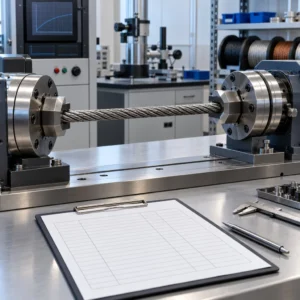
- Proof required: flex and torsion test data at stated conditions, batch traceability
- Spares: complete harness set for the highest-cost-downtime cell, on the shelf
Conclusion
Tending and take-out robots earn their keep through violence — short sprints at maximum acceleration, thousands of times a day, with idle gaps that cycle temperature and vibrate. Cable specified for that profile, with acceleration-rated terminations, chemistry-matched jackets and geometry that keeps flex radii constant, runs for years. Cable quoted generically becomes the cell’s recurring line item around month eight. The difference is a duty profile in the specification instead of a robot model number.
Kexingyu Cable Group (KXYE) supplies motion-grade cable constructions for high-cycle automation and supports integrators with duty-based specifications, heat and chemical rated compounds, and batch traceability behind every rating. Describe your cell’s rhythm through the RFQ page, and we will respond with constructions matched to the sprints, not just the robot.