
Power Cable Manufacturer China: What to Look for Before Ordering
How to tell a real factory from a trading company relabeling someone else's product — and what else is worth verifying before you order.
Introduction
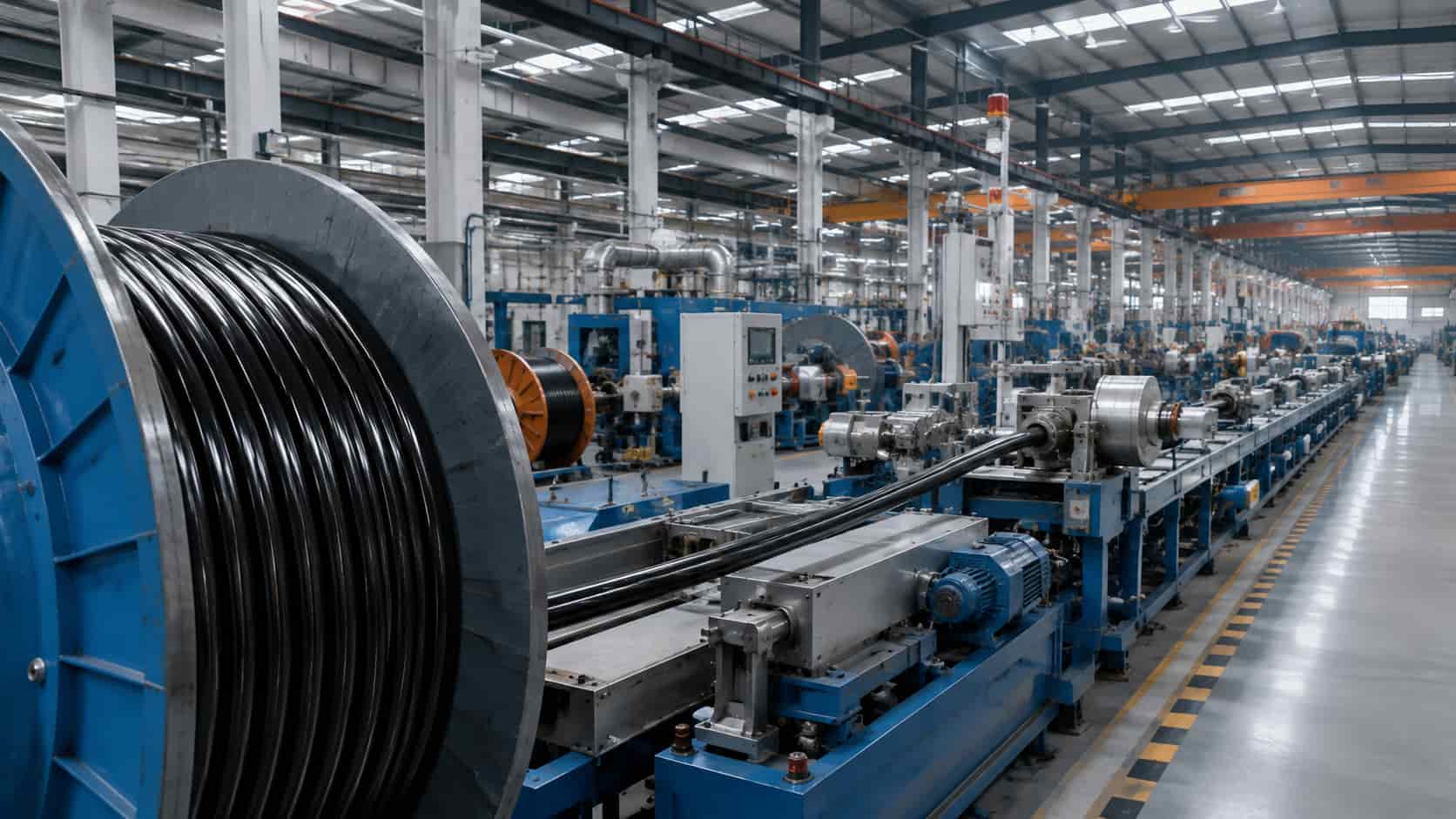
“Manufacturer in China” covers an enormous range of actual businesses — from real factories with their own production lines to trading companies that source from multiple unrelated factories and relabel the product under their own name. Both can deliver a working product, but they carry very different risk profiles for lead time reliability, quality consistency, and technical support. Here’s what to actually check before you commit to a supplier.
Why "manufacturer" vs "trading company" matters
A genuine manufacturer controls its own production schedule, quality process, and raw material sourcing — which means more predictable lead times and someone directly accountable if something goes wrong. A trading company is essentially a middleman: they may offer a wider catalog and lower minimum order quantities, but they have less direct control over the factory’s schedule, and quality issues can get lost in a longer communication chain between you, the trading company, and the actual factory.
How to verify factory vs trading company
A few direct ways to check: ask for a video call or live factory tour rather than accepting photos alone, since stock photos can be reused by multiple trading companies claiming the same facility; ask specific questions about production capacity and equipment that a trading company representative typically can’t answer in detail; check whether the company name on the business license matches the name on test reports and certifications; and search the company’s export history and registered manufacturing licenses, which are often publicly searchable through customs and business registries.
Certifications and test reports
A real manufacturer should be able to produce specific, verifiable test documentation without hesitation. Our cable certifications checklist covers exactly what to ask for and how to tell a real type test report from a generic compliance statement.
Production capacity and lead time transparency
Ask specific questions: what’s the current production backlog, how many production lines does the specific cable type you need run on, and what happens if your order needs to be prioritized. Vague or evasive answers to capacity questions are a common sign you’re dealing with a trading company that doesn’t actually control the production schedule they’re quoting.
Sample and small-batch order policies
A supplier confident in their product quality should be willing to provide samples or accommodate a smaller trial order before you commit to full project volume, particularly for a new relationship. Reluctance to do this, or pricing samples at a level designed to discourage the request, is worth treating as a caution flag.
Communication and technical support responsiveness
Before ordering, test the relationship with a technical question that requires real engineering knowledge to answer well — not just a pricing request. How quickly and how specifically they respond is often a good indicator of whether you’ll get useful support if a technical issue comes up mid-project.
A simple red-flags checklist
Be cautious of: reluctance to provide a factory video call or verifiable production details; certifications that can’t be matched to a specific, checkable test report; vague answers about production capacity and lead times; unwillingness to provide samples or small trial orders; and pricing that’s significantly below every other quote you’ve received, which often signals either a quality shortcut or a trading company undercutting on a product they don’t fully control.
Where Kexingyu Power fits in
We manufacture our cable products in-house rather than trading third-party stock, with production capacity, certifications, and technical support available for direct verification. Browse the full range on our Cables & Wiring Systems page.
Evaluating a Cable Manufacturer
Common questions from international buyers evaluating a cable manufacturer or supplier in China for the first time.
01 Is it always a bad idea to work with a trading company?
Not necessarily. A capable trading company may provide value through a broader product range, lower minimum order quantities, consolidated purchasing and export coordination. The important point is to know whether you are dealing with a manufacturer or an intermediary, because production control, technical communication, pricing transparency and responsibility for quality may differ.
02 Should I request a live factory video call before ordering?
For a meaningful project or first order, a live factory video call is a practical verification step. Ask the supplier to show the production lines, raw-material storage, testing laboratory, finished-goods area and current production activity. A live walkthrough is more useful than relying only on edited promotional videos or factory photographs.
03 Is a much lower cable price always a warning sign?
Not always, but a significant price difference should be investigated before the quotation is accepted. Confirm that conductor material, conductor cross-sectional area, insulation thickness, sheath compound, voltage rating, armor construction, standards and testing requirements are identical across all quotations. A lower price may reflect a different specification rather than a genuine saving.
04 How can I verify a cable manufacturer's export experience?
Ask for recent shipping documents, project references and customer information that can be independently verified where confidentiality allows. Buyers may also review business registration records, certification-holder details and available customs or trade databases. Make sure the exporting company, factory name and certificate holder are clearly connected rather than assuming that similar company names represent the same organization.
Recent Posts

Voltage Stabilizers vs UPS: Do You Need Both?
Voltage Stabilizers vs UPS: Do You Need Both? One device fixes how high or low the voltage is; the other fixes whether there is voltage

Energy Storage for Data Centers: A Growing Backup Power Option
Energy Storage for Data Centers: A Growing Backup Power Option Batteries have always backed up data centers in the form of UPS strings. Grid-scale BESS
Thermal Runaway in Lithium Batteries: What BESS Buyers Should Understand
Thermal Runaway in Lithium Batteries: What BESS Buyers Should Understand How thermal runaway starts, how it propagates, and which evidence buyers should require before approving