
Why FAT Testing Matters When Buying Switchgear
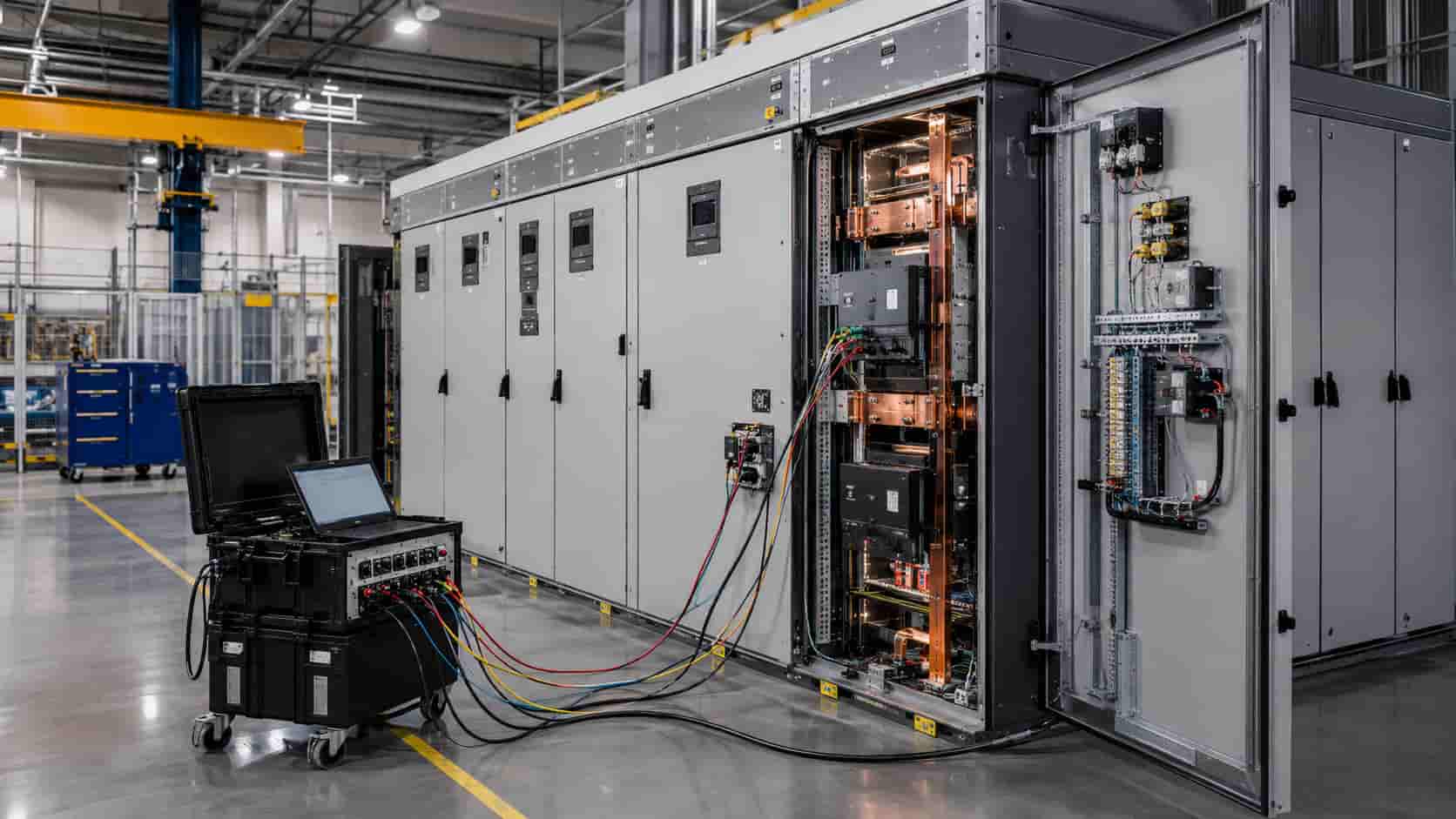
A proper Factory Acceptance Test catches problems while they're still cheap and easy to fix — before the equipment ever leaves the factory.
Introduction
FAT — Factory Acceptance Test — comes up constantly in switchgear procurement discussions, and it’s easy to treat it as a formality to check off rather than understand what it actually verifies. Our switchgear manufacturer checklist mentions FAT as one item to confirm; this article goes deeper into what a proper FAT actually covers and why it’s worth insisting on.
What FAT actually is
A Factory Acceptance Test is a structured verification process performed on the actual switchgear unit — or a representative sample from a production batch — before it ships from the factory. It confirms the specific equipment being delivered was built correctly and functions as intended, which is a different question from whether the design itself is compliant with a standard.
What a proper FAT covers for switchgear specifically
A thorough FAT typically includes: visual and dimensional inspection confirming the equipment matches the approved drawings; dielectric (insulation resistance and high-voltage withstand) testing; mechanical operation testing of breakers, disconnectors, and interlocks to confirm they operate correctly and safely; complete wiring verification against the approved schematic, checking every connection point; and functional testing of protection relays and any control/monitoring systems to confirm they respond correctly to simulated fault conditions.
Why skipping FAT costs more later
A wiring error, a mechanical interlock that doesn’t engage correctly, or a relay setting that wasn’t properly configured are all far cheaper and faster to fix on a factory floor, with full access and testing equipment, than after the unit has been shipped, installed, and is sitting in a switchroom halfway through commissioning. Problems caught at FAT are a documented finding and a factory fix; problems caught in the field are a project delay, and sometimes a safety incident.
Witnessed vs unwitnessed FAT
An unwitnessed FAT is conducted by the manufacturer alone, with results provided as a report. A witnessed FAT — either by the buyer’s own representative, the EPC contractor, or an independent third-party inspector — involves someone observing the test in person or via live video. For critical or high-value orders, witnessed FAT is worth the additional coordination, since it removes any question about whether the reported results reflect what was actually tested.
What documentation you should receive
A complete FAT package should include the test procedure followed, recorded results for each test performed, any deviations found and how they were resolved, and sign-off documentation. This is distinct from the type test reports covered in our IEC 62271 standard explainer — type testing verifies the design meets the standard, while FAT verifies your specific unit was built and functions correctly. Both matter, and they’re not substitutes for each other.
Where Kexingyu Power fits in
Every switchgear assembly we manufacture goes through a documented FAT process before export, with witnessed testing available on request. Browse the full range on our Switchgear & Distribution page.
FAT Testing for Switchgear
Common questions from EPC contractors, engineers and project buyers deciding how much Factory Acceptance Testing involvement their switchgear project requires.
01 Is FAT the same as the type testing required by IEC 62271?
No. Type testing demonstrates that a switchgear design can meet the applicable standard requirements under defined test conditions. FAT, by contrast, is performed on the equipment supplied for a specific project to verify workmanship, assembly, wiring, mechanical operation and specified functions before shipment. Type-test evidence and project FAT therefore provide different forms of assurance and should not be treated as interchangeable.
02 Do I need to travel to the factory to witness switchgear FAT?
Not necessarily. Depending on the project requirements, FAT may be witnessed in person, remotely by live video, by an appointed third-party inspector or completed by the manufacturer with a formal test report. Remote witnessing can be practical for international projects, but the test procedure, camera coverage, measurement visibility, documentation and acceptance process should be agreed before the FAT begins.
03 What happens if FAT identifies a problem with the switchgear?
The deviation should be recorded against the approved FAT procedure or acceptance criteria, investigated and corrected before shipment. The affected test should then be repeated where necessary, with the corrective action and final result documented in the FAT records. One of the main purposes of FAT is to identify manufacturing, wiring, configuration or functional issues while the equipment is still at the factory and can be corrected efficiently.
04 Is an unwitnessed FAT report sufficient for switchgear acceptance?
It can be sufficient when permitted by the project specification and when the manufacturer has a credible quality-control and test documentation process. For critical, high-value or technically complex projects, customer or third-party witnessing can provide additional assurance. The decision should be based on project risk, contractual requirements and the level of confidence already established in the manufacturer's testing system.
Recent Posts

Energy Storage for Data Centers: A Growing Backup Power Option
Energy Storage for Data Centers: A Growing Backup Power Option Batteries have always backed up data centers in the form of UPS strings. Grid-scale BESS
Thermal Runaway in Lithium Batteries: What BESS Buyers Should Understand
Thermal Runaway in Lithium Batteries: What BESS Buyers Should Understand How thermal runaway starts, how it propagates, and which evidence buyers should require before approving

Switchgear Lead Times in 2026: A Buyer’s Planning Guide
Switchgear Lead Times in 2026: A Buyer’s Planning Guide Realistic timelines vary significantly by voltage class and type — here’s how to plan procurement without