
Common Causes of Cable Failure in Industrial Installations
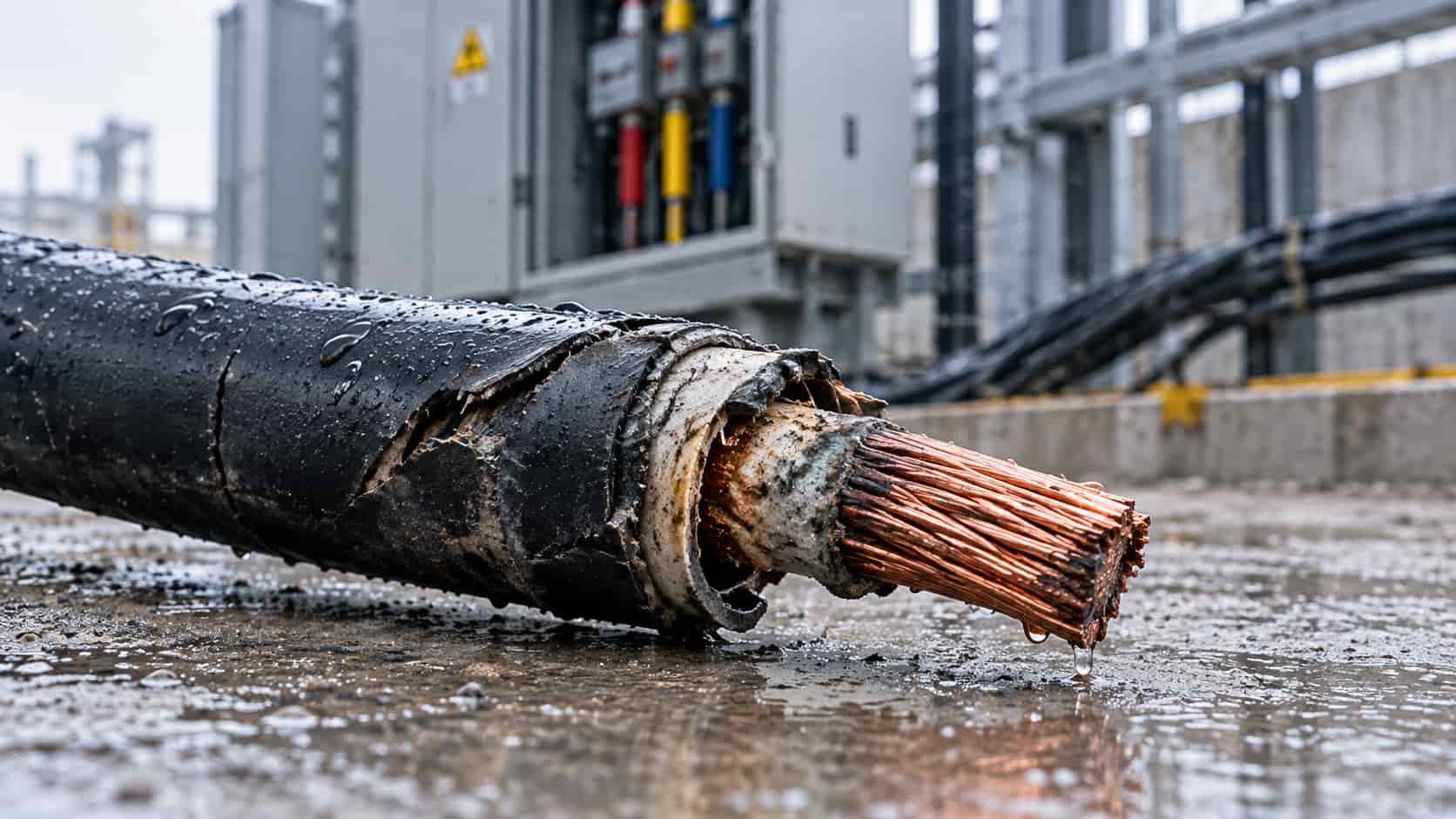
Most cable failures trace back to one of a handful of root causes — most of them preventable at the specification or installation stage.
Introduction
Cable failures rarely happen without warning signs, and they even more rarely happen for reasons that couldn’t have been anticipated at the specification or installation stage. Understanding the common root causes helps you catch these issues before they become an unplanned outage or, worse, a safety incident.
Overheating and overload
The most common cause of premature cable failure is sustained operation above the cable’s rated temperature — often from undersizing, inadequate derating for ambient conditions or cable grouping, or load growth beyond what the original design anticipated. Repeated thermal stress degrades insulation over time, eventually leading to breakdown. Getting sizing right at the specification stage, covered in our cable sizing guide, is the single most effective way to prevent this failure mode.
Insulation degradation over time
Beyond thermal stress, insulation can degrade from prolonged UV exposure in outdoor installations, moisture ingress over time, chemical exposure in industrial environments, and simple age-related material breakdown. This is why matching insulation type and jacket material to the actual installation environment — not just the electrical requirements — matters as much as getting the voltage and current rating correct.
Mechanical damage
Physical damage from impact, crushing, excessive bending below minimum bend radius, or rodent activity is a common and often preventable failure cause. This is exactly the risk that armored cable is designed to mitigate — see our armored vs unarmored cable guide for when that added protection is worth specifying.
Improper termination and connections
A cable is only as reliable as its weakest connection point. Loose terminations create resistance and localized heating that can fail long before the cable itself would. Improperly terminated armor on armored cable, incorrect glanding, and inadequate torque on termination lugs are all common, entirely preventable installation errors that lead to field failures.
Water ingress
Moisture entering through damaged sheathing, poorly sealed terminations, or inadequate ingress protection at connection points is a leading cause of failure in outdoor and underground installations specifically. This is one of the reasons XLPE insulation, with its better moisture resistance compared to standard PVC, is preferred for direct burial and outdoor applications.
Manufacturing defects and substandard materials
Not every failure traces back to installation or environment — inconsistent insulation thickness, substandard copper purity, or corners cut on jacket material during manufacturing can all cause premature failure regardless of how correctly the cable was specified and installed. This is why verifying a supplier’s manufacturing credentials and test documentation matters as much as the technical specification itself — see our guides on evaluating a cable manufacturer and confirming real certification before you order.
How to reduce failure risk at the specification stage
Size cable correctly for actual load, run length, and installation conditions rather than rough estimates; match insulation and jacket materials to the real environmental exposure; specify armored cable where mechanical risk is present; verify manufacturer certifications and test documentation before ordering; and ensure installation follows manufacturer termination and grounding specifications exactly, particularly for armored and high voltage cable.
Where Kexingyu Power fits in
We manufacture cable to IEC and GB standards with full test documentation, and our technical team can help confirm specification against your actual installation conditions before you order. Browse the full range on our Cables & Wiring Systems page.
Cable Failure Prevention
Common questions from facility managers and engineers investigating, troubleshooting and preventing power cable failures.
01 What is the most common cause of power cable failure?
Sustained overheating is one of the most common causes of premature cable failure. It can result from undersized conductors, excessive load, inadequate temperature or grouping derating, poor ventilation or unsuitable installation conditions. Repeated thermal stress gradually degrades the insulation until electrical breakdown occurs.
02 Can a cable fail even if it has never been overloaded?
Yes. A correctly loaded cable may still fail because of mechanical damage, water ingress, excessive bending, poor jointing, loose terminations, chemical exposure, insulation deterioration or a manufacturing defect. Cable sizing is important, but installation quality and environmental protection are equally important to long-term reliability.
03 How can I determine whether a failure was caused by a manufacturing defect?
Determining the root cause usually requires a documented failure analysis by a qualified laboratory or cable specialist. The investigation may examine the conductor, insulation, screens, sheath, joints and failure location, together with operating and installation records. Repeated premature failures from the same production batch should be documented and formally raised with the supplier.
04 Should cable joints and terminations be inspected periodically?
Yes. Joints, glands and termination points are common locations for localized heating caused by loose connections, poor contact, incorrect torque or deteriorating components. Periodic visual and thermal inspections can identify abnormal temperatures before they develop into insulation damage, equipment failure or an unplanned shutdown.
Recent Posts
Voltage Stabilizers vs UPS: Do You Need Both?
Voltage Stabilizers vs UPS: Do You Need Both? One device fixes how high or low the voltage is; the other fixes whether there is voltage
Energy Storage for Data Centers: A Growing Backup Power Option
Energy Storage for Data Centers: A Growing Backup Power Option Batteries have always backed up data centers in the form of UPS strings. Grid-scale BESS
Thermal Runaway in Lithium Batteries: What BESS Buyers Should Understand
Thermal Runaway in Lithium Batteries: What BESS Buyers Should Understand How thermal runaway starts, how it propagates, and which evidence buyers should require before approving