
How Long Does a BESS Last? Cycle Life and Warranty Explained
A BESS does not fail on a single birthday: usable life depends on calendar aging, energy throughput, operating conditions and how the warranty defines end-of-life performance.

Introduction
A battery energy storage system does not have one fixed expiration date. Its usable life is shaped by calendar aging, cycling, temperature, state of charge, power demand, controls and maintenance. The battery cells may gradually lose capacity while the PCS, HVAC, fire-protection equipment and controls follow their own service and maintenance schedules.
For procurement teams, the practical question is therefore not simply “How many years will it last?” A better question is: how much usable energy will the system deliver under our duty cycle, for how long, and what does the supplier contractually guarantee?
What “BESS Life” Actually Means
Several terms are often compressed into one lifespan figure, even though they describe different things:
Design or service life is an engineering planning assumption for the complete system. Calendar life describes degradation with time, including periods when the battery is barely used. Cycle life counts charge-discharge use under stated conditions. Warranty life is the contractual period during which defined defects or performance shortfalls may qualify for a remedy. End of life is usually a capacity threshold—not an abrupt failure.
A system can remain operational after reaching its end-of-life capacity threshold, but it may no longer meet the contracted energy or runtime requirement. That distinction matters when sizing reserve margin, planning augmentation and calculating project economics.
Calendar Aging vs Cycle Aging
Lithium-ion batteries age even when they are not cycling. Calendar aging is strongly influenced by time, cell temperature and average state of charge. Long storage or standby periods at high temperature and very high SOC can consume life without adding useful energy throughput.
Cycle aging is associated with charge and discharge. Its rate depends on depth of discharge, C-rate, temperature, SOC window and cumulative energy throughput. Two sites with the same number of operating days can therefore experience very different degradation.
A reliable life model needs the real dispatch profile: expected cycles or MWh per day, seasonal temperature, charge and discharge power, dwell time at high or low SOC, and required reserve. Generic cycle counts cannot replace this project data.
Why “6,000 Cycles” Is Not Enough
A cycle-life claim is meaningful only with its test conditions. For example, a result stated at 25°C, 0.5C, 90% depth of discharge and 70% remaining capacity is not directly comparable with a result measured at another temperature, C-rate, depth of discharge or 80% remaining capacity.
Buyers should also ask how partial cycles are counted. In a simplified equivalent-full-cycle approach, two 50% discharges may total approximately one full cycle, but the exact supplier algorithm can account for SOC range and other factors. Energy throughput in MWh is often a clearer commercial limit than an isolated cycle number.
The Factors That Shorten BESS Life
High cell temperature accelerates aging and increases the importance of uniform cooling. Repeated high-power operation can add heat and electrochemical stress. Deep cycling generally consumes more life per event than shallow cycling, while long dwell periods near extreme SOC can also be harmful.
Pack imbalance, blocked HVAC filters, sensor drift, failed auxiliaries and poorly tuned controls can turn a reasonable operating plan into a harsher cell environment. Preventive maintenance and remote monitoring are therefore part of life management, not merely operating expenses.
The application must match the design basis. A system priced for occasional peak shaving may not carry the same warranty if it is later dispatched for multiple cycles per day or continuous high-power grid services.
How BESS Warranties Are Usually Structured
A product or workmanship warranty covers defined defects in supplied equipment. A performance or capacity warranty addresses remaining usable energy or power over time. The latter may be limited by years, cycles, cumulative throughput—or whichever limit is reached first.
Availability, round-trip efficiency and response-time guarantees may be separate from the battery capacity warranty. They also need clear boundaries: metering point, excluded planned maintenance, grid outages, auxiliary consumption and data-quality rules.
Do not accept “10-year warranty” as a complete specification. Request the degradation curve, operating envelope, measurement procedure, exclusions and remedy. A shorter document is not necessarily a simpler risk.
| Warranty item | What it tells you | What the buyer should verify |
|---|---|---|
| Calendar term | How long coverage runs from shipment, commissioning or another defined date. | The exact start date, commissioning deadline and whether delays reduce coverage. |
| Cycle limit | The maximum warranted cycles under a stated test or operating profile. | Depth of discharge, C-rate, temperature, SOC limits and the definition of one cycle. |
| Energy throughput | The cumulative discharged or charged energy allowed during the term. | Whether AC or DC energy is counted, the metering point and whether time or throughput expires first. |
| Capacity retention | The minimum remaining usable capacity at specified milestones or end of warranty. | Beginning-of-life baseline, test conditions, measurement tolerance and auxiliary-load treatment. |
| Operating envelope | The temperature, SOC, power and environmental limits required for coverage. | Whether the intended duty cycle and site climate remain inside every limit. |
| Remedy | What the supplier will do if warranted performance is not met. | Repair, module replacement, credit or pro-rated compensation; labor, freight and downtime responsibility. |
| Augmentation | Whether extra modules are planned to maintain contracted usable energy. | Who pays, when capacity is added and whether future modules remain compatible. |
What Buyers Should Check in the Warranty
First, confirm the capacity baseline. Is it nameplate DC energy, commissioned DC capacity, or AC-deliverable usable energy after SOC limits and conversion losses? Then confirm how capacity will be tested: power level, temperature, rest period, meter accuracy and permitted correction factors.
Second, compare the warranty with the intended duty cycle. The dispatch forecast should fit inside limits for throughput, cycles, C-rate, temperature and SOC. Ask how software updates or changes to the energy-management strategy affect coverage.
Third, read the remedy. A replacement promise may apply only to defective modules and may exclude labor, transport, cranes, downtime or site access. Pro-rated credits can be materially different from restoring contracted capacity.
Finally, check reporting and claim requirements: data retention, remote connectivity, maintenance records, notification windows, transferability and the party authorized to perform repairs.
Augmentation and End-of-Life Planning
Projects that must deliver a fixed usable MWh for many years may be oversized at the start or augmented later. These approaches shift cost and risk differently. Initial oversizing adds capital immediately; augmentation depends on future module availability, compatibility, controls integration and safe installation.
The contract should state whether augmentation is included, who pays for it and how mixed-age modules will be managed. Space, cabling, fire zones, HVAC capacity and PCS limits should be considered before the site is built.
End-of-life planning should also address repowering, second-life suitability where technically and legally appropriate, and compliant recycling or disposal. These activities are separate from the battery warranty unless explicitly included.
How to Compare Two Supplier Offers
Normalize both offers to the same duty cycle and site conditions. Compare usable AC energy at beginning of life and at warranty milestones, not only cell nameplate capacity. Put calendar term, cumulative throughput, capacity retention, efficiency assumptions, availability scope and included service on one sheet.
Then model the energy delivered over the contract period and the cost of expected augmentation. A higher initial capacity or a stronger remedy can be more valuable than a lower price paired with narrow operating limits.
Conclusion
BESS life cannot be reduced to one cycle count or one warranty year. Procurement decisions should connect degradation assumptions, real operating conditions, usable capacity, throughput limits and contractual remedies.
Ask every supplier to show the conditions behind the headline figures. When two offers are normalized to the same duty cycle and end-of-warranty requirement, lifecycle value becomes much easier to compare—and future capacity shortfalls are less likely to become an unexpected project cost.
Frequently Asked Questions
There is no universal number. Project life depends on cell chemistry, climate, duty cycle, thermal management and maintenance. Many projects are planned around a decade or longer, but the guaranteed period and remaining capacity must come from the project-specific warranty.
No. A cycle is defined by the supplier's counting method and operating conditions. Partial cycles may be accumulated as equivalent full cycles, so daily operation does not always equal one full cycle per day.
Design life is an engineering expectation under stated assumptions. Warranty life is the contractual coverage period and includes conditions, limits, exclusions and remedies. They should never be treated as interchangeable.
It usually means the system or battery is expected or warranted to retain that percentage of a defined beginning-of-life capacity under specified test conditions. It does not necessarily mean the battery stops working at that point.
Often yes, through planned augmentation, but compatibility, controls, safety review, available space and supplier support must be addressed at the design stage. Mixing modules of different ages or generations requires engineering approval.
Examples include operation outside temperature, SOC, power or throughput limits; missed maintenance; unauthorized modifications; improper storage; and inadequate site utilities. The signed warranty and operating manual control.
Recent Posts

Energy Storage for Data Centers: A Growing Backup Power Option
Energy Storage for Data Centers: A Growing Backup Power Option Batteries have always backed up data centers in the form of UPS strings. Grid-scale BESS
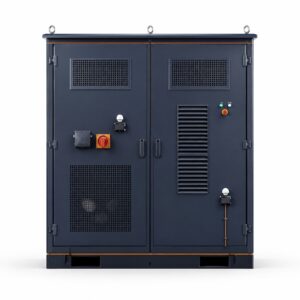
Thermal Runaway in Lithium Batteries: What BESS Buyers Should Understand
Thermal Runaway in Lithium Batteries: What BESS Buyers Should Understand How thermal runaway starts, how it propagates, and which evidence buyers should require before approving
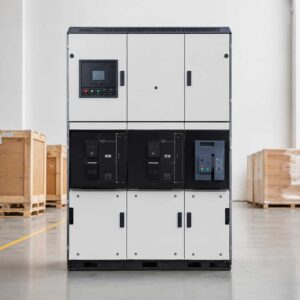
Switchgear Lead Times in 2026: A Buyer’s Planning Guide
Switchgear Lead Times in 2026: A Buyer’s Planning Guide Realistic timelines vary significantly by voltage class and type — here’s how to plan procurement without