
What Does OEM and ODM Mean for Power Equipment Buyers?
Two acronyms decide who owns the design behind the nameplate on your switchgear—and the difference shapes price, lead time and risk for the whole life of the equipment.
Introduction
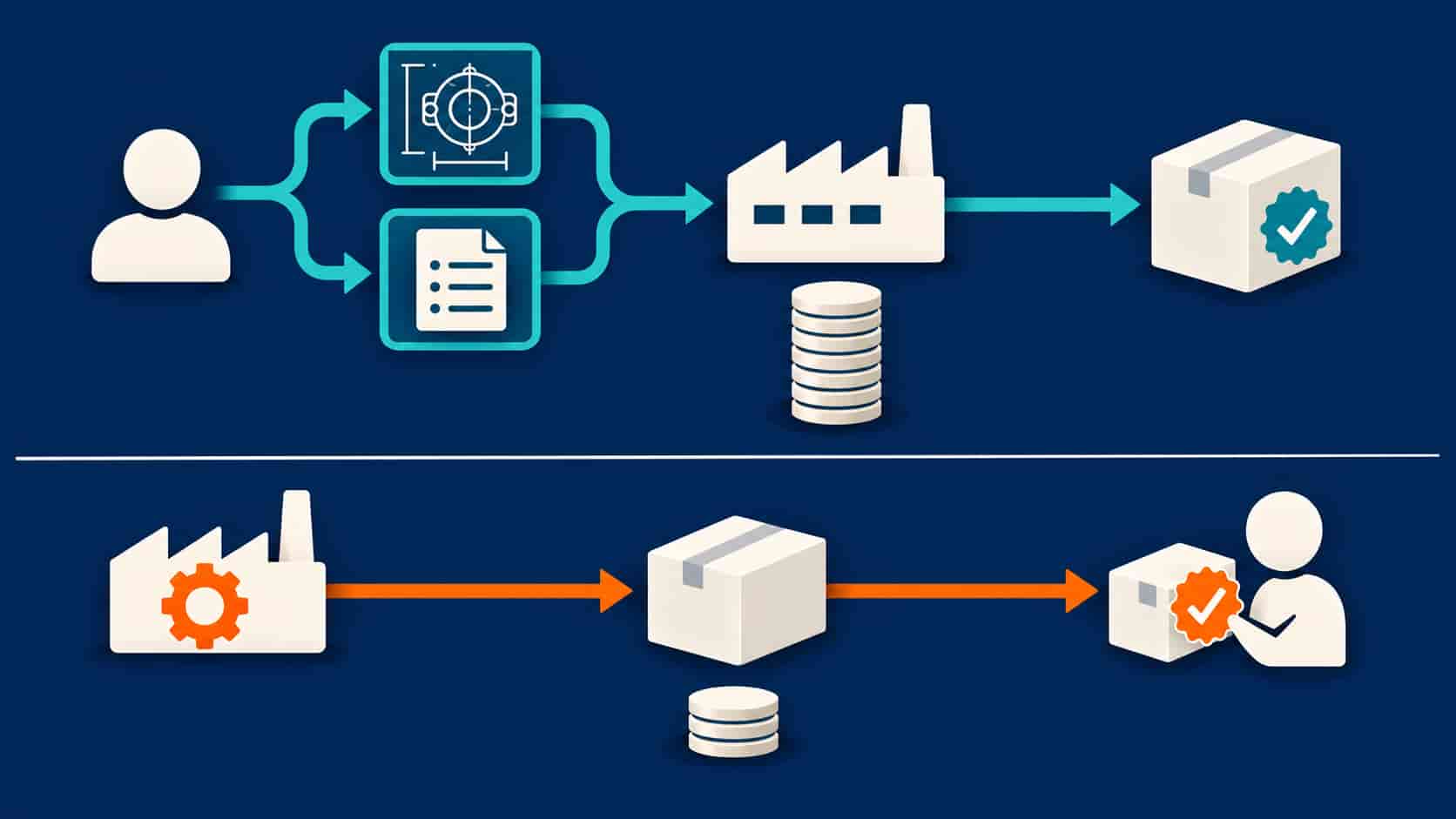
OEM and ODM are two of the most used and least understood terms in cross-border equipment trade. An original equipment manufacturer, in the way buyers use the word, builds products to a customer’s own design and puts the customer’s brand on them. An original design manufacturer offers a finished product of its own, which the customer brands and sells or installs as if it were theirs. Both routes end with your name on the nameplate; what differs is everything underneath it—who drew the drawings, who owns the type tests, and who carries the design risk when something behaves unexpectedly.
The distinction matters because power equipment is not apparel or phone cases. A rebranded ring main unit or distribution transformer carries type-test evidence, grid codes, warranty terms and a service life measured in decades. If the design behind the badge is not documented to your specification, you may find that the certificate you were shown belongs to a different variant, or that the manufacturer who built your “own brand” panel also quoted it to your competitor at a lower price. Buyers who clarify the model before the purchase order avoid most of these surprises; buyers who assume them inherit them.
This guide explains both models as they actually operate in the power equipment industry—for switchgear, transformers, LV boards, inverters and the rest of the transformer and substation families—then compares them side by side, maps which buyer situations fit which model, and lists the contract points that keep either arrangement safe.
OEM: Your Design, Their Factory
In an OEM arrangement, you bring the engineering. The factory receives your drawings, specifications, bill of materials and test requirements, and manufactures against them. Your brand goes on the nameplate, the manuals and the packaging. The factory’s job is production discipline—materials to spec, workmanship to standard, tests to protocol—not design creativity. This is the model most panel builders and larger EPCs use when they have a house design that they want manufactured at scale, or when a client’s specification is specific enough that no catalogue product fits.
The strength of OEM is control. You decide the busbar layout, the protection brand, the cable entry direction, the paint colour and the nameplate wording, because every one of those decisions lives on a drawing that you own. The costs are equally real: engineering time on your side, tooling and setup charges, longer first-delivery lead times, and the responsibility for design errors—because when a design you supplied fails to perform, the factory built exactly what you asked for.
ODM: Their Design, Your Brand
In an ODM arrangement, the manufacturer offers an existing, usually certified, product platform. You select a model, agree on configuration and branding, and the product ships with your name on it. This is how many distributors and regional wholesalers enter the switchgear, inverter or BESS business without employing a single design engineer: the platform exists, the type tests exist, the production line runs every day. You are buying the right to put your label on a proven design.
The economics reward volume and speed. Because the platform is standard, first deliveries are fast, minimum order quantities are moderate, and the factory amortizes its design cost across many customers. The trade-offs sit in differentiation and dependency: the same platform may be available to other buyers under other brands, the factory may restrict which internal components you may change, and the design documents may never leave the factory. An ODM deal is fundamentally a licensing and supply agreement, not an engineering contract.
The Two Models Side by Side
The table below puts the operating differences in one view. Most disputes in rebranded equipment trace back to one of these rows being assumed rather than written down.
| Aspect | OEM (Your Design) | ODM (Their Design, Your Brand) |
|---|---|---|
| Design ownership | Buyer's drawings and specifications; factory builds to them | Factory's platform; buyer brands and configures within limits |
| Engineering effort | On the buyer's sideâdesign, prototyping, review cycles | Mostly on the factory's sideâbuyer selects and approves |
| Time to first delivery | Longerâdesign, samples and fresh certification take months | Shorterâplatform exists, certification largely done |
| Minimum order | Higherâtooling and setup spread across your volume | Lowerâstandard platform produced in batches |
| Certification trail | You commission and own the type-test programme for your design | Type tests belong to the factory's platform and design |
| Exclusivity | Strongâyour drawings are yours under NDA | Weak by defaultâthe same platform may serve other brands |
Reading the table, the practical pattern emerges: OEM buys control with time and engineering effort; ODM buys speed and a proven design with differentiation and dependency. Neither is the better model in the abstract. The right question is what your project actually needs you to own.
Which Model Fits Which Buyer
Buyer situations cluster into recognizable groups, and each points to a default answer. Utilities and EPC contractors with a client-specific specification almost always end up in OEM territory, because the specification—busbar ratings, protection schemes, clearance and creepage requirements—is the deliverable. Distributors building a regional brand move fastest with ODM, adopting a factory platform under their own name while volumes are still small. Panel builders sit in between: they may buy standard enclosures and switchgear lineups as ODM products while designing the custom control sections themselves, a hybrid that works well when you know exactly which layers to own. The scenarios below map the common cases.
| Scenario | Better Fit | Why |
|---|---|---|
| Utility or EPC with a client-specific specification | OEM | The specification is the deliverable; only your design can satisfy it |
| Distributor building an own brand in a new market | ODM | Speed and proven certification beat early differentiation |
| Panel builder adding a standard feeder lineup | ODM | Standard platform complements the custom sections they already design |
| Reseller testing demand with small volumes | ODM | Low MOQ and no tooling exposure while the market is unproven |
| Operator with a repeatable in-house design | OEM | Volume justifies tooling; the design is a long-term asset |
One warning applies to the hybrid cases: when you buy part of a lineup as ODM and part as OEM, the interface between the two—the busbar connection, the protection communication, the earthing arrangement—belongs to nobody by default. Assign it in writing, ideally in the same document that defines the FAT protocol. The guide to custom control cabinets covers similar interface questions for buyers who mix standard and bespoke sections.
The Certification Question
Certification is where rebranding bites hardest, and it deserves its own scrutiny. Type-test certificates attach to a design and a testing laboratory, not to a brand. In an OEM deal you commission the tests for your design, so the trail is clean. In an ODM deal, the certificate you are shown names the factory’s design—and possibly the factory, or an earlier licensee, as the holder. Before signing, ask exactly which document list will be delivered with your branded units: type-test reports, routine test reports per serial number, and a statement connecting the nameplate brand to the certified design. Reputable factories handle this routinely; hesitation is information. Buyers of transformers should run this check against the questions in the transformer manufacturer due diligence checklist, and switchgear buyers against the switchgear manufacturer checklist, because both walk the certificate-to-design trace in detail.
Quality control follows the same logic. Whether the design is yours or theirs, the equipment that ships must still pass a witnessed FAT against the agreed protocol—and in an ODM deal the FAT is your only structural opportunity to see the product before it wears your name. Treat it as non-negotiable; the switchgear FAT guide explains what a proper witness visit covers.
Contract Points That Protect Either Model
The legal skeleton differs less than buyers expect. Whichever route you take, six clauses do most of the protective work: draw up the branding rules (nameplate content, logo placement, manual language), define change control (who may modify what, with what notice), state the certification deliverables per shipment, fix warranty and spare-parts responsibility by name rather than by assumption, and—in ODM deals—agree how long your brand licence survives if the supply relationship ends. In OEM deals add an NDA with real teeth and an ownership clause for drawings and tooling. None of this is exotic; most factories accept these terms daily. What separates buyers is not negotiating skill but whether anyone remembered to ask.
When Neither OEM Nor ODM Is the Answer
Both models assume you want your brand on the equipment. Some buyers do not. A contractor executing a one-off project with no brand ambitions usually does best buying a standard certified product outright—no rebranding, no licensing clauses, just the factory’s name and warranty. At the other extreme, an operator whose product is genuinely novel may need joint development, where the factory contributes manufacturing engineering to a design neither party owns alone. Forcing a novel design into an OEM box, or a standard requirement into an ODM box, produces friction that neither contract template was built to absorb. The honest first question is therefore not “OEM or ODM?” but “do I need my brand on this at all?”
A Practical Checklist Before You Commit
- Decide what you actually need to own: the brand only, the design, or both—and write it down before first contact
- Ask which platform an ODM product is based on, and how many other brands buy it today
- Require type-test reports traceable to the design being sold, plus routine reports per serial number
- Put nameplate, manual and packaging rules in the contract, not in an email thread
- Book a witnessed FAT regardless of model—it is the last independent look before your name goes on
- Agree spare-parts supply and technical support for a defined number of years after delivery
Conclusion
OEM and ODM are not competing quality tiers; they are two different answers to the question of who owns what. OEM gives you the drawings and the risks that come with them. ODM gives you a running start on someone else’s drawings and a dependency that must be managed contractually. Power equipment punishes vague arrangements over a long service life, so the model you choose should be visible in every document that follows: the specification, the certificates, the nameplate and the warranty.
Buyers who settle the ownership question early move faster everywhere else—supplier selection, FAT planning, and after-sales support all inherit their terms from this decision. If the analysis here has clarified which side of the line your next project sits on, the next step is the factory-level due diligence guides on this site, which pick up exactly where the branding question ends.
Frequently Asked Questions
Recent Posts

Power Cable Warranty Terms: What to Demand and What to Watch For
Power Cable Warranty Terms: What to Demand and What to Watch For Quick Answer: A usable warranty names its scope, duration, evidence standard, exclusions and
The Cable Sample Approval Process: What to Test Before Mass Production
The Cable Sample Approval Process: What to Test Before Mass Production Quick Answer: Sample approval tests the supplier’s claims while changes are still cheap —
Cable Drum Packaging for Export: Specs, Marking and Transit Protection
Cable Drum Packaging for Export: Specs, Marking and Transit Protection Quick Answer: Export packaging is a technical specification: drum size for weight and bend radius,