Food and Packaging Machinery: Washdown-Rated Motion Cable
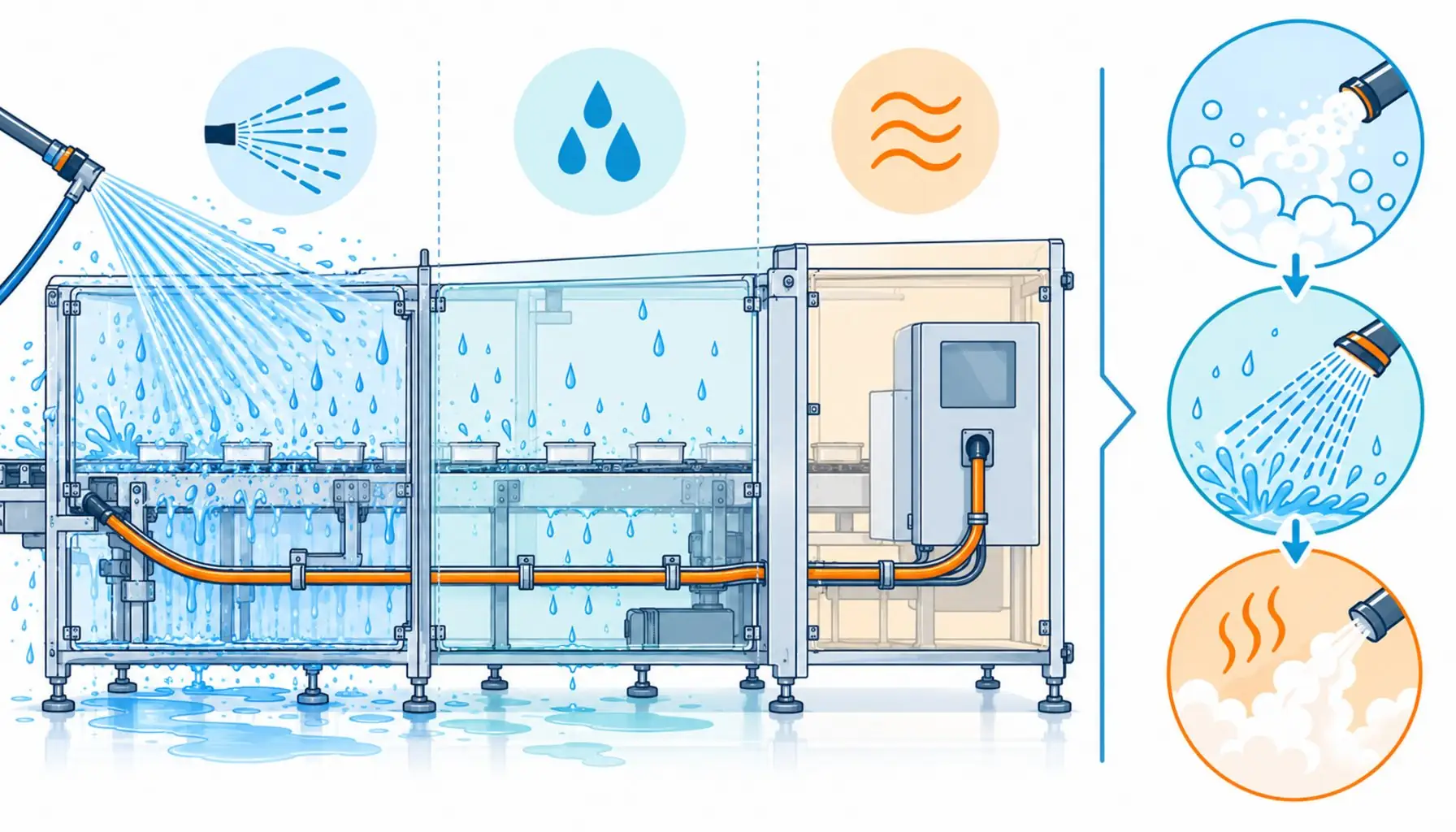
Quick Answer: A washdown machine flexes its cable all day, then attacks it with caustic foam, hot water and steam at every shift change — jacket chemistry, smooth routing and hygienic mounting decide whether the cable survives the cleaning.
Food and packaging plants run a two-shift war against their own equipment. During production, the machines flex their motion cables through millions of cycles — form-fill-seal jaws, case packers, tray lines, robot pick cells. Between shifts, the same machines are flooded, foamed and rinsed with cleaning chemicals chosen to destroy organic residue, which means they also destroy everything organic-adjacent — including most cable jackets. A motion cable that would last eight years in a dry factory can fail in eighteen months under washdown duty, and the failure is usually written in the jacket chemistry, not in the copper. This guide covers what washdown duty actually does to cable — caustics and acids, hot water and steam, fats and oils, and the hygiene design rules that decide where cable may even be routed — and how to specify motion cable that survives both halves of the plant’s day.
Introduction
Washdown is a duty cycle, not an option. Regulatory hygiene rules require food-contact surfaces and their surroundings to be cleaned at defined frequencies, and the cleaning methods are aggressive by design: caustic soda-based foams, acidic descalers, sanitizers, then rinse water at 60-80°C, sometimes steam. The cable harness on a packaging machine lives through that chemical cycle every single shift while also being the most motion-exposed wiring on the machine. The jacket that shrugs off machine oil may swell in caustic foam; the compound that survives caustic may crack in acidic sanitizer; a smooth jacket that sheds both may embrittle under daily hot-water cycling. Chemistry selection is therefore the core of washdown cable specification — more than flex rating, more than price.
The motion side still applies, of course. The chain and robot duty physics are the same as anywhere else — the failure patterns of common cable failure causes all appear in packaging plants too. But washdown adds a rule that surprises machine builders the first time: the cable is part of the hygiene design, and where it is routed and how it is mounted can disqualify an otherwise perfect cable.
What the Cleaning Cycle Does to a Cable
Each stage of the washdown cycle attacks a different property. Knowing which stage does what turns jacket selection from guesswork into matching.
Caustic foam. The workhorse of food cleaning attacks fats and proteins — and hydrolyzes many polymer systems. Jackets that resist caustics well tend to be certain polyurethanes and polyolefins; plasticized PVC is a frequent casualty, stiffening and discoloring shift by shift.
Acidic descaler. Used against mineral scale, acids attack the compounds that survive caustics. A jacket must be chosen against the full chemical sequence, not the dominant cleaner — plants that alternate caustic and acid cycles need compounds rated for both.
Hot water and steam. Heat accelerates every chemical reaction and drives moisture ingress at cable ends. Temperature-rated compounds and sealed transitions matter here; a gland that passes at room temperature can wick at 80°C rinse water.
Fats, oils and product residues. Animal fats and vegetable oils swell some compounds and feed microbial growth in crevices. Smooth, non-absorbing jacket surfaces are part of the hygiene case, not just a cosmetic preference.
| Zone | Exposure | What Fails in Ordinary Cable | Specification Response |
|---|---|---|---|
| Wet zone (direct wash) | Direct chemical and hot water contact, steam, full flex duty | Jacket hydrolysis, swelling, gland wicking, conductor corrosion at entries | Washdown-rated jackets rated for the full chemical sequence; sealed glands; motion-grade construction |
| Splash zone | Occasional spray, chemical mist, condensation | Jacket discoloration, gradual stiffening, connector contamination | Chemically rated jackets, sealed connectors, drip loops and smooth routing |
| Dry zone | Product dust, occasional cleaning drift, normal duty | Fat and oil contact swelling the wrong compounds | Oil-resistant jackets, standard motion construction, normal routing rules |
| Utility side | Panel and drive enclosures, minimal chemical contact | Only ordinary aging — unless entries let washdown in | Sealed cabinet entries; treat the panel as the chemical boundary |
Jacket Chemistry: The Decision That Outweighs Everything
The practical lesson from packaging plants: specify the jacket against the plant’s actual cleaning sequence, with test evidence. Polyurethane compounds dominate washdown motion cable because they resist caustics, oils and abrasion simultaneously — but PU is not one material, and the formulation differences matter under daily chemistry. Polyolefin and certain TPE compounds cover cases PU handles badly, such as strong acid exposure. PVC, the default jacket of ordinary industrial cable, is the compound most often found failing in washdown duty. The compound decision logic mirrors the sheath chemistry reasoning in the XLPE versus PVC comparison — the right question is never which material is generally better, but which material survives this machine’s specific chemistry and duty.
Evidence closes the gap between assertion and performance. Reputable washdown cable suppliers publish chemical resistance tables against named agents at named concentrations, and the best provide immersion or wipe test data. A plant that hands its supplier the actual cleaning SOP — product names, concentrations, contact times, temperatures — gets jacket selections that survive. A plant that writes only washdown-rated on the RFQ gets the supplier’s interpretation of a word.
Hygiene Design: Where Cable May Go and How It Mounts
Food safety design rules treat anything that can harbor soil as a defect. For cabling, three consequences follow. First, routing: cable runs in product zones should be smooth-surfaced, sloped or vertical where possible, and avoid horizontal shelves where water and residue pool — open cable chains are preferred over closed troughs in wet zones for exactly this reason. Second, mounting: clips, saddles and standoffs should be smooth, sealable and cleanable; threaded or porous mounts in wet zones collect soil and fail audits. Third, ends and transitions: every gland, connector and junction in a wet zone is a moisture path, so sealed glands, drip loops and minimizing connector count in the wet zone are design requirements, not preferences. The broader enclosure and cabinet discipline — sealed entries, positive pressure where justified — follows the same hygiene logic described for industrial control cabinet building, extended with food-specific rules.
Regulatory expectations extend to documentation. Materials in product zones may need food-contact or migration compliance declarations depending on the machinery standard and the customer’s audit regime, and the documentation discipline parallels what regulated buyers apply through the certification checklist process: collect the paper at quotation time, not at audit time.
| Check | What to Pin Down | Why It Decides the Outcome |
|---|---|---|
| Cleaning SOP | Actual agents, concentrations, contact times, temperatures, sequence | Jacket chemistry is selected against this list, nothing else |
| Zone map | Which cable runs sit in wet, splash and dry zones | Requirements scale by zone; blanket specs waste money |
| Motion duty | Chain and robot duty per axis: travel, speed, cycles per day | Flex physics apply inside the foam too |
| Hygiene design | Routing surfaces, mounting hardware, connector count in wet zones | Soil traps fail audits regardless of cable quality |
| Temperature range | Rinse temperature, steam exposure, cold store edges | Hot cleaning cycles and cold rooms both change compound choice |
| Documentation | Chemical resistance data, food-contact declarations, traceability | Audit regimes consume paper; missing documents stop acceptance |
When Washdown Rules Are Not the Answer
Honesty about scope keeps this guide useful. The requirements here address cable on machines that are actually washed — food processing, packaging, pharma filling, and any plant with a documented cleaning regime. They do not cover dry goods handling or secondary packaging in ambient warehouses, where standard industrial motion cable is correct and the washdown premium is waste. Chemical resistance against cleaning agents is not chemical resistance against process chemistry — a brewery and a pickle line wash similarly but their process exposures differ completely. And the plant’s fixed electrical installation, washdown-rated or otherwise, remains governed by building codes and the site engineer of record, not by machine cabling practice. Match the specification to the actual cleaning and process reality, and the cable system stays both compliant and affordable.
RFQ Checklist: What to Send the Cable Supplier
Put the plant’s actual day in writing before quotes come back:
- Cleaning SOP: product names, concentrations, contact times, temperatures, sequence per shift
- Zone map: wet, splash and dry zones with the cable runs in each
- Motion duty per axis: chain or robot geometry, travel, speed, cycles per day
- Product contact profile: fats, oils, acids, sugars the jacket may meet
- Temperature range: rinse and steam temperatures, cold room exposure
- Hygiene design constraints: routing surfaces, mounting style, connector limits in wet zones
- Documentation: chemical resistance data, food-contact declarations, batch traceability
Conclusion
A washdown machine asks its motion cable to survive two opposite duties: constant flexing during production and chemical assault between shifts. The cable that does both is specified from the cleaning SOP outward — jacket chemistry matched to the actual agents, sealed transitions, hygienic routing, and documentation that survives the audit. Get that specification right and the harness outlives the machine’s first mechanical overhaul; get it wrong and eighteen months is a good run.
Kexingyu Cable Group (KXYE) supports food and packaging machinery builders with motion cable constructions selected against real cleaning sequences — chemical resistance evidence, batch traceability and honest duty ratings included. Send your cleaning SOP and machine duty through the RFQ page, and we will quote the jacket against your chemistry, not against a word.