CSA and Canada: Cabling Requirements for Machines Going North
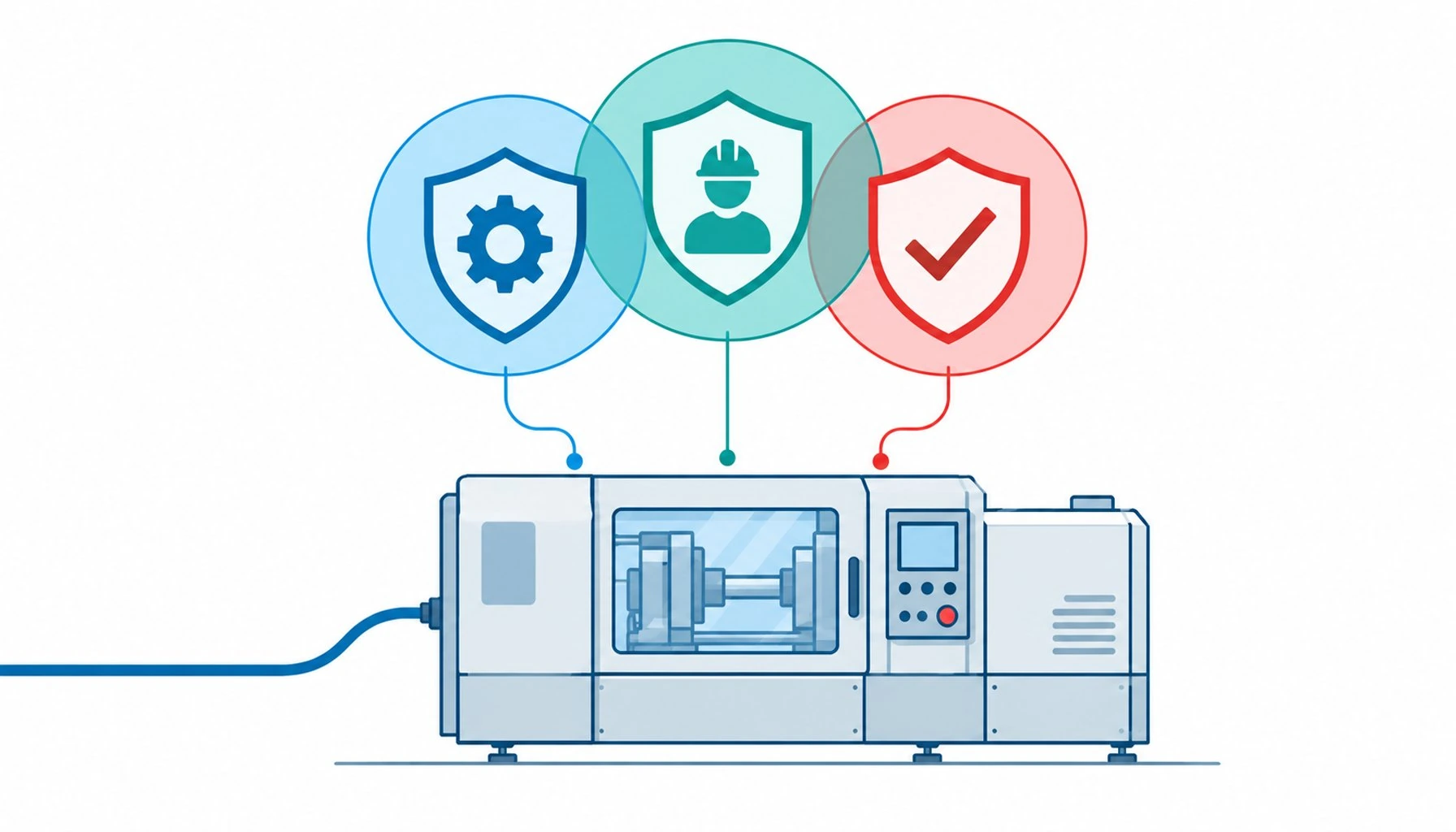
Quick Answer: Canada requires equipment to be approved by a nationally accredited body, and a machine is not approved merely because its components are. Conductors inside need their own Canadian approval or a field evaluation.
Canadian electrical approval looks like the American system with different paperwork, and machine builders treat it that way until the first inspection. Then the differences show up, all of them procedural and all of them expensive to fix after the machine has shipped. Canada approves equipment rather than installations, it insists that component approvals do not add up to a machine approval, and it enforces both through a provincial inspector who has no obligation to be lenient about a foreign marking. For cable, this creates a specific trap: the conductor type that is entirely normal in Europe or the United States may simply not be accepted, and the replacement has to be made before the machine is energised, which means before it arrives.
Introduction
The Canadian Electrical Code sets the rules, and each province adopts it with amendments, so the authority that matters is provincial. Above the code, the approval concept is defined by accreditation: equipment must be certified by a body that the national standards council has accredited, which is why the acceptable marks form a short list rather than an open market. A mark from a body outside that list does not satisfy an inspector, whatever the technical merits of the testing behind it.
For cable, this shapes procurement more than engineering. The construction may be ideal, the test data complete and the price competitive, and the machine can still be held at energisation because the jacket does not carry a mark the province recognises. The broader question of how each market structures this is surveyed in the guide to cable certification checklists, and the Canadian case is the one where the penalty for getting it wrong lands hardest on the schedule.
Approval Means Accredited Certification
The acceptable marks fall into a small family. A Canadian mark from the national association is accepted because it certifies to Canadian standards. A United States testing body’s mark is accepted in Canada only when it carries the Canadian indicator, meaning the product was evaluated to Canadian requirements; the same body’s plain US mark is not. Dual marks covering both countries exist and are increasingly the default for machine builders who sell into both, which removes a class of argument at the point of inspection.
| Mark | Issued by | Accepted where | What it proves |
|---|---|---|---|
| Canadian association mark | National certification body | Any Canadian province or territory | Certification against Canadian standards by an accredited body |
| Canadian-indicator mark from a US body | United States testing organisation | Canada | Evaluation to Canadian requirements, shown by the Canadian identifier in the mark |
| Dual mark covering both countries | Either body | United States and Canada | Both evaluations in one mark, which removes the argument at inspection |
| Plain United States mark | United States testing organisation | United States only | US requirements only; not accepted in a Canadian installation |
| Field evaluation label | Provincially accredited evaluation body | The province where the machine is installed | Equivalent safety documented for that specific assembly |
Why Components Do Not Approve a Machine
The code contains a sentence that foreign builders should read twice: a machine is not approved by reason only that some or all of its component parts are individually approved. The logic behind it is sound. A cabinet full of certified devices can still be wired unsafely, and the assembly-level risks, from bonding continuity to conductor routing to protection coordination, are not properties of any single component.
For cable the sentence is not academic. It means the conductors inside the machine have to be approved to the relevant Canadian standard in their own right, or accepted through a formal evaluation that documents equivalent safety. A machine whose components happen to carry marks is not thereby approved, and the wiring is one of the specific things the sentence is aimed at.
The Standards You Will Actually Specify
Canadian cable standards parallel the American ones closely, and the practical skill is knowing which construction fits which circuit. Thermoset-insulated single conductor types cover panel and equipment wiring where a higher temperature rating is wanted. Thermoplastic types cover general wiring at standard ratings. Portable power cable ratings apply where the cable moves or is handled. Control cable ratings apply to multi-conductor control runs, and armoured constructions serve tray and exposed runs where mechanical protection is required alongside the electrical function. Industrial control equipment and industrial electrical machinery standards sit above these, governing the assemblies that the cable serves.
Two points cause most of the friction. The first is that a European conductor type with an excellent reputation may have no Canadian equivalent approval at all, so substituting before shipment is usually faster and cheaper than requesting a deviation afterwards, and the substitution is a procurement decision that has to be made early. The second is that the machine safety standards, which cover safeguarding and industrial robot systems, add expectations about how safety-related circuits are wired, so the cable serving those circuits cannot be specified purely on ampacity. The control and instrumentation distinction that drives some of these choices is drawn out in the comparison of control and instrumentation cable, and the wider standards landscape across systems is set out in the guide to cable standards across IEC and national systems.
Field Evaluation and Its Schedule
Imported machines usually take the field evaluation route, and its schedule is predictable enough to plan against. Documentation is reviewed first, which typically runs to a couple of weeks and depends entirely on how complete the file is. The on-site evaluation and label take one to two days once the machine is set. The connection authorisation from the provincial authority follows in roughly one to two working weeks. Total elapsed time from arrival to energisation usually falls in the three to six week range, assuming no significant remediation.
Remediation is the variable that turns a milestone into a crisis. A conductor type that is not accepted becomes a rewire in the customer’s plant, and the labour is billed at customer-plant rates while the machine sits idle. Builders who have been through it once design the cable bill of materials around the destination provinces and treat the evaluation as insurance rather than the plan. The documentation that makes the review fast is the same evidence an arrival inspection would want, and the discipline is described in the guide to reading technical documentation and the list of items that travel with an assembly in the guide to cable accessories.
| Decision | Option that avoids delay | Cost of leaving it late |
|---|---|---|
| Marking on every conductor | Specify Canadian or dual-approved constructions from the start | Rewiring in the customer's plant at customer's labour rates |
| Province of installation | Confirm it, since adoption and amendments differ | Evaluation against the wrong expectations, then rework |
| Bonding and conductor colour practice | Follow Canadian conventions or re-identify at terminations | Inspector findings that hold up the connection authorisation |
| Safety circuit wiring | Match the construction to the safeguarding and robot standards | Safety case reopening after installation |
| Documentation package | Assemble drawings, bills of material and declarations before shipping | Two extra weeks of review while the machine waits |
When the Canadian Route Is Not the Answer
Three limits deserve stating. A Canadian mark says nothing about flex endurance, so a continuously moving axis needs its own qualification evidence regardless of how good the marking is. A field evaluation approves a machine, not a design, so a second identical machine needs its own evaluation unless the platform was certified from the start. And approval addresses admissibility rather than suitability: a machine can be fully approved and still run through cables quickly if the cable selection was made on price rather than on duty.
RFQ Checklist: Cable for a Machine Bound for Canada
Send these with the inquiry so the destination requirements are settled before the bill of materials closes:
- The province or territory of installation, and whether the platform will be shipped to more than one
- Whether the machine will be certified as a platform or will rely on field evaluation
- Canadian or dual-approved constructions for every conductor, listed by circuit
- Bonding conductor sizes and colour practice consistent with Canadian convention
- Constructions for safety-related circuits, matched to the safeguarding requirement
- Declarations, test reports and drawings that will be needed for the documentation review
- Lead time for any construction that has to be ordered rather than stocked
Conclusion
Canada rewards builders who treat approval as a design input. The mark matters, the mark has to be the right one, and the components being certified does not certify the machine. None of that is unreasonable, and all of it is knowable months before shipment. The builders who lose time are the ones who discover the conductor requirement when the machine is already standing in a plant in Ontario.
Kexingyu Cable Group (KXYE) supplies control, power and motion cable with documentation prepared for Canadian acceptance, and where a qualified version of a construction is required we source it through our partner arrangements and identify the certificate holder plainly. Send the circuits, the province and the approval route your project will use through the RFQ page, and we will set out which marks are achievable and on what lead time.