
Common UPS Battery Problems and How to Avoid Them
The battery is the only part of the UPS that is quietly dying from the day it is installed—most battery failures are predictable, and most are preventable
Introduction
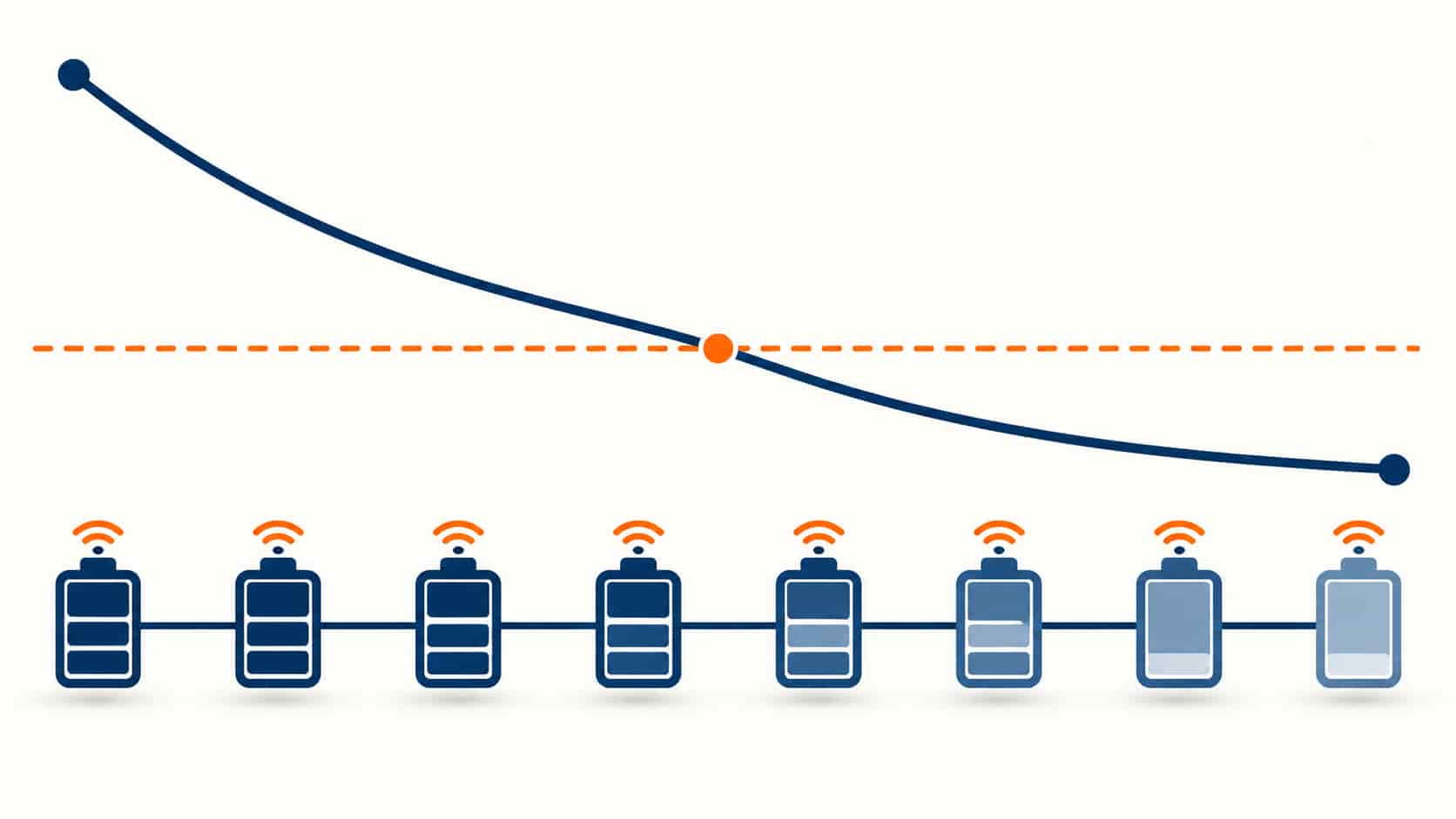
When a UPS fails to do its one job, the post-mortem usually finds the same culprit: the battery. Industry surveys of critical power events put batteries at or near the top of UPS-related failure causes—not because batteries are badly made, but because they are the only component in the cabinet that ages by chemistry from the moment of first charge, that lives at the mercy of the room thermometer, and whose health is invisible until the moment it is needed. Power electronics are engineered to last decades; battery strings are engineered to last years and then be replaced on a schedule the operator must manage.
The good news buried in that statistic is that battery failures are rarely sudden. Sulfation, dry-out, thermal runaway, connection degradation—almost every failure mode in the catalog develops a trail of measurable warnings months in advance: rising impedance, drifting temperature, shrinking tested runtime. The facilities that suffer battery surprises are, overwhelmingly, the facilities that were not measuring. The difference between a battery program that works and one that does not is less about money than about habits: temperature, recharge discipline, testing cadence, and attention to the monitoring the hardware already provides.
This guide catalogs the failure modes, explains the two forces that drive most of them—heat and undercharge—and lays out the prevention and testing habits that keep a battery string honest through its service life. For the wider power context, start from our data center power equipment range.
Why Batteries Are the UPS's Weakest Link
The asymmetry is structural. Rectifiers, inverters and controls are solid-state electronics with design lives measured in decades and failures that mostly announce themselves instantly. Batteries are electrochemical devices whose capacity is consumed by use, by idleness, and by every degree of ambient heat—their “design life” is a statistical promise made at a reference temperature that most battery rooms do not enjoy. A five-year VRLA warranty is a statement about chemistry and temperature, not a countdown clock that runs identically everywhere.
The second asymmetry is visibility. A failing rectifier trips alarms; a failing battery block just quietly loses capacity while its float voltage—the number most systems display—continues to look perfectly normal. Float voltage says almost nothing about the ability to deliver current, which is the entire job. That gap between what is easy to measure and what actually matters is where battery surprises come from, and it is why serious battery programs measure impedance and conduct discharge tests rather than reading the charger faceplate.
The Problem Catalog: What Goes Wrong and Why
Most UPS battery trouble falls into a short list of modes, each with recognizable early warnings:
| Problem | What Happens | Typical Root Cause | Early Warning Sign |
|---|---|---|---|
| Sulfation | Capacity fades; runtime shrinks steadily | Chronic undercharge; discharges never followed by full recharge | Rising impedance; discharge tests short of target |
| Dry-out (VRLA) | Internal resistance climbs; heat sensitivity grows | Sustained high temperature or overcharge gasping water loss | Impedance trend; case bloating on inspection |
| Thermal runaway | Heat-feedback loop; gassing, swelling, possible fire | Heat plus overcharge feeding each other unchecked | Block temperature rising while charger output maxes |
| Plate corrosion | Progressive capacity loss; eventual open cell | Age; float voltage set above specification | Impedance rising first in the oldest blocks |
| Loose connections | Local heating; arcing risk at high current | Torque drift, vibration, thermal cycling | Thermography hotspots at terminals and links |
| Cell imbalance (Li-ion) | Usable capacity limited by weakest cell | Cell aging spread; BMS balancing limits | Per-cell voltage spread widening in BMS data |
| Charger/rectifier fault | Battery never truly recharges after an event | Rectifier component failure or mis-set charge curve | Recharge time growing after each discharge |
Two patterns connect the list. First, most modes are accelerated by the same two forces—heat and incomplete recharging—so a facility that controls those two variables has already prevented most of the table. Second, every mode leaves a measurable trail before it becomes an outage, which makes the monitoring and testing habits in the next sections genuinely preventive rather than merely diagnostic.
Heat: The Accelerant of Every Failure
Temperature is the master variable of battery life. The industry rule of thumb—born in lead-acid chemistry and still broadly true—holds that every 10°C above the 20–25°C reference roughly halves VRLA service life. A string warranted for five years at 25°C may deliver two and a half at 35°C, which is the summer reality of many battery rooms without dedicated cooling. Heat accelerates the parasitic reactions—water loss, grid corrosion—that consume a lead-acid cell from the inside; the battery does not fail because something broke, but because chemistry simply ran faster.
Li-ion changes the risk profile without escaping the physics: its calendar life is longer and less temperature-sensitive, but its failure mode of concern—thermal runaway—is more energetic, which is why reputable Li-ion UPS batteries carry battery management systems with per-cell monitoring, thermal sensing and shutdown logic, plus certifications for the transport and installation context. For both chemistries the prescriptions rhyme: keep the room in the low twenties, eliminate hotspots (a string beside a hot wall or under a lighting fixture ages locally faster), and treat any battery that runs consistently warm as a finding, not a quirk.
Prevention: The Habits That Keep a String Honest
Battery care is a short list of habits executed on a cadence:
| Habit | What It Prevents | Cadence |
|---|---|---|
| Thermal controlâroom at 20â25°C, no local hotspots | Most aging modes at once | Continuous monitoring; thermography yearly |
| Full recharge after every discharge, per the chemistry's curve | Sulfation and chronic undercharge | Every discharge event |
| Impedance/ohmic testing with trend tracking | Sulfation, dry-out, corrosion caught early | Quarterly to yearly by criticality |
| Torque verification and IR thermography of connections | Connection heating and arcing | Yearly |
| Capacity (controlled discharge) test | The only true measure of delivered runtime | Yearly or per warranty terms |
| Review of BMS/monitoring alarms by a named person | Every early warning actually reaching a human | Continuous, reviewed weekly |
The recharge habit deserves emphasis because it is the most commonly violated. Every discharge—even a brief one on a healthy system—consumes chemistry that must be restored on the manufacturer’s recharge curve; strings repeatedly exercised and never fully recharged accumulate sulfate that hardens into permanent capacity loss. Sites that test frequently by discharging need a recharge protocol to match, and the charger’s output capacity must be checked against that protocol: a charger that needs three days to restore what the test took ten minutes to remove is quietly scheduling the next failure.
Monitoring: From Voltage Guessing to Impedance Truth
The monitoring ladder determines how early problems become visible. String-level float voltage and current—the default—detects gross failure only. Impedance or conductance testing adds the metric that trends with real health: each block is measured, compared against its baseline and its neighbors, and the outliers are flagged months before they would fail a discharge. Per-block continuous monitoring systems take this further, watching temperature and impedance around the clock and catching the fast modes—like a heating connection—between scheduled tests.
Li-ion’s BMS shifts the model: because cell-level voltage and temperature are instrumented natively, the battery reports its own state, and the buyer’s task is to verify what the BMS actually exposes—per-cell data to the site’s monitoring platform, not just a green LED. For both chemistries, the organizational point outweighs the technical one: alarms without a named responder are decoration. The most effective battery programs pair modest instrumentation with a weekly review habit, because every failure mode in the catalog was visible to someone’s dashboard first.
Replacement Planning
Battery replacement should be a scheduled project, not an emergency purchase. The inputs are already in hand: warranty terms with their temperature conditions, impedance trends per block, and the discharge-test history. Strings should be replaced when measured capacity approaches the design minimum—typically 80% of rated—rather than when the calendar says so; conversely, a string testing at 100% at year six of a five-year warranty has earned an extension with evidence. Staggered replacement across strings or phases avoids replacing an entire bank in one outage window, though mixing very old and new blocks in one electrical string is its own imbalance risk—the standard practice is replacement by complete string.
Plan the logistics the way any heavy equipment project is planned: disposal and recycling of the old batteries is a regulated activity with real costs in most jurisdictions; new strings arrive heavy and need a route; and the installation window is a planned UPS event with the load on bypass or on the redundant path. Where the duty is growing or the chemistry choice is open, the replacement event is the natural moment to revisit the battery decision—our guide to battery energy storage systems covers when a storage-tier design, rather than another string of UPS batteries, is the better answer for the facility’s next decade.
When the Battery Is Not the Problem
A discharge test that falls short points at the string—but the string is not always guilty. Chargers and rectifiers that undercharge produce batteries that test like sulfated ones; a temperature-sensing charge compensation drift can overcook a healthy string; and a monitoring system miscalibrated after a controller swap can report problems that live only in its own firmware. Before replacing batteries, verify the charging side: recharge voltage at the string terminals, current share across parallel strings, and the charger’s response to a real temperature signal.
Configuration is the other quiet culprit. Strings sized for an older load profile running against today’s bigger draw will test short-of-target while every block is perfectly healthy; runtime expectations set at nameplate rather than at real load produce false alarms; and systems transferred between sites or controllers often inherit settings from a different battery design entirely. The diagnostic discipline is the same as anywhere else in power engineering: verify the system around the component before condemning the component.
Battery Specification Checklist
When buying batteries—standalone strings or inside the UPS quotation—pin these down:
- Chemistry and design life: VRLA or Li-ion, float design life at stated temperature, cycle life if cycled.
- Monitoring scope: what the BMS or monitoring reports—string, block or cell level—and where the data lands.
- Protection and safety: thermal sensing, runaway protections for Li-ion, applicable installation and transport certifications.
- Warranty terms: duration, pro-rata structure, and the temperature and cycling conditions that keep it valid.
- Recharge profile: the required recharge curve and time, and whether the UPS charger actually delivers it.
- Footprint and structure: weight per block, rack or cabinet arrangement, seismic requirements, replacement route.
- Test protocol: acceptance discharge test at commissioning, and the routine testing the supplier recommends.
- End-of-life plan: replacement cadence, staggered strategy, and recycling/disposal responsibilities in the supply contract.
Conclusion
UPS batteries fail by catalog, and the catalog is readable: heat and incomplete recharging accelerate most of the modes, every mode leaves measurable warnings first, and the habits that prevent surprises—thermal control, recharge discipline, impedance trending, real discharge tests—are neither exotic nor expensive. The facilities that lose load to batteries are, almost without exception, the facilities that were not looking.
Build the habits, verify what the monitoring actually reports, and plan replacement as a project with logistics and evidence behind it. When you are ready to specify batteries or the UPS around them, the team at KXY E-Power Group supplies UPS systems with battery monitoring and support programs built for the whole service life—not just the warranty card.
Frequently Asked Questions
Recent Posts
Voltage Stabilizers vs UPS: Do You Need Both?
Voltage Stabilizers vs UPS: Do You Need Both? One device fixes how high or low the voltage is; the other fixes whether there is voltage
Energy Storage for Data Centers: A Growing Backup Power Option
Energy Storage for Data Centers: A Growing Backup Power Option Batteries have always backed up data centers in the form of UPS strings. Grid-scale BESS
Thermal Runaway in Lithium Batteries: What BESS Buyers Should Understand
Thermal Runaway in Lithium Batteries: What BESS Buyers Should Understand How thermal runaway starts, how it propagates, and which evidence buyers should require before approving