
What Is XLPE Cable and Why Is It Used for Power Distribution?
A plain-language explainer on XLPE insulation, how it's built, and why it's the default choice for most modern power cables.
Introduction
If you’ve spent any time looking at power cable datasheets, you’ve almost certainly seen the term “XLPE” attached to the insulation type. It’s one of the most common specifications in modern power cable manufacturing, but the term itself doesn’t explain much on its own. Here’s what XLPE actually is, how it’s made, and why it has become the default choice for power cables from low voltage building wiring up through high voltage transmission lines.
What does XLPE stand for?
XLPE stands for Cross-Linked Polyethylene. It starts as standard polyethylene — the same base material used in a wide range of plastics — but goes through a chemical or physical process called cross-linking, which bonds the polymer molecules together into a three-dimensional network rather than individual loose chains. This structural change is what gives XLPE its distinct performance advantages over standard, non-cross-linked polyethylene or PVC insulation.
How XLPE cable is constructed
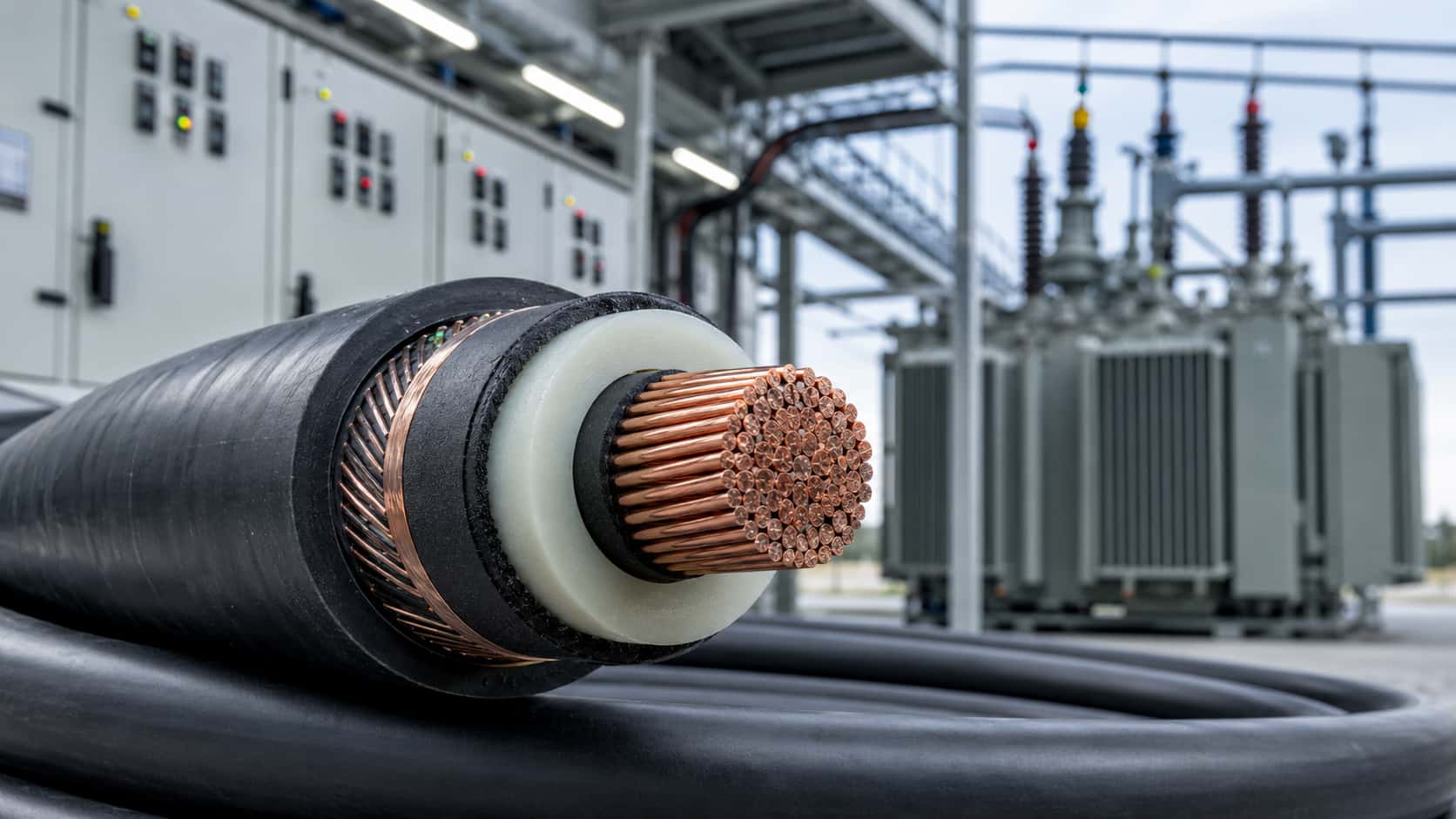
A typical XLPE power cable is built up in layers: a conductor at the core, usually copper or aluminum; the XLPE insulation layer wrapped around the conductor; in many medium voltage designs, a semi-conductive screen layer on either side of the insulation to manage electrical stress evenly; and an outer sheath, commonly PVC or a specialized compound depending on the application, that provides mechanical and environmental protection. For multi-core cables, individual insulated cores are twisted together before the outer sheath is applied.
Why XLPE is preferred over PVC for power cables
The cross-linked molecular structure gives XLPE several practical advantages that matter directly to buyers and engineers specifying cable for a project. It has a significantly higher maximum operating temperature — typically rated for continuous operation at 90°C compared to around 70°C for standard PVC insulation, which allows XLPE cables to carry more current for a given cross-sectional size. It also has better short-circuit temperature tolerance, higher resistance to moisture and chemical exposure, and generally lower dielectric losses, which matters more as voltage class increases.
This is why XLPE has become the standard insulation choice for medium voltage cable in particular — the electrical stress and thermal performance requirements at 6kV and above make PVC insulation a poor fit, while XLPE handles this range reliably and cost-effectively.
Common applications for XLPE cable
XLPE insulated cable is used across a wide range of applications: low and medium voltage power distribution in industrial and commercial buildings, underground and direct-burial power feeders where moisture resistance matters, substation and switchgear interconnections, solar and renewable energy projects, and increasingly in submarine and long-distance transmission cable due to its dielectric performance at scale. If a project involves anything above basic low voltage building wiring, there’s a strong chance the specification calls for XLPE insulation somewhere in the design.
What to check when specifying XLPE cable
A few things worth confirming when ordering XLPE cable, beyond just the voltage rating: which standard the cable is manufactured to (IEC, GB, BS and others have different specific requirements), the conductor material and cross-sectional area appropriate for your load and run length, whether a semi-conductive screen layer is required for your voltage class, and the outer sheath type appropriate for the installation environment — direct burial, cable tray, or exposed outdoor conditions each call for different sheath specifications.
Where Kexingyu Power fits in
We manufacture XLPE insulated power cable across low and medium voltage classes to IEC and GB standards, alongside the switchgear, transformers and other equipment those cables typically connect to — so a single project specification can be sourced as one coordinated order rather than piecing it together across multiple suppliers.
XLPE Cable Selection Basics
Common questions from project buyers specifying XLPE insulated power cables for industrial, commercial and utility applications.
01 Is XLPE cable more expensive than PVC cable?
XLPE insulated cable may have a higher initial price than a comparable PVC insulated cable, but insulation type should not be compared on price alone. XLPE is typically rated for continuous operation at up to 90°C, compared with around 70°C for standard PVC, and may provide higher current-carrying capacity for the same conductor size. Buyers should compare conductor material, cable size, voltage rating, installation conditions and total project cost.
02 Can XLPE cable be installed underground?
Yes. XLPE insulated cables are widely used for underground and direct-burial power distribution because of their resistance to moisture, heat and chemical exposure. However, the complete cable construction must suit the installation environment. The outer sheath, armour, water-blocking design and mechanical protection should be selected according to soil conditions and the applicable cable standard.
03 What voltage ranges are XLPE cables used for?
XLPE insulation is used across low-voltage, medium-voltage and high-voltage power cable systems. It is especially common for medium-voltage cables at 6kV and above, where thermal performance, dielectric properties and electrical stress control become more important. The required insulation thickness and screening structure depend on the cable's rated voltage and manufacturing standard.
04 What should buyers check when specifying XLPE cable?
Confirm the rated voltage, conductor material, conductor cross-sectional area and applicable manufacturing standard, such as IEC, BS or GB. Buyers should also specify whether conductor and insulation screens are required, the appropriate outer sheath or armour construction, installation method, ambient conditions, minimum bending radius and compatible termination accessories.
Recent Posts
Voltage Stabilizers vs UPS: Do You Need Both?
Voltage Stabilizers vs UPS: Do You Need Both? One device fixes how high or low the voltage is; the other fixes whether there is voltage
Energy Storage for Data Centers: A Growing Backup Power Option
Energy Storage for Data Centers: A Growing Backup Power Option Batteries have always backed up data centers in the form of UPS strings. Grid-scale BESS
Thermal Runaway in Lithium Batteries: What BESS Buyers Should Understand
Thermal Runaway in Lithium Batteries: What BESS Buyers Should Understand How thermal runaway starts, how it propagates, and which evidence buyers should require before approving
One Response