Cable Cross-Sections in mm²: A Conversion Guide for Global Buyers (AWG vs mm²)
Quick Answer: AWG, kcmil and mm² are three languages for the same copper — the size conversion is a fixed table, but ampacity never converts with it. Every international cable transaction crosses this border somewhere: a US specification reads 4/0, the Chinese factory quotes 120 mm², and someone has to decide whether those are the same cable. Usually they are close, sometimes they are not, and the difference lives in a handful of rounding decisions that most buyers make by guesswork. This guide replaces the guesswork with the actual chart and the rules around it.
Introduction
Cross-section is the single most quoted number in any cable RFQ, and also the most quietly mis-converted. The traps are predictable: AWG steps get coarser as conductors grow, so “one size up” means different things at 12 AWG and at 250 kcmil; Chinese standard sizes skip values American schedules expect; and the ampacity tables behind each size belong to different standards with different assumptions. The conversion itself is honest arithmetic — the trouble starts when the number is used for more than describing copper area. This article gives the chart, the rounding rules, and the boundary at which conversion stops being safe.
Why Two Systems Exist
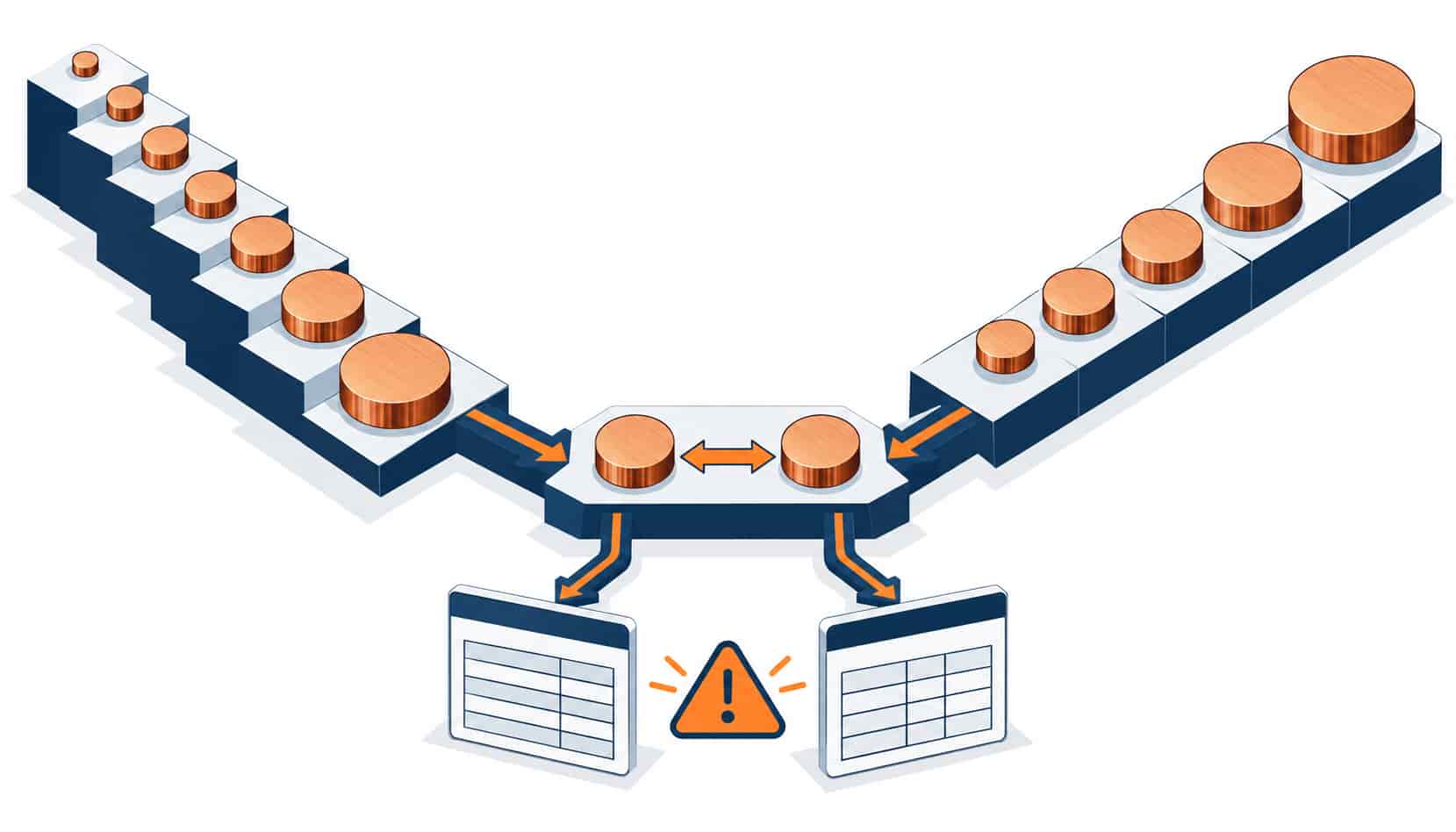
The American Wire Gauge is a historical step system: each gauge number represents a fixed ratio in diameter, which makes area change logarithmically — every three steps halve or double the area, roughly, and the system runs out of sensible numbers before large conductors, handing over to kcmil (thousand circular mils, once MCM) above 4/0. The metric system states conductor area directly in square millimeters and standardizes on a size ladder — 1.5, 2.5, 4, 6, 10, 16, 25, 35, 50, 70, 95, 120, 150, 185, 240, 300 mm² and beyond — chosen around IEC practices. Neither is more correct; they describe the same copper with different conventions, and the Chinese factories in this series manufacture on the metric ladder, which is why the conversion table below matters at every RFQ.
| AWG / kcmil | Exact mm² | Nearest Chinese Standard Size | Buyer Notes |
|---|---|---|---|
| 14 AWG | 2.08 | 2.5 mm² | Round up â 2.08 has no standard home |
| 12 AWG | 3.31 | 4 mm² | Common lighting and outlet conversion |
| 10 AWG | 5.26 | 6 mm² | Round up; never down to 4 |
| 8 AWG | 8.37 | 10 mm² | 8.37 sits between 6 and 10 â take 10 |
| 6 AWG | 13.3 | 16 mm² | 16 is the standard; 13.3 does not exist |
| 4 AWG | 21.2 | 25 mm² | Round up again |
| 2 AWG | 33.6 | 35 mm² | 35 is a Chinese standard the US lacks |
| 1/0 (19.7 kcmil) | 53.5 | 50 or 70 mm² | 53.5 sits between; choice by ampacity, see below |
| 2/0 (26.7 kcmil) | 67.4 | 70 mm² | Close match |
| 3/0 (33.6 kcmil) | 85.0 | 95 mm² | Round up |
| 4/0 (42.4 kcmil) | 107.2 | 120 mm² | The classic feeder conversion |
| 250 kcmil | 126.7 | 120 or 150 mm² | 126.7 â nearest either way; ampacity decides |
| 350 kcmil | 177.3 | 185 mm² | Close match |
| 500 kcmil | 253.4 | 240 or 300 mm² | Between standards; verify by ampacity and drop |
The Rounding Rules That Keep Specs Safe
Three rules cover almost every situation. First, round up for protection: a converted size smaller than the original cannot carry the ampacity the original design assumed, and undersized copper is how converted schedules generate hot terminations — the failure mechanics are the routine entries in our cable failure causes guide. Second, when a converted value sits almost exactly between two standard sizes (53.5, 126.7, 253.4), the decision belongs to the circuit arithmetic — ampacity in the installation conditions and voltage drop — not to habit; the full logic is worked through in our cable size selection guide. Third, state the rounding in the RFQ itself: “350 kcmil, converted to 185 mm²” closes the conversation before it opens, because the certificate and the drum print will then match the schedule by agreement rather than by accident.
What the Number Does Not Convert
Cross-section is the only thing the table converts. Ampacity does not travel with it: NEC tables and IEC tables disagree at the same area because they assume different ambient baselines, conductor temperatures and grouping rules — the standards landscape is mapped in our IEC, GB and BS standards guide. Stranding does not convert either: a “4/0 flexible” request needs a conductor class stated in IEC 60228 terms, and the flexible classes matter as much as the area for termination behavior, as the control and instrumentation cable comparison shows for signal-duty cores. Voltage ratings convert loosely at best — 600 V UL ratings and 0.6/1 kV IEC classes describe different test regimes, and the certification paperwork each destination market expects is its own checklist discipline, and the supplier verification that the drums match the schedule is the one in our power cable manufacturer checklist. Convert the copper; re-derive everything else.
| Typical Circuit | US Practice | Chinese Equivalent | Note |
|---|---|---|---|
| Lighting branch | 14 AWG / 12 AWG | 1.5 / 2.5 mm² | 2.08 and 3.31 round up cleanly |
| Socket outlets | 12 AWG | 2.5 mm² | The workhorse pairing |
| Dedicated appliance | 10 AWG | 6 mm² | 5.26 rounds up to 6 |
| Sub-feeder, small | 6 AWG | 16 mm² | 16 vs 13.3 gives margin |
| Sub-feeder, large | 2 AWG | 35 mm² | 35 has no AWG neighbor |
| Main feeder | 4/0 | 120 mm² | 107 vs 120 â margin, not mismatch |
| Large feeder | 500 kcmil | 240 or 300 mm² | Ampacity and drop pick the rung |
kcmil: The Large-Conductor Language
Above 4/0, American schedules switch to kcmil and the conversion stays linear: one kcmil is 0.0005067 mm², so 250 kcmil is 126.7 mm², 350 is 177.3, 500 is 253.4, 750 is 380, 1000 is 506.7. Chinese standard sizes absorb these with the same rounding rules — 750 kcmil to 400 mm², 1000 kcmil to 500 mm² — but at these sizes the rounding margin is real money and real ampacity, and the circuit arithmetic earns its keep: a 500 kcmil feeder quoted as 240 mm² gives away 13 mm² of copper, quoted as 300 gives 47 extra, and which one is “right” depends entirely on the load, the route and the protection. This is also the range where copper price linkage matters most per drum, so state the converted size before the copper-price formula is agreed.
Export Mapping: Writing the RFQ in Both Languages
The professional move is bilingual specification: write the size in mm² for the factory, keep the original AWG or kcmil in parentheses for the design reviewer, and state the conversion rule applied — “500 kcmil, converted per IEC area to 240 mm², ampacity verified to the destination standard.” Add the conductor class in IEC 60228 vocabulary, and the certification requirements per the destination market. With those elements, the conversion is an agreement instead of a negotiation, and the manufacturer checklist discipline for verifying that the drums match the agreement is the one in our power cable certifications checklist.
When Conversion Is Not the Answer
No conversion table rescues a circuit whose sizing was never done: if the original AWG was itself a guess, converting the guess to mm² just translates the error. Nor does conversion substitute for the destination market’s rules — some jurisdictions demand their own size ladder regardless of origin, and the local inspector wins every argument. And above the largest standard sizes, the honest answer is engineering: busbar, parallel conductors or a redesigned route beat a nonstandard 620 mm² drum that no factory stocks and no standard recognizes. Conversion serves decisions that were already made; it does not make them.
RFQ Checklist: Ordering in Converted Sizes
Make the conversion quotable, so include:
- Both sizes stated: original AWG/kcmil in parentheses, converted mm² as the order size
- Rounding direction and rule: always up, or ampacity-verified at midpoints
- Conductor class per IEC 60228: solid, stranded or flexible
- Ampacity verification standard named: IEC table or destination-market table
- Voltage class restated in IEC terms, not assumed from the UL number
- Core counts per circuit in the metric schedule
- Copper price linkage keyed to the converted mm² size
- Batch test reports with resistance per kilometer on the converted size
- Destination-market certification needs stated up front
Conclusion
AWG, kcmil and mm² are three rulers over one copper, and the conversion between them is a fixed, learnable table — the craft lies in the rounding rules and in knowing that only the area converts. Round up, verify ampacity in the destination standard, write both numbers into the RFQ, and the transatlantic size conversation becomes a one-line agreement instead of a project risk.
Kexingyu Cable Group (KXYE) manufactures on the full metric ladder from 1.5 to 1000 mm² with bilingual size mapping in every quotation, batch resistance test reports, and export-ready documentation — so the copper that arrives matches the number you ordered, in either language.