Johor's Data Center Boom: Cable Demand in Malaysia's Computing Hub
Quick Answer: Johor is one of the world’s fastest-growing data center markets — hundreds of megawatts running, a pipeline roughly double that — and the buildout converts directly into cable demand.
Southern Malaysia has pulled off something unusual: it became a computing hub by geography. Johor sits right across the strait from Singapore, in the corridor where Southeast Asia’s data center demand piles up, and its power-gated land, grid upgrades and cross-border digital economy have made it one of the fastest-growing data center markets tracked anywhere. Industry rankings put its capacity growth near the top globally, with hundreds of megawatts already running and a pipeline roughly twice that under construction. For cable manufacturers and buyers, a boom of that shape means a very specific bill of materials. This guide walks through the demand, the cable scope it creates, and the sourcing route that serves it.
Introduction
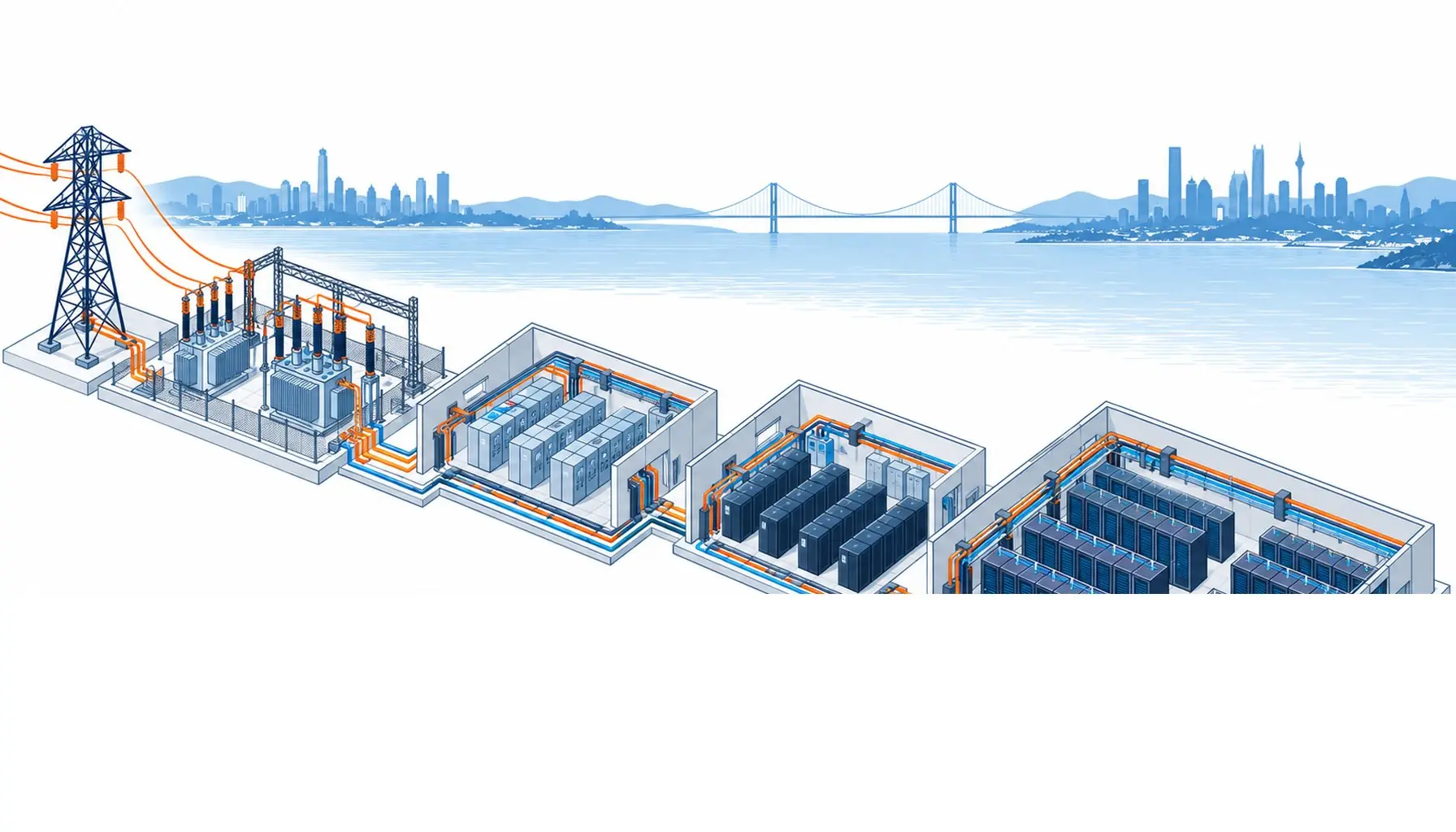
The demand arithmetic is regional before it is local. Southeast Asia’s data center expansion is the fastest-growing corner of a global buildout, tracked in Southeast Asia data center power, and Johor is where that regional demand lands most heavily. Two things help it along: the special economic zone linking it to Singapore, and land-and-power economics its neighbor can’t match. Every megawatt of computing capacity that energizes in Johor drags a fixed tail of electrical infrastructure behind it: intake substations, distribution switchgear, UPS strings, cooling plant, and the cable that ties them all together. That cable comes in MV and LV power families plus the data-carrying cabling inside the halls. So the demand isn’t speculative; it’s proportional. What varies by project is the specification discipline and the supply route, and that’s where buyers earn or lose their margin.
What the Buildout Actually Buys
Walk the power path of a Johor hyperscale hall and the cable scope orders itself. Upstream of everything sits MV feeder cable from the utility intake to the on-site substations: XLPE-insulated MV constructions in the tens-of-kilovolts class, armored where the ducting demands it, sized for feeders that carry megawatts. The engineering distinctions are explained in our MV and LV standards guide. Downstream comes LV distribution cable and busway-adjacent cabling, running from transformers through switchgear to the UPS strings and PDUs. These are short, heavy, derating-sensitive runs, and the sizing and grouping discipline of a proper cable calculation decides both safety and copper cost. Inside the halls you hit the fire-regime layer: LSZH jacketed power cabling and structured cabling, because enclosed spaces make smoke and halogen the design enemy. The material trade-offs are covered in LSZH vs fire-retardant cable. Around the edges, control and instrumentation cabling serves the BMS and electrical monitoring layers. The common thread across all of it: data center cable is specified, not shopped. Each family arrives with standards, test reports and submittal files attached, and a supplier who can’t produce them doesn’t make the shortlist, no matter how sharp the price.
| Demand Driver | Cable Family | Specification Focus |
|---|---|---|
| Grid intake and on-site substations | MV XLPE feeder cable, armored constructions | Voltage class, short-circuit rating, test reports per drum batch |
| Hall distribution and UPS strings | LV power cable, UPS and PDU interconnection | Ampacity with derating, fire performance, consistent batch quality |
| Enclosed halls and galleries | LSZH jacketed power and structured cabling | Halogen-free and smoke performance certificates, not catalog claims |
| Monitoring, BMS and controls | Control and instrumentation cable, shielded pairs | Shielding integrity, insulation ratings, documentation discipline |
The Supply Route: Imports, Credentials and Submittals
Johor’s demand outruns what local supply can absorb at hyperscale schedules, and the corridor imports accordingly. That routes the sourcing conversation through Malaysia’s market-access gate: the certification and import disciplines this series maps in the Malaysia guide, operating on shipments that data center schedules make unforgiving. Three practices separate the suppliers who deliver from the ones who just quote. First, credential honesty at RFQ. Certificate status has to be disclosed and verifiable per construction, because a submittal file that gets assembled after the goods land is the classic schedule killer. Second, batch discipline. Hyperscale halls pull large, repeatable volumes of the same construction, so the buyer’s verification — drum identity, test reports, consistent markings — becomes the quality system that survives an audit; the same four-check logic is detailed in the power cable certifications checklist. Third, program thinking. A Johor campus builds in phases over years, and the supplier who prices phase one below cost to win phase five understands the game; the long-horizon partnership logic sits in one coordinated power equipment supplier. The equipment context matters too, because cable orders ride alongside switchgear and transformer lead times. A program that coordinates the family moves on one schedule, which is the one-stop logic of one-stop power equipment sourcing.
| Stage | Action | Classic Trap |
|---|---|---|
| Design review | Cable scope mapped per hall phase; standards and fire regime fixed | Cable treated as a leftover line after equipment selection |
| RFQ | Certificate status and batch-test evidence required per construction | Price-only comparison across unequally documented suppliers |
| Submittal | Test reports, certificates and datasheets assembled before approval | Submittal started after goods production |
| Delivery | Phased volumes, drum identity and markings reconciled per consignment | Batch mixing across phases without traceability |
| Expansion | Framework terms for repeat constructions across campus phases | Re-tendering identical scopes and re-paying learning costs |
When a Boom Is Not the Whole Answer
Two cautions keep the opportunity honest. First, a demand boom is not a quality waiver. The fastest-growing market attracts the widest supplier field, and the difference between a hall that energizes on schedule and one that stalls at inspection usually comes down to documentation and batch consistency, not the price list. Second, a construction boom is not a schedule waiver. Global cable inputs, copper above all, set the calendar as much as any factory does. The programs that land on time are the ones that ordered against realistic lead times with the copper-linked pricing understood; the sourcing-mistake catalog in international power equipment sourcing mistakes works as the checklist of what not to repeat. Johor rewards prepared buyers. It doesn’t forgive improvised ones.
RFQ Checklist: Johor Data Center Lines for the RFQ
Put the program’s questions in writing:
- Cable scope mapped per phase: MV feeders, LV distribution, LSZH halls, controls
- Certificate and test-report status disclosed per construction, verifiable at RFQ
- Batch test reports and drum traceability commitments written into the contract
- Fire-performance evidence — certificates, not catalog claims — for hall cabling
- Phased delivery schedule with lead times anchored to the construction calendar
- Framework terms for repeat volumes across campus phases considered early
- Equipment coordination — switchgear, transformers, UPS — planned on one timeline
Conclusion
Johor’s data center boom is the most concentrated cable demand story in Southeast Asia: gigawatt-scale ambition, phase-built campuses, and a bill of materials that stays standard across hyperscale. MV feeders, LV distribution, fire-conscious hall cabling, controls. The buyers who win in this market treat cable as specified infrastructure with credentials attached, not as a commodity line. The suppliers who win prove it, batch by batch, across phases.
Kexingyu Cable Group (KXYE) supplies data center programs with the full power-cable scope: IEC-aligned MV and LV constructions, LSZH hall cabling, batch test reports and submittal-ready documentation, all coordinated on the schedule the campus builds to.