Choosing a Cable Supplier for Kyrgyzstan: Products, Documents and Order Terms
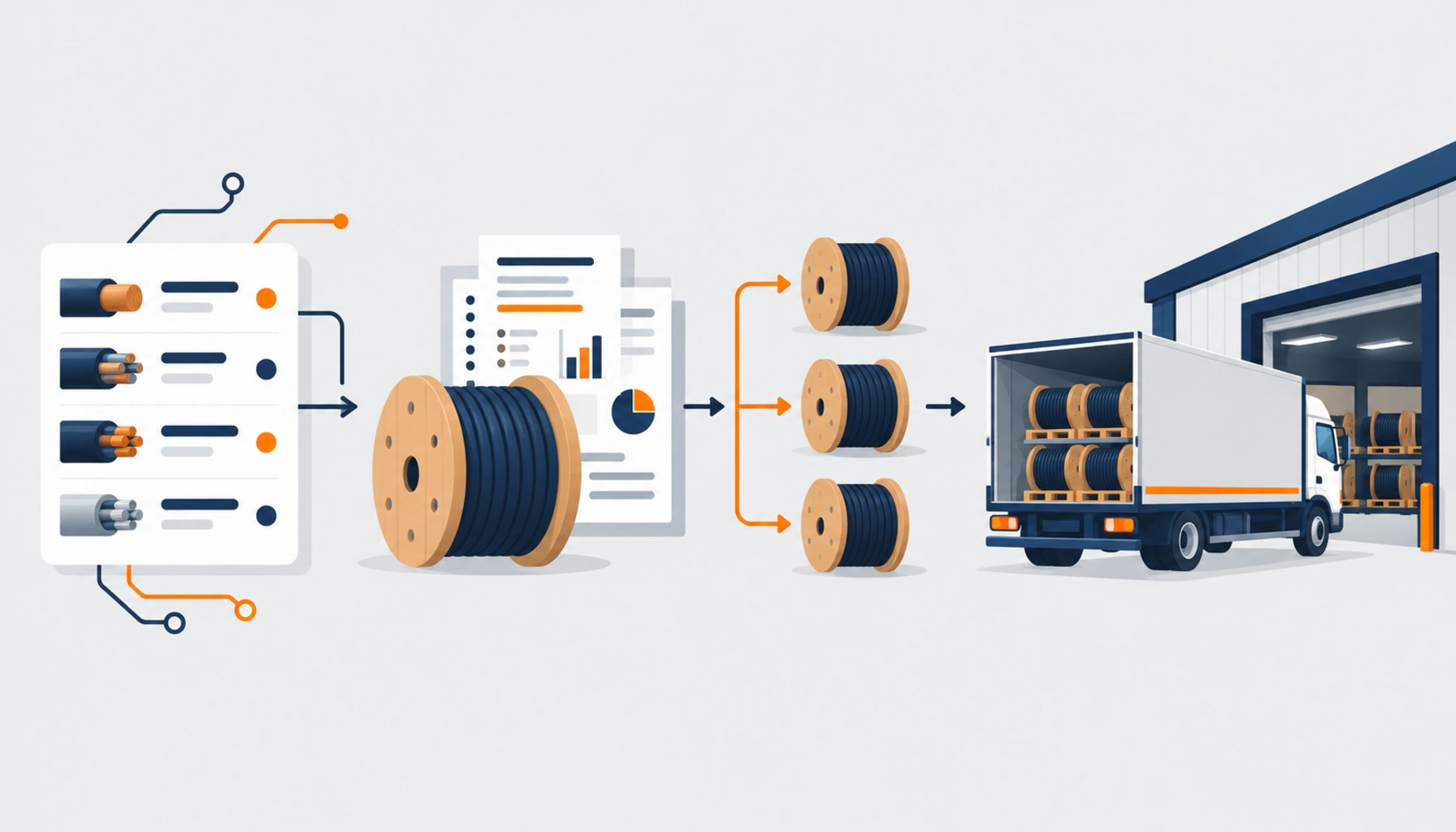
Quick Answer: Before ordering cable for a Kyrgyzstan project, confirm four things with the supplier in writing: the exact supply scope against your product list, the document set that will travel with each shipment, sample-to-batch consistency on the constructions you are buying, and the practical order terms, including drum splits, receiving point and who is responsible at each handover. A short technical annex capturing these answers is worth more than a long negotiation, because it is what both sides check when the goods arrive.
Introduction
Orders for Kyrgyzstan projects are usually not large by global standards, and that changes the selection problem. A buyer handling one or two containers of mixed cable cannot afford a long qualification programme, but also cannot afford a shipment that arrives with the wrong documents or without the drum splits the site needs. The screen has to be short, and it has to hit the points that decide whether the order works: supply scope, documents, consistency and order terms.
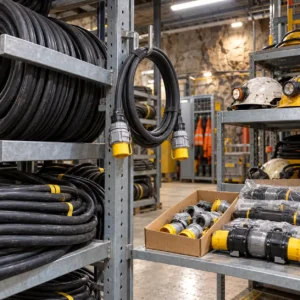
This checklist is for importers, contractors and project purchasers buying cable for projects in Kyrgyzstan. It works through the product list and supply scope, the document samples to request before ordering, how to check that a production batch will match the approved sample, how to plan drum splits and receiving points, and the technical annex that records who is responsible for what. Power and control constructions for this kind of project mix are shown in the control cable range.
Fix the Product List and the Supply Scope Together
Write the list per circuit, not per project. A project order usually carries a handful of constructions serving different circuits: incoming power distribution, motor and equipment feeders, control runs between panels, and a few special lines. Listing per circuit makes the supply scope question concrete: which constructions the supplier builds, at which voltage classes, with which conductor options. The answer belongs in the quotation, line by line.
Ask what is in-house and what is sourced. Smaller orders often mix constructions, and mixed-range suppliers are normal. What matters is knowing who made what, because a deviation on a bought-in line is handled by whoever controls that production. The factory-versus-trader question behind this is set out in our note on manufacturers compared with trading companies.
State the standard each line is checked against. Project documents in the region may reference GOST-based specifications or IEC-referenced requirements, and the two expressions are not interchangeable. Write the standard per line, and treat any proposed equivalence as a claim the supplier demonstrates with evidence. Where a construction differs from your specification, the difference goes on a deviation sheet, not into a phone call.
Request Document Samples Before the Order
Ask to see a real set, not a template. The document set that travels with a shipment is what customs, the site and the handover will work from. Before ordering, ask for a sample set from a previous export shipment: packing list, test reports, certificates as applicable, and the drum labels that went with them. A supplier who produces a real set quickly has answered a question that templates cannot.
What to send alongside the enquiry, so the offer arrives against the same document set, is in our guide to requesting a cable quotation for Central Asian projects.
Check that the reports name your constructions. A report is evidence for the construction it names, with its voltage, cores, section, standard and date. Match each report to a line on your list and record the match. Where a line has no matching report, that gap is a known item to resolve before the order, not a surprise after it. For buyers who want an independent check of the goods against the documents, the options are in our note on third-party inspection.
Agree the marking content now. Drum numbering, coil labels and batch references are agreed content, not a supplier’s habit. Put the marking content in the order confirmation so the packing list, the labels and the goods tell the same story at the receiving point.
Check Sample-to-Batch Consistency
Ask whether the sample runs on the batch line. A sample produced on a laboratory line or a pilot line tells you less than one produced the way your order will be. The question is direct: is the sample made on the same production line and with the same materials as the batch, and if not, what differs?
Keep the approved sample as a reference, not a souvenir. Record what was approved: conductor count and section as measured, insulation and sheath compounds as declared, marking as agreed. The batch is then checked against the record at receipt. This is the practical use of a sample, and it costs the buyer nothing but a notebook.
Treat routine test reports as the batch’s own evidence. Each production batch should ship with routine test results for the drums in that batch, tied to the drum numbers. That is the document that connects the approved sample to the delivered goods, and it belongs in the technical annex as a required document. Batch-level checks at receipt are covered further in our note on cable inspection at receipt.
Plan Drum Splits and the Receiving Point
Confirm drum lengths before fixing quantities. Standard drum lengths differ by construction, and the split between drums decides what the site can actually use: a feeder scheduled in one length arrives differently than the same quantity split into short drums with extra joints. Available lengths and the split plan are confirmed in writing against each line, and the length-versus-jointing trade-off is set out in our note on drum length and jointing strategy.
Name the receiving point and its constraints. A warehouse gate, a site laydown area and a mountain project road are different unloading problems, and they affect packing, drum size and transport mode. Give the supplier the real receiving conditions: location, access, unloading equipment, opening hours for deliveries. The tolerance allowed on ordered lengths is a related term worth settling at the same time, covered in our note on ordered length and drum tolerance.
Decide who inspects at the handover. Whoever receives the goods should know what to check against which document, and how long the check has. A ten-minute drum count against the packing list at unloading prevents most quantity disputes, and a documented claim route handles the rest. The audit questions that surface a supplier’s packaging and handover practice are in our note on supplier audits for projects.
Where several specifications ship in one order, the execution steps for mixed bulk cable orders in Kyrgyzstan carry the drum plan through to the receiving point.
Put the Order Terms in a Short Technical Annex
The annex is the order’s memory. A two or three page annex attached to the purchase order captures the decisions this checklist produces: the line list with standards, the document set, the marking content, the drum splits, the receiving point, the claim route and the division of responsibility at each handover. Neither party needs a good memory after that, only the annex.
Responsibility follows the handover points. Export formalities on one side, transport and import on the other, with the transfer point named and dated by the delivery basis. Long land routes pass through several handovers, and the annex is where each one gets an owner. What should be requested from the supplier per shipment is summarised in our note on export drum packaging.
Keep the annex as the template for repeat orders. The second order for the same project or the same customer starts from the first annex, changes the quantities, and takes an hour instead of a week. Buyers who rebuild the terms each time pay for the same negotiations twice, and the framework logic behind avoiding that is in our note on framework agreements.
Order Confirmation Table
The table collects the confirmations into one pre-order sheet. Each row is a decision that belongs in the annex before the order is placed, with the evidence that supports it and the failure it prevents.
| Item | What to Confirm | Evidence | Failure It Prevents |
|---|---|---|---|
| Product | Line list per circuit with full designations and the standard per line | Quotation answering line by line; reports matching the constructions | Goods delivered to the supplier's reading of the list |
| Documents | The set that travels with the shipment, per line | A sample set from a previous export shipment | A handover or customs check waiting on papers nobody owes |
| Sample | Approved sample record and which line the batch runs on | The sample itself plus the written approval record | A batch judged against memory instead of a record |
| Marking | Drum label content, language and batch references | Marking text agreed in the order confirmation | Drums that cannot be matched to documents at receipt |
| Packaging | Drum types, protection and packing for the real transport mode | Packing specification and a photo of a previous packed drum | Damaged flanges and crushed coils discovered at unloading |
| Drum splits | Available lengths and the split plan per line | Written drum schedule against the quantity list | Joint counts the site budget never planned for |
| Delivery | Receiving point, access constraints and the risk transfer point | Named destination and delivery basis in the annex | An unloading problem that becomes a contractual argument |
| Claims | Inspection window, claim route and evidence per side | Claim clause in the annex with the inspection step named | A shortfall or damage dispute with no procedure to run |
What the Site Conditions Do and Do Not Change
Let the buyer supply the environment, not the stereotype. Projects in Kyrgyzstan cover cities, valleys and high ground, and the cable’s environmental requirements come from the site’s actual conditions: installed temperature range, exposure, mechanical duty. State those conditions in the enquiry where they exist, and let the supplier answer against them. Assuming severe cold or mountainous duty for every order produces over-specified cable and under-specified budgets alike.
Where a special requirement is real, it becomes a line item with evidence. A genuinely low-temperature installation requirement is stated as one, with the temperature, the duty (installed, installed and bent, or dynamic) and the test expected behind it. The buyer provides the condition; the supplier provides the proof. Conditioned claims on both sides keep the annex honest.
Do not let the route redefine the product. The long transport route changes packaging, drum protection and the claim procedure. It does not change the electrical specification. Keeping the two separate is what stops an order from drifting into paying for performance the site never asked for and never tests.
| Annex Section | Contents | Who It Protects | What It Replaces |
|---|---|---|---|
| Line list | Full designations, quantities, standards per line | Both parties | The email thread as a specification |
| Document set | Required reports, certificates and packing list per shipment | Receiving party, document controller | Negotiating papers after the goods have sailed |
| Marking and packaging | Label content, drum types, packing for the transport mode | Warehouse, carrier handovers | Assumptions about how the goods will arrive |
| Delivery basis | Destination, transport mode, risk transfer point | Both parties, insurers | "Delivery to Kyrgyzstan" as a term |
| Inspection and claims | Inspection step at unloading, window, evidence per side | Buyer's claim, supplier's defence | Disputes run on goodwill and screenshots |
Cost, Lead Time and the Small-Order Reality
Small orders carry fixed costs that the quotation should show. Set-up for a short run, sample handling, document preparation and minimum packing all weigh more per metre when the quantity is small. A quotation that spreads them invisibly will resurface as a surcharge; a quotation that shows them per line can be compared and accepted on the facts. Neither is wrong, but only one of them survives the second look.
The production slot is the scarce item, not the machine capacity in general. Volume lines fill with standard work, and a mixed Kyrgyz order with several constructions competes for slots against larger programmes. Asking when the slot would be, and what moves it, is a fair question at quotation stage. Where the date is fixed by the project, the honest answer about the slot is worth more than a faster promise on paper.
Consolidated freight changes the economics of the drum plan. Fewer, fuller drums move more cheaply per metre but give the site less installation flexibility. The drum schedule in the quotation is therefore also a freight decision, and the receiving point’s unloading equipment belongs in that decision. Agreeing the plan once, in the annex, is cheaper than re-deciding it at the loading gate, and it keeps the second order from inheriting assumptions the first order never made.
Currency and payment terms are order terms too. The quotation currency, the payment stages and what happens between stages are part of the comparison for a small order, because the fixed costs amplify every friction. Buyers who run repeat small orders usually standardise these terms with one supplier rather than shopping each order, which is how the framework habit described earlier in this guide starts in practice.
When a Pre-Order Checklist Is Not the Answer
When the supplier is already known to you. A repeat supplier with a clean record on the same constructions needs the quantities, the drum splits and any changed terms confirmed, not the full screen. The annex gets updated; the investigation does not get rerun.
When the order is a genuine emergency. A breakdown replacement has different economics, and the checklist shrinks to the construction, the drum length that fits the failure, and the fastest honest delivery. The annex for the next planned order is where the lesson lands.
When the answers cannot be evidenced at this order size. There is a floor below which some checks cost more than the risk they cover. Note which items went unchecked, say so in the file, and weight the reliance on the supplier accordingly. Unverified is a status, not a verdict, as long as it is recorded.
When the specification itself is unsettled. If the project documents are still moving, a supplier screen is premature. Confirming order terms against a moving specification produces an annex that both parties will ignore, and the wasted effort is the cheapest part of that mistake.
RFQ Checklist
- The product list written per circuit, with full designations and the standard per line
- Supply scope answered line by line: in-house or sourced, with the reports that match
- A sample document set from a previous export shipment
- Sample plan: which constructions are sampled and on which line the batch runs
- Drum lengths available per line and the split plan against the quantities
- Marking content, language and batch references, agreed before production
- The receiving point described as it is: location, access, unloading equipment
- The delivery basis with the risk transfer point named
- The claim route: inspection at unloading, window, evidence per side
Conclusion
Ordering cable for Kyrgyzstan projects rewards the buyer who converts a short checklist into a short annex. The supply scope answered line by line, documents seen as a real sample set, the batch tied to the approved sample, drum splits matched to the site, and every handover given an owner. None of it is difficult, and all of it is cheaper before the order than after the goods arrive.
Kexingyu Cable Group (KXYE) manufactures power, control and special constructions in Quanzhou and supplies Central Asian projects on written specifications with drum-level records. Send us your product list, quantities, drum requirements and receiving point, or upload your BOQ and technical specification, and we will answer against the lines as written. A request for quotation is the fastest route to start.