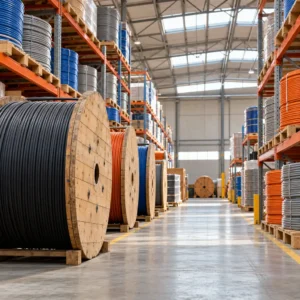
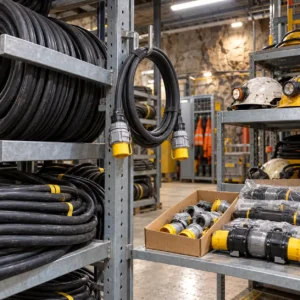
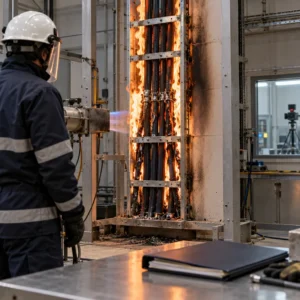
Buying XLPE Power Cables for Kazakhstan: Specifications and Quotation Checklist
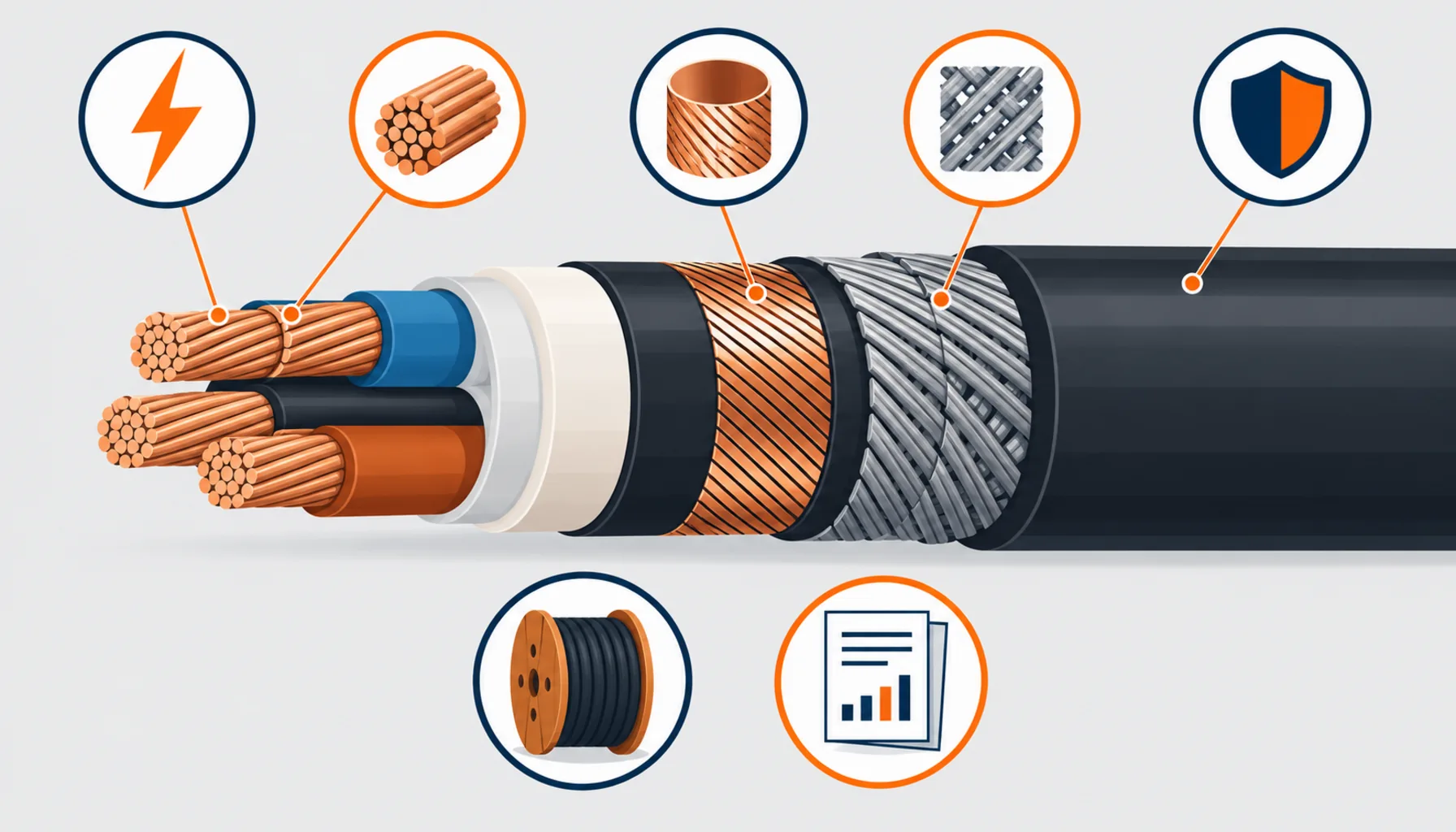
Quick Answer: Buying XLPE power cable for a Kazakhstan project is a specification exercise before it is a price exercise. State the rated voltage in full with its fraction, the conductor material and class, the cores and cross-sections, the screen and armour, and the installation method the cable must suit. Ask which tests the delivery will carry and which drum lengths are available, and settle every technical deviation in the quotation. An offer built on those fields can be compared, ordered and checked at receipt; an offer built on a voltage number and a price cannot.
Introduction
XLPE power cable is the largest single cable purchase on most Kazakhstan projects, and the one where a specification shortcut costs the most. The construction is standardised enough to be quoted quickly and varied enough to be quoted wrongly: the same “10kV cable” description covers several insulation thicknesses, two conductor materials, three armour types and a range of screen designs. The quotation that comes back reflects whatever the factory assumed, unless the enquiry said otherwise.
This guide is for project buyers, EPC purchasers and distributors buying XLPE power cable for Kazakhstan. It works through the specification fields in the order they matter, the installation questions that shape the construction, the tests the delivery should carry, the drum lengths that decide the installation, and the deviations to settle before the order. The construction basics behind the insulation system are set out in our note on what XLPE cable is, and the power constructions a factory offers are shown in the medium voltage XLPE armoured cable page.
Supplier screening for this market, which comes before any of that, is covered in our supplier checklist for Kazakhstan.
Write the Rated Voltage the Way the Project Enforces It
The fraction is the specification. 0.6/1kV (1.2kV), 6/10kV, 12/20kV: the phase-to-earth value, the phase-to-phase value and the insulation level are one statement, not three numbers to choose between. An enquiry that says “10kV cable” invites an offer against Um=12kV or Um=24kV construction, and both answers are defensible readings of a lazy line. Write the fraction once, on every line.
Where the project documents give a system voltage, convert once, deliberately. The cable’s rating follows the network’s earthing and fault-clearing arrangement, and the conversion is an engineering step, not a formality. If the specification is unclear at enquiry stage, ask the supplier to quote against the stated cable rating and to flag the assumption, rather than letting the assumption travel silently into the price.
Voltage decides the test regime, not just the thickness. Routine tests, the type test references and the accessories that terminate the cable all follow the voltage class. A quotation that names its voltage class in full is also telling you which test regime it will run, which is why the field sits at the top of the RFQ table.
Conductor: Material and Class, on Every Line
Copper or aluminium, and never “or” in silence. Conductor material is the largest cost element and the most common quiet difference between two offers. Where the project fixes copper, say so; where aluminium is acceptable, say which lines and ask for both quoted where the choice is genuinely open. The comparison that follows is then about cable, not about metal.
The conductor class follows the installation. Solid and stranded classes suit fixed installation; flexible classes suit the constructions that move or terminate in tight spaces. Compacted stranding changes the diameter and the accessories that fit. The class is a one-word field in the enquiry and an expensive discovery at installation if it is wrong.
Cross-section per core, with reduced neutrals marked. “4×240” says something different from “3×240+120”. Where the project allows two sections, ask for both quoted, because the price difference is often the input the design needs to settle.
Screen, Armour and Sheath as Named Structures
The screen follows the network. Medium voltage constructions carry semiconductive and metallic screens, and the metallic screen design, tapes or wires, and its cross-section, is a specification field where the project states one. LV constructions may carry screens on control pairs inside the same order. State the screen per line rather than trusting the factory’s standard.
Armour is chosen by the installation, not by habit. Steel wire armour suits the mechanical duty of buried and pulled runs; steel tape suits different protections; aluminium wire armour avoids magnetic effects on single-core circuits, and the single-core case is where an armour chosen by habit causes real problems. Name the armour per line, and let the supplier evidence it.
The sheath carries the environment. PVC and PE are the baseline choices, and where the route adds a condition, UV at exposed runs, hydrocarbon contact in specific locations, low-temperature installation, the condition attaches to the line with evidence expected. A general note in the enquiry cover is not a specification; a line property is. Where insulation and sheath choices are being weighed against each other, the comparison is set out in our note on XLPE compared with PVC insulation.
Let the Installation Method Shape the Construction
Buried, ducted, aerial or tray, each asks a different question. Buried runs ask about armour and sheath; ducted runs ask about the pulling forces and the outer diameter; aerial and tray runs ask about UV and mechanical exposure. The enquiry that names the installation method per line lets the supplier confirm the construction suits it, and gives the deviation sheet something concrete to work from.
Bending radii and pulling forces are installation facts with construction consequences. Where the route is tight, the drum lengths, the drum diameter and sometimes the conductor class change. These are quotable, checkable items, and they are far cheaper to settle in the enquiry than at the cable pull.
Accessories and termination belong in the same procurement thought. The cable’s voltage class and diameter determine which joints and terminations fit, and the project needs both from the same construction. Where the accessories are procured separately, the specification still has to be written so that they match, which is one more reason the voltage fraction and the structure fields matter.
Tests: What the Delivery Must Carry
Routine tests on every drum. Conductor resistance, voltage withstand and insulation checks, tied to drum numbers, are the evidence that connects the specification to the delivered goods. State them as a requirement, not a courtesy, and the batch documents become the receipt checklist.
Type test reports per construction. Where the project or the customer requires a type test for the voltage class and construction, ask whether the supplier holds a current report and request the document, not the summary. The report names the construction it proves; a report for a neighbouring construction is a signal, not evidence. Where the project wants its own verification on critical lines, the arrangements are described in our note on third-party inspection.
Sample verification for the first order. For a new supplier relationship, sampling the highest-value line and holding the approval record is cheap insurance, and it gives the receipt check something to compare against beyond memory.
Drum Lengths and the Installation Plan
Ask for available drum lengths per line. Factories hold different drum sizes, and the available lengths decide how the quantity is delivered: the feeder scheduled in one length arrives differently from the same metres split into short drums. Requesting the lengths and then fixing the splits is what makes the delivery match the route plan, and the jointing trade-off is set out in our note on drum length and jointing strategy.
Confirm the tolerance on ordered lengths. The allowance a factory makes on ordered lengths varies, and on a project the difference lands as extra joints or as metres the site did not plan for. The tolerance is a one-line confirmation, covered in our note on ordered length and drum tolerance.
Drum size follows the unloading reality. The receiving point’s crane, flatbed and site access bound the drum weight and diameter. Giving the supplier the real receiving conditions lets them propose a drum plan that survives the last kilometre, which is the part of the journey no price compensates for getting wrong.
Technical Deviations: Settle Them in the Quotation
Ask for deviations as a list with reasons. Where the supplier’s standard construction differs from your line, the quotation should say so in three columns: your specification, the proposal, the reason. Accepting or refusing per line is then a desk exercise, and the record travels into the order annex.
Weight each deviation by what it touches. A conductor class change affects pulling and accessories; a sheath change affects the environment it was chosen for; a screen change affects the network’s fault performance. Deviations reviewed against the duty are engineering decisions; deviations discovered at receipt are disputes.
Record accepted deviations in the order annex. The annex is the document the receipt inspection works from, and an accepted deviation that is not written down becomes a nonconformity in someone else’s reading. The supplier who states limits plainly is the one you can hold to them; the same is true of buyers.
What the enquiry must say so those deviations come back comparable is set out in our guide to requesting a cable quotation for Central Asian projects.
Power Cable RFQ Parameter Table
The table collects the specification fields into one sheet: the parameter, how to state it, why it matters and the common mistake that costs the most.
| Parameter | How to State It | Why It Matters | Common Mistake |
|---|---|---|---|
| Rated voltage | Full fraction: 0.6/1kV (1.2kV), 6/10kV, 12/20kV | Defines insulation, test regime and accessories | "10kV cable" quoted against the wrong insulation class |
| Conductor material | Copper or aluminium, per line | Largest cost element; first place offers diverge | Material left to the factory's assumption |
| Conductor class | Solid, stranded, compacted or flexible | Diameter, accessories and installation behaviour | Class omitted, accessories do not fit at installation |
| Cores and cross-section | e.g. 3×240+120, reduced neutral marked | The electrical design itself | Rounding the quantity into factory-standard sections |
| Screen | Structure and cross-section where specified | Network fault performance and earthing | "Screened" quoted as the factory's standard |
| Armour | Type and material per line; aluminium wire on single-core | Mechanical protection without magnetic heating | Armour by habit on single-core circuits |
| Sheath and conditions | Compound, plus attached conditions: UV, oil contact, low temperature | Environment the cable actually meets | Conditions in the cover email instead of on the line |
| Installation method | Buried, ducted, aerial or tray, per line | Shapes armour, sheath, diameter and pulling plan | Construction confirmed against an unnamed installation |
| Tests | Routine batch tests tied to drum numbers; type reports named | Evidence connecting specification to delivery | Documents discovered missing at handover |
| Drum lengths and tolerance | Available lengths requested; tolerance confirmed | Installation plan and jointing count | Short drums arriving where long runs were planned |
| Deviations | Three columns: specified, proposed, reason | Turns differences into decisions | Silent substitutions discovered at receipt |
Cost and Lead Time on a Power Cable Order
The copper basis and validity are the price’s foundation. A power cable quotation without its metal basis and validity window is a number, not a price. State the basis, the date and the window in the enquiry, and the offers that come back can be held against the weeks between offer and order.
Production slots follow the voltage class. Higher voltage classes run on fewer lines with longer set-ups, and the slot answer for a 12/20kV order is usually the programme’s critical path. Asking for the production time per line at quotation stage is how the delivery date gets planned instead of hoped for.
Quantities move the terms, visibly. MOQ per construction, price steps at volume breaks and drum availability all move with order size. Where the project can consolidate lines or shift a delivery window, the quotation is where those levers get priced. The structure of these terms is set out in our note on cable MOQ and lead time.
Freight follows the weight and the drums. Power cable on steel drums is heavy freight, and the drum plan and destination decide the transport cost as much as the length does. Confirming the destination and the receiving conditions in the quotation keeps the landed cost honest, and the offer comparison then totals a real delivery rather than a factory gate.
| Installation Method | What It Asks of the Construction | Fields It Affects |
|---|---|---|
| Buried | Mechanical protection over the buried span; sheath resistance to soil environment | Armour type and material; sheath compound; corrosion provisions |
| Ducted | Pulling forces within the cable's limits; outer diameter against the duct | Conductor class; sheath friction; drum lengths matched to duct runs |
| Aerial or exposed | Weathering and UV over the exposed life; temperature swing | Sheath compound with the UV condition; confirmation of the rating's evidence |
| Cable tray or ladder | Bending radii at turns; support spacing; groupings with other circuits | Diameter and flexibility; sheath; separation rules on single-core runs |
| Direct pull to equipment | Tight terminal access; minimum bending at the gland | Conductor class (flexible where needed); core shapes; gland compatibility |
When a Standard XLPE Construction Is Not the Answer
When the network arrangement changes the design. Earthing and fault-clearing arrangements affect the screen and armour design, and a standard catalogue construction may not match. Where the project’s electrical design specifies the screen, the specification wins over the catalogue, or the difference is engineered deliberately.
When the route imposes a real condition. A genuinely low-temperature installation, a hydrocarbon contact zone or a UV-exposed span is a line property with evidence behind it, not a general upgrade to apply everywhere. State the condition where it exists and let the construction follow it.
When the accessories drive the cable. Where terminations and joints are already procured or specified, the cable’s diameter and construction have to match them. Buying the cable first and the accessories later is how mismatched diameters reach the site.
When the price is the only thing being compared. If the decision will be made on the number alone, the specification work in this guide is wasted. Either the comparison becomes a real one, or the risk is accepted with eyes open; the failure is pretending the comparison happened.
RFQ Checklist
- Rated voltage written in full with the fraction, on every line
- Conductor material and class stated per line, both quoted where the choice is open
- Cores and cross-sections exact, reduced neutrals marked
- Screen structure and cross-section where specified, armour type per line
- Sheath compound with any service condition attached to the line it affects
- Installation method named per line, with bending and pulling constraints where they exist
- Routine batch tests tied to drum numbers, type reports named where required
- Available drum lengths requested, tolerance confirmed, splits fixed on the lengths
- Deviations requested as a three-column sheet with reasons
- Copper basis, validity window and included documents stated in the offer
Conclusion
An XLPE power cable purchase for Kazakhstan rewards the buyer who treats the quotation as the output of a specification, not a substitute for one. The voltage fraction, the conductor, the structure, the installation method, the tests and the drum plan are all one-page decisions that shape the cable for its whole service life. Settle them in the enquiry and the deviation sheet, and the offer you compare is describing your project rather than the factory’s assumptions.
Kexingyu Cable Group (KXYE) manufactures XLPE power constructions in Quanzhou and quotes Central Asian power cable enquiries line by line, against the voltage fractions, structures and conditions as written, with the copper basis, documents and drum plan stated in the offer. Send us your specification, quantities and destination, or upload your BOQ, and we will answer against the lines as written. A request for quotation is the fastest route to start.