Reading the Normative Annex of a Central Asian Cable Tender
Quick Answer: The normative annex is the tender’s standards list, and it decides more of the cable package than any commercial clause. Read it row by row: which document is named, which edition and year, what that document actually covers, and whether the words “or equivalent” sit beside it. Then cross-check the list against the bill of quantities, because a schedule line no named standard covers is the row your bid will be marked on. An afternoon spent on the annex is cheaper than a clarification round after submission.
Introduction
Every Central Asian cable tender carries a thin annex that buyers skip: a list of standards, sometimes ten lines, sometimes forty, written in Russian with years in brackets. It looks like boilerplate. It is not. That list tells you which document governs each property of the cable, which edition the acceptance inspector will read, and how much room the offer has to deviate.
This page is a reading guide for the annex itself, for EPC bid teams and cable distributors pricing Kazakh, Uzbek, Kyrgyz, Tajik and Turkmen tenders. The full tender journey, from technical assignment to delivery, is a separate and longer job covered in our Central Asian cable buying hub. Here we stay inside the annex, because most of the technical marks in a bid evaluation are decided by how the standards list was answered.
What the Normative Annex Is and Where It Sits
The annex sits at the end of the technical assignment and lists the documents the design is built on: construction standards, conductor tables, fire requirements, test methods, sometimes certification schemes. Its legal weight comes from the main text, which usually says the works “shall comply with the documents listed” and stops there.
Read the hierarchy before anything else. Where the main text and the annex disagree, the main text governs. Where the annex and the bill of quantities disagree, the annex usually governs because it is named as normative. Where two annex rows disagree with each other, nothing governs, and that ambiguity is worth a clarification question before it is worth an assumption.
The annex is also where the tender hides its real personality. A list of GOST numbers with no alternatives tells you the buyer expects a regional plant and a local inspector. A list mixing IEC numbers with GOST tells you a lender or an international EPC is in the room, and the offer will be reviewed twice by two audiences.
Reading the List Row by Row
Take each row on its own and ask four things. What is named, and is the name complete: a GOST number without its year is an open question, because the editions differ. What does that document actually cover: a row naming GOST 31996 covers low voltage plastic-insulated power cable and nothing else. Is it a requirement or a reference: “tested per” and “certified per” are different verbs with different evidence. And does the row carry an alternative, written as “or equivalent”, “or IEC …”, or silence.
Silence is the strongest row in the annex. A row naming one standard with no alternative is a pass-or-fail line in the evaluation, and offering an IEC build against it scores zero no matter how good the cable is. A row with “or equivalent” is negotiable, but negotiable at the evaluator’s discretion, which is why the deviation sheet belongs in the bid rather than in a covering letter.
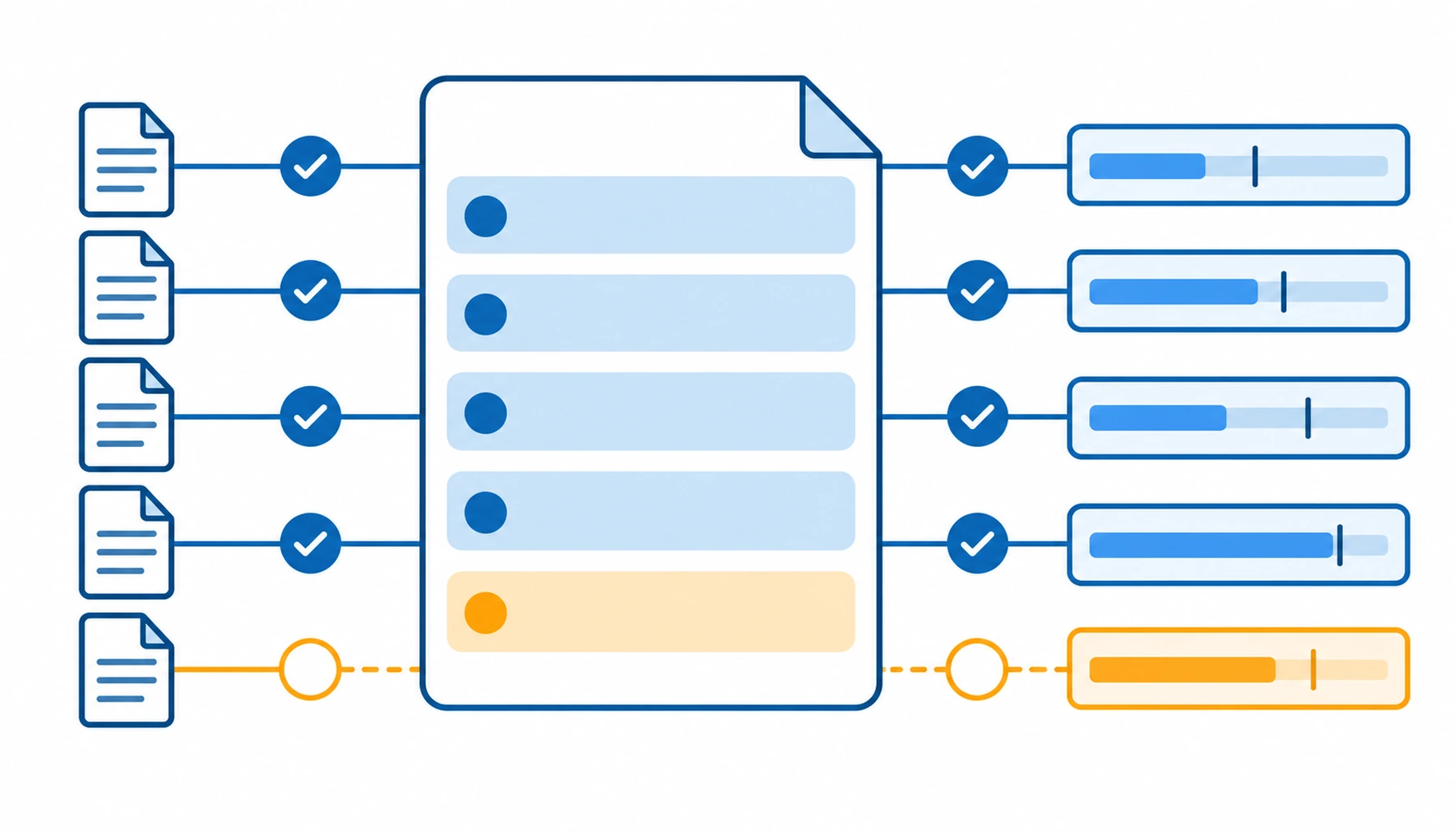
Write your four answers into a working table as you go. By the end of the list you have a one-page map of the tender’s technical obligations, and the gaps in it are your clarification questions. That map is also what a reviewer sees first, which makes it the cheapest document in the bid pack.
Edition Traps: Which Year Governs
Years in the annex are not decoration. GOST 31996-2012 and its predecessors differ in construction tables and test requirements; IEC 60502 and IEC 60332 have moved through editions that changed figures and categories. A tender naming “GOST 31996” with no year invites each party to pick, and the acceptance inspector’s pick is the one that counts.
The trap runs both directions. A supplier quoting the newest edition can be non-compliant against a tender written to an older one, and a buyer who silently assumes the newest edition can find the delivered thickness tables do not match the annex. State the year in the offer, row by row, exactly as the annex prints it or as you propose it.
Where the year is missing, ask. A one-line clarification fixing the edition for every row in the annex is normal practice and costs a day. Skipping it hands the choice to whoever checks the delivery, and inspectors in the region are conservative by training: they read the edition they learned, not the one in your datasheet.
The Equivalence Clauses and What They Actually Allow
“Or equivalent” appears in most annexes in the region, and it means less than buyers hope. It is not a statement that IEC and GOST are interchangeable; it is a permission to propose, subject to the evaluator’s agreement. What makes the permission usable is evidence: a construction list, a test mapping and a deviation note that show the proposed build meets the stated requirements of the named document in the fields listed.
Four wordings cover the ground. Name the GOST document as governing and list the IEC alternative with deviations stated. Name both and give a precedence rule. Name the construction and reference both standards only for the test regime. Or specify to IEC and add a national annex for the fields the local inspector checks. The crosswalk between the families is set out in our note on IEC 60502, and the voltage-class logic behind the hardest rows in our note on medium voltage cable standards.
What the clause never allows is a thinner answer. An offer that answers “or equivalent” with a logo and no mapping has used the clause as cover, and evaluators in the region are practised at scoring those bids down. The equivalence argument belongs to the annex row it answers, one row at a time.
What Each Named Standard Actually Covers
Annexes list document numbers, not scope, and half the misreadings in a bid come from assuming one number covers the whole cable. It never does. The construction standard covers construction; conductors, fire behaviour and test methods each sit in their own document, and a cable is only fully specified when all four rows exist.
Watch for the rows that are missing as much as the rows that are present. A tender with a construction standard and no fire row has left fire to the building code, which the buyer’s engineer will rediscover later. A tender with a fire row but no test method row leaves the method open, and the method is where the pass figure lives. Missing rows are legitimate clarification questions and are received better than assumptions.
The Typical Annex and How to Answer It
The table shows the rows that appear most often in a Central Asian cable tender, what each row governs and the misreading that costs the most marks.
| Annex Row | What It Governs | How the Offer Should Answer | Costliest Misreading |
|---|---|---|---|
| GOST 31996-2012 | LV plastic-insulated power cable construction | Construction list mapped to the standard, year stated | Reading the number as covering the whole cable |
| IEC 60502-2 or equivalent | MV XLPE construction and tests | Compliance plus U0/U derivation and deviation list | Quoting a voltage class without the earthing study |
| GOST 22483-2012 | Conductor classes and resistance | Class restated as material, form and wire count | Assuming IEC class numbers run in parallel |
| GOST 31565-2012 | Fire safety class of the cable | Class letter plus the tests behind it | Treating the class letter as a test method |
| IEC 60332-3, 61034, 60754 | Bunched flame spread, smoke, acid gas | Method, category and pass figure per row | Answering with a compound name instead of a test |
Annex Requirements That Sit Outside the Standards
Most annexes end with rows that are not standards at all: certificates, test reports, factory audits, samples. These rows decide the evidence pack, and they are scored on presentation as much as substance. A certificate row wants the certificate named, the issuing scheme named and the scope matching the schedule sections; the checklist is in our power cable certification checklist.
Audit and inspection rows want a named scope: what will be inspected, against which tables, with whom present. Offering “factory visits available” against such a row scores nothing, while a one-page scope scores well and costs a day. The structure is in our notes on cable factory audits and third-party cable inspection.
Marking rows are the quiet ones that decide the site. Where the annex requires marking per a named standard, the drum label, the passport and the schedule have to agree on the string, and the fields that have to match are in our note on cable marking and traceability.
Cross-Checking the Annex Against the Bill of Quantities
The last pass is arithmetic. Every line in the bill of quantities must be covered by at least one named standard, at the right voltage and the right construction family. The check takes an hour: walk the schedule, and for each line write which annex row covers it. Lines with no row are your clarification questions; rows with no line are dead weight the evaluator will still expect answered.
Watch the voltage boundaries. A schedule mixing 1 kV and 10 kV lines needs both an LV and an MV row, and tenders sometimes carry only one. Watch control cable too: it is frequently sold against a manufacturer specification, so a schedule line of control cable against a power cable annex row is a gap worth naming before the bid, not after the award.
Finish with the delivery rows. Where the annex names shipping documents or acceptance tests, confirm the schedule’s Incoterm matches who is expected to hold which paper at which border. A bid that prices delivery but answers no document row will be scored as incomplete, whatever the drums cost.
Annex Review Freeze List
These are the outputs the annex review must produce before the bid is priced, in the order the review should run.
| Output to Freeze | How to Record It | Evidence Behind It | Cost of Skipping It |
|---|---|---|---|
| Row-by-row map | One line per annex row: scope, edition, alternative or silence | The standards themselves, current and named editions | Rows answered from memory in the bid |
| Edition position | Year stated per row, clarifications requested where missing | Written clarification response | Inspector's edition wins at delivery |
| Equivalence answers | Deviation sheet per "or equivalent" row | Construction list and test mapping | Bid scored down for an unmapped logo |
| Coverage check | Every schedule line mapped to an annex row | Working table with gaps named | Uncovered lines discovered at evaluation |
| Evidence plan | Certificate, report and audit rows answered with named scope | Certificate scopes against schedule sections | Evidence pack marked incomplete |
| Clarification list | Questions numbered against annex rows, submitted in time | Purchaser's written answers | Assumptions scored as non-compliance |
| Delivery document rows | Incoterm and document flow matched to the annex requirements | Delivery plan naming the papers per border | Clearance risk owned by nobody after the award |
When the Annex Is Not the Answer
When the main text contradicts it. The technical assignment can and does override its own annex, usually in fire requirements added late. Where the two disagree, answer the main text, note the contradiction in the clarifications, and never average the two readings.
When the annex names a document nobody can produce evidence against. A standard referenced without a scheme for certificates or reports is a promise no supplier can keep. Raise it before submission; after the award it becomes a delivery risk priced by nobody.
When the schedule is a copy of another project’s annex. Regional tenders recycle annexes, and the recycled list sometimes names standards the project’s own voltage levels never touch. Answer what the schedule needs, and say plainly which rows the schedule does not engage.
When the buyer’s own specification is stricter. Nothing in the annex stops the purchaser from writing a thicker wall or a longer fire duration into the main text. The annex is the floor, and the offer must answer the stricter of the two without commentary.
When equivalence would be argued against a performance calculation. A fire strategy or a fault study in the main text overrides any standards row, because the calculation asks for numbers no class letter carries. Map the tests to the calculation, not to the row.
RFQ Checklist
- Every annex row read for scope, edition and alternative wording
- Year stated per row, missing years clarified in writing
- Equivalence rows answered with a construction list and test mapping
- Deviation sheet annexed to the bid, one line per mapped row
- Every bill of quantities line mapped to at least one annex row
- Coverage gaps raised as numbered clarification questions
- Certificate and report rows answered with named schemes and scopes
- Audit and inspection rows answered with a written scope
- Marking rows reconciled across drum label, passport and schedule
- Main text checked against the annex for contradictions before pricing
Conclusion
The normative annex rewards the bid team that reads it slowly. Row by row, it tells you which document governs, which edition counts, where the offer may propose and where it may not. Everything the evaluation will later mark is already written in that list; the bid either answers it or hopes.
Kexingyu Cable Group (KXYE) reads Central Asian annexes against both GOST and IEC constructions and returns row-mapped answers with the offer. Send the annex as scanned. A request for quotation is the fastest start, the evidence fields are in our industrial cable RFQ checklist, and scoring two answers against one annex is covered in our note on comparing cable quotations.