GCC Machine Imports: Cable Expectations in Gulf Automation Projects
Quick Answer: Gulf projects run two layers of approval, a regional mark and a national shipment scheme, and they also run at 50°C ambient. The second one changes the cable before the first one does.
Gulf automation projects fail for two entirely different reasons, and suppliers tend to prepare for the wrong one. The first is paperwork: a regional conformity mark, a national product certificate, a shipment certificate, each issued through a different system and each capable of holding a container at port. The second is physics: an ambient temperature that sits near the top of what most industrial cable was specified for, and a design that was sized in an air-conditioned engineering office in another climate. Both are foreseeable, and the second is the one that costs money for years after the project is handed over.
Introduction
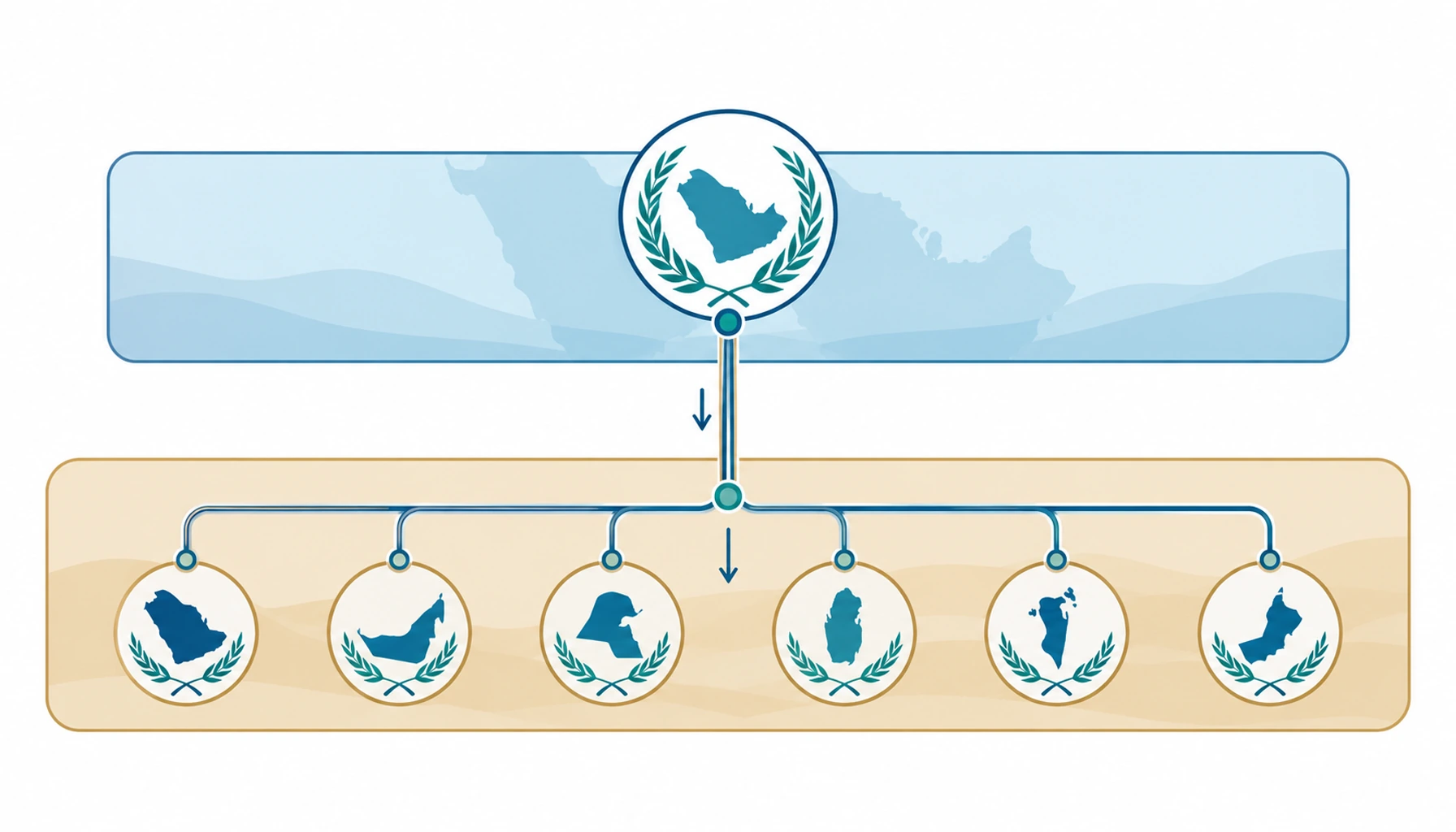
The regional layer is a Gulf-wide conformity mark administered by the Gulf standardisation organisation under a technical regulation for low-voltage electrical equipment and appliances, mandatory since the middle of 2016 and periodically revised. Its scope is defined by voltage range rather than by product family, and low-voltage cables and wires sit inside that scope alongside appliances, plugs and protective devices. A machine imported into the region therefore brings cable into a regulated product category, which is a different starting position from Europe.
The national layer sits on top and does not disappear. Saudi Arabia requires product and shipment certificates through its electronic platform, the United Arab Emirates operates its own conformity scheme for regulated products, and the other member states issue shipment-level certificates against their own arrangements. Suppliers who treat the regional mark as the whole answer find out otherwise at the border, which is the least convenient place to learn it. The wider pattern of how markets layer these requirements is surveyed in the guide to cable certification checklists.
Two Layers: Regional Mark and National Scheme
The regional mark is issued by bodies the standardisation organisation has notified, and it carries a tracking symbol that links the product to the certification record in the regional database. That tracking symbol is not decorative: printing the mark without it is one of the most common mistakes suppliers make, and inspectors and buyers use it to verify the certificate on the spot. Documentation is expected to be retained for a long period, and certificates run for a fixed term before renewal.
| Layer | Applies to | Output | How long it lasts |
|---|---|---|---|
| Regional conformity mark | Low-voltage electrical equipment within the voltage scope, including wires and cables | Mark plus tracking code, registered in the regional database | A fixed term, renewable, with documentation retained long term |
| National product certificate | Products placed on the Saudi market within the regulated scope | A product-level certificate registered on the national platform | Renewed annually |
| National shipment certificate | Each consignment entering the market | A per-shipment certificate tied to the consignment | The shipment it covers |
| National conformity certificate | Regulated products for the UAE market | A conformity certificate for the product | Renewed annually |
| Voluntary quality mark | Products in specific categories | A quality mark requiring a maintained system | Multi-year, subject to continued compliance |
What Falls in the Regulated Scope
The regulation is framed by voltage, so the question is which cable a machine brings into scope. Cable sold or supplied as a product within the voltage band is the clearest case. Cable installed inside a machine follows the machine, but a machine connecting to a regional supply through a cord or a supply cable is exposed at that junction, and that is where inspectors and buyers concentrate their attention.
Two practical notes follow. International test reports and certification documents can be reused as a basis, provided the regional and national differences in the applicable standard are covered; they cannot simply be presented as they stand, and a European marking is not accepted in place of the regional one. And the certificate covers the models listed on it, so supplying a variant that appears in a catalogue but not on the certificate is a mismatch rather than a formality.
Heat Is a Cable Problem Before It Is a Paperwork Problem
Gulf installations design for ambient temperatures that European and North American specifications rarely anticipate, and the grid runs at 50 Hz with 220 to 240 volts single phase and 415 volts three phase. The voltage and frequency are unremarkable; the ambient is not. Cable current-carrying capacity is quoted for a reference ambient, commonly 30°C in the international installation standard, and it has to be corrected for the actual conditions where the cable is installed.
The correction is substantial and it bites differently depending on insulation. At a 50°C ambient, a PVC-insulated cable with a 70°C conductor rating takes a factor in the region of 0.71, while an XLPE-insulated cable with a 90°C rating takes roughly 0.82. In plain terms, a run that was comfortably sized at reference conditions can be overloaded at Gulf ambient even though nobody changed the load. Where cables are grouped, run in a hot enclosure, or installed in a panel with other heat sources, the derating compounds, and the compounding is where undersized designs reveal themselves in summer. The arithmetic and the input data are set out in the cable selection guide, and the distribution-side context sits in the guide to industrial power distribution.
Sun, Sand and Coastal Air
Three environmental realities shape the construction. Ultraviolet exposure attacks polymer jackets on any run that sees direct sunlight, so outdoor routing needs a sheath compound and a stabiliser package chosen for it rather than a standard indoor compound. Abrasion from windborne sand is real for cables in exposed trays and on moving equipment, which pushes wear resistance up the specification. And coastal or offshore sites add salt, which is a slow attack on terminations and on any exposed metal rather than on the jacket itself, so the cable requirement travels with a gland and termination requirement. The environment also affects how cables are inspected over time, since a jacket that has hardened in the sun behaves differently in a carrier than one that has not.
Documents That Travel With the Shipment
The documentation set is what decides how quickly a consignment moves, and it is assembled before the container is loaded or not at all. The items below are the ones that matter for the cable portion of a machine or a project package. The China-side documentation that supports the same submissions is collected in the guide to Chinese electrical equipment certification, and the commercial side of working in the region is covered in the guide to Middle East power equipment sourcing.
| Document | What it settles | Common failure |
|---|---|---|
| Regional conformity certificate with tracking code | Admissibility of the regulated product across member states | Mark printed without the tracking code |
| National product certificate | Registration of the product for the destination market | Assumed to be covered by the regional mark |
| Shipment certificate per consignment | Release of that specific consignment | Raised too late to precede the vessel |
| Test reports against the applicable standards | The technical basis for the certificates | International reports presented without the regional differences covered |
| Model and variant list | Which constructions the certificate actually covers | Shipping a catalogue variant that is not listed |
| Rating data for the installed conditions | That the construction suits the site, not just the standard | Sizing quoted at reference ambient only |
When the Mark Is Not the Answer
Three limits. The conformity mark certifies admissibility, not suitability: a fully certified cable can still be undersized for a 50°C site, and no certificate will catch it. The certificate covers listed models and a named manufacturer, so a production change or a new variant starts a new process rather than an amendment. And the paperwork is a point-in-time approval, so certificates that expire between the order and the delivery become a shipment problem rather than a renewal reminder.
RFQ Checklist: Cable for a Gulf Project
Send these with the inquiry so both the compliance and the thermal sides are settled before quotation:
- Destination market and whether the project requires the regional mark, a national certificate, or both
- Design ambient temperature and the conditions at the cable’s actual route, including enclosure temperature
- Whether direct sunlight, abrasion or salt exposure applies to any run
- Sizing basis, including the derating applied and the reference conditions used
- Test reports and declarations against the standards the certificates will rely on
- Model and variant list, so the certificate matches what will ship
- Certificate validity dates relative to the delivery schedule
- Gland, termination and accessory requirements that follow from the environment
Conclusion
Gulf projects reward suppliers who prepare two separate things. The first is the document set: a regional mark with its tracking code, national certificates, a shipment certificate, and technical reports whose scope covers the regional differences. The second is the thermal design: sizing corrected for an ambient that most specifications were never written for, with sheath and accessory choices to match the sun, the sand and the salt. Getting the first right clears the port; getting the second right keeps the plant running through its first summer.
Kexingyu Cable Group (KXYE) supplies control, power and motion cable with declarations and test reports suitable for Gulf conformity submissions, and we quote sizing corrected for the installed ambient rather than at reference conditions. Send the destination, the site conditions and the sizing basis through the RFQ page, and we will confirm what documentation we can issue directly and what requires a partner arrangement.