Cable Insulation Selection for Site Conditions: PVC, XLPE, EPR and Silicone Compared
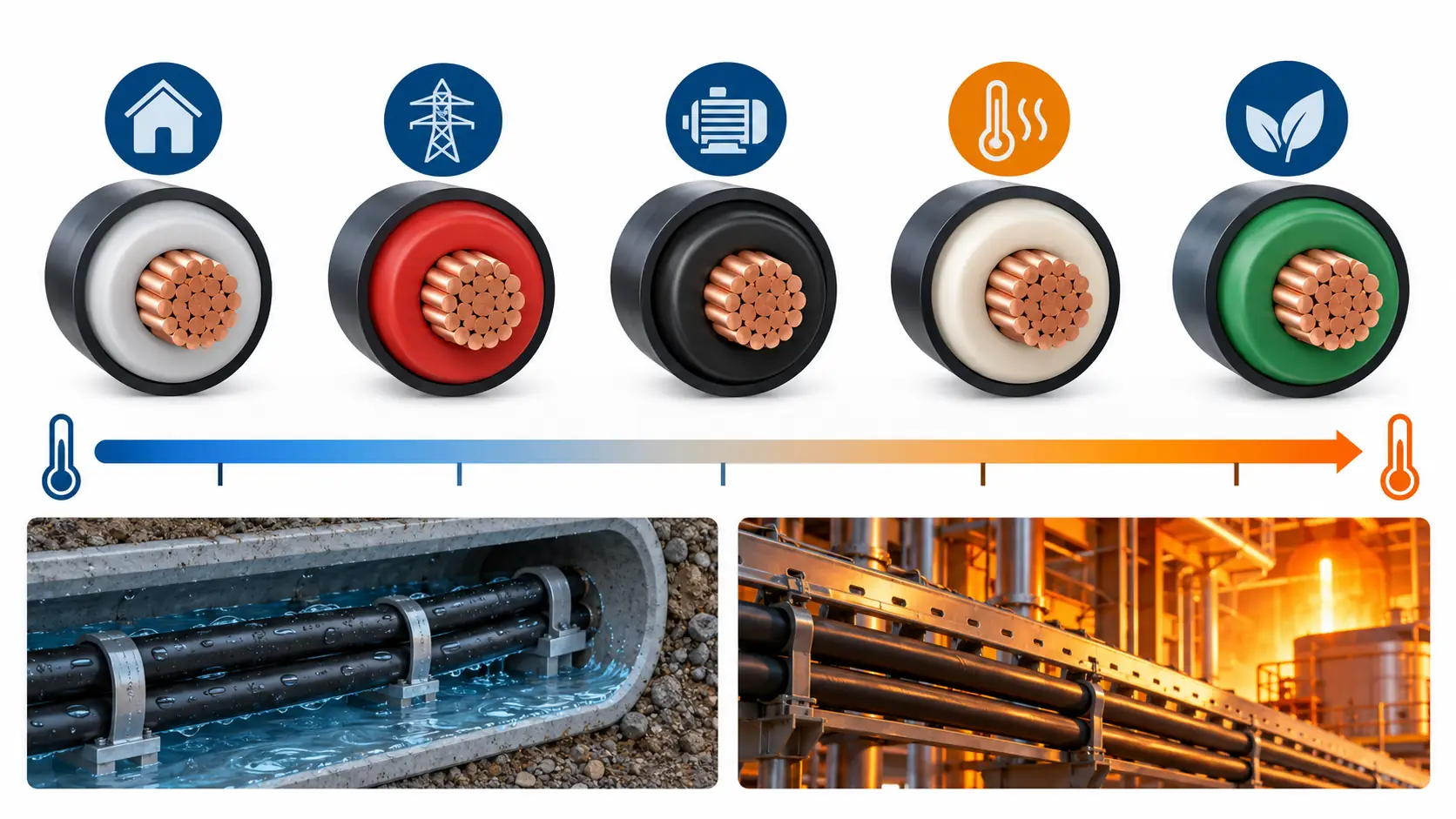
Quick Answer: Cable insulation selection is decided by three site conditions, not by what the last project used: the temperature the conductor will actually reach, the water or chemical it will see, and whether the cable will move. PVC covers the cheap fixed end of the range, XLPE covers most fixed power work, EPR and silicone cover heat and movement, and every step up the range costs money and lead time. Get the three conditions into the RFQ in numbers and the choice makes itself.
Introduction
Insulation is where an industrial cable specification is won or lost. Two cables with identical copper and identical current rating behave completely differently after five years in a wet duct or beside a hot process line, and the difference sits in a layer the buyer never sees once the cable is installed.
This guide is written for the person raising the requisition. It sets out what each insulation family is good for, the three conditions that decide the choice, the evidence worth demanding, and the decisions to freeze before the order goes out. The thermoset versus thermoplastic comparison behind it is covered in our note on XLPE versus PVC cable.
What Insulation Has to Do on a Site
Hold voltage at the working temperature. Insulation is specified by the conductor temperature it tolerates continuously, and that number sets the ampacity of the whole circuit. A cable with a higher temperature class carries more current for the same copper, which is often the real reason a spec moves up a grade.
Resist water and the chemicals on site. Water treeing in a wet duct and chemical attack in a washdown area both start in the insulation. Neither shows up at commissioning, and both are expensive to prove afterwards.
Survive the mechanical duty. Fixed cable sees one bend at installation. Cable that moves, or that is terminated onto a vibrating machine, sees the flex and vibration transmitted into the insulation and the termination every day.
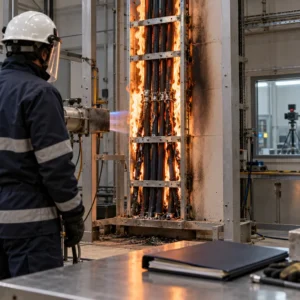
Behave in a fire. Flame propagation, smoke density and halogen content are insulation and sheath properties, and on building and tunnel work they are regulated rather than optional. Our note on low-smoke halogen-free versus fire-retardant cable covers the difference between the two claims.
The Families a Site Buyer Chooses Between
PVC is thermoplastic and cheap, works well in dry fixed runs up to 70 C conductor temperature and is available everywhere. It softens when hot, hardens when cold and releases acidic smoke in a fire, all of which are acceptable in a plant room and not acceptable in a tunnel or a public building.
XLPE is a thermoset, tolerates 90 C continuously and carries more current than PVC for the same cross-section. It is the default for fixed power cable, holds up in wet ground better than PVC, and dislikes repeated flexing at low temperature. Where the term is new to a project team, our note on what XLPE cable is sets out what the cross-linking actually changes.
EPR is a thermoset rubber: similar temperature class to XLPE, far better flex and low-temperature behaviour, and the usual choice where a power cable moves or where a joint has to survive thermal cycling. Silicone goes further, holding up at 180 C or more and staying flexible when cold, which is why it appears near furnaces, in cold stores and on equipment that must keep working in a fire.
The table below compares the families on the conditions a site actually imposes, with the evidence to demand and how each choice fails when it is made on price alone.
| Insulation | Best site duty | What to Specify | Evidence to Demand | Cost and Lead-Time Driver | How It Fails |
|---|---|---|---|---|---|
| PVC | Dry, fixed, light-duty circuits and control wiring indoors | Temperature class, voltage class, compound type, flame retardance required or not | Compound declaration, temperature and voltage test results, flame test where claimed | Cheapest family and usually ex stock; the lead time is on lengths, not material | Softening at overload, hardening and cracking in cold outdoor service, acidic smoke in a fire |
| XLPE | Fixed power cable in trays, ducts and wet ground | 90 C class confirmation, water treeing resistance, screen arrangement for medium voltage | Routine and type tests to the applicable standard, insulation resistance, dimensional records | Compound and degassing time drive cost and lead time on medium voltage | Water treeing in a wet duct, damage from repeated flexing at cold ambient |
| EPR | Power cable that moves, reels or is terminated onto vibrating plant | Flex and torsion duty, low-temperature limit, jointing compatibility, temperature class | Flex and cold bend data, retention of properties after ageing, jointing system approval | Rubber compounds cost more and cure slower than XLPE | Mechanical damage at repeated bends that a stiffer insulation would resist |
| Silicone rubber | High ambient at furnaces, kilns and hot process lines; cold stores | Continuous and short-time temperature, resistance to the specific oil or chemical, core count | Ageing test results at the declared temperature, oil and chemical exposure data, dielectric results | Highest material cost of the common families; specialist terminations add weeks | Mechanical damage from abrasion because silicone is soft; failure where a cheaper gland was used |
| Halogen-free low-smoke compound | Tunnels, public buildings, confined spaces and escape routes | Smoke density, halogen content, flame propagation class, circuit integrity where required | Third-party test reports to the named standard, with the class and the construction identified | Certified compound and certification paperwork both sit in the lead time | Approval rejected on arrival because the report names a different construction |
Temperature, Water and Treeing: The Three Failure Modes
Temperature is a number, not a grade. Ask for the conductor temperature the insulation is rated for and the ambient it will see. A 90 C cable in a 60 C plant room has margin; the same cable in an unventilated roof void does not. Where the ambient is high, the choice is a higher temperature class or a larger cross-section, and the two costs should be compared.
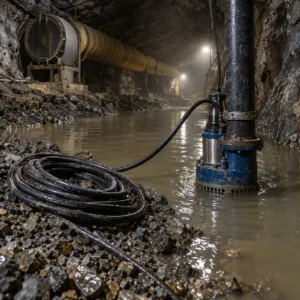
Water is the slow one. In a duct that stands wet, medium voltage XLPE insulation degrades through water treeing, which is why water-blocked and screened constructions exist. The question to ask is whether the route drains, because insulation selection cannot fix a duct that holds water. Our note on insulation resistance testing covers what the results show on a wet installation.
Treeing and voids are manufacturing issues. Voids, contamination and moisture in the compound start the same degradation from inside the insulation. That is why medium voltage insulation is bought on evidence of process control, not only on a sample test.
Thermal cycling at joints. A joint between two different insulation families is a reliability problem. Where a cable is jointed on site, the joint kit and the insulation have to come from one system.
What to Freeze Before the Order Goes Out
These six items are cheap to settle at specification stage and expensive once drums are on a truck.
| Decision | What to State | Evidence to Attach | Cost of Leaving It Open |
|---|---|---|---|
| Conductor temperature class | The continuous temperature the insulation must hold, and the design ambient | A derating calculation showing the class used and the margin | Overload trips and a premature replacement at the hottest run |
| Wet or dry route | Whether each route drains, stands wet or is periodically flooded | A route drawing with wet sections marked | A water-treeing failure in a duct nobody flagged |
| Chemical and oil exposure | The chemicals, oils and washdown agents the cable will meet | Exposure test data for the compound supplied | Insulation that swells or cracks within a year of commissioning |
| Movement and vibration | Fixed, flexed or vibrating, run by run | Flex data at the declared radius and duty cycle | Insulation damage at the machine end of a fixed run |
| Fire performance required | Whether flame retardance, low smoke or circuit integrity is required, and to which standard | Third-party test report identifying the class and the construction | A delivery that cannot be inspected in |
| Jointing and termination system | The joint and termination kits to be used, and their compatibility with the insulation | Jointing system approval naming the cable construction | Repeat joint failures where two systems were mixed |
Cost, Lead Time and What Moves
Stock cable is almost always PVC or XLPE, because those are the families that sell in volume. Made-to-order covers most EPR and silicone work and runs on the compound and the core count. Certified halogen-free and fire-rated constructions are the longest line, because the certified compound and the test evidence are part of the product.
The variable that is never stable is copper. Industrial programmes run long, so a tender-stage quotation can be months from the order, and on a large feeder that movement outweighs the insulation cost difference. Ask how the copper element is calculated and how long the price holds. A supplier who locks a copper basis for a stated window is easier to budget against than one who resets at order.
Incoming Inspection: What Proves the Insulation
Against the drum. Count drums against the packing list, verify marked lengths and photograph the drum markings before anything is cut, so the delivery can be linked back to the construction certificate.
Electrical checks. Measure insulation resistance on the finished lengths and, where the run is long, check the figure against the length and temperature correction. Conductor resistance per kilometre confirms the copper; insulation resistance confirms the layer over it.
Material evidence. Match the compound declaration and the temperature and fire test reports to the construction actually delivered. On a halogen-free or fire-rated order, confirm the report names the construction on the drum rather than a product family.
What Sits Around the Insulation
Insulation is one layer of four, and the three around it change the price and the life of the cable as much as the insulation itself. A semiconductive screen smooths the field at the conductor, a bedding layer cushions the cores, and the sheath takes the mechanical and environmental load. Our note on cable sheath materials compared covers the outer layer in detail.
This matters to a buyer because the layers have to be chosen together. A halogen-free insulation under a PVC sheath does not deliver a halogen-free cable. An EPR insulated cable with a stiff sheath that will not flex defeats the point of buying EPR. Silicone insulation paired with a sheath chosen for abrasion resistance is the combination that makes a hot-area cable last, and it is the reason the temperature performance of the finished product cannot be read off the insulation datasheet alone.
Where a project needs the whole assembly matched to one duty, it is easier to buy it as a construction rather than to build it from four clauses. Our silicone constructions for high-temperature and shielded control duty, such as the shielded silicone multicore cable and the silicone rubber high-temperature control cable, are supplied with the core count, screen arrangement and temperature class already fixed, which removes most of the risk of a mixed specification.
When a Higher-Grade Insulation Is Not the Answer
When the failure is mechanical, not thermal. Insulation cracking from repeated flexing or abrasion is a construction and routing problem. Moving up a temperature class does not fix it, and often the softest, highest-temperature family is the worse choice for abrasion.
When the duct simply holds water. Water treeing is reduced by a water-blocked construction and a route that drains. Buying a premium insulation into a duct that stands full does not solve it.
When the extra ampacity is not needed. A 90 C class only earns its cost where the circuit actually uses the additional current. On a lightly loaded fixed feeder, XLPE is bought for its water performance rather than its rating.
When the site’s approved standards already name the compound. Where the client’s specification names an insulation and a jointing system, the competition moves to delivery, evidence and price rather than material selection.
RFQ Checklist
- Conductor temperature class required, with the design ambient and the derating basis
- Voltage class and insulation level per circuit
- Route condition per run: dry, damp, flooded or buried
- Chemicals, oils and washdown agents the cable will be exposed to
- Movement or vibration duty at each end of the run
- Fire performance required, with the standard and the class named
- Insulation material and compound type, specified per duty rather than site-wide
- Joint and termination system, with compatibility confirmed against the construction
- Test reports required: routine, type, ageing and fire, with records per drum
- Copper basis and the validity window of the price
Conclusion
Insulation selection follows temperature, water and movement, in that order. Put the three into the RFQ as numbers, name the standard where fire performance is regulated, and let price competition work on the parts of the order that genuinely have a choice. Then buy the jointing system from the same place as the cable, because that is where mixed insulation families usually fail.
Kexingyu Cable Group (KXYE) has manufactured cable in Quanzhou since 1996, supplying PVC, XLPE, rubber and silicone constructions with compound declarations and test records that travel with the drums. Send us the cable schedule with the temperatures, the route conditions and the chemicals, and we will come back with the constructions, the evidence that applies to each and a delivery plan against your programme. A request for quotation is the fastest route.