
Transformer Lead Times in 2026: Why the Shortage Persists
A buyer-focused guide to capacity constraints, component bottlenecks, scheduling risk, and practical ways to secure transformer delivery
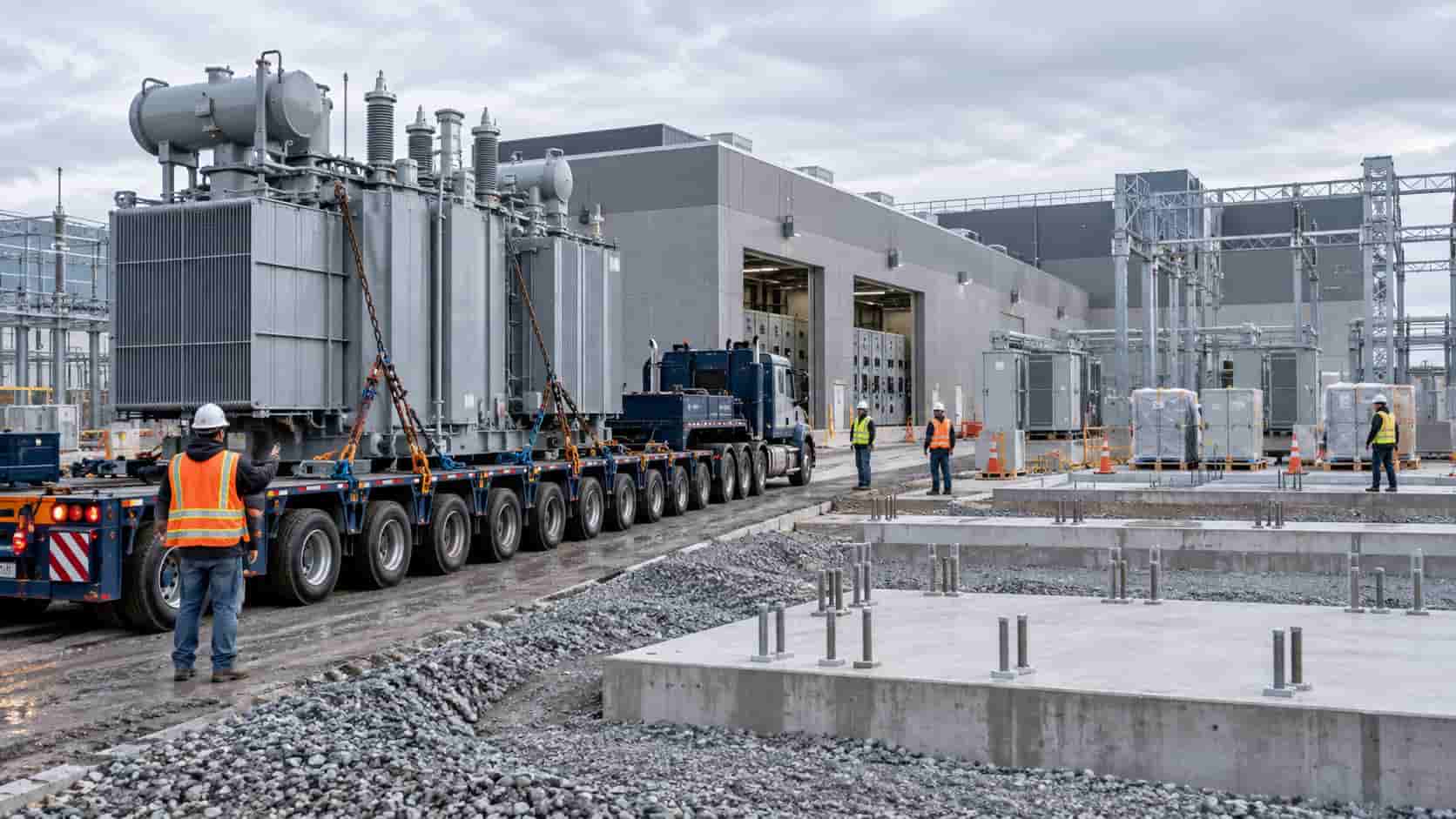
The transformer lead time shortage remains a project risk in 2026, but buyers should be careful with headline numbers. There is no single global lead time that applies to a small dry-type transformer, a utility pad-mounted unit, a substation transformer and a custom large power transformer. The useful question is not simply, ‘How many months?’ It is, ‘What exact design, factory slot, approval path, component set, testing scope and delivery milestone does that number include?’
Public U.S. Department of Energy supply-chain information shows how sharply conditions changed: distribution-transformer lead times rose from roughly three to six months in 2019 to 12 to 30 months in 2023. In early 2026, DOE still identified the 2023 figure as its latest comparable data. This is a market benchmark, not a current quotation for every project or region.
Transformer Lead Time Shortage in 2026: The Short Answer
The shortage persists because demand grew faster than the transformer supply chain could add qualified capacity. Grid replacement, new housing and industry, renewable generation, electrification, resilience investment and data centers all compete for overlapping materials, components, engineering talent, winding capacity and test bays.
Manufacturers are investing in new plants, component production and workforce development. Those investments matter, but transformer capacity cannot be expanded like a simple assembly line. Facilities must be built, equipment installed, workers trained, designs qualified and quality systems proven. Large units also depend on long-cycle components and specialized transport. Capacity announced in 2025 or 2026 may therefore improve future availability without immediately clearing existing backlogs.
For buyers, the practical response is to treat transformers as early critical-path equipment and coordinate them with switchgear procurement rather than waiting until civil construction is advanced.
What Does “Transformer Lead Time” Actually Include?
A supplier may quote from purchase order to ex-works completion, while the buyer assumes the date means delivered, installed and ready to energize. That mismatch can hide months of engineering, approval, transport and site work.
1. Technical clarification and order release
The schedule may not start until commercial terms, datasheets, standards, deviations and system interfaces are agreed. A purchase order with unresolved voltage, impedance, losses, accessories or terminal details is not necessarily a production release.
2. Engineering and approval drawings
General arrangement, terminal layout, foundation loads, control schematics, nameplate data and accessory interfaces normally require review. The manufacturer needs a defined approval window, and the buyer needs to know whether late comments reset the schedule.
3. Long-lead material and component procurement
Core steel, conductor, insulation, bushings, tap changers, radiators, special fluids, protection devices, fans, sensors, switches and fuses may follow different supply paths. One missing approved component can delay an otherwise completed design.
4. Manufacturing, drying, assembly and testing
Transformer production uses specialized winding, core assembly, insulation, tank fabrication, drying or vapor-phase processes, oil processing and test facilities. The available bottleneck may be a winding machine for one size, a drying oven, a skilled team or the high-voltage test bay rather than total factory floor area.
5. Packing, transport, installation and energization
Ex-works completion is not site readiness. Export packing, permits, vessel or truck availability, heavy-haul route studies, unloading, oil filling or accessory assembly, field testing, protection commissioning and utility authorization can all sit outside the factory lead time.
Why the Transformer Shortage Persists
Demand is broad, simultaneous and difficult to forecast
Transformer demand is not being driven by one market. Utilities are replacing aging assets while connecting new customers and strengthening resilience. Renewable plants and battery systems need step-up transformers. Factories, EV charging networks and electrified processes add load. Data centers can require multiple voltage levels, redundant trains and phased capacity that multiply the number of schedule-critical units.
DOE-supported distribution-transformer demand analysis estimates a very large installed U.S. fleet and indicates that about 55% of in-service units are more than 33 years old. Aging does not mean every unit fails immediately, but it increases replacement pressure at the same time new-load demand is rising.
Electrical steel and conductor supply are specialized
Transformers need magnetic core materials with controlled properties, not generic structural steel. Grain-oriented electrical steel and amorphous material have specialized production routes, grades, widths and loss characteristics. Copper, aluminum and continuously transposed conductor also need the correct dimensions and quality. A shortage or qualification constraint in these inputs can affect several manufacturers at once.
Critical components are not always interchangeable
Bushings, on-load tap changers, fuses, switches, monitoring devices and insulation systems are selected for electrical duty, standards and approved supplier lists. Replacing a delayed component may require engineering review, customer approval and sometimes repeat testing. DOE’s transformer supply work specifically highlights component interchangeability as a way to identify and manage lead-time risk, not as permission to substitute parts without control.
Skilled labor and test capacity take time to build
Experienced designers, winders, insulation workers, welders, assemblers, test engineers and field service teams cannot be added instantly. The same is true for impulse generators, high-voltage laboratories, loss-measurement systems, drying plants and heavy lifting infrastructure. Quality failures caused by rushing production would create a much larger project risk than a realistic schedule.
Customization reduces slot flexibility
Nonstandard voltage ratios, unusual impedance, special loss guarantees, low sound limits, high insulation levels, seismic duty, stainless-steel enclosures, special fluids, monitoring packages and utility-specific terminals can move an order away from a manufacturer’s repeatable platform. The result may be more engineering, a narrower component choice and fewer compatible production slots.
Factory expansion does not remove the backlog overnight
Major manufacturers have announced substantial transformer and component investments across the United States, Canada and Latin America. These projects confirm that the industry sees sustained demand. They also illustrate why relief is gradual: new factories, insulation capacity, bushing lines and test capability require construction, commissioning and workforce ramp-up before they contribute stable output.
Why Lead Times Differ by Transformer Type
| Transformer Category | 2026 Planning Behavior | Common Schedule Drivers | Buyer Action |
|---|---|---|---|
| Standard utility distribution | High-volume demand can fill production lines even when designs are relatively standardized | Core steel, conductors, tanks, bushings, fuses, utility-specific accessories, test capacity | Use approved standard designs and forecast call-off quantities early |
| Pad-mounted distribution | Cabinet, cable-interface and feed-arrangement choices make late changes costly | Radial/loop feed, bushings, switches, fuses, compartment layout, enclosure materials | Freeze utility interface, cable data and cabinet arrangement before slot confirmation |
| Dry-type distribution | Availability varies by insulation system, enclosure, temperature rise and special environmental duty | Conductor availability, insulation materials, coils, enclosure fabrication, fans and sensors | Confirm service conditions, loss limits, enclosure and accessory scope at RFQ stage |
| Medium power / substation | Engineering, accessories and project-specific testing become larger parts of the schedule | Bushings, tap changer, protection/monitoring, radiators, controls, test-bay capacity | Approve drawings quickly and separate essential requirements from preferences |
| Large power transformer | Custom engineering, long-cycle components, factory capacity and transport dominate | Electrical steel, CTC conductor, insulation, bushings, tap changer, test bay, heavy transport | Reserve capacity early and develop transport, installation and spare strategy in parallel |
| Data center / special duty | Redundancy, fast load growth and coordinated energization create multiple schedule interfaces | Low-loss design, impedance, harmonics, sound, protection, switchgear interface, staged capacity | Coordinate transformer, switchgear, protection, cables, FAT and energization as one package |
A buyer should never transfer a lead-time assumption from one transformer category to another. Standard distribution units may benefit from repeat designs but face very high order volume. Large power transformers are lower-volume yet highly engineered, with long-cycle components and transport constraints. Dry-type and pad-mounted units sit between those extremes depending on rating, enclosure, accessories and utility requirements.
Even two electrically similar units can have different schedules if one uses a manufacturer’s standard platform and the other requires an unqualified component, a special test or a new mechanical arrangement.
How Data Center Projects Are Affected
For data center power infrastructure, the transformer schedule is connected to utility service, medium-voltage switchgear, protection studies, generators or grid-forming resources, UPS architecture, busway and staged energization. A transformer arriving late can block commissioning even when the building and IT equipment are ready.
The data center market adds three forms of pressure. First, individual campuses can require large blocks of capacity. Second, redundancy can multiply equipment quantities. Third, design changes may continue while the developer tries to reserve a manufacturing slot. If voltage, impedance, loss capitalization, sound limits, harmonic assumptions or redundancy philosophy change after release, the promised slot may no longer match the final design.
A separate published guide explains why data centers face combined switchgear and transformer shortages. The key planning lesson is to release critical equipment through controlled design gates, not through incomplete orders that invite repeated changes.
Seven Ways Buyers Can Reduce Schedule Risk
1. Define the milestone before asking for lead time
Ask for separate dates for technical clarification, drawing submission, drawing approval, production start, factory acceptance testing, ex-works readiness, shipment, site delivery and commissioning support. Put the same milestone definitions into every supplier comparison.
2. Freeze the minimum technical baseline
Before slot confirmation, define rated power, voltage ratio, frequency, phases, connection or vector group, taps, impedance, insulation level, cooling, temperature rise, losses or efficiency requirement, service conditions, sound limits, terminals, fluid, enclosure, accessories, standards and test scope. Mark each item as fixed, selectable or pending.
3. Ask for evidence behind the delivery date
A credible schedule should identify the manufacturing location, design family, reserved or forecast production slot, long-lead components, approval assumptions and test-bay plan. Buyers do not need confidential factory data, but they do need more than a salesperson’s unsupported month count.
4. Standardize without weakening essential requirements
Use utility-approved standard ratings, common accessories, repeat terminal arrangements and qualified alternatives where the system allows. Do not remove safety, performance, loss, environmental or grid-code requirements merely to advertise a shorter lead time.
5. Control drawing approvals and changes
Name responsible reviewers, set a response period and consolidate comments. Require the supplier to show the schedule effect of any requested change before it is accepted. A late change to impedance, bushing, tap changer, enclosure or cable interface can affect both design and purchased components.
6. Plan FAT, logistics and site readiness in parallel
Reserve witness-test dates early, confirm test-report timing and prepare transport studies, foundations, oil handling, installation equipment and commissioning resources while the transformer is being manufactured. Avoid storing a completed transformer because the site or import documents are not ready.
7. Build resilience into the procurement strategy
For repeat programs, consider framework agreements, forecast quantities, approved alternate components, common spare strategy and standardized interfaces. For critical single projects, evaluate a second qualified source, but do not split responsibility in a way that creates incompatible equipment or unclear warranties.
Questions to Put in a Transformer RFQ
Schedule basis: What event starts the clock? Is the quoted date for FAT, ex-works readiness, shipment or site delivery? What buyer-approval duration is assumed? How much float is included?
Factory and slot: Which facility will build the unit? Is the design within an established platform? Is a slot reserved, forecast or subject to later allocation? What conditions can cause the slot to move?
Critical materials: Which components are currently longest lead? Are qualified alternatives available? What approvals or test changes would a substitution require?
Engineering control: When will drawings be submitted? Which inputs are still open? How will deviations and buyer changes be logged, priced and reflected in the schedule?
Testing: Which routine, type and special tests are included? When is the test bay planned? Are witness tests in person or remote? When will certified reports be issued?
Delivery and support: What Incoterm, packing, route, permits, offloading, site assembly, oil processing, field testing, commissioning and spare-parts support are included or excluded?
Common Mistakes That Make Delays Worse
Using a market average as a promise. Historical or industry lead-time data is useful for risk screening, but only a dated supplier commitment tied to an approved specification can support the project schedule.
Placing an incomplete order to ‘get in line.’ This can work only when the open items are explicitly bounded. If fundamental electrical or mechanical requirements remain uncertain, the order may reserve the wrong design or no usable slot at all.
Optimizing the transformer separately. A transformer that arrives before its switchgear, cable terminations, protection settings or foundation is not an energized system. Interface schedules must be managed together.
Ignoring documentation and approvals. Utility review, drawings, type-test evidence, loss guarantees, FAT reports, shipping documents and import requirements can delay release even after manufacturing is complete.
Believing the shortest quotation automatically carries the lowest risk. Buyers should compare technical compliance, factory capability, component sourcing, quality controls, test capacity, logistics and contractual schedule definitions as well as the stated duration.
Conclusion
The transformer lead time shortage in 2026 is structural rather than a single temporary disruption. Demand remains broad, critical materials and components are specialized, skilled capacity takes time to develop, and custom engineering limits interchangeability. Factory expansions are positive, but their benefits arrive gradually.
The safest buying strategy is to define the milestone, stabilize the technical baseline, verify the production and component plan, control approvals, and coordinate the transformer with the wider substation package. KEXINGYU E-POWER GROUP can review transformer and substation RFQs against project-specific ratings, standards, interfaces, tests and delivery requirements. Final availability and schedule remain subject to engineering review and confirmed production capacity.
Recent Posts
Voltage Stabilizers vs UPS: Do You Need Both?
Voltage Stabilizers vs UPS: Do You Need Both? One device fixes how high or low the voltage is; the other fixes whether there is voltage
Energy Storage for Data Centers: A Growing Backup Power Option
Energy Storage for Data Centers: A Growing Backup Power Option Batteries have always backed up data centers in the form of UPS strings. Grid-scale BESS
Thermal Runaway in Lithium Batteries: What BESS Buyers Should Understand
Thermal Runaway in Lithium Batteries: What BESS Buyers Should Understand How thermal runaway starts, how it propagates, and which evidence buyers should require before approving