
Utility Grid Expansion Equipment: What Distribution Projects Need to Procure
Extending a distribution network is a long list of unspectacular equipment bought on time and to standard—and projects fail far more often on procurement discipline than on engineering.
Introduction
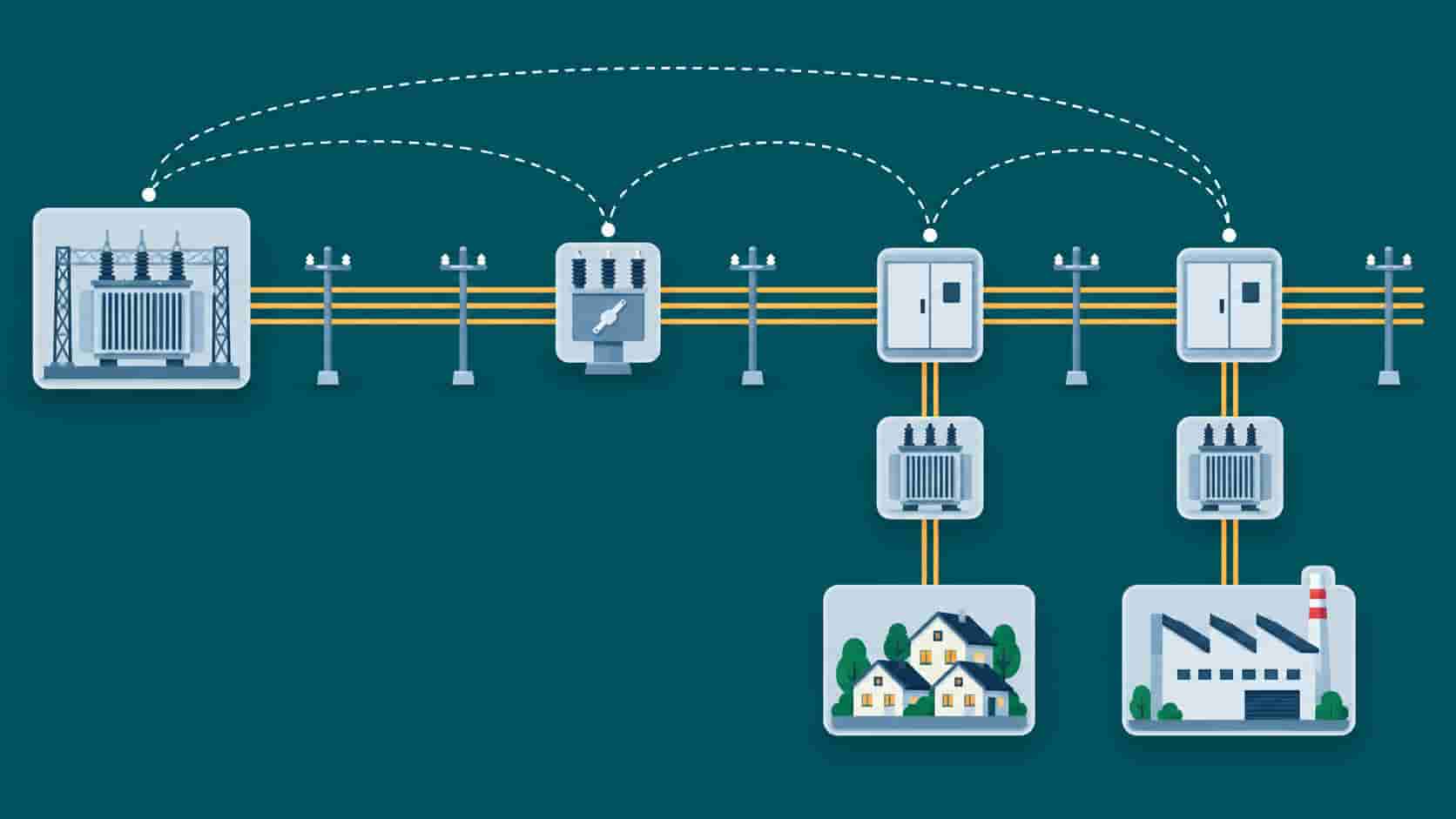
Every year, utilities, rural electrification agencies, industrial park developers and mining companies extend medium-voltage networks into new territory: new housing estates, new factory zones, new feeders along a highway. The engineering of a feeder extension is well understood. What trips projects is the procurement: a bill of materials with a dozen equipment categories, standards that vary by country, type-test certificates that cannot be faked, and lead times that have stretched painfully since 2021.
This guide is the buyer’s view of a grid expansion project. It lists the equipment a typical MV extension actually needs, explains which standards and type tests must accompany each item, and—increasingly the deciding factor—how to plan around transformer and switchgear lead times. The equipment itself is specialist territory; our transformers and substations range covers the core MV blocks in detail. Here we stay at the level of the shopping list and the contract.
What Grid Expansion Actually Buys
A typical 11 kV or 33 kV feeder extension—say, twenty kilometres serving three villages and a light industrial cluster—consists of the following procurement categories. Volumes vary; the structure rarely does.
- Line hardware and structures. Poles (concrete, steel or wood per local practice), cross-arms, insulators, stay sets, earthing materials, and OPGW or ADSS where the feeder carries communications.
- Medium-voltage cables and accessories. XLPE cable per the project’s chosen standard, terminations, joints, and cable boxes where overhead meets underground.
- Switching and protection points. Ring main units at each distribution substation, sectionalising switches along the feeder, reclosers on long rural routes, and fuses or fuse-switch combinations at small tap-offs.
- Distribution transformers. Pole-mounted, pad-mounted or compact secondary substations—typically hundreds of units on a rural programme, each a purchasing decision in miniature.
- Metering and connection equipment. CT/PT metering units, prepayment meters where the utility’s programme requires them, and service connection hardware.
- Control and monitoring. Feeder remote terminal units, distribution automation RTUs where SCADA reaches the MV level, and the communication backhaul that makes them useful.
The engineering adage holds for procurement too: the transformer is the heart of the network, but the project’s schedule lives and dies on the small items—cable accessories, RMU spares, termination kits—whose absence stops an energisation for weeks.
The MV Equipment Core: Switching, Transformation, Protection
These are the items that carry the network’s reliability figures, and where specification discipline pays back for decades. The table summarises the core blocks and what to nail down at order stage.
| Equipment | Role on the Network | Decide at Order Stage | Common Procurement Gap |
|---|---|---|---|
| Ring main unit (RMU) | Tee-offs and distribution substations; loop in and out, feed and protect the transformer | Switching rating (SF6, vacuum or solid insulation per utility policy), cable connections and sizes, extendable or terminal, motorised or manual, ARC or interlock scheme | Cable bushings ordered to a different standard than the cable terminationsâship a mismatch and the crew improvises on site |
| Sectionaliser / recloser | Splits long feeders so faults isolate small sections instead of whole routes | Breaking capacity and duty cycle, control cabinet and protection settings, auto-reclose sequence, communication option for automation | Protection coordination with upstream devices never studiedârecloser fights the substation breaker |
| Distribution transformer | Steps MV down to LV at every consumer connection point | Mounting type, rating and taps, losses class per utility standard, vector group, off-circuit or on-load tapping, HV/LV connection fittings | Losses level left unpricedâcheap units tax the utility's losses budget for twenty years |
| LV board and metering | Distributes and bills at the consumer boundary | Board rating and outgoing ways, meter type per programme, CT/PT class, prepayment integration | Metering cabinets ordered without the utility's approved-pattern certificate |
| Protection relays | Detect and clear faults at the substation infeed | Feeder protection functions, CT/PT matching, communication protocol, settings study responsibility | Settings study subcontracted to nobodyârelays commissioned on default values |
On the switching core, the biggest recurring decision is ring main unit versus a conventional switchboard. Compact RMUs dominate distribution substations for good reason—weatherproof, factory-tested, minimal footprint—but traditional switchgear retains the advantage where operators need full control and monitoring indoors. Our comparison of RMUs and traditional switchgear sets out the selection logic in detail.
Transformers deserve a dedicated decision on mounting style, because it drives civil works, safety clearance and cost per unit. Overhead networks favour pole-mounted units; dense estates and industrial zones increasingly specify pad-mounted or compact prefabricated substations. The trade-offs—vandalism exposure, clearance requirements, flood risk, cost per kVA—are compared in our pad-mounted versus pole-mounted transformer guide.
Cables, Accessories and the Standards Question
MV cable is deceptively standardised: a project buys “11 kV XLPE cable” and believes the matter closed. Then the accessories arrive from a different supplier’s catalogue and the jointers report that the stress-control geometries do not match. The procurement rule is simple: buy cable and accessories as one engineered system from coordinated sources, not as two shopping lines.
The standards landscape adds a second layer. IEC 60502 governs MV cable in most of the world; BS 6622 and BS 7870 remain current in markets with British inheritance; and utilities layer their own approved-vendor and accessory-matching requirements on top. Our guide to MV cable standards across IEC, GB and BS maps which markets follow which framework and how to specify so the cable, joints and terminations arrive as a compatible set. For multi-country programmes, resist the temptation to mix standards across lots—standardise per country, and keep accessories within that standard’s ecosystem.
Standards and Type Tests You Cannot Skip
Type-test certificates are the passport that lets equipment onto a utility network, and the audit that keeps counterfeit or downgraded product out. The table lists the tests that buyers should demand by name, not by “certified” gesture.
| Equipment | Governing Standard | Type Tests to Require |
|---|---|---|
| Ring main unit | IEC 62271-200 (or equivalent national adoption) | Internal arc classification (IAC) at stated current and time, temperature rise, short-time withstand, cable-charging switching duty |
| Recloser / sectionaliser | IEC 62271-111 | Capacitive and cable-charging switching, mechanical endurance, protection functions verification under stated conditions |
| Distribution transformer | IEC 60076 series (or regional equivalent) | Lightning impulse, short-circuit withstand (or validated design series), temperature rise, sound level where urban siting applies |
| MV cable | IEC 60502-2 / BS 6622 / BS 7870 per market | Partial discharge, tan delta, impulse test on the assembly, hot-set and shrinkage on the insulation |
| Accessories (joints, terminations) | IEC 60502-4 series | Partial discharge on assembled accessory, impulse on assembled accessory, sealing and waterproofing class |
Two procurement notes on certificates. First, ask for the type-test report from an accredited laboratory, not a “certificate of conformity” issued by the factory—reports carry the test parameters that let your engineer verify applicability. Second, match the certificate to the exact variant ordered: an IAC rating proven at 20 kA for one second does not transfer to the 25 kA variant, and cable joints tested on 95 mm² cores do not automatically cover your 185 mm² lot. Suppliers who answer these questions precisely are, in our experience, the ones whose shipments pass inspection.
Lead Times and Procurement Planning
Since 2021, the electrical supply chain has turned lead times from a footnote into a project-critical path item. Large power transformers now quote year-plus deliveries in many markets, and even distribution-class transformers and RMUs have moved from weeks to many months. Our analysis of the transformer supply shortage and lead times explains the structural causes—grain-oriented electrical steel capacity, winding labour, and a demand wave from data centers and electrification.
For a grid expansion programme, three planning disciplines protect the schedule:
- Order the long items first, even before detailed design closes. Transformer ratings and RMU configurations can be fixed early from the network study; civil designs can flex around them. The reverse sequencing—design everything, then discover the transformer queue—has delayed more projects than any technical problem.
- Standardise the fleet. One transformer platform, one RMU configuration, one cable standard across the programme multiplies every quantity discount, simplifies spares and training, and makes partial deliveries useful. Variety is a project cost, not a feature.
- Buy the spares with the fleet. RMU fuses, cable jointing kits, transformer bushings and a transformer spare at strategic points belong in the original purchase order. A feeder outage waiting on an imported joint kit burns the goodwill the project was meant to build.
When Utility-Style Procurement Is Not the Answer
The utility procurement model—annual tenders, framework contracts, lowest-cost evaluated bids—exists for a reason, but it does not fit every buyer. Know when to step off it:
- Private industrial estates and mining sites. A private network with one owner and one contractor is better served by a coordinated package supply—switchgear, transformers, cables from one responsible scope—than by assembling a utility tender split across six lots with six interfaces.
- Fast-track projects. Where energisation dates drive revenue, paying a premium for shorter, guaranteed lead times on the critical path usually beats the lowest evaluated bid that arrives after the rainy season.
- Small extensions. A two-substation extension does not justify a tender machinery designed for hundreds. Framework catalogue pricing through an established supplier shortens the calendar dramatically.
- Uncertain demand. Where load growth is speculative, phased supply with reserved factory slots beats warehousing equipment that may wait years in the weather.
What to Ask Suppliers Before You Sign
Close the RFQ with these items pinned down, and most grid-expansion disputes never happen:
- Type-test reports by number and variant, with the exact rating of the units on offer, from named accredited laboratories.
- Compatibility confirmation for cable, joints and terminations as one system, with the accessory supplier named.
- Lead times in writing per batch, with liquidated dates and the factory slot reserved at order.
- Losses and noise figures per unit class, priced into the evaluation—not promised in a brochure.
- Spares and tooling list for energisation, jointed into the supply contract, not deferred to operations budget.
- Witnessed factory tests and routine test reports per shipment batch, with the utility’s inspector invited.
- Packaging and storage specification—equipment for rural programmes waits outdoors, and the packing must survive it.
Conclusion
Grid expansion succeeds when the procurement is engineered as carefully as the network: a complete bill of materials, standards and type tests demanded by name, cable and accessories bought as a system, and the long-lead items ordered before they become the critical path. None of this is glamorous, and all of it is decisive.
The suppliers worth keeping are the ones who answer certificate questions precisely, reserve factory slots in writing, and treat spares as part of the network rather than an afterthought. Hold your RFQ to that standard, and the feeder you energise this year will still be performing when the next programme round begins.
Frequently Asked Questions
Quick answers to the questions distribution project teams ask most often.
Recent Posts

Energy Storage for Data Centers: A Growing Backup Power Option
Energy Storage for Data Centers: A Growing Backup Power Option Batteries have always backed up data centers in the form of UPS strings. Grid-scale BESS
Thermal Runaway in Lithium Batteries: What BESS Buyers Should Understand
Thermal Runaway in Lithium Batteries: What BESS Buyers Should Understand How thermal runaway starts, how it propagates, and which evidence buyers should require before approving

What Cables Does a Data Center Need? The Complete Cable List
What Cables Does a Data Center Need? The Complete Cable List Quick Answer: A data center needs eight cable families — medium voltage feeders, low