UL 758 and AWM Styles: How Flexible Cable Is Classified for North America
Quick Answer: UL 758 defines Appliance Wiring Material, and every AWM style number fixes a cable’s construction, temperature and voltage ratings, so buyers should read the style as a recipe card, not a performance promise, and check motion claims separately.
Nearly every cable shipped into North American automation equipment carries a line of print with a number in it, and that number, the AWM style, is the product of UL 758, the standard for Appliance Wiring Material. The system is older than most of the industries using it, and it works differently from the certification frameworks buyers know from power cable, which is why AWM claims get misread so often: a recognized style says a great deal about how the cable is built and surprisingly little about how long it will flex. This guide explains what the standard actually covers, how an AWM style designation is structured, where recognition sits relative to listing, and how to read the style information on a flexible cable datasheet without inferring things it does not say.
Introduction
AWM exists because end-use equipment standards, the standards for appliances, machines and panels, evaluate the finished equipment, and the cables inside that equipment need a defined way to be accepted as components. UL 758 provides that way: a catalog of recognized styles, each a fixed construction that a manufacturer has had evaluated and that UL’s follow-up service then audits in production. The framework is component recognition rather than product listing, and that difference drives most of the practical questions buyers raise: what the mark means, who is responsible for the cable’s suitability, and why the style sheet reads like a construction drawing instead of a test report.
The certification landscape around AWM, and how it compares with the marks power cable carries, is set out more broadly in the guide to the power cable certifications checklist, and this guide stays focused on the AWM layer itself.
What UL 758 Actually Evaluates
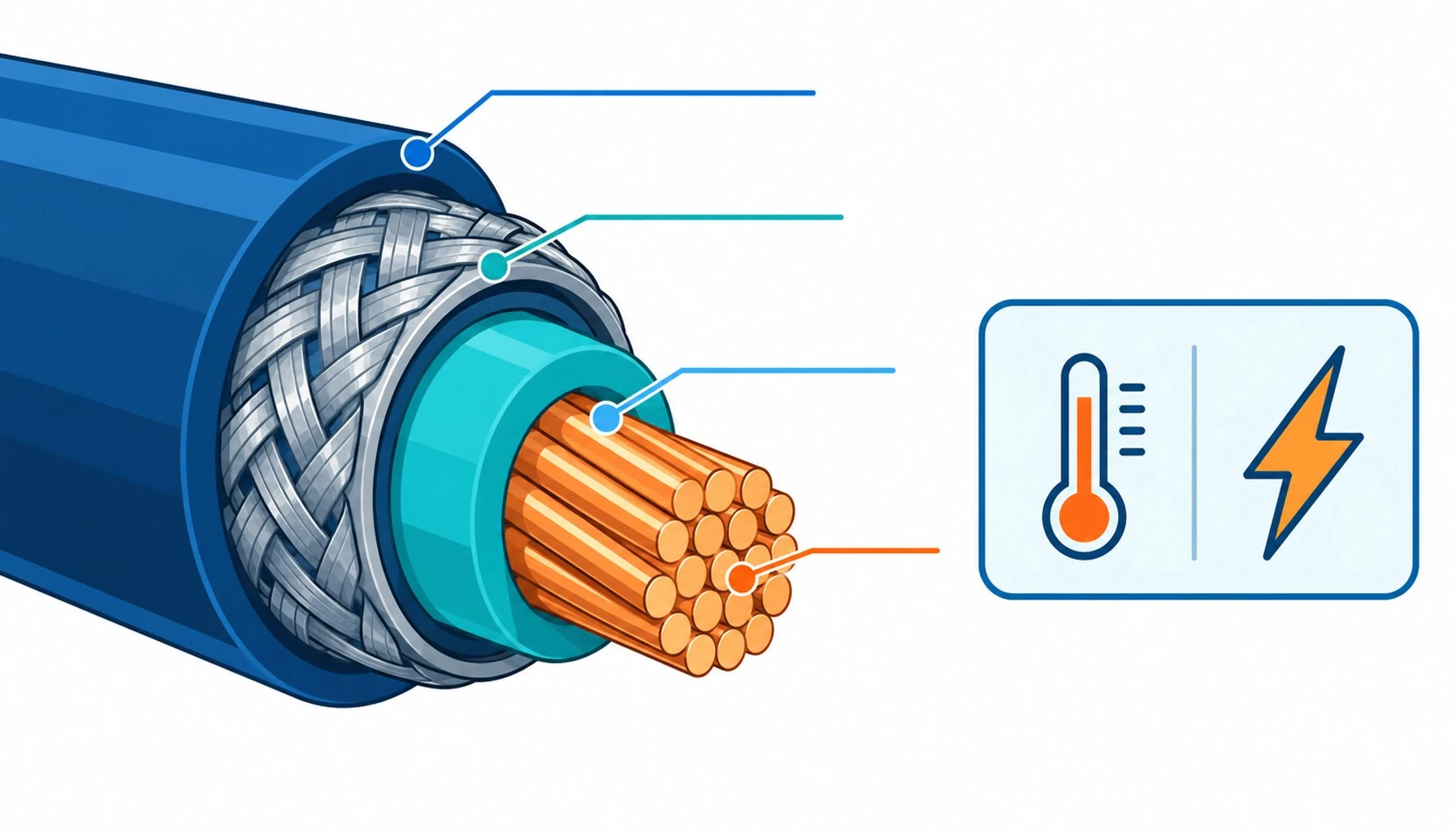
An AWM style evaluation centers on construction: conductor size and material, insulation type and thickness, any jacket or shield, the number of conductors, and the finished cable’s dimensions. From that construction, the style sheet states the temperature rating and the voltage rating, and assigns the tests the construction must pass, dielectric, insulation resistance, physical properties appropriate to the materials, and flammability behavior relevant to the application category. The style sheet is specific enough that two manufacturers claiming the same style should be building to the same recipe, which is precisely the point: the style number lets an equipment designer specify a component and have confidence that any manufacturer holding that style builds the same thing.
What the evaluation does not include is the part motion cable buyers care about most: flex endurance. Cycling a cable over a bend radius a million times is not a parameter the AWM framework assigns, so a style number tells you the cable is built a certain way, and nothing about how that construction behaves on a drag chain. That separation, construction certified, duty claimed, runs through every AWM datasheet and is the first thing to check when reading one.
Reading an AWM Style Designation
A practical style line looks like this: AWM Style 2464, 105 degrees C, 300 volts, multiconductor with shield, overall PVC jacket. Each element fixes something. The style number anchors the construction recipe held under the recognition. The temperature rating states the ceiling the insulation system was evaluated for, which matters in cabinets with drives and in enclosed drag chains. The voltage rating states the electrical class evaluated, and exceeding it is not a derating exercise, it is a different product. The construction description tells you whether the cable suits the routing: individually insulated conductors, twisted, shielded, jacketed, and with what materials.
The element that misleads buyers most often is what is absent: any statement about minimum bend radius in motion, flex cycles, torsion capability or oil immersion, unless a specific style’s materials and evaluation happen to address a specific environment. Manufacturers add those properties in their own datasheets, tested on their own rigs, and the style number neither confirms nor denies them. The reading discipline for separating certified construction from manufacturer claims is covered in the guide to reading equipment datasheets.
The anatomy of a designation, and the boundary between what it fixes and what it leaves open, is laid out below.
| Element | Example | What it fixes | What it does not |
|---|---|---|---|
| Style number | Style 2464 | The recognized construction recipe, audited in production | Does not rate motion duty or service life |
| Temperature rating | 105 degrees C | Continuous operating ceiling the insulation system was evaluated for | Does not derate for confined heat or bundled loading automatically |
| Voltage rating | 300 V | Electrical class evaluated under the style | Does not permit reuse at higher voltages with margins |
| Construction line | Twisted pairs, shielded, PVC jacket | Materials, layering and dimensions of the finished cable | Does not state flex, torsion or environmental endurance |
| Recognition status | UL Recognized Component | Component acceptance for use in evaluated end equipment | Does not by itself authorize field installation as standalone wiring |
Recognition Versus Listing: Why the Mark Looks Different
AWM cables carry a Recognized Component status rather than a Listing, and the distinction is not bureaucratic decoration. A listed product, like a power cable evaluated as a finished product for field installation, has been assessed for the uses its type permits on its own. A recognized component is assessed for use inside equipment that will itself be evaluated: the machine builder’s control panel, the appliance, the automation system. The equipment evaluation decides whether the component’s use is acceptable in context. This is why AWM styles carry application categories, some styles accepted for external interconnection use and others restricted to internal wiring, and why an equipment certification project starts from the equipment standard and works down to the component, not the reverse.
For buyers sourcing cable from Asia for North American equipment, the practical checks are straightforward: the style number exists in the recognition system under the manufacturer’s name, the recognition covers the construction actually quoted, and the follow-up service mark appears on the shipped product. Supplier claims that drift from the recognized construction are the most common mismatch, and the vetting questions that surface them early are covered in the guide to vetting equipment manufacturers.
How AWM Fits a Motion Cable Purchase
For robot and machine cable, the AWM layer and the duty layer answer different questions, and a sound specification uses both. The AWM style answers the compliance question: the construction is recognized, rated and auditable for the equipment’s North American evaluation. The duty layer answers the engineering question: bend radius, flex cycles, torsion, oil and coolant exposure, verified by the manufacturer’s test data. A cable that has the style but no duty data is a compliance item with an unknown lifetime; a cable with duty data but no recognized style is an engineering item that will complicate the equipment evaluation. Buyers who ask for both at RFQ stage avoid the retrofit conversations later. The certification planning that surrounds multi-market equipment is treated in the guide to the equipment certification checklist, and the questions below turn that planning into supplier checks.
| Question | Why it matters | What a good answer looks like |
|---|---|---|
| Which style number does this construction hold, and under whose name? | Anchors the claim to an auditable recognition | Exact style number with manufacturer name, verifiable in the recognition system |
| Does the shipped product carry the follow-up service mark? | Recognition only counts if production is audited | Mark present on the cable print or jacket per the follow-up procedure |
| What motion data exists beyond the style? | Flex endurance is not an AWM parameter | Manufacturer test data with radius, cycles and rig conditions stated |
| Is the style accepted for the intended application category? | Internal wiring styles do not cover every external use | Application category confirmed against the equipment evaluation plan |
| Do the rated temperature and voltage match the machine's real service? | Mismatches surface at equipment evaluation, late and expensive | Ratings chosen from the duty analysis, not the catalog default |
When an AWM Style Is Not the Answer
Honest limits: AWM recognition is a component framework, and some motion cable purchases do not fit it. Fully custom constructions may be built to a new or modified style description through the manufacturer’s file, which takes time and costs money that small orders rarely justify. Cables intended for standalone field use fall outside the component logic entirely and belong to the finished-product frameworks power cable uses. And no style number substitutes for the machine-level wiring obligations of the destination market, which the equipment evaluation applies on top of the component recognition. The style answers one layer of the compliance stack; the rest still needs doing.
RFQ Checklist: AWM Requirements on a Cable RFQ
Attach these items to the RFQ:
- Target style number and rating class, or the construction description if a new style is needed
- Application category: internal wiring or external interconnection, per the equipment evaluation plan
- Ratings: temperature and voltage from the machine’s real service, not the catalog default
- Motion duty: bend radius, cycle count, torsion and environment, with test data requested
- Recognition evidence: manufacturer name, style number and follow-up service marking on shipments
- Documentation: style sheet, construction records and test reports delivered with the order
Conclusion
UL 758 and the AWM style system give North American equipment builders a component language: fixed constructions, audited production, ratings that slot into an equipment evaluation. The system works when buyers read it for what it is, a construction recipe with compliance standing, and pair it with the duty data that only the manufacturer’s testing can supply. Read that way, the style number becomes a useful anchor instead of a false comfort.
Kexingyu Cable Group (KXYE) supplies flexible machine cable with both layers in view: recognized constructions for the compliance file and test data for the duty claim. Send your equipment’s cable scope through the RFQ page, and we will quote the style and the duty together.