Inspecting Site Cable: When to Keep, Repair or Replace
Quick Answer: Site cable decisions drift between sentimental and paranoid unless the criteria are written down. Inspect on a schedule with a fixed checklist, judge each run on insulation, continuity and sheath condition against stated thresholds, repair what passes the repair standard, retire what fails twice, and tag everything with its test date. The criteria cost one page; the alternatives cost either repeated failures or good cable in the skip.
Introduction
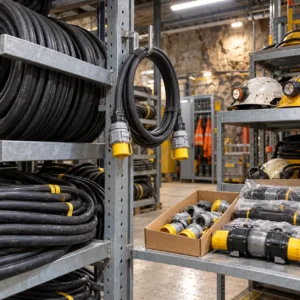
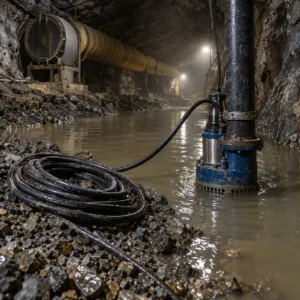
Every site owns a cable population that nobody fully knows: drums in the store, sets in the rack, runs buried in the work. Decisions about it are made at the point of use, under pressure, by whoever is there, and the outcomes split between the two classic errors: cable that should have retired going back to work, and cable that had years left going to the skip because its coil looked tired.
Written criteria fix both errors, and the inspection that feeds them is cheaper than either. This guide gives the routine, the tests, the keep-repair-replace thresholds, and the records that make the whole system defensible when an auditor or an insurer asks.
The Inspection Routine
Cable inspection works on three loops of different depth, and all three are cheap.
The daily glance. At every setup and every shift start, the crew looks at what it is about to use: jacket intact, ends sound, no taped joints, tags present. Thirty seconds per set. This loop catches most developing faults simply because it looks at everything most often.
The weekly walk. A supervisor walks the installed routes at working pace, logging damage, hot spots and missing protection hardware. This loop covers the runs nobody uncoils, the feeders and board connections that age in place.
The scheduled test. Every set and every fixed run gets instrumented on a fixed cycle: insulation resistance and continuity as the core, with results recorded against the item’s tag; our notes on insulation resistance testing and in-service cable testing cover the methods and intervals. The test loop is what turns inspection from opinion into data, and the record per item is what the next three sections rely on.
Keep, Repair or Replace: The Tests
Each item gets one of three outcomes, and each outcome has tests that anyone can apply.
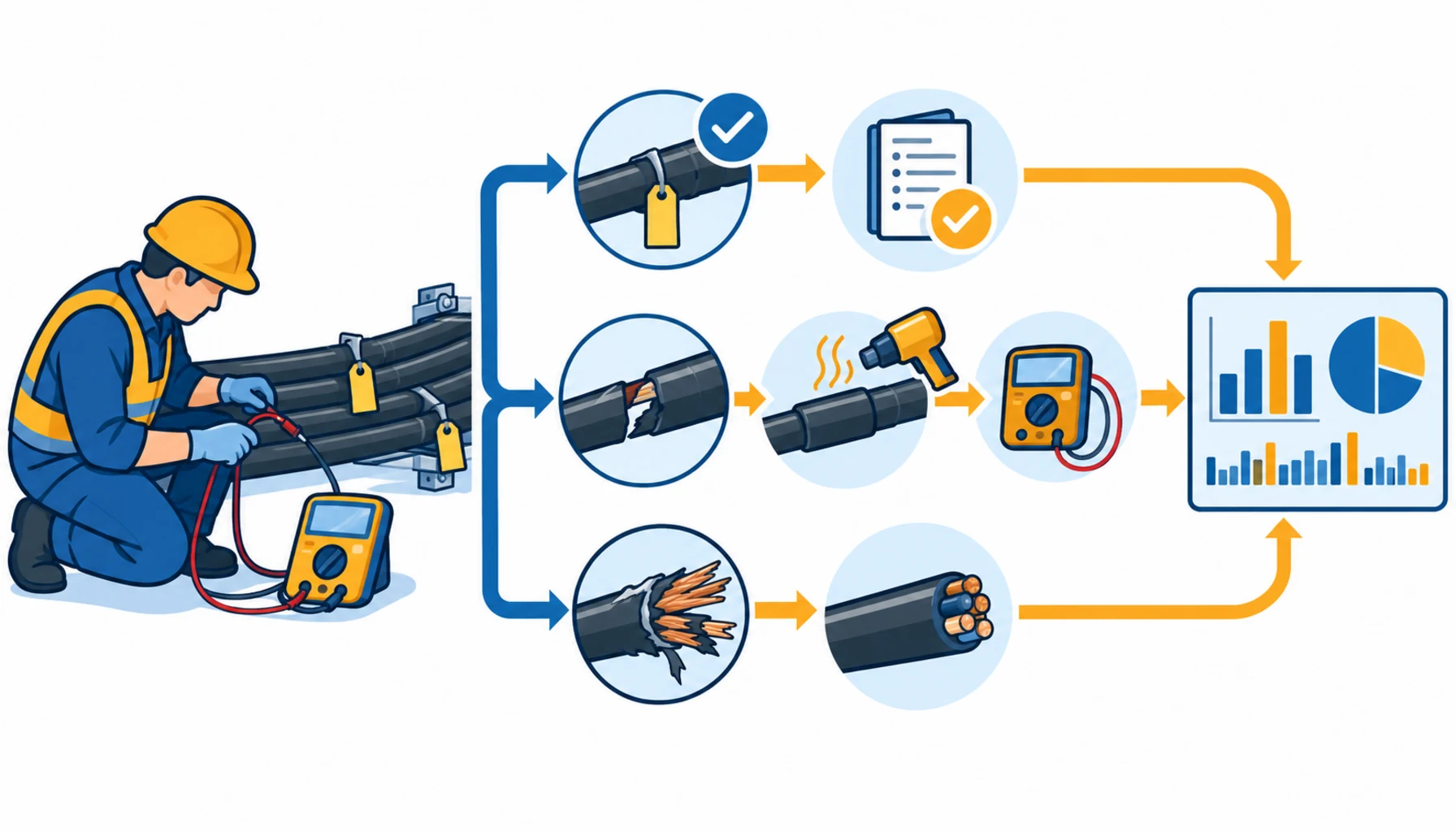
Keep. Insulation resistance above the threshold at the test voltage, continuity of every core within limits, sheath intact with surface scuffing only, ends sound with strain relief working, and a tag in date. A set that passes all five goes back to work; passing is not a feeling, it is a record.
Repair. Sheath cuts that have not reached the cores, damaged ends, and missing hardware are repair items, and the repair standard decides what counts: proper splice kits and heat shrink for jackets, correct lugs and tooling for ends, and a retest before return to service. A repaired item gets a repair mark and its next test date, and repeated repairs in the same metre move the item to replace regardless of test readings, because the local structure is gone.
Replace. Insulation below threshold, any conductor exposure, water in the cores, heating marks at joints, crushed sections with deformed geometry, and the second strike on the same item. Reading the failure before replacing matters, because the pattern names the missing control; our note on cable damage and wear patterns covers the diagnostics. Replacement also carries a rule the census enforces: like-for-like replacement is only allowed where the cause was external. If the construction failed the duty, the replacement is specified for the duty, not for the shape.
| Outcome | Condition | Tests to Apply | What the Outcome Requires | Cost Logic | Failure Mode If Skipped |
|---|---|---|---|---|---|
| Keep | Insulation passes, sheath surface damage only | Insulation resistance, continuity per core, ends checked, tag in date | Recorded pass, next test date set | Free; the record is the cost | Latent faults rotating back into service |
| Repair | Sheath cuts short of cores, damaged ends, missing hardware | Repair per standard, retest before return | Repair mark, test date, repair history updated | Minor materials against a new set | Taped joints becoming the normal |
| Replace | Insulation failure, core exposure, water, heat marks, second strike | Read the failure pattern, then replace for the duty | Retirement mark, census entry, replacement spec'd to cause | A new set against a dead short and a stopped crew | Repeat failures and the incident nobody can explain |
Records: The Part That Makes It Defensible
The inspection earns its keep in the records, because records are what turn a habit into a system and a system into a defence, and defence is what the site needs the day something goes wrong on a circuit it inspected last month.
Per-item records. Every set and run has an identity: a tag number, a length, a construction, a test history. The tag is the key; untagged cable is anonymous, and anonymous cable always fails at the worst moment because nobody knew its history. The tag plus the record sheet answers the question every investigation starts with: what was this, and when was it last proven?
Thresholds written down. The insulation values, the repair rules and the retirement triggers belong in a one-page standard with the inspection cycles. Without written thresholds, every decision is negotiable, and negotiation under time pressure is how bad cable returns to service. The thresholds also give the auditor and the insurer what they actually want, which is evidence of a managed population rather than perfection.
Independent eyes where it counts. Major feeders, disputed failures and insurance-driven inspections justify a third party; our note on third-party cable inspection covers when the engagement pays. The same logic runs at the other end of the cable’s life: factory testing and sample approval before delivery are the inspection that happens while defects are still cheap, covered in our notes on cable factory testing and the cable sample approval process.
What to Freeze Before the Order
| Decision | What to State | Evidence to Attach | Cost of Leaving It Open |
|---|---|---|---|
| Inspection cycles | Daily glance, weekly walk, scheduled instrumented test | A one-page routine with owners named | Inspection as a mood, not a system |
| Thresholds | Insulation values, continuity limits, repair and retirement rules | The written standard, versioned | Negotiated decisions under time pressure |
| Tagging | Every item tagged with number, length, construction, test date | Tag stock and record template | Anonymous cable with no history and no defence |
| Repair standard | Splice, lug and retest rules per damage type | Repair standard and repair marks | Repairs that hide faults instead of fixing them |
| Replacement logic | Replace for the duty, like-for-like only for external causes | Census entries backing each replacement | Repeat failures bought at retail prices |
| Independent review | Third-party engagement triggers for feeders and disputes | Engagement criteria in the standard | Self-inspection questioned after every incident |
Buying So Inspection Has Something Worth Keeping
Inspection manages the population it inherits, and a population of mis-specified cable fails no matter how well it is inspected. The buying decisions therefore deserve the same discipline as the tests, starting with the specification written against duty rather than price: flexing duty gets fine-stranded flexible constructions, outdoor duty gets weather and UV sheaths, wet positions get water-tolerant builds. Cable bought right mostly passes inspection; cable bought cheap fails it on schedule, and no tagging scheme changes that.
Buy inspectable. Some constructions are simply easier to inspect: printed metre markings on the sheath, cores that colour-code consistently, sheath compounds that show damage rather than hiding it. Ask for them. A sheath that shows its scuffs is an inspection instrument, and the markings that let a crew cut an exact replacement length are a small factory option that saves an argument at every repair.
Buy documented. The factory test reports, conductor declarations and compound data that come with a properly documented order are the baseline that every field test compares against. Without them, a passing field reading has no reference and a failing one has no context. The documents cost nothing at quotation and are nearly impossible to reconstruct afterwards, which is why they belong in the order confirmation rather than in a follow-up email nobody answers.
Buy to the fleet, not the job. Standardising constructions and lengths across projects makes every unit inspectable against the same thresholds, and the census from one project pre-loads the next. Mixed fleets double the inspection work and halve its value, because nothing on the rack is comparable to anything else.
The Annual Census and the Next Order
Once a year, or at each major project close, the record system becomes a census, and the census is where inspection pays its dividend. Sort the population by construction and duty, list the failures by pattern, and let the numbers write the next specification.
What the census answers. Which constructions survived the programme and which did not; which duties consumed the replacements; whether failures concentrated at connections, routing or the cable itself; and what the actual annual consumption was, in metres and in money. A site that can answer these questions buys its next fleet as a planned order against known duty. A site that cannot answer them buys the same mixed pile again and hopes.
Feeding the specification. The census entries become the RFQ line items: the constructions to standardise on, the lengths to buy in, the spares to hold, and the duties that deserve a heavier build than last time. This is also the moment to retire the constructions that failed their duty everywhere, because the census shows patterns a single failure never can. Procurement and inspection are usually different people; the census is the document that makes them one system, and it takes an afternoon a year.
Economics: What Inspection Actually Costs
The full routine costs a site remarkably little: tags and record sheets, an insulation tester, some hours per week, and the discipline that keeps the loops turning. The tester is a one-time capital item and the tags are pennies, so the ongoing cost is almost entirely labour, and the labour is the same labour the site already spends hunting intermittent faults, just spent earlier when the faults are still cheap. Against it stand the two alternatives, each expensive in its own currency. The sentimental site runs failures to breakdown, pays emergency replacement prices, and occasionally pays for the incident. The paranoid site skips good cable, buys twice, and still misses the genuinely dangerous item because the volume of replacement hides it.
The written criteria do something subtler than saving money: they concentrate attention. A population inspected by rule produces a census, and the census says which constructions survive the site and which do not, which suppliers’ sets age well and which age fast, and what the next order should actually contain. That knowledge compounds across projects, and it is the difference between a contractor who owns its cable fleet and one who rents one from the skip.
Warranty closes the loop at the commercial end. Cable that fails young, with records proving the duty and the tests, has a case; our note on power cable warranty terms explains the clauses that decide it. Sites without records have stories, and stories do not carry warranty claims.
When Inspection Criteria Are Not the Answer
When the population is unmanaged. Criteria applied to anonymous cable are guesses with paperwork. Tag first, test second.
When the fault is upstream. A run that keeps failing tests may be reporting an overloaded circuit or a bad board, not a bad cable. Diagnose the circuit before condemning the item.
When the construction was wrong for the duty. Inspection manages the population it has; it cannot rescue a fixed-installation cable doing a flexing duty. The fix is in the specification.
When the item is safety-critical. Earthing and emergency circuits deserve replacement at conservative thresholds regardless of test passes, because the cost asymmetry is total.
RFQ Checklist
- Tagging scheme and record template specified with the first order
- Insulation and continuity thresholds written into the site standard
- Inspection cycles with named owners per loop
- Repair standard with splice, lug and retest rules
- Retirement triggers including the second-strike rule
- Replacement specified for duty, with census entries required
- Instrumented test equipment on the site’s capital list
- Third-party engagement criteria for feeders and disputes
- Factory test reports and sample approval on the supply side
- Warranty terms read against the record system before signing
- Metre markings and inspectable sheaths requested at specification
- Census afternoon scheduled at each project close
Conclusion
Site cable inspection is a system of three loops, written thresholds and per-item records, and it converts the keep-repair-replace decision from a judgment call into a lookup. Buy inspectable, documented cable to a standard fleet, and the inspection has something worth keeping. The site that runs it stops losing good cable to the skip and dangerous cable to the rack, and its next cable order is written by evidence instead of habit.
Kexingyu Cable Group (KXYE) has manufactured cable in Quanzhou since 1996, supplying test-documented constructions for site fleets and supporting buyers with the factory evidence that makes inspection meaningful from delivery onward. Send us the constructions your census keeps replacing, and we will come back with the duty-rated alternatives. The fastest route is a request for quotation.