Certificates of Conformity vs Type-Test Reports: Evidence in Central Asian Tenders
Quick Answer: A certificate of conformity answers a market access question: may this product be sold or imported here. A type-test report answers an engineering question: was this construction tested to this method, and what did it do. Tenders ask for both and evaluate them differently, and the two fail in the same place, which is the scope. Neither document covers a size or a construction it does not name, and a submission built on the cover pages rather than the scope pages will lose points or lose a shipment.
Introduction
Two thick folders arrive with every serious cable bid: one of certificates, one of test reports. Evaluators score them, buyers file them, and in most projects nobody reads the scope pages until something goes wrong. By then the drums are on site and the argument is about which document was supposed to cover what.
This guide separates the two kinds of evidence, sets out what each one proves and where each one stops, and shows how to combine them in a submission that survives an audit. It is written for EPC buyers and bid teams working on Central Asian tenders. The country-level routes are in our note on cable import certification by country.
Two Papers, Two Different Claims
A certificate says a product may be placed on a market. It is issued or registered by a body, it names a standard, and its purpose is to satisfy a regulator. What it does not do is tell an engineer how the cable behaves, because behaviour is not what the document is for.
A type-test report says a construction was tested to a method and produced these results. It carries the laboratory, the sample description, the test clauses and the measurements. Its purpose is technical, and its value depends entirely on whether the construction in the report is the construction in the offer.
Confusing the two is common because both arrive as a cover page with a stamp. The test is simple: ask what question the document answers. If the answer is may we sell it, it is conformity evidence. If the answer is what does it do under this test, it is a test report.
What a Certificate of Conformity Actually Certifies
It certifies that the product described in its scope has been assessed against the named requirement, by a body entitled to assess it, under the rules of that market. That is a real and useful statement. It is also narrower than most buyers assume when they file it.
The scope is the whole document. A certificate that lists a PVC-insulated cable at 1 kV, cross-sections from 1.5 to 240 mm², does not cover a 300 mm² cable, an XLPE construction, or an armoured variant unless those are named. Buyers who read only the cover find this out at acceptance.
The issuing body matters as much as the scope. A body accredited for a different product group can issue a document that looks correct and carries no weight at the border. Check the accreditation range, then the scope, then the dates. The full list of fields is in our power cable certification checklist.
A certificate also has a holder, and the holder is a company rather than a product. When the holder is a distributor who has since changed business, the document remains valid and practically unavailable to the project that needs it in year three. Name the holder in the contract and require copies on request.
Five Kinds of Evidence in a Cable Bid
The table sets out what each document proves, what it does not, and where a submission usually overstates it.
| Document | Question It Answers | What It Does Not Cover | Where It Is Checked | Typical Failure |
|---|---|---|---|---|
| Conformity certificate | May this product enter or be sold here | Performance, other constructions, other sizes | Border and tender compliance | Scope narrower than the schedule |
| Declaration of conformity | The applicant states it meets the requirement | Independent testing | Border and tender compliance | Read as third-party evidence |
| Type test report | This construction behaved like this under this method | Other constructions, production consistency | Technical evaluation | Issued on a different size |
| Routine test report | This drum passed these tests before dispatch | Design, type approval, ageing | Acceptance inspection | Missing for part of the delivery |
| Factory audit report | The plant can repeat what was tested | Any property of the cable itself | Supplier qualification | Presented as product evidence |
What a Type-Test Report Covers
A type test is run once on a representative construction, and its result stands for that construction until the standard or the design changes. The report names the sample, the clauses tested and the measured values, and it is normally signed by a laboratory rather than by a factory.
The sample description is the part that decides whether the report is useful. A report that says 3×240 mm² aluminium, XLPE, copper tape screen covers that build. It does not cover the 3×95 on the same order, and the common assumption that a smaller size is covered by a larger one is not what the document says.
The clauses matter as much as the size. Mechanical tests, dimensional checks and electrical tests answer different questions, and a report with four clauses out of twelve is a partial document. Our note on IEC 60811 mechanical testing shows what the material clauses involve.
Factory and site testing sit on a different axis again. A factory acceptance test is run before dispatch against an agreed programme, and a site acceptance test is run after installation, often on a cable that has been pulled, bent and jointed. Neither is a type test, and a bid that offers one in place of the other has mixed up three documents. Our note on factory and site acceptance testing separates them.
The Construction Match: Both Papers Fail the Same Way
Read the scope of a certificate and the sample line of a report next to the schedule, and the same gap appears. Both documents describe a family; the schedule describes line items. The distance between the two is where acceptance disputes live.
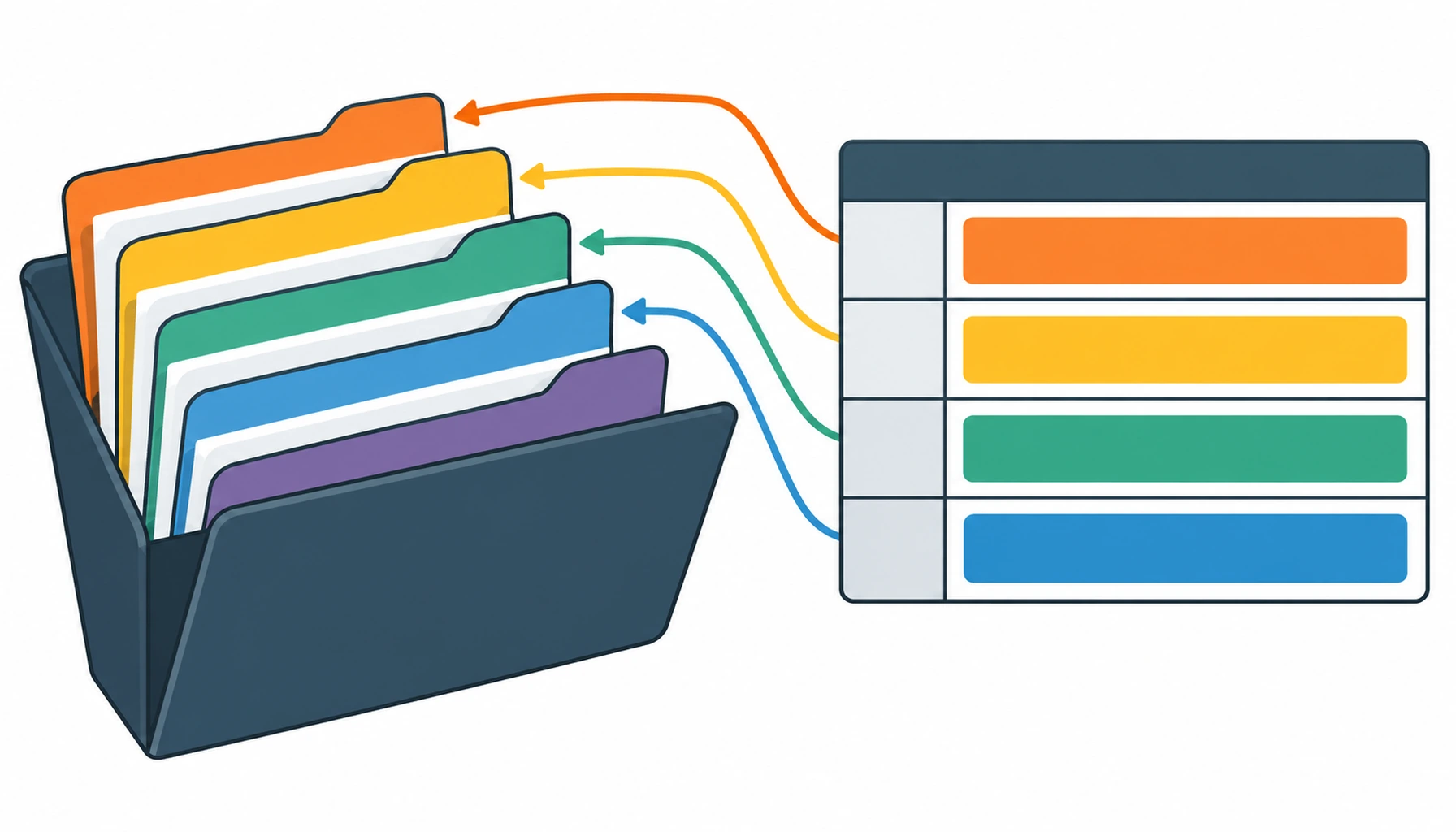
Do the comparison in a table of three columns: schedule line, what the certificate covers, what the report covers. Any line with a blank in either evidence column is a line that needs an extension, a new test or an explicit acceptance of the gap. That last option is a decision for the buyer, taken in writing, before the order.
Where the gap is small, the fix is cheap. An extension through the issuing body or an additional test on the missing size takes weeks rather than months, provided the sample still exists. Where the gap is a different construction, the honest answer is that the evidence does not exist yet.
The drum label is the third column nobody fills in. Evidence that names a construction is only useful if the drum in the yard carries the same description, and a label that says 3×95 while the certificate covers 3×240 turns a technical gap into a document dispute. The fields that have to agree are in our note on cable marking and traceability.
Edition and Validity: The Quiet Expiry
Standards get revised and certificates expire, and neither event announces itself in a tender file. A report against a superseded edition is evidence about a design that the current standard no longer describes, and an evaluator who notices will mark the whole submission down rather than one clause.
Check the dates in a fixed order: standard edition, then report date, then certificate validity, then specification revision. If the specification is newer than the report, the report cannot be answering the specification, however thick it is.
Certificates have the same problem with a different clock. A series certificate with four months left when a two-year installation begins is a document that will expire mid project, and the renewal is not something the buyer can do alone. Put the expiry date into the contract as a deliverable.
Ask for the renewal terms at the same time as the certificate. A body that will renew on the strength of an existing file is a different prospect from one that wants fresh samples, and the difference decides whether a long project needs a budget line or a phone call.
Combining the Two in a Submission
Build the evidence pack around the schedule rather than around the folder. For each line: the construction, the certificate that covers it, the report that covers it, the routine test that will accompany the drum. Four entries per line, and the pack writes itself from there.
A short index page does more for an evaluation than another fifty pages of certificates. Name the line items, the documents that cover them and the page numbers, and put the deviations on the same page. Evaluators score what they can find, and a well-indexed file is read in full.
Red flags are worth listing on that page too. A certificate whose scope predates the standard edition, a report with the sample line blacked out, a routine test certificate covering half the drums, a declaration offered where a certificate is required: each one is a question the evaluator will ask anyway, and raising it first costs nothing.
Then price the gaps. Where a line has thin evidence, say what it would take to close it and what it costs, and let the buyer decide with the number in front of them. Our note on comparing quotations for Central Asia sets out how that scoring usually works.
Evidence Pack Freeze List
These are the fields to settle before the bid goes in, in the order an evaluator checks them.
| Item to Freeze | How to Write It Into the Submission | Evidence to Attach | Cost of Leaving It Blank |
|---|---|---|---|
| Line-by-line index | Schedule line, certificate page, report page, routine test | Index page with page numbers | A strong pack that is never read |
| Certificate scope | Construction, range and voltage named against each line | Scope page marked up | Compliant bid scored as non-compliant |
| Report sample line | The construction and size the report was issued on | Report cover and sample description | A report about a different cable |
| Standard edition | Number with the year, matching the specification | Report citing the same edition | Evidence against a superseded text |
| Validity dates | Expiry after the last installation date | Certificate with dates visible | Document lapsed mid project |
| Routine tests per drum | Stated as a deliverable with each shipment | Sample report from a previous order | Acceptance hold on part of the delivery |
| Deviation list | Every gap named, with the cost to close it | One-page list signed by the bid team | A gap discovered by the evaluator instead |
When Documents Are Not the Answer
When the buyer is using paper to avoid a factory visit. A day in the plant answers questions no report can: how the drums are stored, whether the test bay is calibrated, whether the cable on the floor matches the one in the file. For a first order of any size, the visit is cheaper than the risk.
When a certificate is offered as a substitute for acceptance testing. Acceptance happens on the drums, and the routine test report is the document that covers it. A type test says the design works; it says nothing about the drum that arrived with a crushed inner end.
When the tender weights paper more than process. Some evaluation grids score documents and ignore how they were obtained. Bid to the grid, then protect the project with the process evidence in the contract, because the grid will not be there when a joint fails.
When the pack is complete but stale. A full folder of documents from five years ago describes a factory that may not exist in the same form. Our note on cable nonconformance handling deals with the case where the current output does not match the historic evidence.
RFQ Checklist
- Line-by-line index mapping schedule items to certificate and report pages
- Certificate scope naming construction, cross-section range and voltage
- Type test report sample line matched to the offered construction
- Standard number and edition consistent across report, certificate and offer
- Validity dates later than the last installation date
- Routine test reports stated as a per-drum deliverable
- Factory audit or process evidence kept separate from product evidence
- Deviations listed with the cost and time needed to close each one
- Witness and re-test rights written into the contract
- Document pack indexed in the evaluator’s language
Conclusion
The two documents are not rivals and one cannot replace the other. A certificate gets the cable into the country, a report gets the offer through evaluation, and a routine test gets the drum through acceptance. A submission that keeps those three jobs separate is easier to write and much harder to challenge.
Kexingyu Cable Group (KXYE) supplies cable into Central Asia with type test reports per construction, routine reports per drum and conformity documents matched to the destination, and quotes the gap where a scope does not reach. Send the schedule with the destination on it. A request for quotation is the fastest start, the field list is in our industrial cable RFQ checklist, and the regional picture is in the Central Asian cable buying hub.