Australia's Data Center and Renewables Buildout: Cable Import Requirements
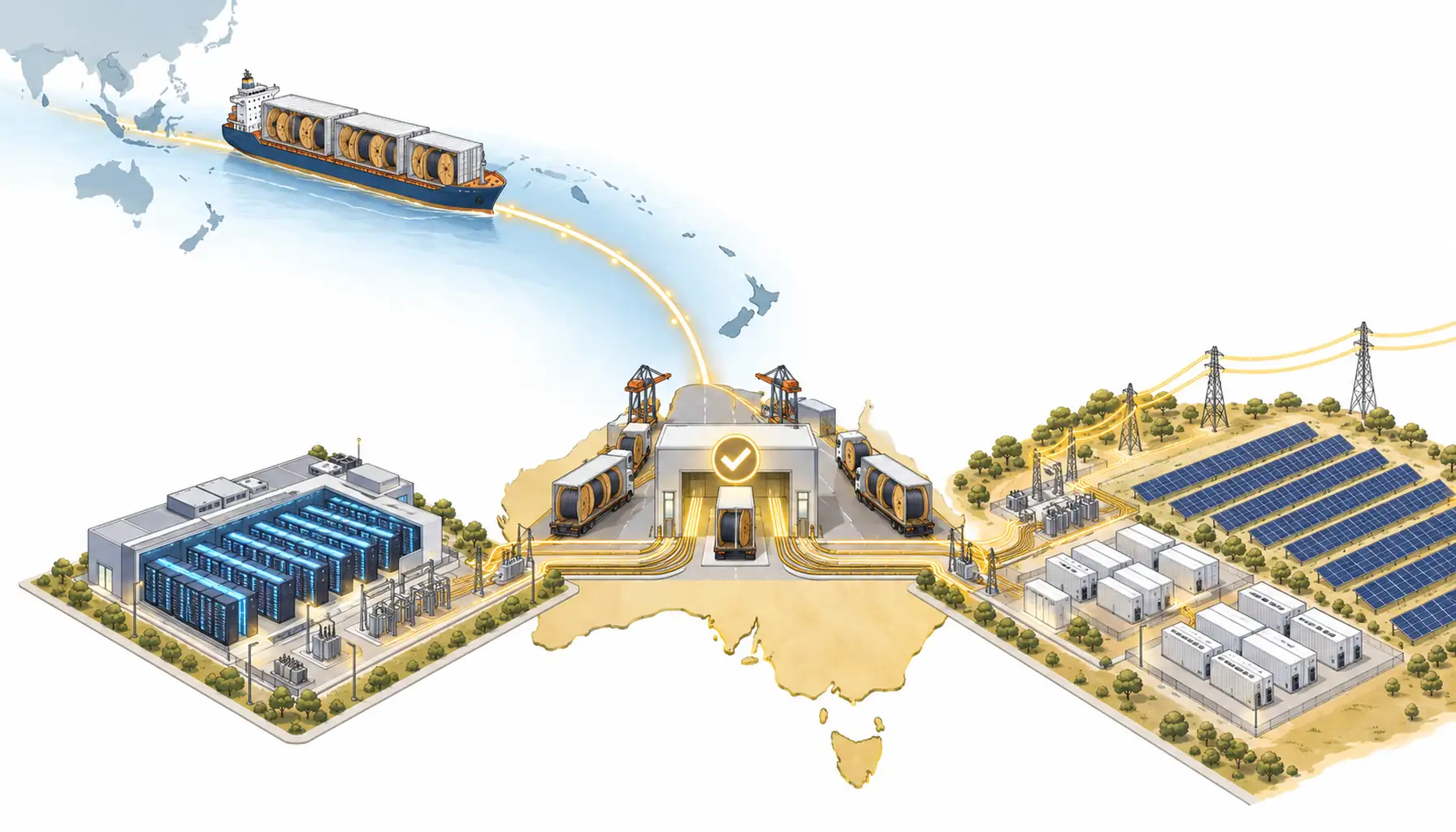
Quick Answer: Australia runs twin cable-hungry buildouts — data centers scaling in Sydney and Melbourne, renewables rewiring the grid — both buying imported cable through AS/NZS specifications and RCM marking.
Australia is running two cable-hungry buildouts at once. The first is digital: Sydney and Melbourne rank among the Asia-Pacific’s densest data center markets, with hyperscale expansion meeting AI-driven capacity demand and edge buildout following the population. The second is energetic: a renewable transition rewiring the continent — utility-scale solar and wind, transmission projects connecting them, storage firming both — at a scale that buys MV cable, conductor and solar cable in program volumes. Both buildouts import most of their cable, because local manufacturing covers only a slice of the demand, and both buy through the same gate: AS/NZS specifications and the RCM marking regime. For a cable supplier, Australia is a developed-market price point with an island’s logistics and a standards system that is rigorous, specific and — for factories that document properly — entirely navigable. This guide maps the twin demand, the standards gate, and the logistics that tie them together.
Introduction
The demand frame: Australia sits in the Asia-Pacific growth analysis of data center power demand growth as a developed market with emerging-market growth rates — hyperscale operators expanding through Sydney’s and Melbourne’s campuses, and the renewable buildout supplying both the power and a second cable market. The hall bill follows the standard architecture — MV intake, LV distribution, UPS strings, LSZH interiors — engineered to the standards framework in our MV and LV standards guide, with AS/NZS specifications naming the constructions. The renewables side buys the solar cable families detailed in the solar cable specification guide and the grid-side MV and conductor volume of transmission buildout. Two markets, one gate, and an island distance that makes logistics part of every quote.
The Twin Buildouts: What Each Buys
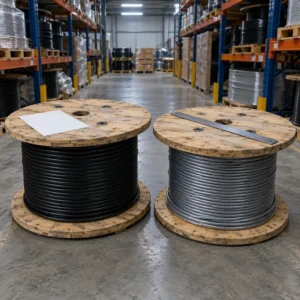
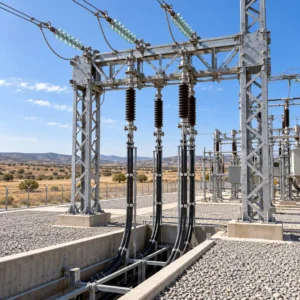
The data center buildout buys the hall bill at campus scale: MV feeders into Sydney and Melbourne campuses, redundant LV distribution, UPS strings and fire-regulated interiors, with the consultant-gated specification culture of developed markets governing every submittal. The renewables buildout buys across the generation chain: DC and AC solar cable in utility-farm volumes, wind-farm cabling, battery-storage connections that firm intermittent supply, and the transmission projects — some of the longest new lines in the developed world — that buy MV and high-voltage cable plus conductor at program scale. The two buildouts share more than the gate: they share the geography, because data centers increasingly site beside renewable supply for both cost and corporate-carbon reasons, and they share the electrical family, because the transformers and switchgear both sides buy run on the stretched schedules tracked in the family’s planning guides. A supplier who serves both buildouts with one coordinated file — hall bill plus solar and storage families plus MV program volume — matches the way Australian buyers actually assemble their projects.
| Buildout | Where and What | Leading Cable Families |
|---|---|---|
| Data centers | Sydney and Melbourne campuses, edge metros | MV intake, LV distribution, UPS strings, LSZH interiors |
| Solar and storage | Utility farms and firming projects | DC/AC solar cable, battery interconnection |
| Transmission | Long new lines connecting renewables | MV and HV cable, conductor at program scale |
| Shared layer | Campuses siting beside renewable supply | Coordinated hall-plus-generation files |
The Standards Gate: AS/NZS and RCM
Australia’s electrical products regime is specific about what it wants: AS/NZS standards name the constructions and tests, the Regulatory Compliance Mark covers the electrical safety side for regulated products, and importers carry responsibility for the conformity of what they bring in — which makes the importer’s demand for documented evidence direct and non-negotiable. The system is rigorous but not opaque: AS/NZS specifications parallel IEC constructions closely in most power-cable families, type-test evidence maps onto the named standards with proper documentation, and the consultant-gated submittal culture treats a well-built IEC-anchored file with respect. The supplier posture mirrors the UK’s administrative discipline with an Australian accent: name the AS/NZS standards your evidence addresses, state the RCM and importer-responsibility arrangement clearly, and keep the mapping current — the certification discipline of the power cable certifications checklist applied to a standards system that documents its expectations precisely. Suppliers who arrive with the mapping done compete on product; suppliers who arrive expecting to figure it out during the tender lose the tender.
The Island Premium: Logistics and Calendar
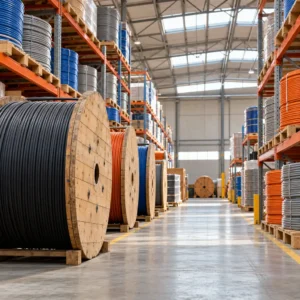
Australia’s distance is the supply side’s permanent fact: ocean routes measured in weeks, port and inland legs adding more, and a market whose projects still run on calendars that assume the cable arrives when promised. The logistics discipline is therefore structural — container routing and inland legs scheduled as one plan, duty and clearance responsibility fixed per the incoterms framing of FOB vs CIF for power equipment, and buffer realism stated in the quote rather than discovered at the port. The electrical-family context sharpens it: Australian projects buy the transformer and switchgear family on the same stretched schedules as every developed market, and the coordination logic of one-stop power equipment sourcing appeals to buyers assembling campus or farm infrastructure from multiple families across an ocean route. The recurring failure patterns of international power equipment sourcing mistakes carry an island accent: the costliest error is quoting the product without pricing the distance. A calendar that ignores the ocean will fail at the port.
| Stage | Action | Classic Trap |
|---|---|---|
| Standards mapping | AS/NZS requirements mapped per family before quoting | IEC evidence presented without the AS/NZS mapping |
| Compliance arrangement | RCM scope and importer responsibility stated clearly | Marking questions discovered during the tender |
| Logistics plan | Ocean route, port and inland legs scheduled with buffers | Calendar that ignores the ocean |
| Program file | Hall, solar, storage and MV families offered coordinated | Families quoted as disconnected commodities |
| Retention | Developer and EPC frameworks across both buildouts | Serving one buildout while the other pays the factory |
When Distance Is Also a Moat
Two cautions frame the opportunity. The island distance that raises every quote also filters every competitor: the suppliers who invest in the AS/NZS mapping, the logistics plan and the two-buildout file face less contest than the same families attract in reach-able markets, and the developed-market price point pays for the administration. And the twin buildouts are not synchronized — data center demand runs on hyperscale calendars while transmission projects run on regulatory ones, so the supplier who smooths production across both rhythms, rather than chasing whichever is louder this quarter, is the one whose capacity plan survives. Enter through the mapping, price the distance honestly, and let the moat keep working in your favor.
RFQ Checklist: Australia Lines for the RFQ
Put the market’s questions in writing:
- AS/NZS standards mapped per cable family with test evidence
- RCM scope and importer-responsibility arrangement stated
- Hall, solar, storage and MV families offered as one file
- Ocean route, port and inland legs scheduled with stated buffers
- Duty and clearance responsibility fixed per incoterms
- Batch identity and documentation packaged for consultant review
- Framework terms across developer and EPC programs in both buildouts
Conclusion
Australia runs two cable-hungry buildouts through one standards gate: data centers scaling in Sydney and Melbourne, renewables rewiring the grid, and most of the cable imported through AS/NZS specifications and RCM-marked responsibility. The market rewards suppliers who do the mapping before the tender, price the island distance honestly, and serve both buildouts as the coordinated demand they actually are.
Kexingyu Cable Group (KXYE) serves Australia with the posture the gate demands: AS/NZS-mapped evidence files, RCM and importer arrangements stated clearly, logistics planned from ocean to site with honest buffers, and hall-plus-generation families coordinated in one file — cable supply for the market where two buildouts share a gate, and the distance is part of the price.