Procuring Coal Preparation Plant Cable: Wash, Dust and Corrosion Duty
Quick Answer: A coal preparation plant cable failure is rarely electrical in origin. It is water working into a tray, slurry corroding a steel tape, reagent attacking a jacket, or a screen frame shaking a gland loose. That is why a coal preparation plant cable specification should be built zone by zone from the process, and why a cable that performs perfectly in a dry plant will fail in a wash box within a season.
Introduction
Coal preparation is a wet process. Raw coal is washed, sized, separated in dense medium and dewatered, and the plant is designed so that water and fines go where the process needs them rather than where the electrics are. In practice a good deal of it goes where the electrics are anyway, and the cable installation carries the consequences.
Buyers who treat the plant as one electrical environment end up with one specification and a long list of exceptions. Buyers who split it into zones, and write each zone against its own attack, get cable that lasts and a spares holding that makes sense. The zoning also makes the enquiry faster, because a supplier can price five clear lines instead of guessing at one.
Why a Coal Preparation Plant Is a Different Environment
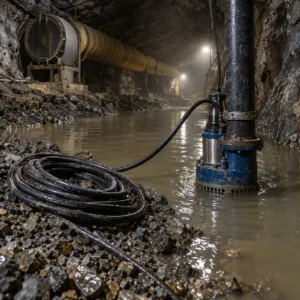
Water is continuous, not occasional. Hoses, glands, spillage and sprays mean a cable in the open is wet for much of the day. A construction with no water blocking absorbs moisture at every damaged point and along damaged steel tape, and the failure appears as insulation resistance falling rather than as a visible break.
The water is not clean. Slurry water carries fine coal, clay and dissolved salts, and in some plants it is acidic. That is a corrosion environment rather than a damp one, and it attacks armouring and any exposed steel far faster than pH neutral water does. Our note on corrosion resistant cable for chemical and sewage duty covers constructions built for that class of exposure.
Fine coal dust is everywhere. It settles on trays, fills glands and gets into joints. Where the plant’s own hazardous area classification calls for it, cable selection and glanding have to follow that classification, and the plant’s documentation is the reference rather than the supplier’s assumption.
Vibration is designed in. Screens, centrifuges, crushers and feeders are all machines whose purpose is to shake. Cable that is merely laid on a tray in that part of the plant will abrade through its own sheath at the support points.
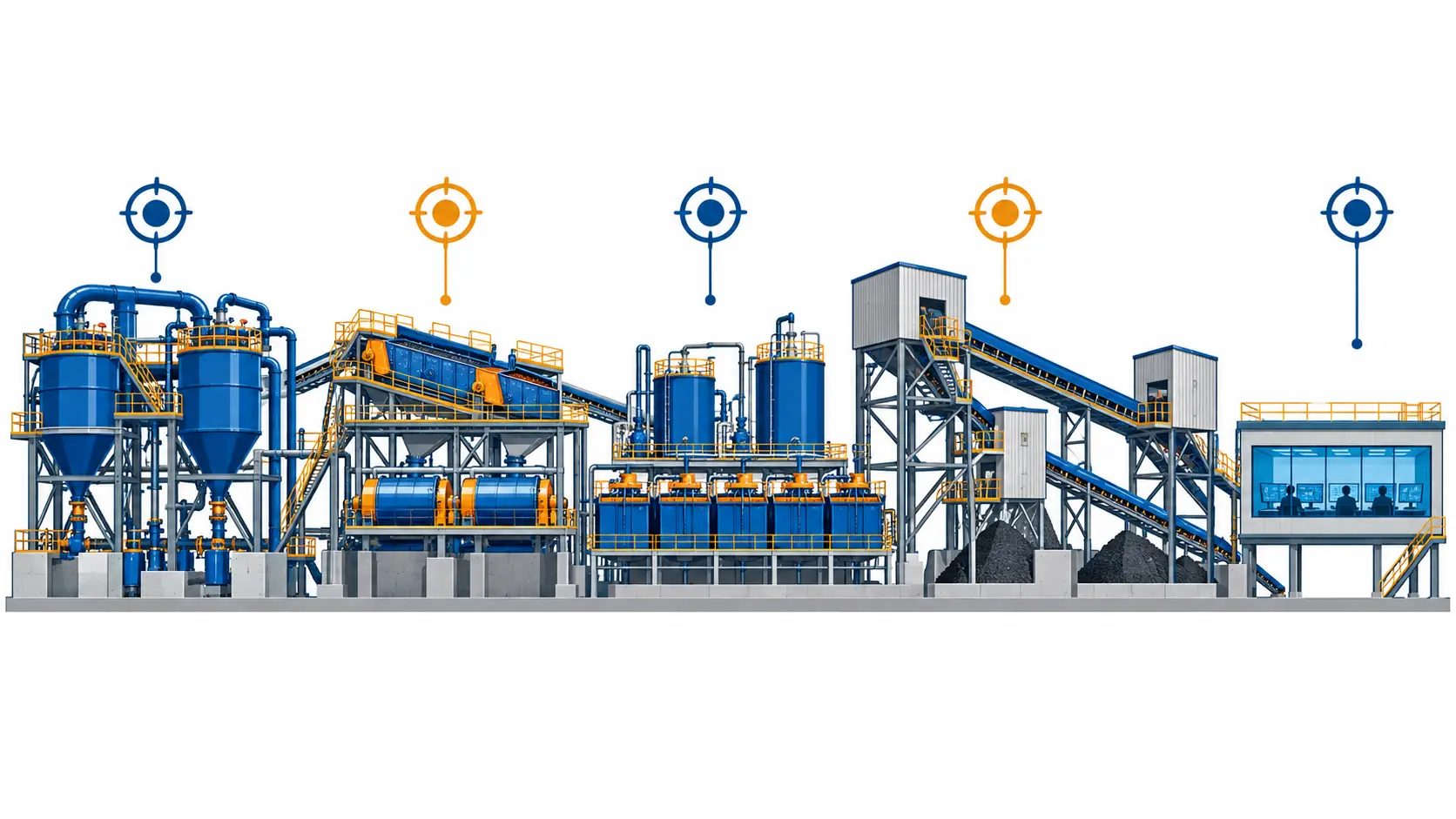
The Five Zones and What Each One Needs
Read the table against the plant layout. Most cable problems in a preparation plant sit in one of these five places.
| Zone | What Attacks It | What to Specify | Evidence to Demand | Cost and Lead Time | How It Fails |
|---|---|---|---|---|---|
| Dense medium and magnetite area | Magnetite slurry, abrasion, wash down | Abrasion resistant sheath, water blocked, corrosion resistant fixings | Abrasion data and immersion or water blocking evidence | Standard lengths, moderate cost, quick to supply | Sheath worn through, water ingress, earth fault on the feeder |
| Screens and centrifuges | Continuous vibration and wash water | Flexible construction at the moving connection, proper strain relief | Flex data at the declared movement, not a static rating | Premium at the moving end, standard elsewhere | Conductor fatigue at the gland and a broken core |
| Reagent and flotation area | Reagent spillage, foam, chemical attack | Compound chosen for the actual reagent, plus trays that drain | Immersion results at the actual fluid and temperature | Specialist compound carries a longer lead time | Swollen or softened jacket, then a short circuit inside |
| Belt and transfer houses | Dust, belt spillage, ultraviolet through openings | Flame retardant construction, dust tolerant glands | Flame test evidence and gland ingress data | Balanced price, widely available | Dust in the termination and tracking across the surface |
| Control and instrumentation | Wet plant, screening needs, long runs | Screened control and instrument pairs, separated from power runs | Screen continuity and pair balance data | Low cost but easily delayed; order it early | False level, flow or density indications and plant trips |
Drives, Screens and Vibration
Screens and centrifuges are the parts of a preparation plant where cable is asked to move. The movement is small and fast rather than large and slow, which changes the failure mode.
Small fast movement needs flexible stranding too. A cable connected to a vibrating frame with class 2 stranding will fatigue and break a core, because the movement is applied thousands of times a shift. Where the connection cannot be made mechanically compliant, the cable itself has to be, and the construction should be bought for the movement. The principles are the same as those behind continuous flexing constructions, which are set out in our note on continuous flex and drag chain cable.
Strain relief is part of the purchase. A flexible cable clamped solidly at both ends is a cable that will break at the clamp. Where a gland or a cleat holds the cable, the installation has to leave a service loop and then secure it, and the specification should say so.
Variable speed drives add a screening problem. Most preparation plant drives are on drives, and the cable between the drive and the motor carries a switched waveform that will find the nearest control cable. A screened construction with the screen bonded at both ends, plus a separated earth return, is the standard answer. Where several drives share a tray, the screen and separation arrangements belong in the same drawing.
Control and Instrumentation in a Wet Plant
A preparation plant runs on measurement. Density, level, flow and belt weight all feed the control system, and a false reading is often worse than a stopped machine, because it can run the plant into an upset condition.
Keep instrumentation cable out of the power tray. Where a control or instrument cable shares a route with a drive feeder, screening alone may not be enough. Physical separation and a separate earth reference for the instrument circuits are what make the readings stable. Our notes on control versus instrumentation cable and on the control cable range set out where each type belongs.
Waterproof the junctions, not just the cable. Most moisture problems in a wet plant happen at the termination and the junction box, not in the middle of the cable. Choose junction boxes and glands for the zone, and mount them so water runs away rather than into the entry. A water blocking construction helps, and the water blocking cable range covers the constructions built for it.
Allow for wash down as a permanent condition. A plant that hoses its structural steel down every shift is a plant where every cable in the open sees water daily. That is a specification input, not a site practice, and it should appear in the enquiry.
What to Freeze Before the RFQ Goes Out
| Decision | What to State | Evidence to Attach | Cost of Leaving It Open |
|---|---|---|---|
| Zone list | Every cable run assigned to one of the five zones | A cable schedule with the zone marked per run | One construction bought for five different attacks |
| Water exposure | Continuous, sprayed or splash, per run | Water blocking or immersion evidence where continuous | A feeder that absorbs water and trips on leakage |
| Chemical exposure | The actual reagent or slurry and its temperature | Immersion results at those conditions | A jacket that swells and fails inside the first year |
| Vibration interface | Which connections move and how far | Flex data at the declared movement | Core fatigue and repeat failures at one gland |
| Drive screening | Screened construction and the screen bonding arrangement | Screen and earth conductor details | Nuisance trips and unstable instrument readings |
| Instrument separation | Which circuits are instrument circuits and their route | A route drawing showing separation from power | False density and level readings and plant upsets |
Lead Time and Cost Structure
Most of a preparation plant cable package is standard material, which makes it tempting to leave until the last minute. Two items break that pattern.
The specialist compound drives the lead time. Where a zone needs a compound chosen for a specific reagent, that compound may only be made in batches, and a short length of an unusual grade carries a setup penalty. Confirm the compound against the actual reagent early, because discovering the requirement after the plant is being commissioned adds weeks.
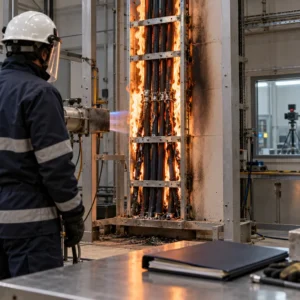
Flame retardant constructions are readily available, but the evidence is not automatic. Where the plant’s classification calls for a flame retardant or low smoke construction, the test report is part of the product. Our notes on low smoke and flame retardant cable and on flame retardant grades explain the difference between the classes, and the testing behind them is described in our note on halogen and smoke testing.
Copper is a large share of a long feeder, so the copper basis matters on the drive and feeder lines more than on the lighting and control lines. Where the plant is being expanded rather than built, resist the temptation to use the leftover cable from the original build on a zone it was not bought for. Zone mismatches are the most common source of avoidable failures in an expansion.
Incoming Inspection and the First Wet Shift
A wet plant is one of the few places where it is worth testing cable after installation but before handover, because the failure mode is moisture and moisture takes time to show.
Measure insulation resistance wet. Take a reading on the installed run after the plant has been hosed down, not before. A cable that reads well dry and poorly wet is telling you about its water blocking or its glands, and finding that out during commissioning costs far less than finding it out in production. Our note on insulation resistance testing covers the conditions that make the measurement meaningful.
Inspect the gland and the box, not only the cable. Most moisture entry in a wash plant happens at terminations. Check how water leaves the box, whether the gland is rated for the zone, and whether the cable enters from below.
Run the vibrating connections before the screens are loaded. A cable that is going to fatigue at a gland usually shows a loose cleat or an over-tight bend during a short run with the frame moving and nothing in the box. Checking at that stage is inexpensive.
Photograph the installation. A photograph of each zone taken before commissioning gives the maintenance team a baseline for what correct looked like, and makes later comparisons possible.
When a Heavier Cable Is Not the Answer
When the failures are at the gland. Cable failing repeatedly at the entry to a vibrating machine is an installation problem. A heavier construction postpones it; a service loop and proper strain relief stops it.
When the sheath is showing chemical damage. A swollen or softened jacket means the compound is wrong for the environment. Buying the same construction in a heavier wall does not fix a chemistry problem. Move the cable, shield it or change the compound.
When the tray is the problem. Cable in a tray that fills with slurry is being asked to live in a bath. Trays that drain, or a change of route, are often cheaper than a bespoke cable.
When the instrument reading is the only symptom. An unstable density reading is a screening and separation problem far more often than a cable fault. Test the separation before blaming the instrument cable, and note that the cable carries the drive’s noise rather than generating it.
When one specification is being stretched across the plant. A single construction chosen to suit the worst zone is over-specified everywhere else. The saving from zoning usually exceeds the saving from a single larger order, and the zoning also produces a clearer spares list.
RFQ Checklist
- Every run assigned to a zone, with the zone marked on the schedule
- Water exposure per run: continuous immersion, sprayed or splash only
- Reagent, slurry and magnetite exposure with the actual fluid and temperature
- Vibration interface described at each moving connection
- Flame retardant and low smoke requirements per the plant classification
- Screen bonding arrangement and earth return for every drive-fed motor
- Instrument circuits listed separately, with the route separation required
- Sheath compound matched to the dominant attack in each zone
- Water blocking on any run exposed to continuous water
- Gland and junction box types suitable for the zone and for wash down
- Tray drainage and support arrangement, with cable cleated against movement
- Copper basis and validity window on the feeder and drive lines
- Spares holding covering every compound and construction used
Conclusion
A coal preparation plant is five cable environments in one building, and the specification should be written that way. Zone the runs, match the compound to the actual attack, deal with vibration at the connection and keep instrumentation out of the power routes.
Kexingyu Cable Group (KXYE) has supplied electrical cable from Quanzhou since 1996, including the water blocked, corrosion resistant, screened control and instrument constructions that a wet plant calls for, along with the glands and junction boxes that go with them. Send the zone list, the fluids and the vibration interfaces, and we will come back with the constructions, the test evidence that applies to each zone, and a delivery plan around your commissioning date. The fastest route is a request for quotation.