
Commercial Critical Power Backup: Requirements Buyers Must Get Right
Backup power for a shopping mall, a hospital wing and a trading floor are three different purchases—and the fastest way to overspend or underspecify is to treat them as one.
Introduction
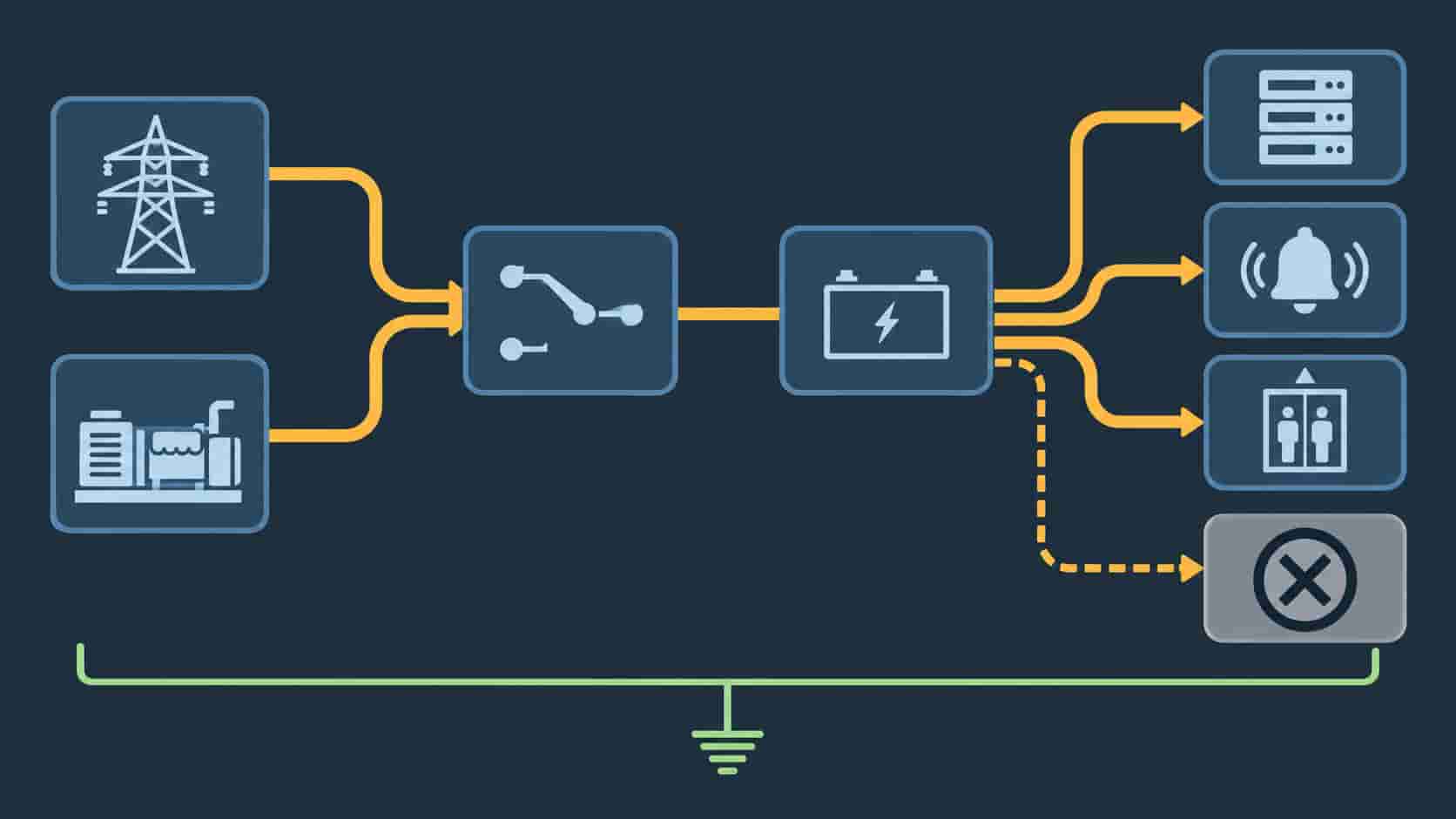
Most buyers meet critical power requirements twice: once when the building is being designed, and once—more painfully—during the first extended blackout, when whatever was specified either carried the building or did not. Between those two moments sits a purchasing decision shaped by codes, load classification, runtime targets and a chain of equipment that must switch, convert and protect in a precise sequence.
This article is written for the owners, developers and facility teams who buy that equipment: the automatic transfer switches, UPS systems, generators, switchgear and, increasingly, battery storage that make up a commercial critical power backup system. It explains how to classify your loads so you buy runtime only where it is needed, how codes shape the design you must comply with, and how each equipment block should be specified—plus the situations where more backup hardware is simply the wrong answer. The equipment differs for data halls and other technical spaces; if that is your project, our data center power hub covers that vertical in depth. This article stays with commercial buildings: offices, hotels, malls, hospitals and mixed-use complexes.
What Counts as Critical Load in a Commercial Building
The first and highest-leverage step is a load audit that splits every circuit into three or four classes. Skipping this step is why so many buildings end up backing up everything—and paying for it—when only a fraction of the load actually deserves it.
- Life safety loads. Emergency lighting, fire pumps, smoke control, fire alarm panels and evacuation lifts. Codes dictate both the switching speed and the minimum runtime for these circuits, and the requirements are not negotiable. They switch automatically and they run first, always.
- Business-critical loads. Whatever the tenant’s business cannot tolerate losing: server rooms, building management systems, payment and transaction systems, security and access control, and in hospitals the operating theatres and ICU. These loads typically need true uninterruptible supply—a static or hybrid UPS—because even a momentary break causes damage.
- Essential comfort and continuity loads. One lift core out of several, selected air handling, kitchen cold storage, sewage and water pumps. These tolerate a short delay while a generator starts, so they ride on generator-backed switchboards rather than UPS.
- Non-essential loads. General lighting and power, retail fit-out, comfort cooling. They stay dead in an outage—or are shed deliberately to stretch generator fuel. Keeping them backed up is the most common and most expensive over-specification in commercial buildings.
The audit output is a load schedule with kW figures, switching requirements and runtime targets per class. Every downstream purchase decision—generator size, UPS capacity, battery autonomy, switchgear rating—should trace back to a line in that schedule. Suppliers who ask for it are engineering; suppliers who quote without it are guessing.
The Standards and Codes That Shape the Design
Commercial backup power is one of the most codified corners of electrical engineering, and the applicable framework depends on where the building stands:
- IEC 60364 and local wiring regulations define the classification of supply systems, safety services and the earthing arrangements your switchgear must satisfy in most of Asia, Africa, the Middle East and Europe.
- NFPA 110 and NFPA 70 (NEC) Article 700 govern emergency and standby power in North America and in many US-influenced markets, including generator starting requirements and transfer equipment behaviour.
- Healthcare and high-rise codes layer stricter rules on top: hospital standards typically demand two independent sources for defined spaces and sub-second transfer for defined circuits, and high-rise codes increasingly require standby provisions for firefighter lifts and smoke systems.
- Insurance and tenant requirements often exceed statute. Financial tenants routinely demand tighter power guarantees than the local code requires, and the lease may be the strictest specification in the building.
Two practical consequences follow. First, collect the applicable code citations early and hand them to bidders—retro-fitting compliance after equipment is ordered is slow and costly. Second, where codes set the floor, your business analysis sets the actual target: code compliance keeps the building legal, but the load audit decides whether the business survives a four-hour outage.
Sizing the Backup: Load Classes and Runtime Targets
With loads classified and codes collected, the design becomes a matrix of class versus requirement. The table below is the reference frame we recommend buyers keep at the centre of every supplier conversation.
| Load Class | Typical Circuits | Switching Requirement | Runtime Target | Who Defines It |
|---|---|---|---|---|
| Life safety | Emergency lighting, fire pumps, smoke control, alarm panels, evacuation lifts | Automatic transfer within seconds; defined circuits may need no-break supply | 90 minutes to several hours per local code; fire pump often sized separately | Building and fire codeâno buyer discretion |
| Business critical | Server rooms, BMS, transaction systems, security, hospital operating and ICU | UPS ride-through with zero interruption; generator picks up after start | UPS autonomy 5â15 minutes to generator stable; combined runtime hours to days | Code floor plus tenant or business requirement |
| Essential continuity | Primary lift core, selected AHUs, cold storage, water and sewage pumps | Delayed automatic transfer; brief break acceptable | Generator-backed for the planned outage scenario, typically 8â72 hours of fuel | Owner's business analysis |
| Non-essential | General lighting and power, retail fit-out, comfort cooling | No backup; shed automatically to protect the backed-up bus | None by design | Design engineeringâresist pressure to include it |
Three sizing notes that frequently decide whether the system works in its first real outage. Generator sizing is a starting-load problem: the set must accept the step load of everything that transfers at once—fire pump starts, lift re-leveling, chilled-water pumps—so a generator sized to running kW alone will stall or collapse voltage at transfer. UPS autonomy is a bridge, not a destination: five to fifteen minutes covers generator start and stabilisation, and anything longer is usually better bought as generator fuel or battery capacity elsewhere. Fuel autonomy deserves the same rigour: state the outage scenario you are designing for—grid loss for 8 hours, 24 hours, three days—and size tank and delivery logistics to it, including the realistic resupply time in your city.
The Equipment Chain, Room by Room
Walking from the utility incomer to the wall socket, each equipment block has one job and a handful of specification points that separate a good unit from a troublesome one.
| Equipment | Job in the Chain | Specification Points That Matter |
|---|---|---|
| Automatic transfer switch (ATS) | Chooses between utility and backup source for each load class | Transfer delay per class, closed-transition or break-before-make, rating and withstand/closing rating, bypass-isolation type for maintenance without downtime |
| UPS system | Carries zero-interruption loads through the generator start window | Topology (online double-conversion for critical circuits), capacity with growth margin, battery autonomy and battery technology, input THDi, bypass arrangement |
| Generator set | Sustains the backed-up bus for the full outage scenario | Standby vs prime rating, step-load acceptance against the load schedule, starting system redundancy, fuel autonomy, sound attenuation for urban sites |
| LV and MV switchgear | Distributes, protects and sectionalises the backed-up network | Voltage class matched to the building network, bus-section and bus-coupler scheme for maintenance, protection coordination study, arc-safe construction |
| Battery energy storage (BESS) | Provides bridging power and peak support without engine logistics | Usable energy at duty cycle, response time, grid-forming or grid-following mode, integration with generator control, fire suppression standard |
| Transformers | Match generator and storage voltages to the building network | Impedance for fault limitation, vector group consistency, rating against step loads, outdoor or indoor type per room allocation |
Two blocks deserve special attention. On switchgear: many commercial projects underestimate the difference between the low-voltage world of a single tower and the medium-voltage ring of a mixed-use estate. Our comparison of LV versus MV switchgear explains where the boundary falls and what changes in specification. And before any switchboard leaves the factory, require a witnessed factory acceptance test—our article on why FAT matters for switchgear details the checks that catch wiring and protection errors while they are still cheap to fix.
On storage: battery systems are entering commercial backup designs as a quieter, cleaner alternative or supplement to generators for the bridging role. The design question is the same one data centers are already answering at scale—our article on energy storage for data center backup walks through the grid-forming requirements and integration risks that apply equally in a commercial building. For sites that already own generators, a battery-plus-generator hybrid often beats either alone; the sizing logic is in our generator and storage hybrid guide.
When More Backup Is Not the Answer
Backup hardware is easy to buy and hard to operate well. These are the situations where we advise buyers to stop adding equipment and fix something else:
- The grid failures are frequent but short. If the utility drops out weekly for a few minutes, an ATS plus a generator that starts for every hiccup wastes engine hours. A BESS bridge or even supply-side investigation may solve more for less.
- Maintenance has no budget. Unmaintained generators fail to start at statistically depressing rates. A smaller, properly serviced system beats a larger, neglected one every time; if service cannot be funded, say so at design stage and design for it.
- Nobody did the load audit. Adding capacity to an unclassified network just backs up more junk. The audit is cheap; the oversized generator it prevents is not.
- Single points of failure remain upstream. A second generator feeding the same fuel line, the same ATS control or the same room adds cost without resilience. Redundancy analysis should look at the chain, not just the box.
- The building is being sold or repurposed. Over-specifying backup to a leaving tenant’s requirement is capital the next owner will not pay for. Match the horizon you actually own the asset for.
What to Ask Suppliers Before You Sign
Backup systems are bought on paper and judged during blackouts. Pin these items into the contract:
- Compliance mapping: which code clauses the proposed design satisfies, clause by clause, not a general “complies” statement.
- Step-load acceptance calculation for the generator against your actual load schedule, with the transfer sequence stated.
- UPS battery autonomy at the real critical load, at end of battery life, at your site temperature.
- Witnessed FAT scope for switchgear, ATS and UPS; site integrated test procedure including a full transfer under load.
- Protection coordination study responsibility—who performs it and who signs it.
- Spares, training and service response times; generator starting-system spares on site, not at a depot.
- Documentation package: as-built single-line diagrams, test records and O&M manuals before final payment, not after.
Conclusion
Commercial critical power backup is a requirements exercise before it is an equipment exercise. Buildings that ride out outages gracefully are the ones whose owners classified loads honestly, set runtime targets from business reality rather than habit, and then specified each block—ATS, UPS, generator, switchgear, storage, transformer—against those targets with a contract that made suppliers accountable for the integrated result.
The cheapest backup power, in the end, is the backup you correctly decided not to buy. Do the load audit first, let the codes set the floor and the business set the target, and spend the budget where an outage actually hurts.
Frequently Asked Questions
Short answers to the questions buyers ask most about commercial backup power requirements.
Recent Posts
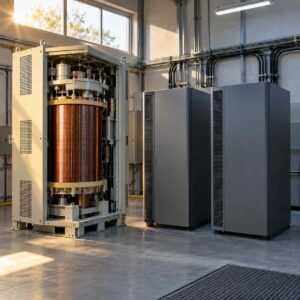
Voltage Stabilizers vs UPS: Do You Need Both?
Voltage Stabilizers vs UPS: Do You Need Both? One device fixes how high or low the voltage is; the other fixes whether there is voltage
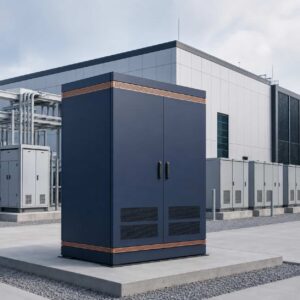
Energy Storage for Data Centers: A Growing Backup Power Option
Energy Storage for Data Centers: A Growing Backup Power Option Batteries have always backed up data centers in the form of UPS strings. Grid-scale BESS
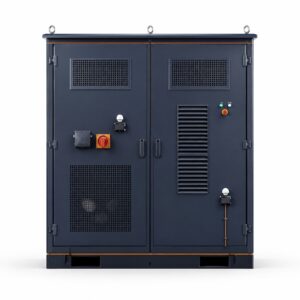
Thermal Runaway in Lithium Batteries: What BESS Buyers Should Understand
Thermal Runaway in Lithium Batteries: What BESS Buyers Should Understand How thermal runaway starts, how it propagates, and which evidence buyers should require before approving