How to Compare Cable Quotes: Beyond Price per Meter
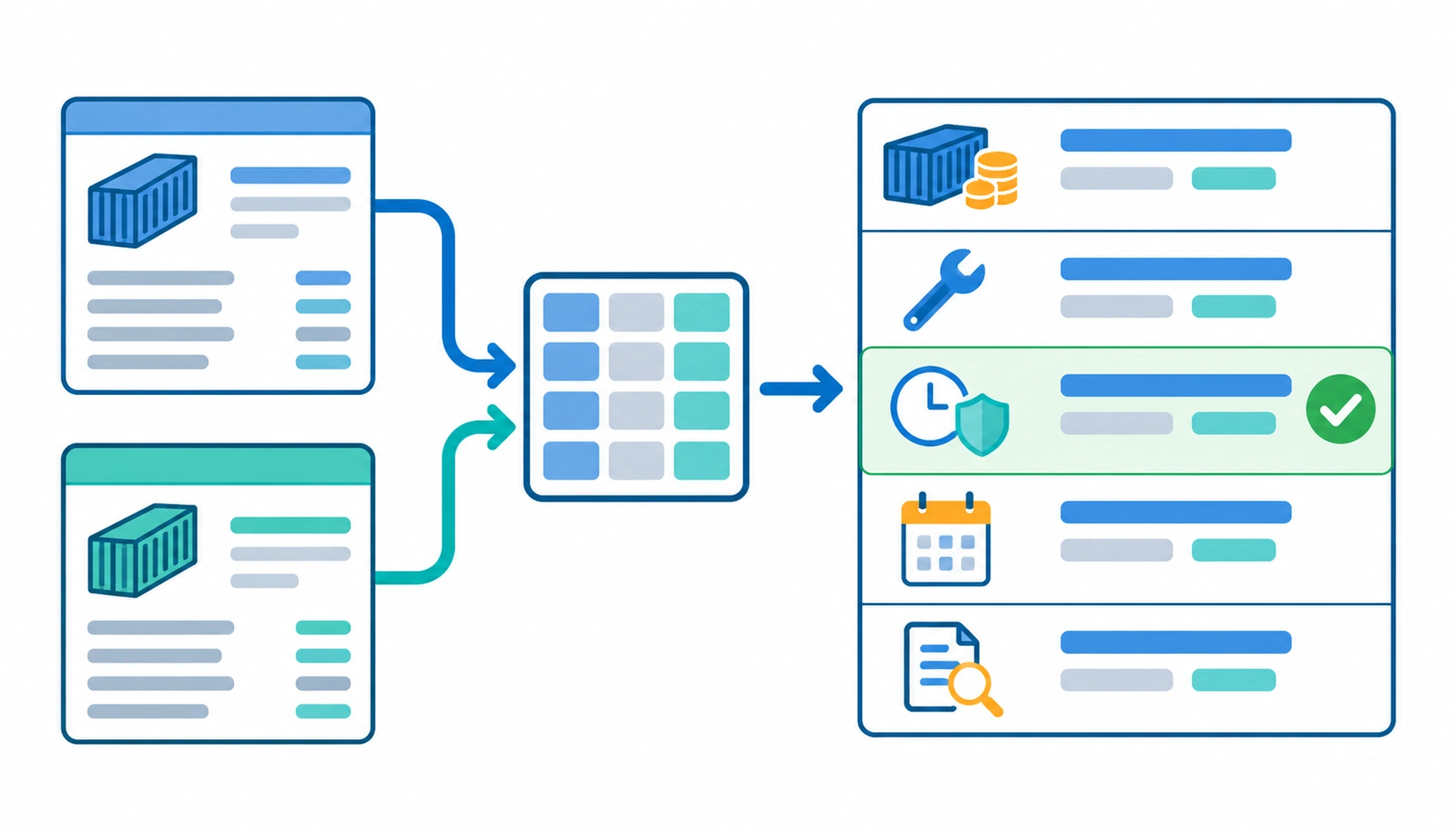
Quick Answer: Two quotes 30% apart can both be honest — they are pricing different cables. Normalize on specification, incoterm and copper basis first, then compare on total landed cost and evidence quality.
The cable quote comparison is where procurement discipline pays its rent, and it is also where most of it is skipped. The scenario is familiar: three quotes arrive, the prices differ by thirty percent, and the spread gets read as margin — so the cheapest wins, or the middle one wins for comfort. Both readings miss what the spread usually is: three suppliers pricing three different cables, or the same cable on three different commercial baselines — copper fixed on different dates, freight included in one and excluded in another, tests included in one and sold separately in the next. A price per meter is not a price until the meter has been defined. This guide gives the comparison a method: normalize the quotes until they describe the same cable on the same terms, then compare on what actually lands at the tray — total cost, evidence quality and the schedule the supplier can honestly keep.
Introduction
The method matters because cable quotes differ for legitimate reasons layered on illegitimate ones, and the buyer’s job is separating the two. The legitimate layer is the price stack itself — the conductor and compound decisions documented in the cable size selection guide and the grade premiums behind XLPE and LSZH constructions — where different fixing dates and different factory overheads produce real spread between honest suppliers. The illegitimate layer is quiet thinning: a compound grade swapped, an armor omitted, a test scope trimmed — changes invisible in a price and visible only in a datasheet read line by line, per the datasheet reading guide. Comparison is the tool that exposes both: normalize until identical, then interrogate the residue. The method below assumes quotes arrive against your specification; quotes written before any specification are prices for unnamed products, and the comparison starts by sending the spec.
Step One: Normalize the Technical Baseline
Before comparing numbers, force every quote onto the same technical page. Each offer should state, against your specification: conductor material and stranding class, insulation family and grade, sheath compound and its flame or LSZH rating, armor type and presence, screen construction, voltage rating, drum lengths and markings. Missing lines are not gaps — they are the comparison’s first finding, because a supplier who does not state the grade is choosing it after the order, and the choice will be economical. The normalization questions are short and brutal: is the conductor the same class? Is the insulation the same named grade or just the same family? Is the armor present where the route requires it? Quotes that answer line by line can proceed to commercial comparison; quotes that answer “yes, equivalent” in prose have already told you what quality to expect from everything that follows. The datasheet is the referee here — where a quote’s prose and its datasheet disagree, the datasheet is the one to trust.
Step Two: Normalize the Commercial Baseline
Technical normalization done, the commercial layer follows the same discipline. Copper basis: each quote should state its copper pricing mechanism and fixing date — quotes fixing metal on different days are prices from different markets, and a lock-in quote competes fairly only against other lock-in quotes on the same rule. Incoterm: an ex-works price and a CIF price are different products; normalize to landed cost at your port or site, with duty, freight and insurance as explicit lines — the responsibility mapping in FOB vs CIF terms shows which legs hide where. Test scope and certification: routine, sample and type tests, third-party witness fees, and the export document set — included, priced separately, or absent, per the certification checklist. Lead time and payment terms: a shorter lead time and milestone-based terms are commercial value, and they belong in the comparison as columns, not as footnotes. When the normalization is honest, the remaining spread usually shrinks to single digits — and that residue is the real negotiation.
| Line | What to Normalize | Red Flag When Absent |
|---|---|---|
| Conductor | Material, cross-section, stranding class | "Equivalent" without a class |
| Compounds | XLPE grade, LSZH rating by name | Family named, grade missing |
| Armor and screens | Type and presence per route | Armored and bare priced alike |
| Copper basis | Mechanism, benchmark, fixing date | "Market price" with no rule |
| Commercial frame | Incoterm, duty, freight, insurance | Comparing ex-works to CIF |
| Verification | Test scope, witness fees, documents | Tests quoted as extras |
Step Three: Compare What Lands at the Tray
With both baselines normalized, the comparison moves to total cost of ownership — the number the project actually pays. Landed cost per meter is the floor: normalized price plus freight, duty and insurance, spread over real drum yield. Installation cost is the next layer: drum lengths that match the pulling plan save jointing labor, and constructions that terminate with standard practice save specialist hours. Service cost is the horizon: a sheath grade that survives the route, a construction with documented traceability, a supplier whose batch files make the consultant’s sign-off a formality — these are costs avoided years after the invoice, and they never appear in the per-meter column. The evidence quality of the quote is itself a data point: suppliers who answered the normalization questions line by line have shown you how they will behave during production, when the questions get harder. A quote is a sample of how the supplier works — compare it accordingly, alongside the factory verification in the manufacturer checklist, because the cheapest honest quote from an unaudited factory is still a risk the audit would price.
When the Lowest Quote Is Not the Answer
Two closing cautions, both recurring. The first is the outlier rule: when one quote lands far below the normalized field, it’s usually not a bargain but a clue. Either a layer thinned somewhere the normalization missed, a copper fixing from a luckier week, or an error that will surface as a claim; the correct response is not selection but interrogation, and a supplier who can’t explain their own number has effectively explained themselves. The second is the false economy of comparison theater: normalizing three quotes and then awarding on the original per-meter totals anyway. The method’s value is entirely in what it changes; buyers who run it for the file and award on habit end up with the paperwork but not the protection. Comparison done properly ends with an award that can be defended to the project, the consultant and the auditor — and that’s the real, if quiet, difference between procurement that just buys cable and procurement that buys outcomes. When the quotes are on the table, the RFQ page prices against a specification that makes the comparison fair from the first line.
| Column | What It Captures | Where It Hides |
|---|---|---|
| Landed cost per meter | Normalized price plus freight, duty, insurance | Incoterm differences between quotes |
| Installation fit | Drum lengths, termination practice | Jointing labor the site pays |
| Service horizon | Sheath durability, traceability files | Costs avoided after the invoice |
| Schedule reliability | Staged lead time, confirmed queue | Blanket "6 weeks" promises |
| Evidence quality | Datasheets, test scope, batch documents | Prose answers to line questions |
RFQ Checklist: Comparison Lines for the RFQ
Put the market’s questions in writing:
- Quotes requested against one identical specification
- Conductor class, compound grades and armor stated per line
- Copper mechanism and fixing date stated in each quote
- All quotes normalized to landed cost at the named port
- Test scope and document set itemized, not bundled
- Lead time broken into stages per supplier
- Outlier quotes interrogated before any award
Conclusion
Comparing cable quotes is a two-step normalization followed by an honest comparison: force the technical baseline and the commercial baseline until every offer describes the same cable on the same terms, then award on total landed cost, installation fit, service horizon and the evidence quality the quote itself displays. The price per meter is the last number to read — after the meter has been defined.
Kexingyu Cable Group (KXYE) writes quotes that survive normalization: conductor class and compound grades stated line by line, copper mechanism and fixing date explicit, tests and documents itemized, lead times broken into stages — cable quotations designed to be compared, and won on what lands at the tray.