Voltage Drop in Long Cable Runs: Calculations Every Buyer Should Check
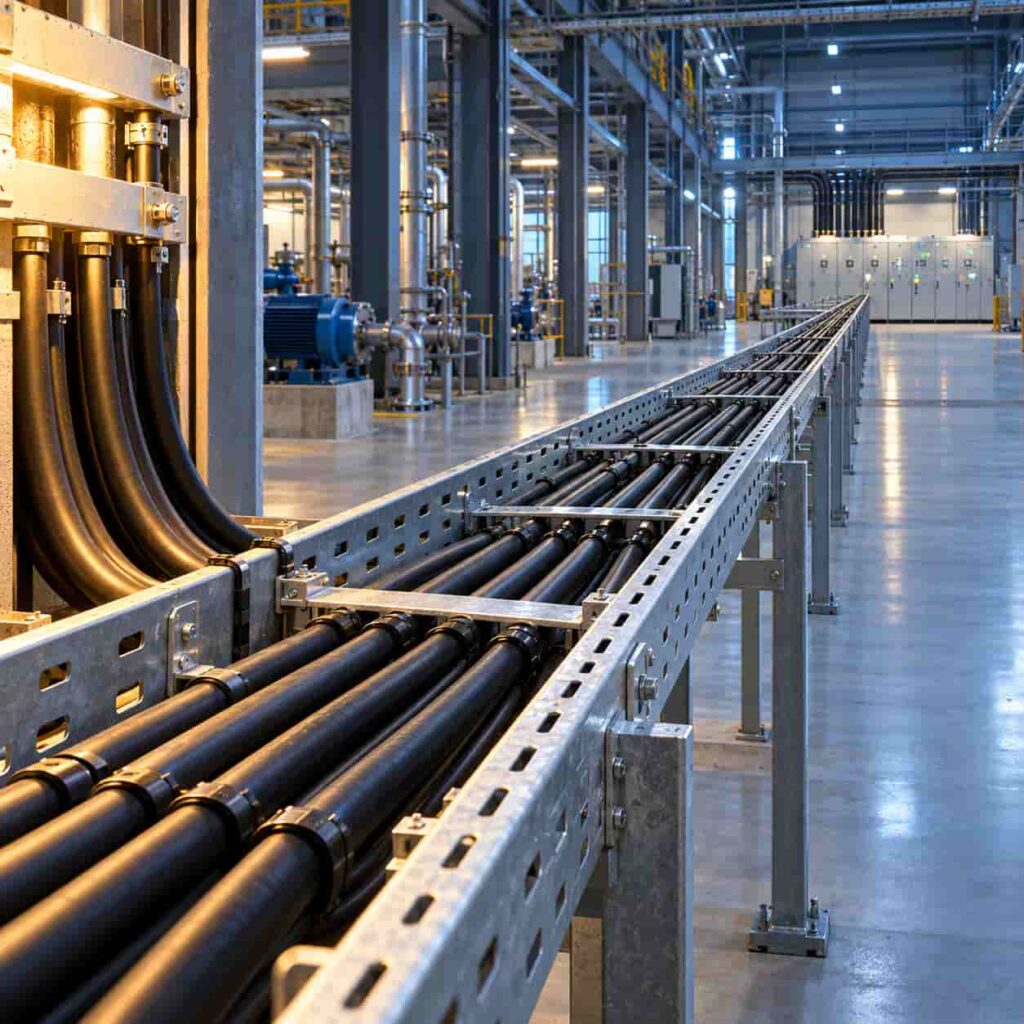
Voltage Drop in Long Cable Runs: Calculations Every Buyer Should Check Quick Answer: On long runs voltage drop — not ampacity — sizes the conductor: a feeder can pass the thermal check and still deliver 8 percent less voltage than the load needs. Short circuits are thermal problems; long circuits are voltage problems. A cable […]
Cable Voltage Ratings Explained: 0.6/1kV, 8.7/15kV and 26/35kV
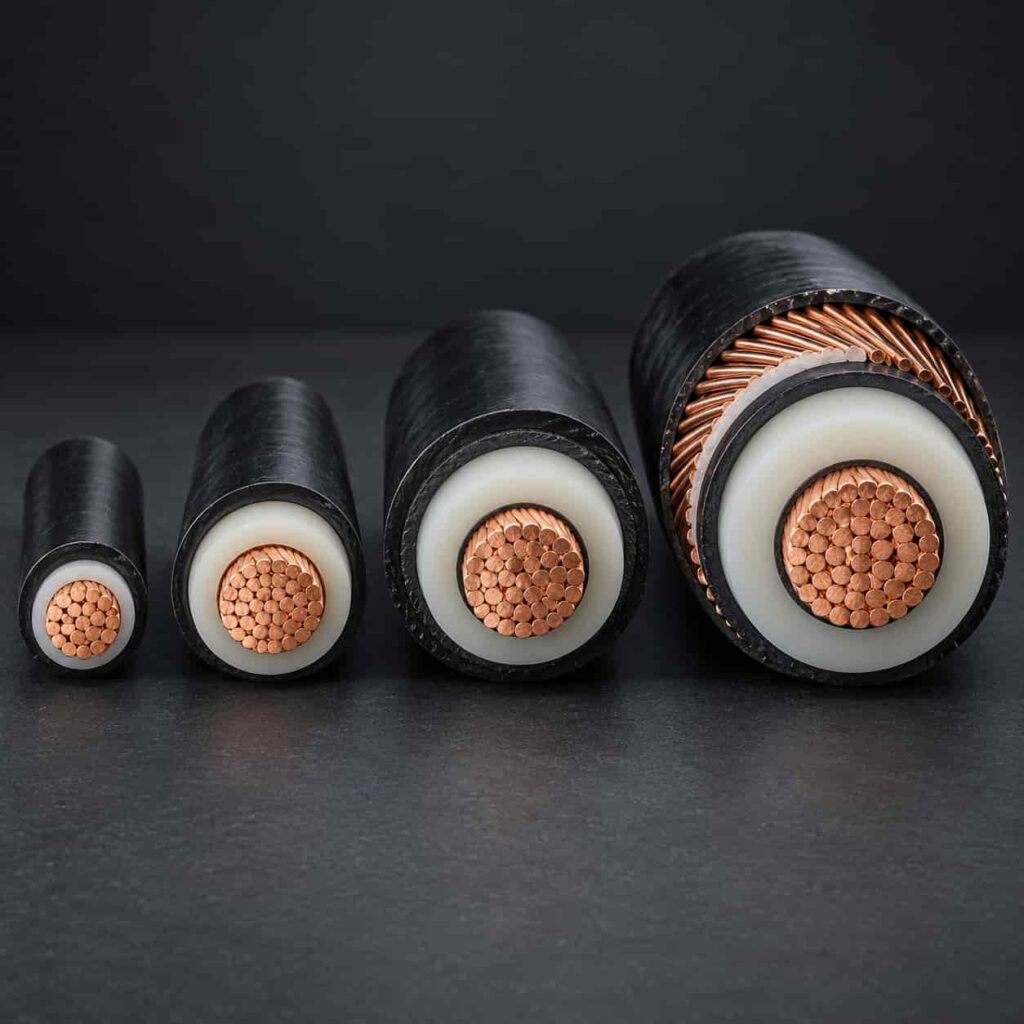
Cable Voltage Ratings Explained: 0.6/1kV, 8.7/15kV and 26/35kV Quick Answer: A U0/U rating answers two questions — U0 is conductor-to-earth voltage, U between conductors — and the earthing regime decides which number binds. No line on a cable schedule is quoted more and understood less than the voltage rating. The two-number grammar travels with every […]
Aluminum vs Copper Conductors for Power Distribution: Cost vs Performance
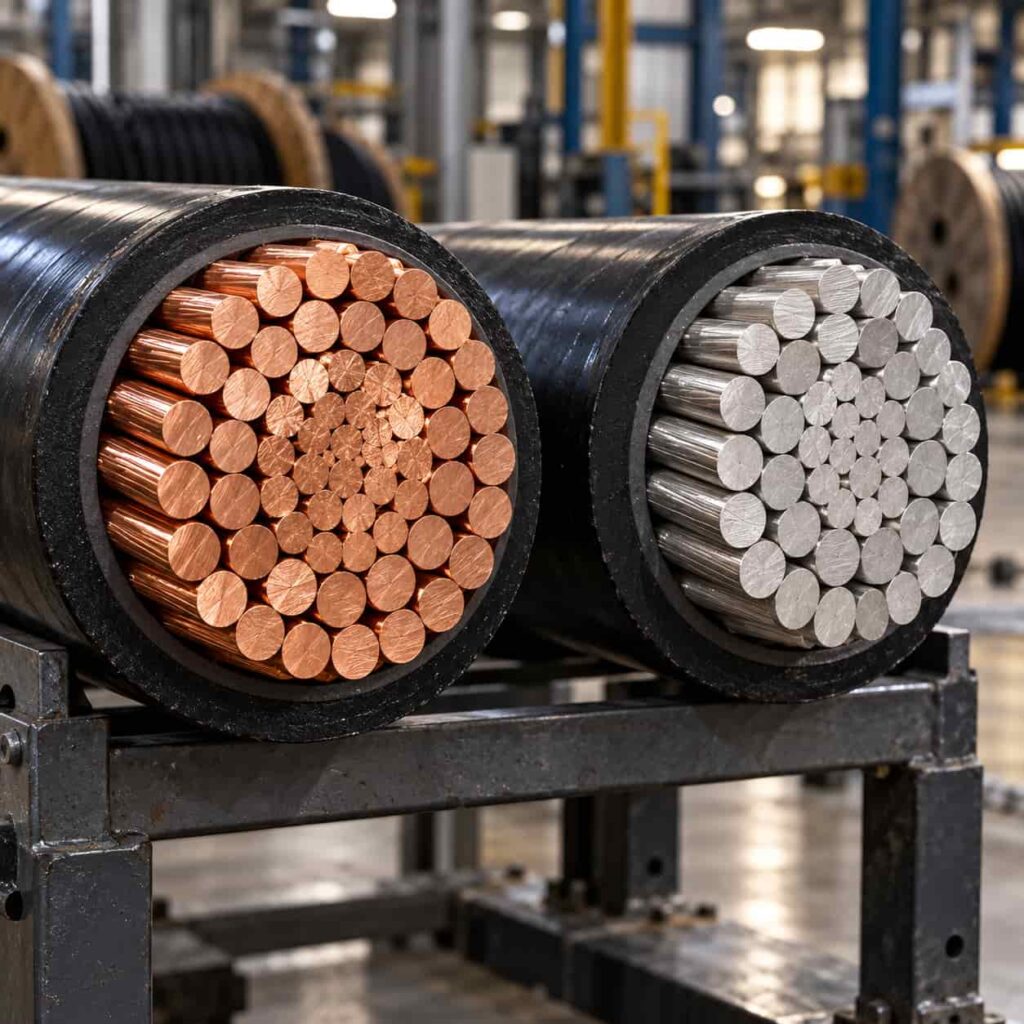
Aluminum vs Copper Conductors for Power Distribution: Cost vs Performance Quick Answer: Aluminum conducts about 61 percent as well as copper but costs far less per ampere delivered — it wins on long straight feeders; copper wins where space is tight. The conductor-metal question looks like a spreadsheet problem, and part of it is: run […]
Cable Cross-Sections in mm²: A Conversion Guide for Global Buyers (AWG vs mm²)
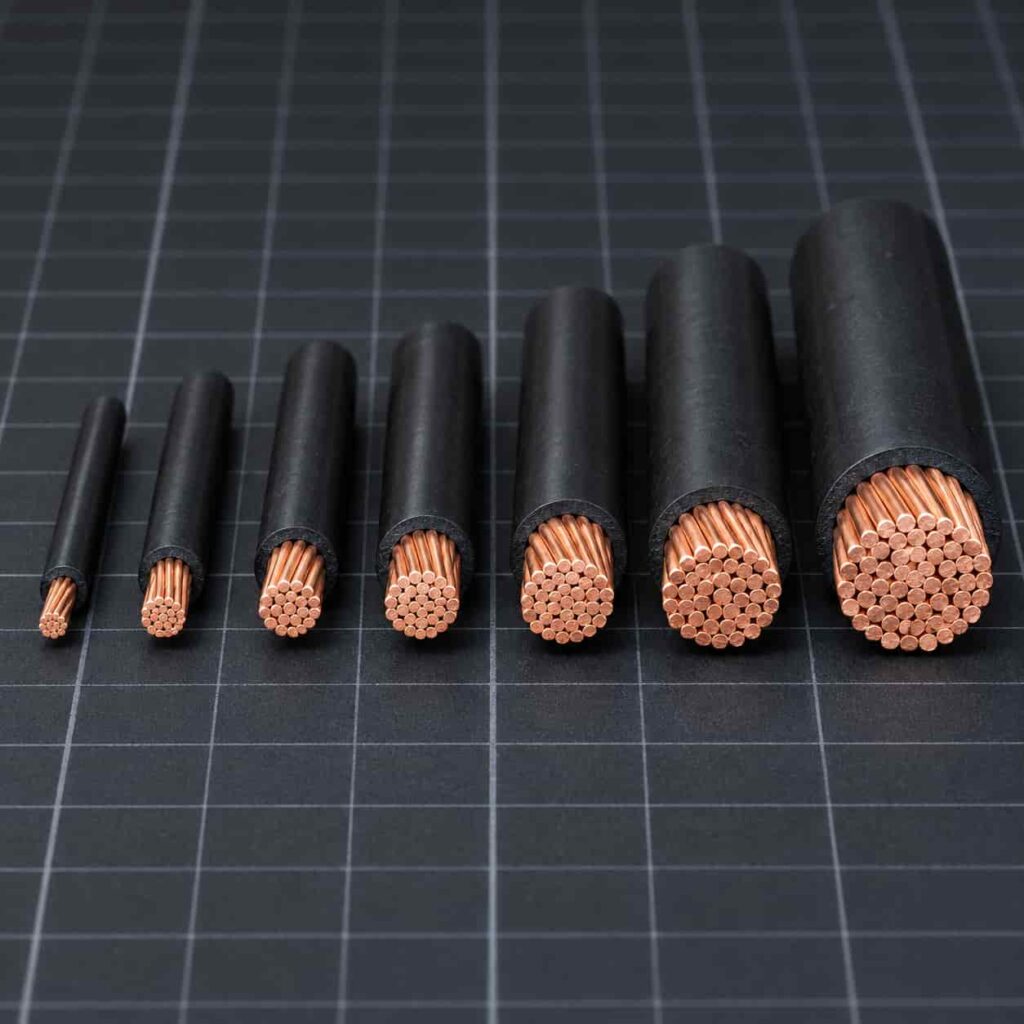
Cable Cross-Sections in mm²: A Conversion Guide for Global Buyers (AWG vs mm²) Quick Answer: AWG, kcmil and mm² are three languages for the same copper — the size conversion is a fixed table, but ampacity never converts with it. Every international cable transaction crosses this border somewhere: a US specification reads 4/0, the Chinese […]
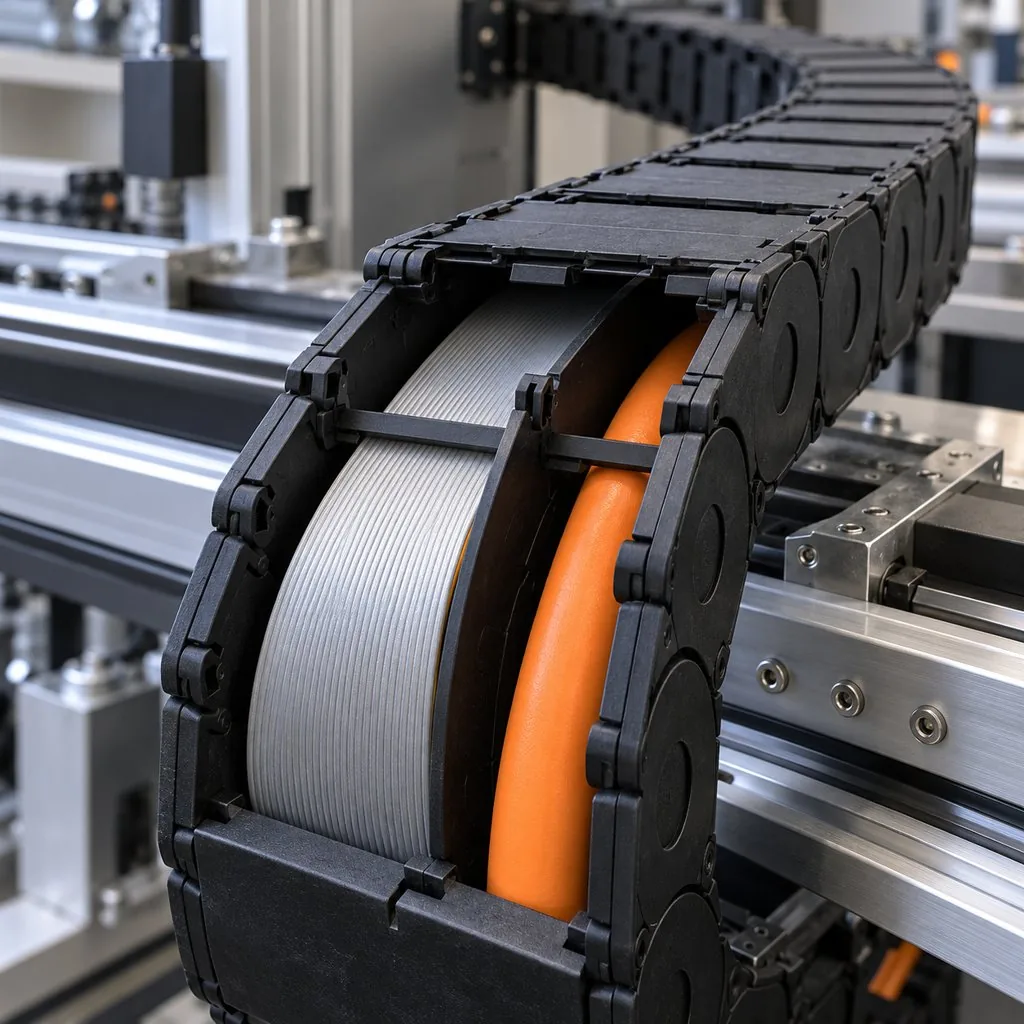
Round vs Flat Cable in Cable Carriers: Choosing the Right Form
BBTRZ Flexible Mineral Insulated Cable vs BTTZ: Which to Choose
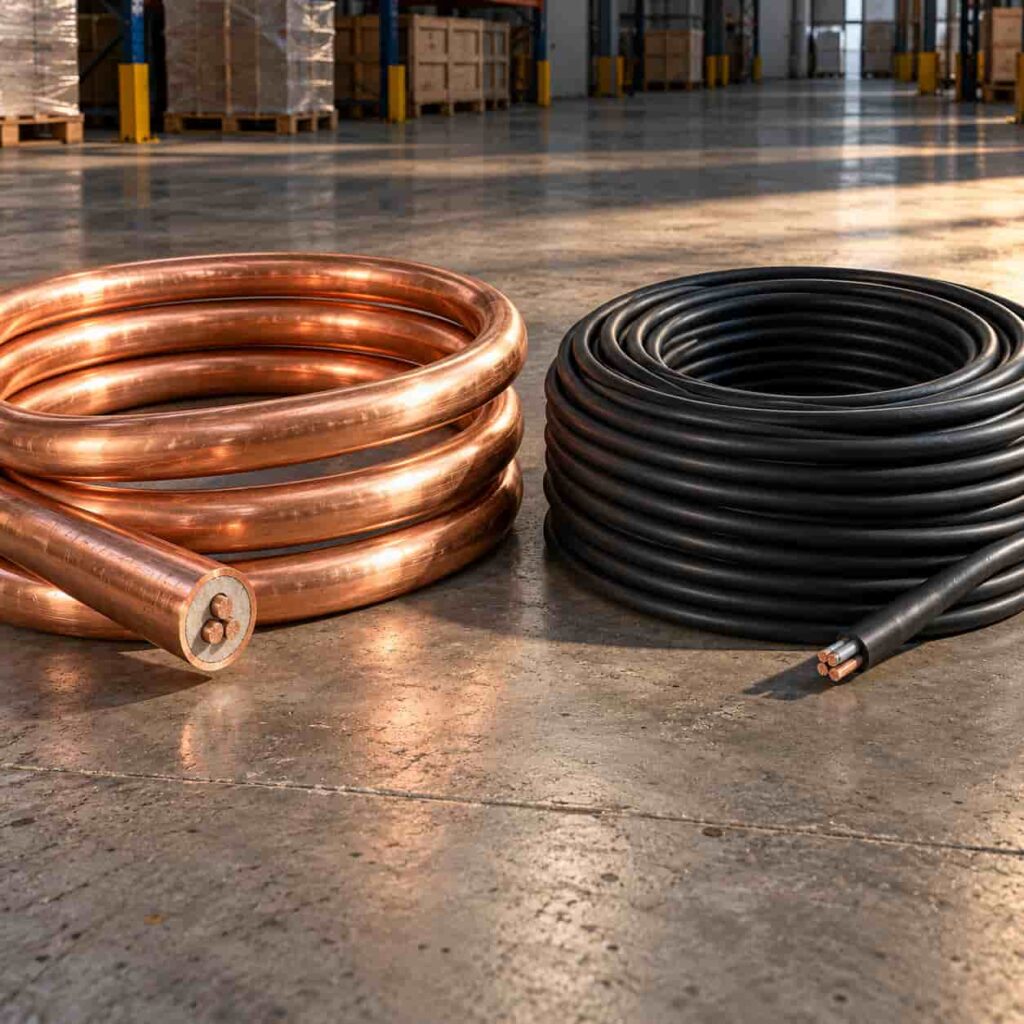
BBTRZ Flexible Mineral Insulated Cable vs BTTZ: Which to Choose Quick Answer: BTTZ trades installability for absolute fire survival; BBTRZ keeps strong fire resistance while bending like ordinary cable — demanding endurance picks BTTZ, practical routing picks BBTRZ. Both cables carry a fire-resistance rating. Both get called “mineral insulated” by their makers. And yet on […]
Continuous Flex Cable vs Drag Chain Cable: Which One Does Your Machine Need
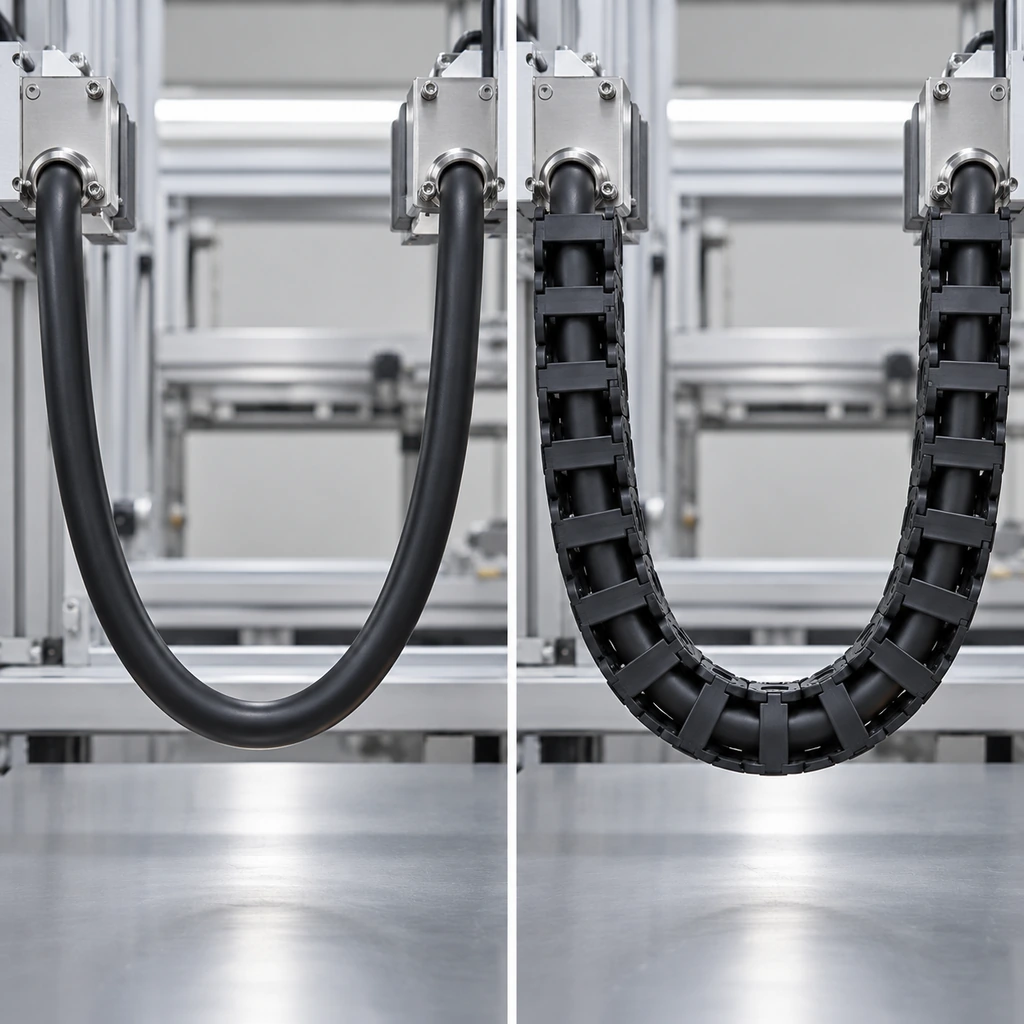
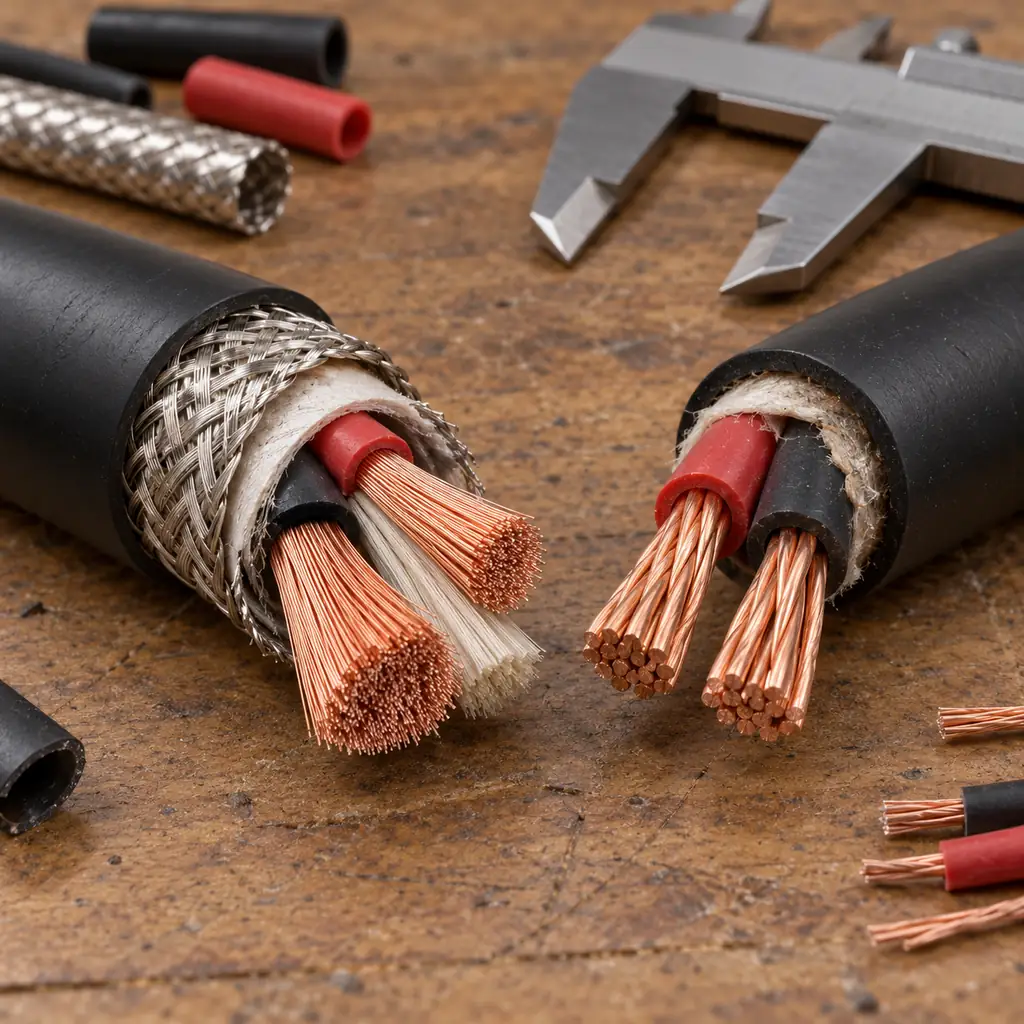
High-Flex Cable vs Standard Flexible Cable: Where the Difference Shows Up
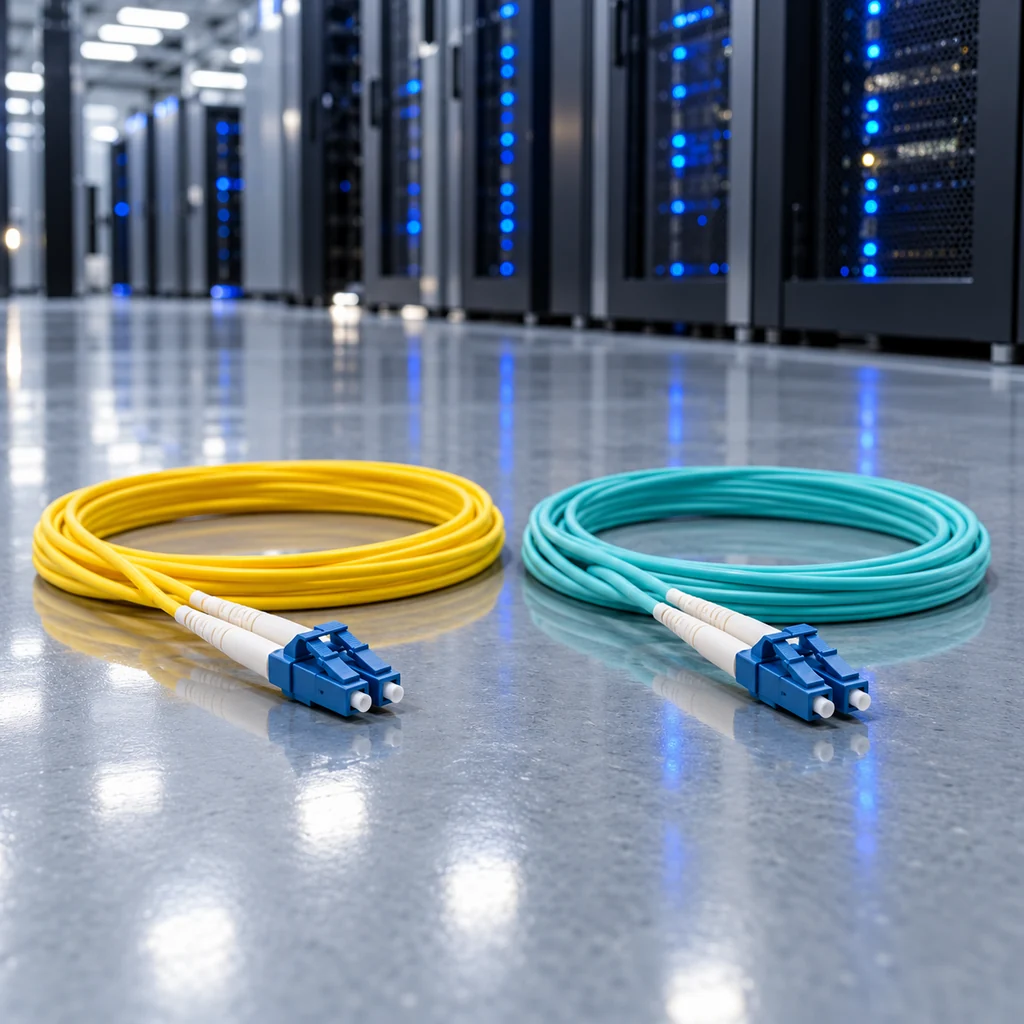
Single-Mode vs Multimode Fiber: Selection for Data Center Interconnect
How to Compare Cable Quotes: Beyond Price per Meter