Buying Mine Hoist Cable and Winder Control Feed for Safety Circuits
Quick Answer: Mine hoist cable in the procurement sense means the control, brake and feed cable around a winding installation. It does not mean the hoisting rope, which is a different product and a different buyer. What makes it a specialist purchase is that the hoist is a lifting machine with people on it, so the brake feed, the signalling and the monitoring circuits are held to a higher standard than the rest of the mine’s cable.
Introduction
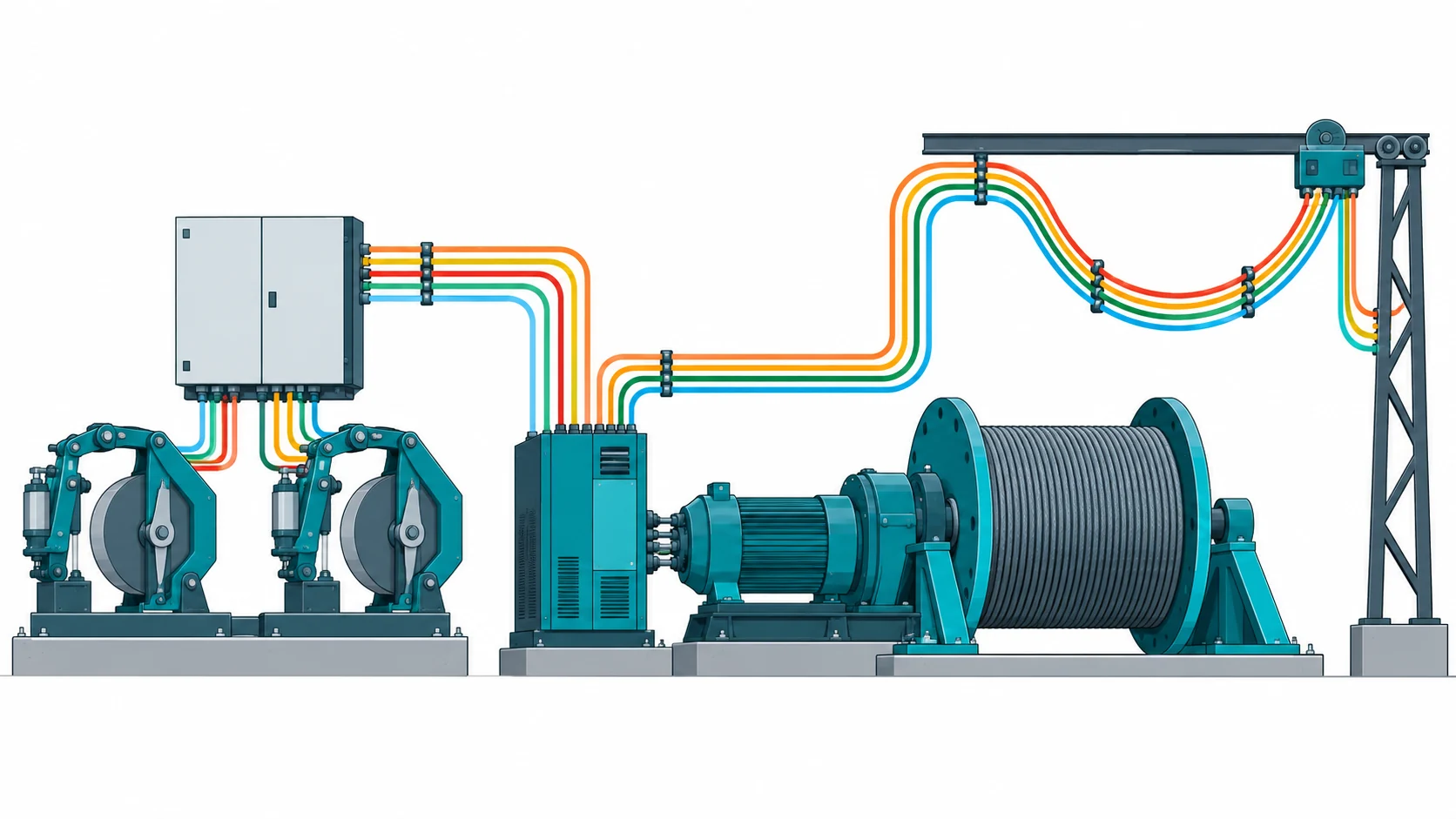
Start a conversation about mine hoist cable and half the room will assume you mean the steel rope over the sheave. That is a different purchase from a different supplier with a different standard, and it is worth saying so at the top of the enquiry. What this guide covers is the electrical cable that makes the winder work: the brake feed, the control and signalling, the drive feed from the converter, the moving control cable that follows a trolley, and the earthing and monitoring conductors.
Those circuits matter out of proportion to their cost. A mine can tolerate a fan down for an hour. It cannot tolerate a hoist that will not hold, and it will not tolerate a hoist that starts a journey it cannot see. Cable specification for a winding installation is therefore written around what happens when something fails, not only around what happens when everything works.
What Makes a Hoist Different From Other Mine Loads
The machine carries people. A winding installation is a lifting appliance, and its safety circuits are treated accordingly. Brake feed, overtravel protection and signalling conductors are part of that safety function, and the standards and approvals that apply to the installation are set by the mine’s own engineering rules and by the jurisdiction.
Failure has to be safe, not just rare. The design question is what the circuit does when a conductor breaks, a screen fails or a drive faults. A brake circuit that releases on loss of signal is worse than one that applies. Cable specification feeds directly into that behaviour.
The environment is a machine room. Oil mist, vibration from the drum, heat from the converter and moving trolleys are the local conditions, and they are nothing like a roadway. Cable that would be adequate elsewhere is not adequate here by default.
Availability expectations are high. A hoist is often the only route in and out of a shaft, so a cable fault can strand a shift as well as stop production. That is why the control and feed circuits are usually designed, installed and spares planned as a system rather than as individual runs.
The Five Circuits Around a Winder
Splitting a hoist installation into these five cable groups makes the specification and the spares list far easier to write.
| Circuit | Function and Failure Behaviour | What to Specify | Evidence to Demand | Cost and Lead Time | How It Fails |
|---|---|---|---|---|---|
| Brake feed and release | Holds or releases the brake; must fail to a safe state | Screened feed, circuit integrity where the design requires it, correct core identification | Circuit integrity or flame test evidence if required, plus screen details | Premium construction, longer lead time, short lengths | Conductor or screen failure that releases a brake at the wrong moment |
| Control and signalling | Depth indication, signalling and interlocks between stations | Screened control pairs, separated from power, with spare cores | Screen continuity and pair identification schedule | Moderate cost, often ordered last | False depth or signal indication leading to a short or overtravel |
| Drive feed from the converter | Carries the switched output to the winder motor | Screened construction, bonded screen, separated earth return | Screen and earth conductor details, insulation level | Long copper length, drives the project lead time | Earth fault tripping and bearing current damage |
| Moving control cable | Follows a trolley or a moving operator station | Flat or festoon construction qualified for the movement | Flex data at the declared travel and cycle count | Specialist item, made to order, longer lead time | Conductor fatigue and a break inside the moving section |
| Earthing and monitoring | Carries the earth path and the continuity monitoring circuit | Correct protective conductor sizing and a bonded screen throughout | Earth continuity test after installation | Low cost, high consequence if omitted | Earth path failure and a monitoring circuit that trips on healthy equipment |
Brake and Safety Circuits: Where Circuit Integrity Matters
The brake circuit on a winder is a safety function, and cable selection for it follows from that. Three requirements come up repeatedly.
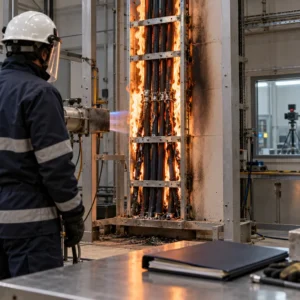
Know what the circuit must do when the cable fails. That is a design decision that belongs to the winder engineer, and the cable specification follows from it. Where the requirement is that the circuit continues to function for a period during a fire, the cable is specified for circuit integrity and the test evidence behind that claim is part of the product. Our note on the fire resistant cable range covers the constructions used for that duty.
Keep the brake circuit physically separate. A brake feed sharing a tray with a drive feeder is exposed to the drive’s noise and to a common cause failure. Separation and a screened construction are both usually justified, and the separation should be shown on the route drawing rather than assumed on site.
Identify the cores unambiguously. A brake circuit that is re-terminated during a night shift is a circuit where an identification mistake is a safety event. Specify the core identification and carry it through to the termination, and record it on the drawing.
Winder Drives and EMC
Most modern winders are on converters, which turns the drive feed into an EMC problem as much as a power problem. The cable is the largest antenna on the installation.
Screen the drive feed and bond it properly. A screen that is connected at one end only is a screen that radiates. Bond at both ends with a proper gland, and run the motor earth conductor back to the converter rather than to the nearest structural steel. The reasoning is the same as for any drive-fed motor, and it is set out in our note on shielded connectors and EMC.
Keep signalling out of the drive route. Depth indication and interlock signals are low level and they run through the same machine room. Physical separation plus screened pairs is the standard answer, and it is cheaper to design in than to cure afterwards. Our notes on control versus instrumentation cable and on the control cable range show where each type belongs.
Deal with the moving cable as a separate problem. Where an operator station or a trolley moves, the cable that follows it is a festoon or flat construction and it needs its own qualification. A round cable chosen because it was already on site will fatigue at the bend points. Flat and festoon constructions are covered in our note on the flat festoon composite cable.
Where the control philosophy involves a moving station rather than a fixed one, the moving control cable is best bought as a system with its trolley and strain relief, in the same way that a travelling control arrangement for a lift is designed. Our note on the lift and hoist control cable range covers the constructions used for that duty.
What to Freeze Before the RFQ Goes Out
| Decision | What to State | Evidence to Attach | Cost of Leaving It Open |
|---|---|---|---|
| Circuit list | Brake, control, drive, moving and monitoring as separate lines | A winder cable schedule with circuits and lengths | One flexible cable bought for circuits with different duties |
| Safety behaviour | What each safety circuit must do if the cable fails | A written design statement from the winder engineer | A brake that releases when it should hold |
| Circuit integrity | Whether a fire survival period is required, and for how long | Test evidence for the exact construction quoted | A cable that meets a general standard and not the requirement |
| EMC and earth | Screen bonding, earth return route and separation from signalling | A route drawing showing separation | Nuisance tripping and bearing current damage |
| Moving sections | Travel, speed and cycle count for each moving cable | Flex data at the declared movement | Fatigue failure inside the moving section |
| Core identification | The identification scheme, carried through to the termination | A core schedule on the drawing | A re-termination mistake on a safety circuit |
Lead Time and Cost Structure
A hoist cable package is small in value and long in process, which is the opposite of most mine cable orders.
Quantities are short and the specification is unusual. A winder needs tens of metres of a specific screened construction rather than hundreds of metres of a standard one. Short lengths of a special construction carry a setup penalty, so the lead time is driven by the rarity of the item rather than by the amount of copper in it.
The moving control cable is the long pole. A flat or festoon construction qualified for the travel is usually made to order, and it has to match the trolley geometry. Confirm the travel and the trolley before ordering, because a moving cable made to the wrong length cannot be shortened into a correct one.
Buy the whole installation from one supplier where possible. The brake feed, the control and the monitoring conductors have to work together, and their screen and earth arrangements interact. Buying them as one package makes the supplier responsible for the interfaces, which is worth more than the saving from splitting the order. The same argument applies to the joints and the glands, which should match the cable rather than be sourced separately at commissioning.
Where a shaft installation is being refurbished, the cable schedule is usually the weakest document in the package, because it has been amended over decades. Rebuilding it from a site survey before the enquiry is almost always time well spent, and it stops the package being quoted against a drawing that no longer reflects the machine.
Spares, Testing and the Route
A hoist cable package is bought for a decade, so the spares and the test records matter as much as the construction.
Hold the moving cable as a spare. The moving control cable is the item most likely to fail and the least likely to be available off the shelf. One spare length, made up with its ends, converts a stranded shift into a changeover.
Test the earth path after every intervention. The earth continuity and bonding chain around a winder should be verified after any work that disturbs it. Our note on grounding and bonding verification covers the checks, and its logic applies directly to a machine whose safety circuits depend on that path.
Record the installation as built. Photographs, core schedules and test results kept with the winder documentation save an enormous amount of time on the next intervention. Where a third party inspects the installation, keep their report with the cable records. Our note on third party cable inspection describes how that is usually arranged.
Watch the bend at the drum side. Cable near a moving drum and near a trolley sees repeated bending, and the bend cycle count is what decides its life rather than its age. Our note on cable bending cycles explains how that life is counted and how to feed it into the inspection interval.
When a Heavier Cable Is Not the Answer
When the fault is in the monitoring scheme. A continuity monitoring circuit that trips on healthy equipment is telling you about the scheme, the bonding or the relay setting. Replacing the cable repeats the fault with newer copper.
When the drive is tripping on earth fault. That is an EMC and earthing problem rather than a cable quality problem. Check the screen bonding and the earth return route before buying a screened cable of a heavier type.
When the moving cable fails at the same point every time. A moving cable that fails at one spot has a trolley or strain relief problem. Correcting the geometry lasts longer than a tougher construction.
When a fire survival claim is being bought on a general standard. If the design needs a circuit to keep working for a period during a fire, the test evidence has to be for the exact construction and the exact duration. A general flame retardant claim is not that evidence.
When the whole package is bought on unit price. A winder package is bought for safety behaviour, availability and a fifteen year life. Comparing two quotations on the price of the copper is comparing the smallest part of the decision.
RFQ Checklist
- The five circuit groups listed separately, with lengths and routes
- Written statement of what each safety circuit must do if the cable fails
- Circuit integrity requirement, with the standard and duration if applicable
- Screen bonding arrangement and earth return route for drive-fed circuits
- Separation of control and signalling from drive feeds, shown on the route
- Moving cable travel, speed and cycle count, with trolley geometry
- Core identification scheme, carried through to the terminations
- Insulation level and prospective fault current per circuit
- Gland and termination types matched to the cable and the enclosure
- Spare moving cable made up with ends, held on site
- Earth continuity and bonding test after installation and after interventions
- As-built records, core schedules and test results kept with the winder file
- Package bought as one coordinated supply where the interfaces interact
Conclusion
Mine hoist cable means the control, brake and feed cable around a winding installation, and it is bought for what happens when something fails. State the safety behaviour, separate the signalling from the drive, qualify the moving cable for its travel and hold a spare that can be fitted in a shift.
Kexingyu Cable Group (KXYE) has supplied electrical cable from Quanzhou since 1996, including the screened control, festoon and fire resistant constructions that a winder installation calls for, along with the glands and terminations that match them. Send the circuit list, the safety requirements and the trolley details, and we will come back with the constructions for each circuit, the test evidence that applies, and a delivery plan that fits the outage window. The fastest route is a request for quotation.