Vietnam's Digital Buildout: Cable Imports for Data Centers and Industry
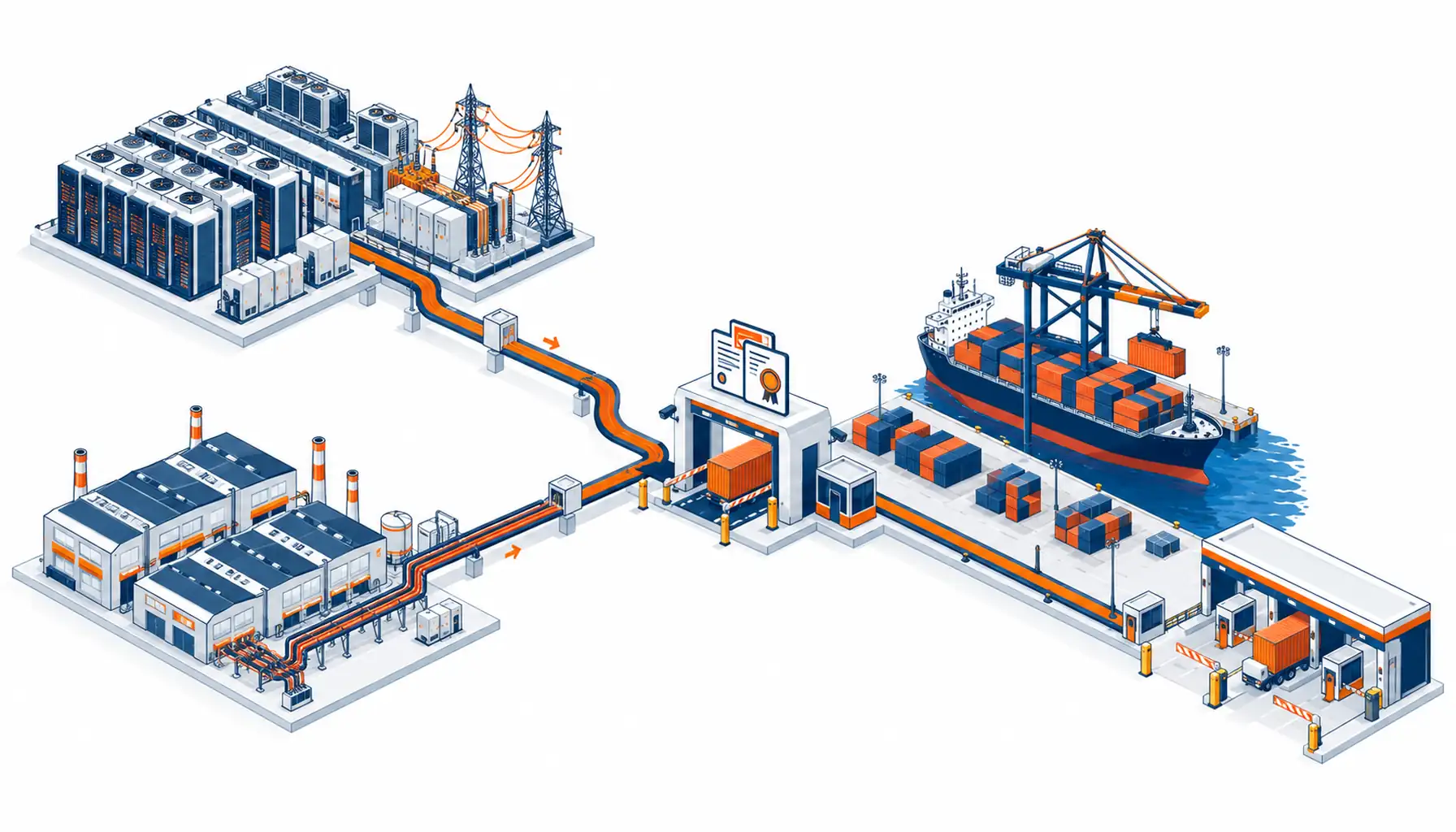
Quick Answer: Vietnam’s cable demand runs on two engines — a fast-scaling data center sector and the industrial-park economy — both pulling constructions through the same QCVN market-access gate.
Vietnam’s digital economy is compounding on top of its manufacturing economy, and the combination produces one of Southeast Asia’s most durable cable import stories. The data center side is scaling fast around Ho Chi Minh City and Hanoi as cloud and AI capacity land. The industrial side is the established engine: electronics, textiles, assembly plants spreading through a dense park network that electrifies a little more every year. Both engines buy cable, and both buy it increasingly through imports, under a market gate that splits regulation between two authorities. This guide maps the demand, the cable it consumes, and the route it travels.
Introduction
The demand frame is regional: Southeast Asia’s data center expansion is the fastest-growing corner of a global buildout, tracked in Southeast Asia data center power, and Vietnam’s slice of it is scaling quickly from a Hanoi–Ho Chi Minh City axis. The industrial frame is deeper and older: the park-driven manufacturing demand pattern is sketched in industrial park power demand, and it keeps generating cable orders of a different shape — feeder and distribution cable for factories, control cabling for production lines, building wire for worker facilities and park infrastructure. The supply route for both is the import channel this series maps in the Vietnam guide: regulated constructions passing the QCVN gate, with the telecom and power sides of regulation split between authorities. Two engines, one gate, one recurring discipline: verify before promising.
Engine One: Data Centers
Vietnam’s data center demand concentrates in the two metros, in projects that follow the regional hyperscale pattern: utility intake through MV substations, LV distribution to UPS strings, fire-regulated halls, monitoring layers. The cable bill is the standard one. MV XLPE feeders engineered to the framework in our MV and LV standards guide, LV distribution shaped by the backup architecture, LSZH hall cabling under the compound trade-offs of LSZH vs fire-retardant cable, and monitoring and storage-side cabling sized to the uptime targets. What distinguishes the Vietnamese data center program is rhythm: the sector is early in its curve, so projects land as discrete waves with international consultants on submittal discipline. Those are documentation gates that cable suppliers meet or miss.
Engine Two: Industrial Parks
The manufacturing engine is broader, steadier and more price-sensitive. Park expansions buy incoming MV feeders and substation connections; factories buy LV distribution, control and instrumentation cabling, and building wire at volumes that repeat across tenants and phases. The orders are smaller, the decisions faster, and the specification culture leans more toward IEC conformity than submittal gates — though the multinationals running the parks bring their own documentation standards with them. Two layers stack on the industrial demand: the electrification of new park phases in secondary provinces, and the grid upgrades that follow industrial load growth. The geography multiplies the volume. Parks string north from Hanoi and east from Ho Chi Minh City, and each new cluster repeats the same opening sequence: substation connection, feeder runs, factory fit-outs, worker infrastructure. So the demand arrives as a repeating pattern across provinces rather than as one large project. For suppliers, the industrial engine rewards scale and consistency; for buyers, it rewards the same verification discipline, because a park full of tenants electrifying on schedule has no patience for a cable shipment stuck at a border for missing papers.
| Dimension | Data Centers | Industrial Parks |
|---|---|---|
| Concentration | Ho Chi Minh City and Hanoi axis | Park network across secondary provinces |
| Cable scope | MV feeders, UPS-side LV, LSZH halls, controls | Feeders, factory LV distribution, control pairs, building wire |
| Specification culture | Consultant-gated submittals, batch evidence | IEC conformity, faster decisions, price-sensitive |
| Order shape | Large, phased, project-anchored | Smaller, repeating, tenant-driven |
| Shared constant | QCVN gate and document discipline at the border | QCVN gate and document discipline at the border |
The Supply Route: One Gate, Both Engines
Whether the cargo serves a data hall or a factory floor, the border is the same: Vietnam’s market-access gate splits the regulation of power and telecom cable between two authorities, and the import process this series maps in the Vietnam guide runs conformity certification, importer registration and customs matching in sequence. The buyer’s practices are the series’ standards. Verify at RFQ: which constructions sit in which regulator’s scope, and what the factory holds for them — the four-check discipline of the power cable certifications checklist. Allocate the border: who registers, who certifies, who owns the documents, written into the contract per the incoterms framing in FOB vs CIF for power equipment. And respect the calendar: cable lead times ride with the electrical equipment family, and the programs that fail in Vietnam fail on paperwork and calendars — the recurring patterns of international power equipment sourcing mistakes — not on cable quality.
| Stage | Action | Classic Trap |
|---|---|---|
| RFQ | Constructions mapped to the correct regulator's scope | Power and telecom cable treated as one regulatory line |
| Selection | Factory credentials verified per construction | Conformity file borrowed from a different plant |
| Contract | Registration, certification and duties allocated explicitly | Importer registration discovered after booking |
| Delivery | Documents and markings reconciled per consignment | Invoice descriptions drifting from the certified file |
| Repeat | Verified constructions reused across tenants and phases | Verification restarted for identical scope |
When Two Engines Are Not One Strategy
Two cautions close the map. The engines buy differently: a data center program is won on documentation depth and batch consistency, while a park tenant order is won on price, speed and reliability. A supplier optimized for one doesn’t automatically serve the other. And the gate does not negotiate: regardless of engine, the regulated constructions need their conformity file before the border, and the fastest way to lose a Vietnamese customer is to discover the file gap at the port. The strategy that works serves both engines with the same verified factory file and adjusts only the commercial rhythm. It’s the disciplined posture this series has repeated since CCC.
RFQ Checklist: Vietnam Lines for the RFQ
Put both engines’ questions in writing:
- Demand engine identified per program: data center wave or park expansion
- Constructions mapped to the correct regulator’s scope, current at RFQ
- Factory credentials — holder, coverage, currency — verified per construction
- Batch test reports and traceability commitments for project-anchored orders
- Importer registration and duties allocated in the contract
- Lead times coordinated with the electrical equipment family
- Repeat-construction terms for park tenants and multi-phase campuses
Conclusion
Vietnam’s cable import story is two engines pulling one gate: data centers scaling from two metros, industrial parks repeating across provinces, both importing constructions that must clear the same conformity sequence. Suppliers who hold one verified factory file and flex the commercial rhythm serve both engines. Buyers who verify the file before the promise keep both on schedule.
Kexingyu Cable Group (KXYE) serves Vietnam-bound programs across both engines — IEC-aligned power, control and fire-regulated cabling, with conformity documentation assembled before the border and batch evidence that survives consultant review. For suppliers, the dual-engine pattern rewards one well-kept evidence file serving both: the data hall’s consultant and the park’s EPC ask different questions of the same batch reports.