Indonesia's Data Center Growth: Cable Demand from Jakarta Outward
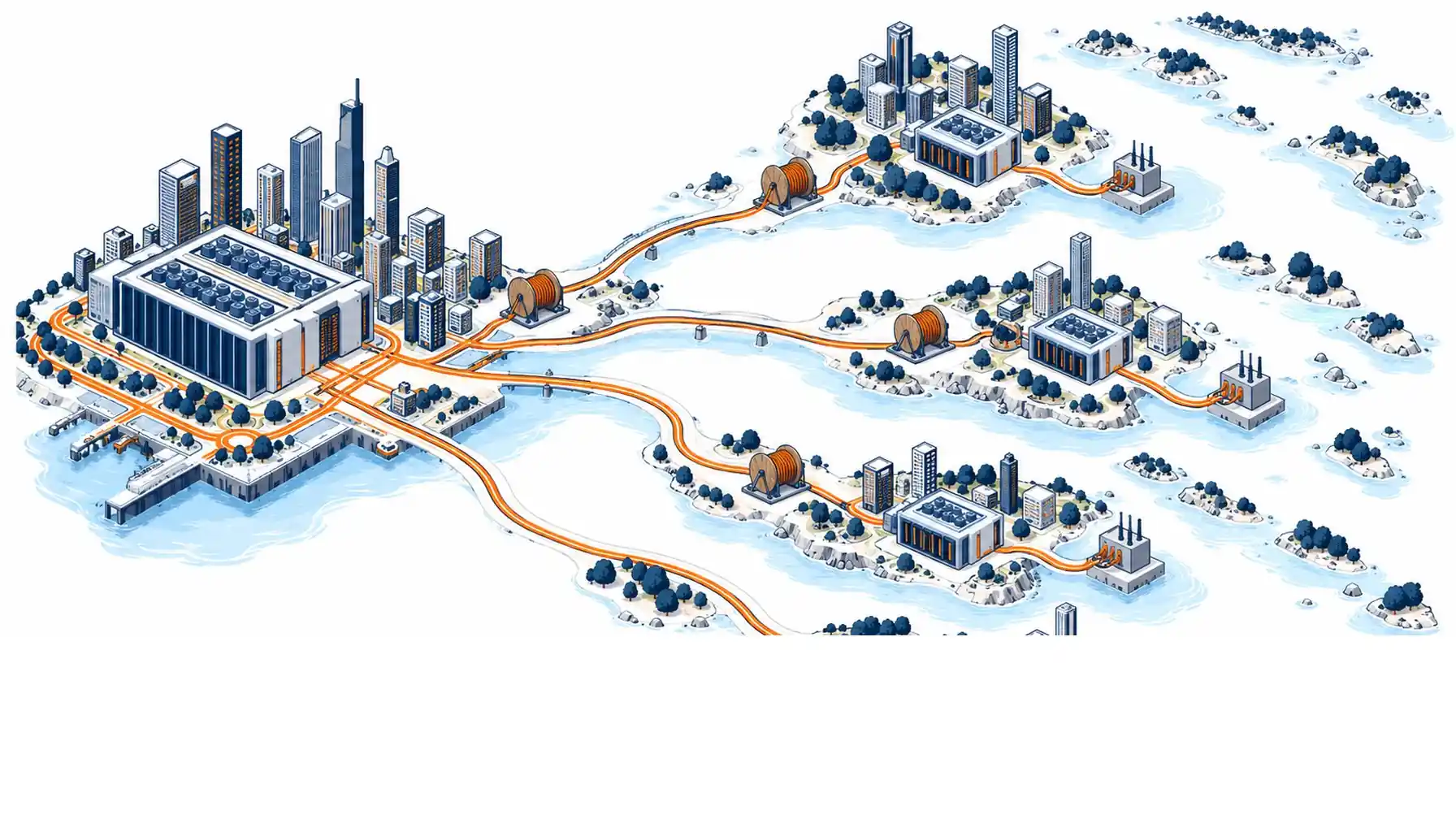
Quick Answer: Indonesia’s data center market grows outward from Jakarta — and the buildout buys the standard hall bill, with the SNI certification gate deciding which factories can supply.
Indonesia has Southeast Asia’s largest population and one of its youngest digital economies, and its data center market is finally converting that into capacity. It grows outward from a Jakarta core along Java’s industrial spine and into the secondary cities where the next wave lands. For the electrical supply chain, the shape of the demand is the familiar one: hyperscale-style halls that each convert megawatts into substations, UPS systems and cable, in a country that guards its cable market with a mandatory, plant-issued certification gate. This guide maps both halves, the demand and the gate, in one read.
Introduction
The regional context is the fastest-growing data center corner of a global buildout, tracked in Southeast Asia data center power, and Indonesia is its scale play: hundreds of millions of users, cloud regions landing, AI interest climbing, and a government pushing digital infrastructure into the national plan. The geography matters as much as the volume. The market grows outward from Jakarta, first along Java’s industrial corridors, then toward Bali, Batam and the secondary metros, and each wave of expansion carries the same electrical bill with it. The supply side carries its own constant: Indonesia’s SNI certification regime, the plant-license gate this series maps in the Indonesia guide, sits over the regulated cable families that data halls consume. Demand outward, gate upstream. The buyer’s job is to plan both.
What the Growth Buys: The Data Hall Electrical Bill
Strip a Jakarta hyperscale hall to its cable and four layers appear, in the same order everywhere. First the intake: MV XLPE feeder cable from grid connection to on-site substations, the engineered constructions mapped in our MV and LV standards guide, armored where routing demands, fault-rated and batch-tested. Then the distribution: LV power cable from transformers through switchgear to UPS strings and PDUs, where the backup architecture — sized for a data hall’s resilience targets — decides how many parallel feeders the design carries. The halls take LSZH-jacketed power and structured cabling under the fire regime, with the compound trade-offs of LSZH vs fire-retardant cable. And the controls run on shielded instrumentation pairs for monitoring and BMS. Two Indonesian specifics bend the bill. The archipelago grid makes on-site resilience, and therefore the UPS and storage side — the systems in data center energy storage backup — carry more weight than in landlocked markets. And the SNI gate makes credential documentation part of the product itself.
| Layer | Cable Family | Requirement Focus |
|---|---|---|
| Grid intake and substations | MV XLPE feeder cable, armored constructions | Voltage class, fault ratings, SNI-scope check per construction |
| Distribution and UPS strings | LV power cable, parallel UPS feeders | Ampacity with derating; architecture-driven run counts |
| Enclosed halls | LSZH power and structured cabling | Halogen-free and smoke certificates under the fire regime |
| Resilience systems | Battery and storage cabling, DC strings | Grid-independence sizing for an archipelago supply |
| Monitoring and BMS | Shielded control and instrumentation pairs | Shield integrity, documentation consistency |
The Supply Route: SNI Gate, Import Rhythm and Program Building
The sourcing conversation routes through the SNI gate this series maps in the Indonesia guide. Regulated constructions need the license in the manufacturing plant’s name — tested, audited, surveillance-kept — and the buyer’s verification is the standard four checks of the power cable certifications checklist: holder, coverage, currency, marking. Three practices convert the gate into a plan. Verify at RFQ, never at the port: scope checks and license currency belong in supplier selection, because a delivery promised against a future license is the wish-not-a-schedule error this series repeats in every gated market. Plan the importer side explicitly: Indonesia’s border procedure matches shipments to credentials through the importer of record, and the allocation of duties, clearance and documents belongs in the contract per the incoterms framing in FOB vs CIF for power equipment. And build programs, not orders: the outward growth means the same constructions repeat as new metros and campuses come online. Price them against the copper-linked economics that move every program’s base, with the recurring failure patterns of international power equipment sourcing mistakes as the checklist of what not to repeat.
| Stage | Action | Classic Trap |
|---|---|---|
| Design | Hall electrical bill fixed; SNI scope mapped per construction | Regulated families treated as generic imports |
| RFQ | License holder, scope and currency verified per factory | Certificate photocopy accepted without register check |
| Contract | Importer duties, clearance ownership and milestones allocated | Delivery dates assumed before the license exists |
| Delivery | Documents and markings reconciled per consignment | Batch mixing without traceability |
| Expansion | Repeat constructions under framework terms as new metros land | Re-starting verification per project |
When Growth Is Not the Whole Answer
Two cautions frame the opportunity. A growing market is not an open market: Indonesia’s gate is one of the region’s heavier ones, and the programs that move are the ones whose factories hold current SNI licenses for the exact constructions. That capacity takes months to build and can’t be improvised. And outward growth is not uniform demand: the Jakarta core, Java’s corridors and the secondary metros move on different schedules and different buyer structures, and the suppliers who win treat each wave as its own program with its own verification. It’s the register-not-memory discipline that governs every market this series maps.
RFQ Checklist: Indonesia Data Center Lines for the RFQ
Put the program’s questions in writing:
- Hall electrical bill mapped: intake, distribution, UPS, halls, controls
- SNI scope status confirmed per construction, current at RFQ time
- License holder plant, standards and currency verified through official channels
- Batch test reports and drum traceability committed contractually
- Importer of record and clearance duties named on the customer side
- Resilience-side cabling — UPS and storage strings — sized to the archipelago grid reality
- Framework terms for repeat volumes as the market expands outward
Conclusion
Indonesia’s data center market grows outward from Jakarta the way its grid grows outward from Java: wave by wave, each wave carrying the same electrical bill and the same gate. The buyers and suppliers who pair the demand map with the SNI map, meaning licensed factories for regulated constructions verified before dates are promised, are the ones whose cable is in the ground when the halls energize.
Kexingyu Cable Group (KXYE) supports Indonesia-bound data center programs with IEC-aligned power and LSZH cabling across the hall electrical bill, accurate SNI status disclosure, and one-source documentation that keeps the gate a schedule line, with factory credentials matched to the constructions that ship. For suppliers, that means the file moves with the build: each new wave re-tests the same evidence, and the factories that hold it current win the next wave by default.