How to Buy Cables from China: A Step-by-Step Process for Overseas Buyers
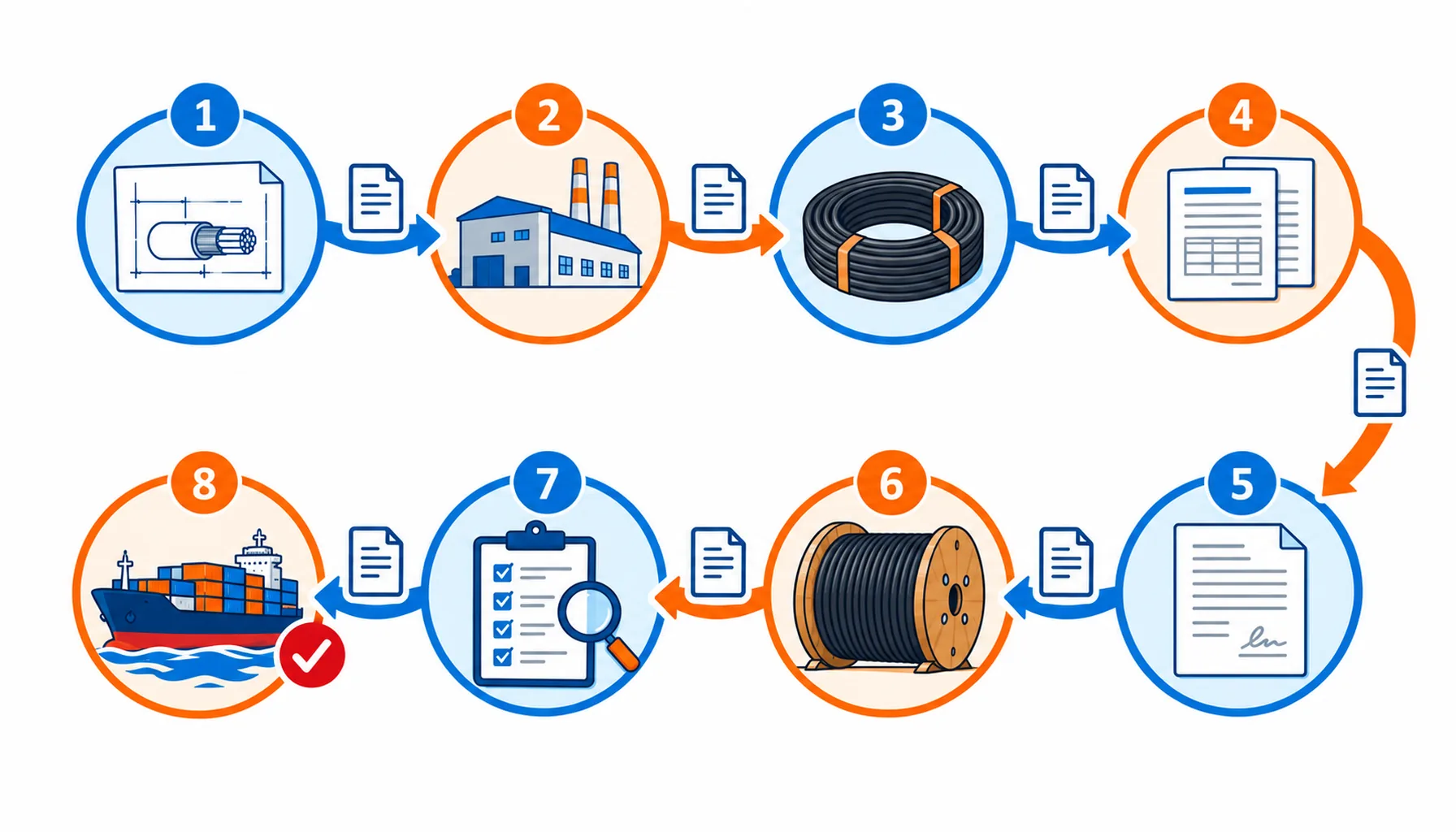
Quick Answer: Buying cable from China works as an eight-step process — specify, shortlist, vet, sample, quote, contract, inspect, ship — where each step produces a document the next one depends on.
China manufactures more cable than any other country, at price points that keep overseas project budgets honest — and the difference between a smooth program and a painful one usually has less to do with the cable than with the process around it. Buyers who treat the purchase as a transaction — send a drawing, accept the cheapest quote, wait for a container — meet every failure mode the trade has to offer: unverified constructions, batches without traceable tests, customs surprises and a supplier who turns out to be a desk with a phone number. Buyers who treat it as a process — eight steps, each producing a document the next step depends on — get what the factories are actually good at: capable production, fast customization and export logistics refined by decades of volume. This guide walks the full path from first specification to drums on site, and it doubles as the hub for the deeper guides linked along the way.
Introduction
The process below compresses into one page what buyers otherwise learn from a bad first order. It assumes the reader is specifying cable for a real project — power distribution, fire circuits, control runs — and wants the goods to arrive matching the specification, with paperwork that survives the consultant and the customs officer. Each step has a deeper companion guide: the vetting detail lives in the power cable manufacturer China checklist, and the freight-detail detail in FOB vs CIF for power equipment. Run the steps in order and the cable arrives as specified; skip one, and it tends to resurface later as a cost, usually at the worst possible moment.
Steps 1–2: Specify Precisely, Shortlist Factories
Everything downstream inherits the specification. Write it as a construction standard plus a schedule of parameters — conductor material and class, insulation and sheath compounds, voltage rating, armor, flame and fire performance, length per drum — and name the standard the construction should satisfy (IEC, BS, AS/NZS or equivalent). A precise specification does two things: it lets a real factory quote engineering instead of guessing, and it makes non-conforming goods detectable before shipment rather than after installation. Then shortlist. Search results and marketplace rankings are advertising, not vetting; the reliable filter is whether the company is a manufacturer with the machines for your construction, and the check for that is the next step. Three to five candidates is the right depth — enough for price tension, few enough to vet properly.
Steps 3–4: Vet the Factory, Approve Samples
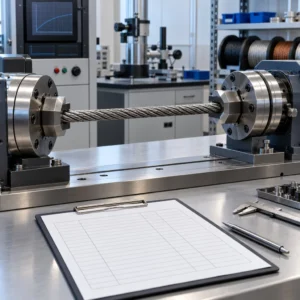
Vetting separates manufacturers from traders and capable factories from assembled ones. The core moves: read the business license scope, take a live video walk through the workshops or audit in person, ask for the equipment list that matches your construction (a factory without a crosslinking line does not make XLPE cable), and check that third-party test reports actually name the factory and the construction. The full protocol is in our guide to vetting Chinese electrical equipment manufacturers, and the certification leg — which certificates mean what, and which export documents your market requires — is in the China certification checklist. Then sample before committing: a sample from the production line, not a showroom piece, tested against the named standard. Sample approval converts the specification from words both sides read into a physical artifact both sides measured.
| Step | Output | Depends On |
|---|---|---|
| 1. Specify | Construction standard plus parameter schedule | Project design and applicable standard |
| 2. Shortlist | Three to five candidate manufacturers | Specification written |
| 3. Vet | Audit notes, equipment list, traceable reports | Shortlist agreed |
| 4. Sample | Approved sample tested to the named standard | Factory vetted |
| 5–6. Quote and contract | Fixed commercial terms and copper mechanism | Sample approved |
| 7. Inspect | Batch tests and pre-shipment inspection reports | Contract signed |
| 8. Ship | Clean customs file and drums on site | Inspection passed |
Steps 5–6: Quote, Compare and Contract
With an approved sample in hand, request quotes against the same specification from every shortlisted factory — this is the only comparison that means anything, and the discipline of international power equipment sourcing mistakes applies in full: compare construction to construction, copper basis to copper basis, incoterm to incoterm. A quote worth accepting states the construction per the drawing, the copper pricing mechanism, the delivery window, the payment terms and the documents included. Payment terms deserve respect for both sides’ realities: deposits and balances are standard in the trade, and first orders with a new supplier are the place for conservative terms and third-party inspection rights written into the contract. Contract before production starts, not after the goods exist — once the cable is already made, signing is paperwork rather than leverage.
Steps 7–8: Inspect Production, Ship Clean
Production is where the specification either holds or quietly drifts. The controls are routine and effective: request batch test reports against the standard as production proceeds, and exercise pre-shipment inspection — your own team or a third party — checking drum labels, lengths, construction sampling and packaging against the approved sample. The inspection right only exists if the contract wrote it in, which is why step six matters twice. Shipping then runs on the paperwork: commercial invoice, packing list, bill of lading, certificate of origin and any market-specific certificates, all consistent with each other, because customs officers work through the documents before anyone gets to the drums. The incoterm decision — who owns which leg of the journey — is made in the contract and explains the cost differences quotes show; the FOB vs CIF comparison maps who is responsible for what.
| Milestone | Document in Hand | Classic Trap |
|---|---|---|
| Specification frozen | Parameter schedule with named standard | Sending only a model number |
| Factory vetted | Audit notes and traceable test reports | Vetting by website and price |
| Sample approved | Signed sample record with test results | Approving a showroom sample |
| Contract signed | Terms, copper mechanism, inspection rights | Ordering before terms exist |
| Inspection passed | Batch and pre-shipment reports | Skipping inspection on repeat orders |
| Customs cleared | Consistent invoice, packing, origin file | Documents that disagree with each other |
When a One-Quote Sprint Is Not the Answer
Two cautions close the loop. The first is the sprint: treating the process as overhead and going straight from drawing to cheapest quote skips the very steps that make the price real — the vetting, the sample, the inspection rights — and the savings evaporate into the rework. The second is the frozen process: buyers who ran the eight steps once and never repeat the vetting on later orders discover that suppliers, volumes and factories change. The process isn’t a gate you pass once; it’s a light that stays on — full protocol on new suppliers and new constructions, sampled checks on familiar ones. Overseas buyers who keep that discipline running buy from China the way its best factories work best with: precisely, with documentation, and repeatably. When the specification is ready, the RFQ page starts step two with the shortlist.
RFQ Checklist: Lines That Start the Process Right
Put the market’s questions in writing:
- Construction standard and full parameter schedule attached
- Manufacturer status confirmed — machines named for the construction
- Sample from production line, tested to the named standard
- Quote against the identical specification with copper mechanism stated
- Payment terms and third-party inspection rights in the contract
- Batch test reports per drum range during production
- Export document set listed and mutually consistent
Conclusion
Buying cable from China rewards process the way few purchases do: eight steps, each producing a document the next depends on, turn the world’s largest cable industry into something you can actually plan around. Specify precisely, shortlist manufacturers, vet before the rush, sample from the line, contract with copper and inspection terms written in, inspect production and ship on paperwork that agrees with itself.
Kexingyu Cable Group (KXYE) runs this process as standard: auditable manufacturing from conductor to finished drum, samples from the production line, copper-linked pricing with the mechanism stated in the contract, batch documentation per drum range and export files that clear customs the first time — cable supply built to work with the process, not around it.