BC vs CCA vs CCS Conductors: Why Copper Content Defines Cable Quality
Quick Answer: CCA and CCS cables look identical to bare copper on the drum and cost 20-40% less — and carry up to 55% more resistance, run hotter under PoE and fail compliance tests. The conductor metal is the cable.
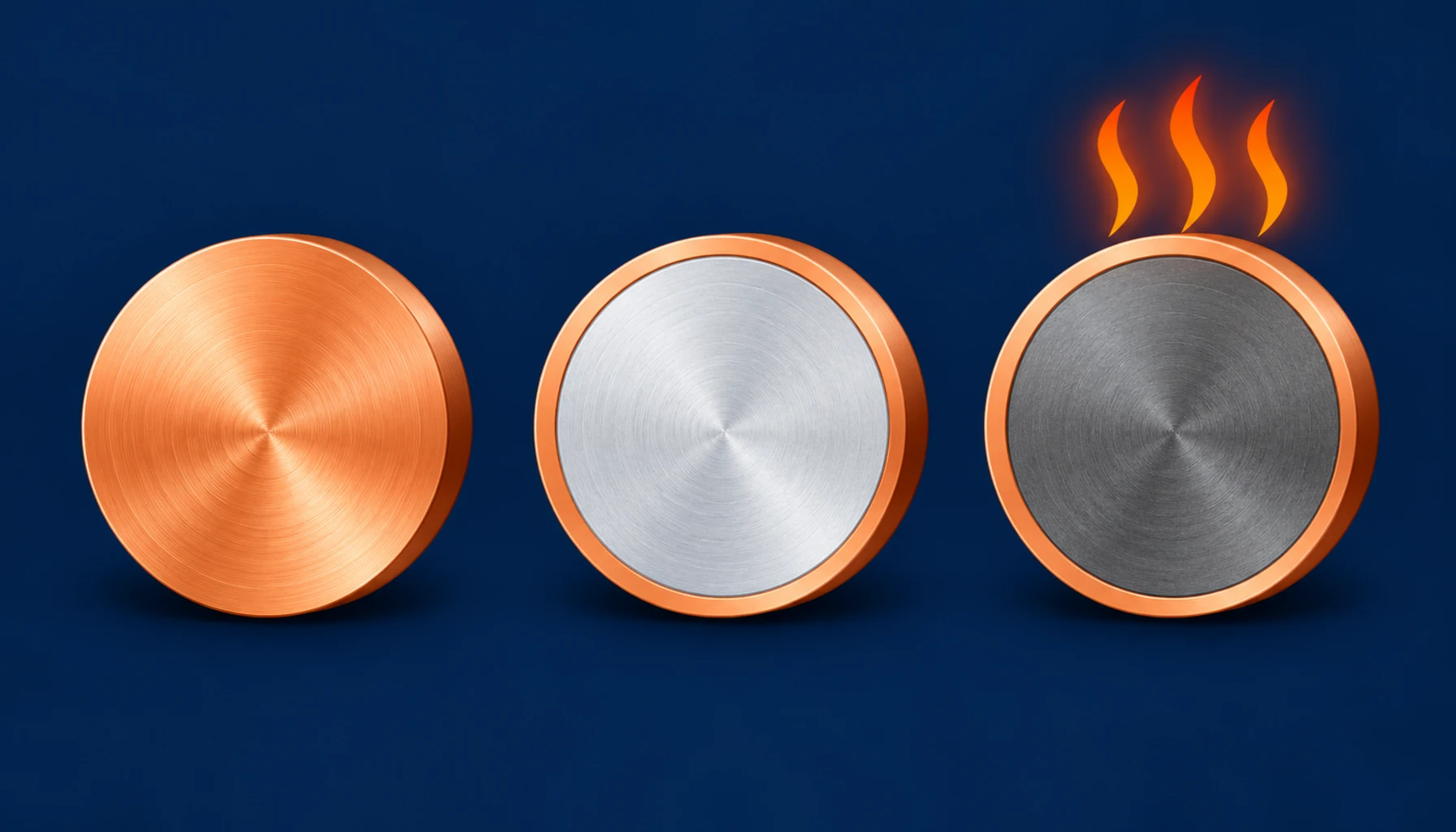
The bc vs cca network cable question is the most consequential quiet decision in network cabling, because the three conductor types — bare copper (BC), copper-clad aluminum (CCA) and copper-clad steel (CCS) — are manufactured to look identical: same jacket print, same category claim, same box. What differs is the metal doing the work. Aluminum conducts about 60% as well as copper by volume; steel far worse; both are made saleable by a thin copper cladding that passes the eye test and fails the physics. The consequences are not subtle: resistance well above the standard’s limit, links that negotiate below their category, PoE bundles that run dangerously hot, and conductors that fracture at the patch panel after a season of handling. CCA exists because it is cheap, and it survives because its failure is delayed — the fraud completes itself after the invoice. This guide gives the comparison numbers, the failure modes and the three-minute verification that separates real copper from a copper skin.
Introduction
The economics explain the fraud. Copper is the single largest cost line in a network cable, and aluminum trades at a fraction of copper’s price — so a conductor that is mostly aluminum but looks like copper saves real money per kilometer, which is why CCA appears persistently in the cheapest quotes and the unlikeliest bargains. The standards, however, are written in copper: the DC resistance limits that define every category, from the horizontal classes to the short-reach top, assume solid bare copper conductors, and no cladding thickness rescues the underlying metal’s resistance. The gap matters at every voltage the cable touches: attenuation rises, PoE delivery sags, and heat — the resistance product — accumulates in bundles that were sized assuming copper behavior. Buyers who would never accept an undersized power conductor routinely accept an undersized data conductor because the substitution is invisible, and the verification habit documented in the datasheet reading guide — reading the metal, not the label — is exactly the habit the substitution defeats. The three contenders, measured:
The Three Conductors, Measured
Bare copper (BC) is the standard: solid annealed copper, meeting the DC resistance the category promises, carrying PoE within thermal expectations, terminating reliably at IDC contacts, and flexing through installation without work-hardening into fractures. Every compliant cable ever certified to a TIA or ISO class uses it. Copper-clad aluminum (CCA) is an aluminum conductor with a copper skin — typically 10-20% of the radius — giving a resistance roughly 55% higher than the copper equivalent, a weight advantage that makes it popular in aerial drops, and a fatigue profile that cracks at termination points after repeated handling. Under PoE it is the worst case: higher resistance means more heat per watt delivered, and a bundle of CCA links carrying PoE runs measurably hotter than the copper calculation — the arithmetic behind the fire-safety concerns that have barred CCA from code-listed installations. Copper-clad steel (CCS) substitutes a steel core, with resistance far above copper and stiffness to match; its historical role is coax center conductors and certain aerial applications where tensile strength matters more than conductivity, and its appearance in twisted-pair LAN cable is essentially always a cost fraud rather than an engineering choice. The resistance numbers scale to heat, and heat is the failure that arrives after acceptance.
| Property | Bare Copper | CCA | CCS |
|---|---|---|---|
| DC resistance | Meets category limit | About 55% higher | Far above limit |
| PoE behavior | Within thermal design | Hot bundles, sagging delivery | Unusable for real PoE loads |
| Attenuation | Per standard | Elevated; margin lost | Elevated severely |
| Termination | Reliable IDC contact | Cracks at panels over time | Stiff, unreliable contact |
| Weight | Standard | Light — aerial niche | Heavy, stiff |
| Compliance | Listable, certifiable | Barred from listed installs | None for LAN use |
The Failure Timeline: Why the Fraud Completes Itself
CCA’s survival in the market is a timing trick. At installation, the cable pulls, terminates and passes — because link certification at low frequencies, or no certification at all, does not expose the resistance gap. The problems surface on a clock. Within months, patch-panel terminations show intermittent faults as the aluminum-fatigued conductor works against IDC contacts; within a year, PoE-powered devices at the far ends of runs report brownout symptoms — access points rebooting, cameras dropping — as resistance and heat converge; within a code inspection or a real fire review, the conductor material voids the installation’s compliance entirely. By then the drums are empty, the installer is gone and the saving has been spent many times over in truck rolls. The pattern matches the wider class of specification-substitution failures catalogued in the international sourcing mistakes guide: the cheapest line item turns into the most expensive defect, precisely because its verification got skipped at the dock, where checking it was still cheap.
The Three-Minute Verification
Conductor verification needs no laboratory — three checks at the delivery dock settle it. The scrape test: strip a conductor and scrape it with a knife; bare copper is copper throughout, CCA shows silver aluminum under a thin copper film, CCS shows bright steel. The ohmmeter test: measure a known length — a meter of conductor — and compare to the category’s DC resistance limit; CCA’s 55% excess announces itself immediately, no precision required. The solder test: CCA is nearly impossible to solder cleanly because aluminum oxidizes instantly under the iron; bare copper wets in seconds. Write the verification into the acceptance protocol — sample per batch, per the certification checklist discipline — and the substitution stops at the dock. The deeper defense is supplier-side: conductors are a factory’s identity, and the audit questions that the manufacturer vetting guide recommends — rod sourcing, drawing process, batch traceability — apply to network cable exactly as to power cable. A factory that cannot tell you where its copper rod comes from has effectively answered the question anyway.
When the Cheapest Quote Is Not the Answer
The CCA quotation has a tell: a price per meter that undercuts the copper market by more than the honest efficiency spread. Copper has a world price, the conductor is most of the cable’s mass, and genuine suppliers cluster within a few percent of each other — a quote far below the cluster is pricing aluminum. The counter is not negotiation but arithmetic: normalize the quotes on conductor material first, exactly as any quote comparison normalizes on specification, and the fraudulent bid disqualifies itself before the negotiation begins. Where CCA has a legitimate role — specific aerial drops where weight governs and no PoE flows — the specification says so explicitly, and the cable is labeled as what it is. The silent substitution of CCA for copper in a general-purpose LAN cable is not a tradeoff anyone agreed to — it is a counterfeit, and the full cable-layer landscape it pollutes is mapped in the data center power hub.
| Check | Method | What It Reveals |
|---|---|---|
| Scrape | Knife the stripped conductor | Silver under copper = CCA; bright steel = CCS |
| Ohmmeter | Resistance of a known length | The 55% excess of aluminum, instantly |
| Solder | Wet a tip with the iron | Aluminum refuses; copper wets |
| Quote position | Price versus the copper cluster | Far below = pricing aluminum |
| Batch sample | Verification in acceptance protocol | Substitution stopped at the dock |
| Supplier audit | Rod source, drawing, traceability | Factory identity before first order |
RFQ Checklist: Conductor Lines for the RFQ
Put the metal in writing:
- Conductor material specified: solid bare copper, CCA prohibited
- DC resistance limit stated per the category standard
- Verification tests written into the acceptance protocol
- Batch sample testing per delivery, documented
- Quotes normalized on conductor material before comparison
- Outlier quotes interrogated on conductor identity
- Batch traceability and rod sourcing confirmed at audit
Conclusion
Bare copper, copper-clad aluminum and copper-clad steel are not quality grades of one product; they are different metals in the same jacket, and the cable’s resistance, heat behavior, termination life and legal compliance all follow the metal. Specify BC, verify at the dock with three minutes and a meter, and treat any quote that prices aluminum as copper as what it is — a counterfeit that fails on a delay.
Kexingyu Cable Group (KXYE) draws its network cable from solid bare copper rod with batch traceability end to end: conductor material stated on every datasheet, DC resistance per the category standard, and drums whose metal matches their print — cable specified in copper and delivered in copper.