Buying Cold-Resistant Cables for Kazakhstan: Ratings, Tests and Supplier Questions

Quick Answer: A cold-resistance rating is a claim about a test, and buying cold-resistant cables for Kazakhstan means checking that the test behind the claim matches the duty the cable will actually see. Three temperatures govern the purchase: the temperature the cable operates at when energized, the colder temperature it is installed at, and the dynamic condition it flexes at. A supplier whose datasheet answers all three, with named test conditions and compounds, can be evaluated; a supplier whose datasheet prints a single temperature figure cannot. This guide sets out the questions that separate the two, and the evidence each answer should carry.
Introduction
Kazakh winters are a specification, not a weather forecast. Cables are pulled off drums in freezing mornings, run in ground that freezes to depth, and flex on equipment whose morning start happens far below the temperature the afternoon brings. A cable chosen for its operating temperature alone has been chosen for one third of its duty, and the other two thirds are where winter installations fail: the sheath that cracks at unrolling, the insulation damaged at pulling, the jacket stiff enough to defeat the crew.
This guide is for buyers specifying and purchasing cables for Kazakh cold conditions, from site power and instrumentation to equipment flexing service. It covers the three temperature conditions to separate in the enquiry, the test conditions that sit behind any rating, the sheath and bending questions to put to suppliers, the storage, transport and installation practices that protect the cable before it is ever energized, and the supply documents that turn a datasheet claim into a checkable requirement. The construction logic behind cold performance is introduced in our note on the cold flex test, and the wider selection logic for cold sites is set out in our note on cable for extreme cold sites. Supplier preselection for the Kazakh market is covered by the country checklist in this series.
Separate the Three Temperature Conditions in the Enquiry
Fixed operating temperature is the least demanding of the three. A cable installed once, in mild weather, at its final location, then operated in a cold environment, sees its lowest temperatures while de-energized or lightly loaded, and its insulation and sheath age gently. Many standard constructions manage this condition across a wide range, and quoting it separately stops it from lending its tolerance to the harder conditions.
Installation temperature is the condition that breaks cables. Pulling, unrolling and bending a cable below its handling limit damages sheath and insulation before the cable carries a single amp, and the damage is invisible until winter’s first fault. The enquiry should state the lowest temperature at which installation may proceed, and the supplier’s answer should state the minimum installation temperature for the offered construction, as a property of the compound, not as a matter of crew courage.
Dynamic temperature is installation cold applied repeatedly. Flexible and mobile service in winter, reeling, trailing, robotic and continuous flexing at low ambient, compounds the demand: the material must take bending strain while cold, cycle after cycle. Constructions intended for this duty exist, and our note on low temperature flexible cable sets out what distinguishes them. The enquiry that names the duty as dynamic gets constructions designed for it; the enquiry that says only “cold resistant” gets marketing.
Ask What Test Conditions Sit Behind the Rating
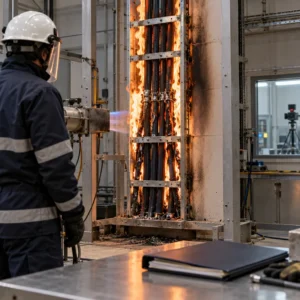
Every temperature figure is a shorthand for a test. The questions that make it meaningful are: tested on which property, cold bend, cold impact, low-temperature elongation; on what specimen; pass judged by what criterion; and on the finished cable’s components or on the compound alone. Two suppliers quoting the same figure may have tested different properties to different criteria, and the evaluation only works when the test conditions travel with the number.
Static ratings do not transfer to dynamic duty. A compound that survives a specified temperature in a bend test once does not automatically survive the same temperature under repeated flexing, and datasheets that quote one figure for both uses are collapsing the distinction. Where the duty flexes, the evaluation asks for flexing endurance evidence at the stated low temperature, not for a repeat of the static certificate.
Ratings apply to components, and the cable is an assembly. Insulation, bedding and sheath compounds differ, and the weakest one governs the cable’s real limit. The supplier question is direct: what is the lowest temperature each layer of the offered construction is rated for, and which layer sets the cable’s overall handling and flexing limit? An answer at assembly level, per layer, is worth any number of single-figure datasheets.
Interrogate the Sheath Compound, Not the Datasheet Adjective
“Cold resistant” is a category, and the compounds in it differ. Elastomer compounds, PVC grades modified for cold, and polyethylene or specialty jackets each bring different low-temperature behaviour, different abrasion and oil characteristics, and different price. The evaluation asks the supplier to name the compound family per construction and state what the cold rating is based on, because the adjective covers materials with genuinely different limits.
Cold performance trades against other sheath properties. The compound gains for low-temperature flexibility may give something up in hot performance, abrasion or chemical resistance, and a Kazakh site may need cold performance and something else at once. Our note on sheath materials compared sets out the trade space, and the enquiry should state all the environmental requirements together so the supplier engineers the balance rather than optimizing one variable.
Where cold and instrumentation or armouring combine, confirm the assembly. Cold-rated instrument constructions with armour and screening exist, and our range includes such assemblies, for example the cold-resistant armoured instrument cable and the cold-resistant PE jacket cable within our high and low temperature resistant cable range. Each layer of such an assembly should carry its own rating answer, because a cold-rated jacket over a stiff bedding solves nothing at the drum.
Protect the Cable Between Factory and Trench
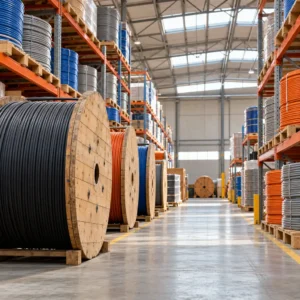
Storage is the first cold test. Drums stored outdoors through a Kazakh winter are colder than any test specimen, and a cable unwound from a deep-frozen drum behaves worse than its datasheet suggests. Storage guidance belongs in the supplier’s delivery documents: acceptable storage conditions, warming practice before unrolling in severe cold, and the handling limit below which unrolling waits or the drum moves indoors.
Transport and site handling set their own limits. Loading, unloading and dragging drums across frozen ground impose impacts the cold ratings were never meant to cover. The delivery plan should say who handles the drums at each step and with what equipment, and the site should know the compound’s behaviour when dropped or dragged cold, because that is when sheaths crack.
Installation practice completes the protection. Pulling tensions, bending radii and drum stands are set out in the installation guidance the supplier provides, adjusted for the actual installation temperature. The general discipline of checking a cable’s condition before it is buried is the same at any temperature, set out in our note on site inspection and replacement criteria, and at low temperature the margin for skipping it narrows to nothing.
Require the Supply Documents That Make the Claim Checkable
Datasheet claims become requirements in the order. The enquiry’s temperature conditions, installation minimum, dynamic duty where it applies, and the test conditions accepted as evidence, belong in the order documents, so that the delivered cable is bought against a checkable specification rather than a brochure. Batch test reports then read against those requirements, drum by drum.
Electrical evidence matters as much at low temperature. Insulation resistance measured on cold cable differs from the same measurement warm, and acceptance checks at a winter site should know which they are looking at. The measurement method and its interpretation are set out in our note on insulation resistance testing, and the acceptance temperature is one more condition to agree in the order documents.
Samples anchor the winter performance. Where the duty is critical, a sample of the offered construction, stored cold and bent at the agreed low temperature in front of the buyer’s inspector, answers in an afternoon what a season of argument would not. The sample approval process for sealing references and reading batches against them is set out in our note on the sample approval process.
The Supplier Question and Evidence Table
The table organises the cold-resistance conversation with a supplier: for each duty condition, the question to put, the answer to expect, and the evidence that supports it.
| Condition | Question to the Supplier | Evidence to Require |
|---|---|---|
| Fixed operating | What is the lowest temperature each layer of the construction is rated for in continuous operation, and which layer governs? | Per-layer ratings on the datasheet; test basis named for the governing layer |
| Installation | What is the minimum installation temperature of the offered construction, per compound? | Cold bend or equivalent handling evidence at the stated temperature, on the finished cable's components |
| Dynamic or flexing | What flexing endurance evidence exists at the stated low temperature for this construction? | Flexing test at low temperature on the same construction, or sealed-sample bending demonstration |
| Sheath compound | Which compound family carries the cold rating, and what did it trade for it? | Named compound with low-temperature data plus its abrasion, oil and heat figures |
| Storage and handling | What storage, warming and unrolling practice does the supplier specify for severe cold? | Written handling guidance in the delivery documents; handling limit stated |
| Every line | Will batch reports state the test conditions so receipt checks read against them? | Batch reports tied to drum numbers with test conditions stated; acceptance temperature agreed in the order |
Cost and Lead Time in Cold-Resistant Supply
Cold-rated compounds carry a cost, and so does their absence. The premium for a genuinely cold-rated construction is modest against the cost of a winter installation failure: a cracked sheath found at commissioning means pulling new cable through frozen ground. The evaluation prices the claim, evidence attached, against the failure it prevents, and the arithmetic rarely favors the unevidenced bargain.
Stock versus production is the lead time question. Standard constructions ship from stock or short production; specialty cold-rated or dynamic-duty constructions run on production slots with sample rounds attached. The enquiry that states the duty precisely gets a lead time quoted against a construction that exists, which is the only lead time worth comparing.
Season is a schedule input, not an afterthought. Orders placed so that installation lands in the depth of winter need the handling limits respected in the schedule: warming time, daylight working windows, storage under cover. Where the programme cannot avoid deep winter installation, the cable choice and the installation plan must be engineered together, and the supplier’s handling guidance is an input to that plan, not a leaflet in the drum.
Repeat winter supply compounds its evidence. Each season’s deliveries add batch data at real site temperatures, and the buyer who keeps those records with the sealed samples buys the next winter with a file instead of a hope. The evidence base, once built, is the cheapest specification tool the buyer owns.
| Duty Category | Typical Application | What Must Be Confirmed Before the Order |
|---|---|---|
| Cold storage and fixed runs | Site power, buried and tray runs installed in mild weather, operated through winter | Per-layer operating ratings; no installation below the handling minimum; storage guidance in the documents |
| Winter installation, then fixed | Trenching and pulling during the cold season | Minimum installation temperature per compound; pulling and bending practice at that temperature; warming procedure before unrolling |
| Static cold with occasional handling | Laydown yards, temporary supplies, cables moved between winter locations | Handling and drag limits; impact behaviour of the compound; inspection criteria before re-energizing |
| Dynamic cold, continuous flexing | Mobile equipment, reeling and trailing duty, flexible connections operating in winter | Flexing endurance evidence at the stated low temperature; strain relief and bending radius on the machine; sample demonstration where duty is critical |
When a Cold-Resistant Rating Is Not the Answer
When the duty never goes cold. Indoor, buried below frost depth or process-heated installations do not need cold-rated premiums, and specifying them wastes money that the mechanical requirements could use.
When the problem is installation practice, not the compound. A cable unrolled violently from a frozen drum fails under any rating, and no compound buys back rough handling. Where the site’s handling is the weak link, the fix is procedure and training, and the procurement answer is handling guidance enforced, not a better datasheet.
When one figure is being asked to cover three duties. Where a supplier will not separate operating, installation and dynamic temperatures, the claim cannot be checked, and the evaluation treats it as unevidenced whatever the number says.
When the evidence cannot be produced by anyone. A required flexing endurance figure at a temperature no laboratory data covers is a specification problem, and it goes back to the specifier: either accept a sample demonstration as the evidence, or redesign the duty.
RFQ Checklist
- Three temperature conditions stated per line: fixed operating, installation minimum, dynamic duty where applicable
- Test conditions accepted as evidence named in the enquiry: property, specimen, criterion
- Per-layer temperature ratings required, with the governing layer identified
- Sheath compound family named, with cold evidence and its trade-offs stated
- Flexing endurance evidence at low temperature for dynamic duty, not static certificates
- Storage, warming and unrolling guidance required in the delivery documents
- Acceptance test temperature agreed, so winter receipt checks read against the right conditions
- Samples sealed and demonstrated at the agreed low temperature where duty is critical
- Batch reports tied to drum numbers with test conditions stated
- Winter delivery schedule built around the handling limits, not against them
Conclusion
Buying cold-resistant cables for Kazakhstan is a conversation about conditions, not a search for a number on a datasheet. The buyer who separates operating, installation and dynamic temperatures, asks what test stands behind each rating, interrogates the compound rather than the adjective, and secures the handling guidance and batch evidence in the order documents, ends up with cables that survive the winter on purpose. The one-figure datasheet is not a rival offer; it is the absence of one.
Kexingyu Cable Group (KXYE) manufactures cold-rated constructions in Quanzhou and answers Kazakh cold-condition enquiries at the level the duty demands: per-layer ratings, named compounds, handling guidance in the delivery set and batch reports tied to drum numbers. Send us your temperature conditions, quantities and destination, or upload your technical specification, and we will quote against the winter, not against the brochure. A request for quotation is the fastest route to start.