Cable for the Aluminum Industry in Tajikistan: Smelter and Electrolysis Loads
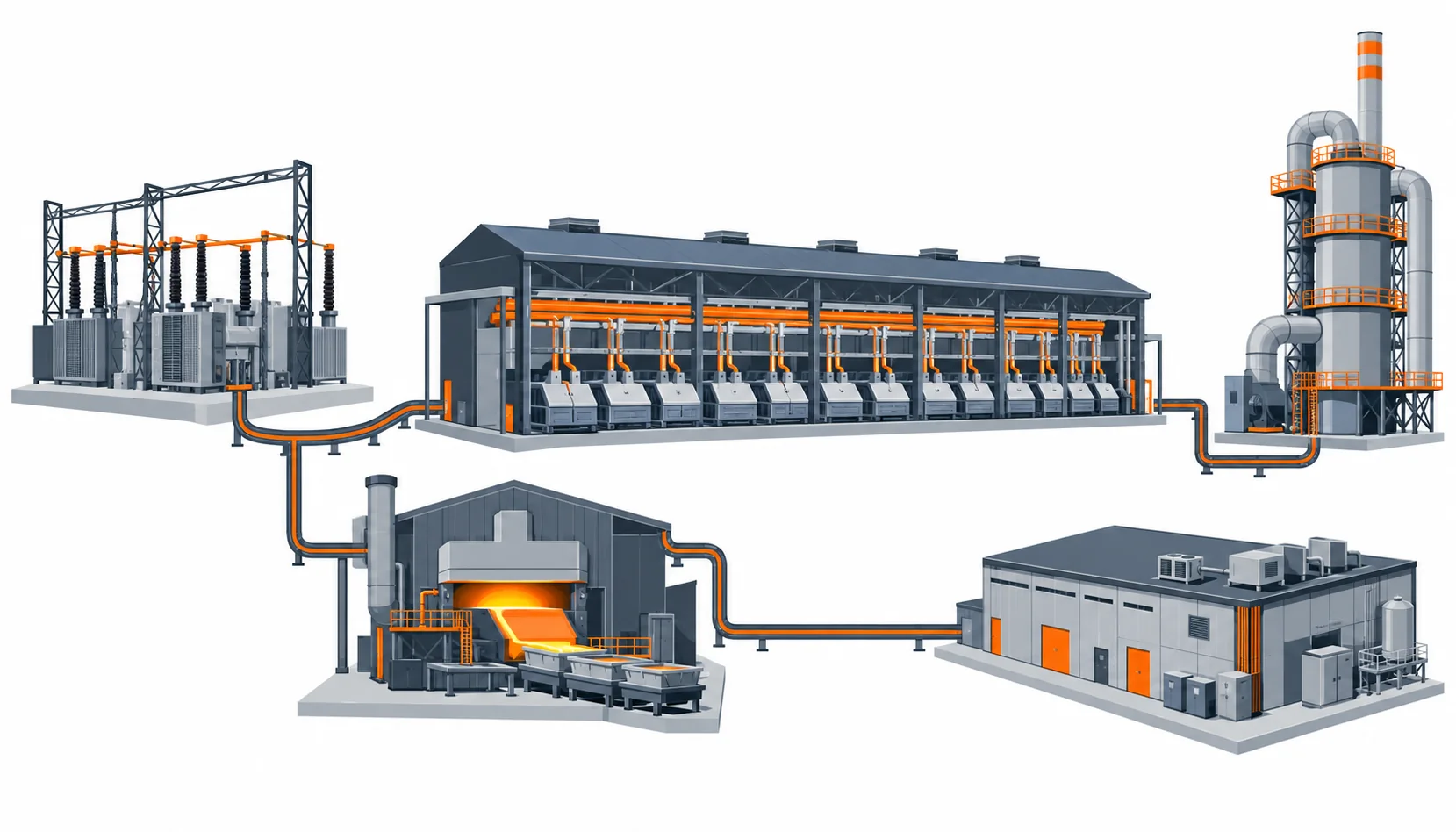
Quick Answer: An aluminium smelter is two electrical systems in one fence. The potline runs on very high direct current at a few volts, through busbars, in a hall that is hot, dusty and full of magnetic field. Everything else — rectifier transformers, cast house, fume treatment, auxiliaries — is ordinary AC plant with an unusually severe environment around it. Buy the AC cable on ambient, grouping and chemistry, and keep every cable route as far from the potline busbar as the layout allows. A standard industrial cable fails in a potroom not because it is undersized but because nobody asked what the hall does to a sheath.
Introduction
Tajikistan’s aluminium smelter is one of the largest single electrical loads in the country, and it was built when the surrounding grid was part of a different system. That history shows up in the cable work: long AC feeders from a remote switchyard, a potline hall that has been rebuilt in sections, and a cast house that has been added to twice.
This guide is for plant engineers, EPC contractors and distributors supplying cable into aluminium projects in Tajikistan. It covers the potline as an environment rather than as a load, the four AC zones around it, the armour decision near heavy DC current, ambient derating inside a potroom, and the fields to freeze before the purchase order. Instrumentation in the same plant is a separate purchase, covered in our note on control and instrumentation cable for Tajikistan.
The Potline Is an Electrical Environment, Not Just a Load
Few cables in the plant carry the potline current. That job belongs to busbar. What the cable does is live beside it, and the effects that matter are heat, dust and magnetic field rather than ampacity.
Ambient in the hall is the first number. A potroom runs hot at the best of times and hotter during a pot change, and the trays are fixed to steel that is at hall temperature. Whatever figure appears in the design brief, the enquiry should carry the measured summer ambient at tray height, because that is the number the derating is built on.
Magnetic field changes the support and armour decision. A steel tray, a steel clamp or a steel wire armour close to a heavy DC busbar forms a path for flux, and the losses appear as heat in the steel rather than as a reading on any instrument. On single-core AC circuits the same mistake shows up as circulating current in the armour.
Dust is not inert. Alumina dust is abrasive and mildly alkaline, bath material is fluoride-rich and corrosive when damp, and both settle on trays that are difficult to reach. A sheath chosen for a clean factory is being asked to do a different job here.
Four AC Zones Around the Potline
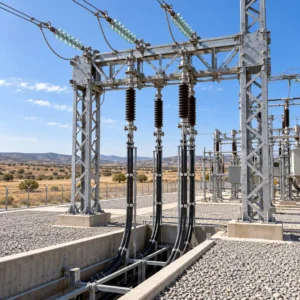
Rectifier yard and transformer bay. Medium voltage feeders from the grid side, harmonic-rich current on the transformer secondary, and outdoor terminations that are re-made during every rectifier overhaul. This is the zone where standard medium voltage practice applies, with derating for harmonics and for the ambient between transformer walls.
Cast house and anode plant. Heat, water, and machines that move. Furnaces radiate, the casting pit uses water, and the cranes and tilting equipment introduce flexible connections that a stranded cable will not survive without a flexible conductor class. Heat-resistant and silicone constructions belong here more than anywhere else in the plant, and the family is on our high and low temperature cable page.
Fume treatment and scrubber area. Wet, acidic and full of fluoride in solution. Cable in this zone sees the worst chemistry in the plant, and the sheath decision is the same one described in our note on chemical exposure and cable selection.
Auxiliary and works buildings. Offices, workshops, stores and the substation control room. Ordinary building wire and ordinary installation practice, and the only zone where the cheapest compliant product is the right one.
Cable by Smelter Zone
The table sets out the zones that appear in most smelter enquiries, with the decision each one forces.
| Zone | What to Declare | Evidence to Ask For | Cost and Lead Time | Risk If Left Open |
|---|---|---|---|---|
| Potroom and potline aisle | Summer ambient at tray height, grouping, alumina and bath dust, proximity to busbar | Derating calculation with ambient stated, plus sheath dust resistance | Standard sections, longer slots on special sheaths | Section short in summer, sheath hardened within a few years |
| Rectifier and transformer yard | Voltage class, harmonic content, outdoor termination, ambient between walls | Type test report and a derating note for harmonics | Medium voltage, longer slot | Hot terminations and a shortened cable life at the rectifier |
| Cast house and anode plant | Radiant heat, water at the pit, moving connections, oil and graphite dust | Temperature rating plus flexible conductor class | Premium construction, fewer sources | Sheath cracking at the furnace end, strand breaks at the crane |
| Fume treatment and scrubber | Fluoride in solution, acid, humidity, washdown | Chemical resistance data for the compound offered | Premium sheath, longer slot | Sheath swelling and earth faults on the scrubber circuits |
| Auxiliary and works buildings | Standard building wire, fire alarm and lighting circuits | Routine test documents, fire test where the occupancy asks for it | Low cost, wide supply | Fire-rated circuits replaced by standard cable on a value-engineering pass |
Armour, Support and the Magnetic Field
Steel armour is not neutral in a potroom. Next to a heavy DC busbar, a steel armour or a steel tray carries induced losses and gets warm on its own account. The usual answer is a non-magnetic armour or a non-metallic construction on the circuits that run closest to the busbar, and a route that keeps distance rather than a product that compensates for it.
Single-core AC has its own rule. One core per cable in steel armour, with both ends bonded, is a loop waiting for current. Either bond at one end only, or use a non-magnetic armour, and write the arrangement on the drawing. The comparison of constructions is in our note on armoured and unarmoured cable.
The tray is part of the decision. Steel tray, steel clamps and steel armour in the same run give the flux three paths. A GRP tray or an aluminium tray near the potline removes two of them, and it costs less than the derating that follows when the third one heats up.
Aluminium or Copper for the Large Feeders
Aluminium conductor is normal in this industry, and not only on price. It is lighter on long runs from a remote switchyard, and the terminations are made with the same bi-metal practice used on the busbar. The trade is a larger section for the same current and a termination that has to be done properly once.
Terminations decide the outcome. Aluminium creeps under a clamp, so the lug, the compound and the torque all matter more than they do with copper. A joint that is re-tightened every outage is a joint that was wrong at installation, and the conductor question is set out in our note on aluminium versus copper cable.
Flexible class matters wherever the cable moves. Cranes, tilting furnaces, anode handling and tapping equipment all move, and a solid or compacted conductor fails at the strands long before the insulation does. Class 5 or class 6 is a line in the order, not an upgrade to argue about later; the definitions are in our note on IEC 60228 conductor classes.
Heat, Dust and What the Sheath Meets
Radiant heat is local and severe. A cable run within a few metres of a furnace door sees a temperature the hall average does not describe. Move the route, or specify a construction rated for it, and say which of the two you chose in the schedule so the installer does not improvise.
Alumina dust is abrasive. It works into glands and around cleats, and over years it turns a flexible cable into a stiff one. Glands that close on the sheath rather than on the bedding, and a sheath with some hardness, are the practical countermeasures.
Fluoride needs water to become a problem. Dry bath material on a tray is unpleasant; the same material wet from a scrubber leak is aggressive. That is why the scrubber zone is specified separately from the potroom in a good schedule, even when the two areas are close together.
Routine Tests, Sampling and Site Acceptance
Every drum should arrive with its own routine test sheet. Conductor resistance, insulation resistance and a voltage test are the minimum, and the sheet has to name the construction that was tested rather than the family it belongs to. A certificate for “XLPE cable” tells a smelter nothing about the sheath on the drum in front of it.
Sampling beats inspecting everything. On a large order, agree the sample size and the tests at enquiry stage, then have the samples taken during production rather than from the finished store. The practice is described in our note on third-party cable inspection.
Site acceptance is a separate gate. Drums that stood in a yard for a season can pass a factory test and still fail an insulation resistance check after installation, and the argument about which stage caused it costs more than the test. Record the reading at delivery, and again before termination.
Aluminium Smelter Cable Order Freeze List
These are the fields to settle before the purchase order is placed.
| Item to Freeze | How to Write It Into the Order | Evidence to Attach | Cost of Leaving It Blank |
|---|---|---|---|
| Ambient per zone | Measured summer ambient at tray height, not the design brief figure | Derating calculation per zone | Sections short in the potroom every summer |
| Armour type near busbar | Non-magnetic or non-metallic named on the circuits close to the potline | Construction drawing showing armour and tray material | Hot armour and a derating nobody planned for |
| Conductor and class | Aluminium or copper, class 2 or class 5, stated per circuit | Conductor table with resistance and class | Strand breaks at the first moving connection |
| Sheath per chemistry | Compound named for potroom, cast house and scrubber separately | Chemical and temperature data | One sheath doing three jobs and failing at two |
| Termination scope | Who supplies lugs, compound and torque values, and who inspects | Termination procedure with torque figures | Re-torqued joints every outage |
| Fire-rated and emergency circuits | Circuits named with duration and test category | Report naming construction and duration | Emergency lighting lost with the fault |
| Drum length and route | Drum size matched to the aisle and to the crane capacity | Drum schedule per zone | Joints in an aisle where no platform fits |
When a Standard Industrial Cable Is Not the Answer
When the run is inside the busbar zone. A cable tray bolted to the potline structure is not an ordinary industrial run, whatever the voltage. If the route cannot be moved, the construction has to change, and the change belongs in the enquiry rather than in a site instruction.
When the cable is expected to survive a pot change. Bath spills, hot metal and a burst of radiant heat are events, not ambient conditions. A cable in that path should be routed away or protected, because no sheath on a standard schedule is bought for a splash of liquid bath.
When the plant is expanding pot by pot. Sections of a smelter are rebuilt on a rolling programme, and each rebuild quietly changes the ambient and the grouping around the trays that stay. Recheck the derating at each expansion instead of reordering the same part number.
When the cheapest offer names no construction. In a plant where the environment does the damage, an offer that lists a section and a voltage but no sheath compound, no armour and no conductor class is not comparable with the others. Ask for the construction line before comparing prices.
RFQ Checklist
- Zone marked on every circuit: potroom, rectifier, cast house, scrubber, auxiliary
- Measured summer ambient at tray height stated per zone
- Circuits per tray given so grouping can be applied
- Distance from the busbar noted for every run inside the potline aisle
- Armour type named, non-magnetic where the field is significant
- Conductor material and class stated, flexible class where the cable moves
- Sheath compound named per chemistry, with fluoride and alumina noted
- Termination scope and torque values agreed in writing
- Fire-rated circuits listed with duration and test category
- Drum lengths matched to aisle width and crane capacity
- Test documents per drum, with the construction named on them
Conclusion
The cable spend in an aluminium smelter is small against the potline and the rectifiers, and it sits in the part of the plant where the environment is worst. That combination is why so many smelters replace cable early. Ambient, chemistry and field are the three questions, and none of them appears on a standard datasheet unless somebody in the enquiry asks for it.
Kexingyu Cable Group (KXYE) supplies medium voltage feeders, heat-resistant and silicone constructions, non-magnetic armoured cable and flexible classes from Quanzhou, and quotes smelter enquiries zone by zone with test documents per drum. Send the cable schedule with the ambient column completed, or upload the construction drawings. A request for quotation is the fastest way to start, the format is set out in our industrial cable RFQ checklist, and the country picture is in the Tajikistan supplier guide.