Cross-Border Power Lines in Central Asia: Cable for Regional Interconnection Projects
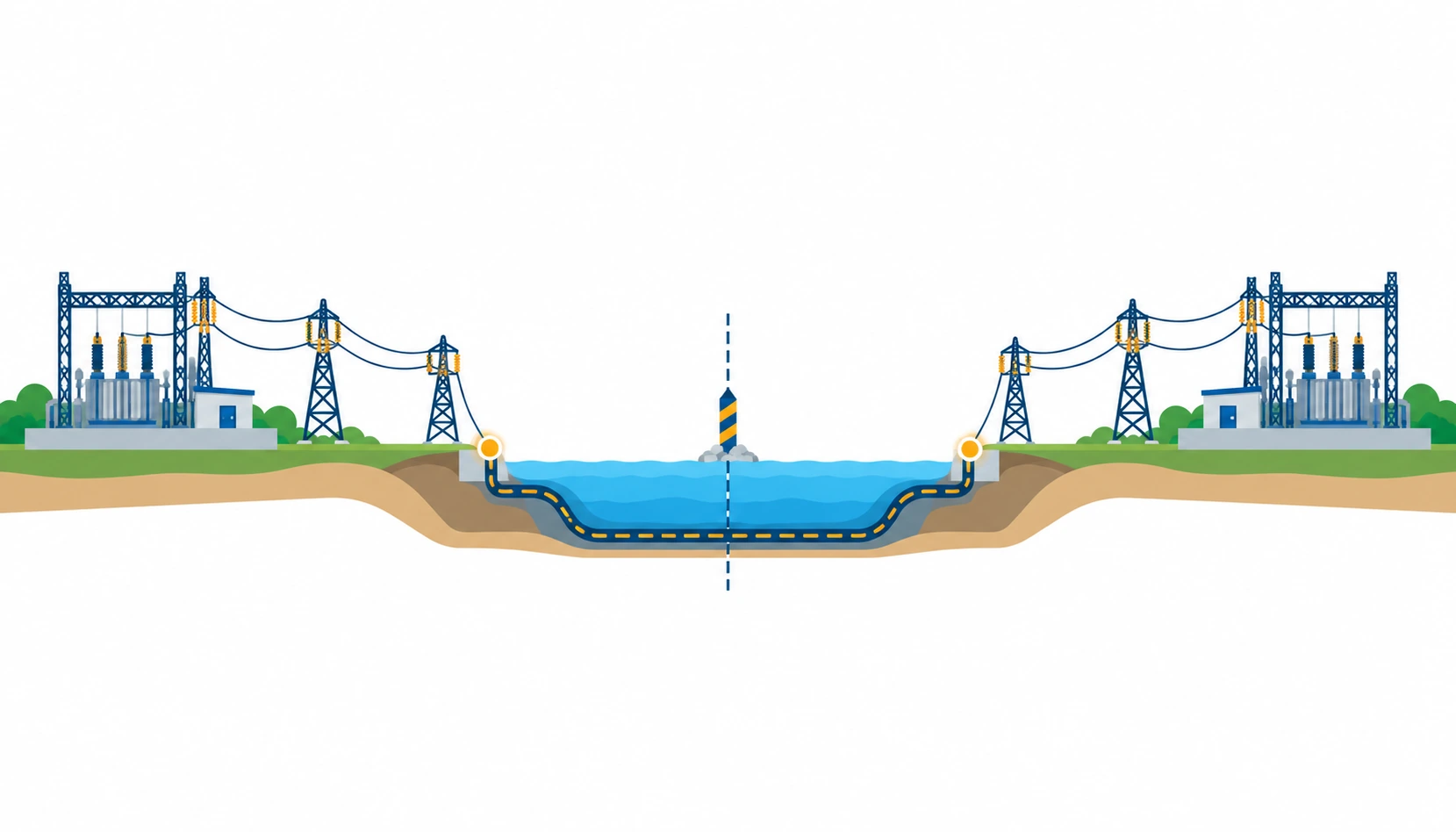
Quick Answer: An interconnection project is mostly overhead line, and the cable is concentrated where the line meets something it cannot cross in the air: a substation, a river, a road, a railway, or a border. That concentration is the problem, because those are also the places where the specification is jointly owned. If the utilities on either side work to different standards, the cable joint between them is where the difference becomes physical. Buy the cable at the interface, not at the voltage class, and settle who accepts what before the drums are made.
Introduction
Regional interconnection in Central Asia is a long game: lines that were planned when the network was one system, sections rebuilt as corridors are agreed, and interfaces that move as the politics around them move. Cable suppliers come into that slowly, usually through the substation and crossing packages rather than the line itself.
This guide is for EPC contractors, transmission utilities and distributors working on interconnection packages in the region. It covers where cable appears on an overhead route, the interface points that decide the product, what happens when two standards meet at one joint, delivery across a border, and the fields to freeze before the order. The upstream question of connecting large new loads to a network is a related but different brief, covered in our note on grid interconnection for large loads.
An Interconnection Is Two Specifications Meeting
Each utility specifies to its own habit. One side may work to an international standard with type-tested designs and a documented approval route; the other may work to a regional standard with its own test regime and its own acceptance practice. Neither is wrong, and the cable has to satisfy both where the two meet.
The interface is a physical place. A terminal station, a switching compound, or a joint bay at the crossing point. It has a fence, a drawing and a signature, and the drawing is where the cable specification is decided.
Responsibility splits at that fence. Who supplies the cable, who joints it, who tests it and who signs for it are four different answers that are often given by four different contracts. Ask for the split in writing before pricing anything.
Documents travel further than the drums. Certificates accepted on one side may need re-issue for the other, and a test report that names a standard the receiving utility does not recognise is a report that delays energisation. Build the documentation set early, and treat it as a deliverable with a date rather than as paperwork that follows the cable.
Where Cable Appears on an Overhead Route
Substation exits and terminations. Where an overhead line enters a compound, the last span often becomes cable, buried or in a trench, because the clearances inside a substation cannot be met in air. This is the largest cable item in most interconnection packages.
Crossings that cannot be flown. A river with a navigation requirement, a road that cannot be closed for a span, a railway with its own structural rules. Each crossing is a short length of a large section, and each one is a separate design with a separate approval.
Terminal and switching stations. Station service, protection and control, and the earthing that ties the installation together. Individually small, collectively the part that delays commissioning when it arrives late.
Border and metering points. Where the energy is measured and the two systems are separated, the cable work is short, precise and heavily documented. Metering circuits and their segregation are their own specification, and they belong in the package rather than in a later variation.
Cable by Interface Point
The table sets out the interface points that appear in most interconnection enquiries, with the decision each one forces.
| Interface Point | What to Declare | Evidence to Ask For | Cost and Lead Time | Risk If Left Open |
|---|---|---|---|---|
| Substation exit and gantry | Voltage class, single or three-core, screen bonding, termination type | Type test report and a bonding arrangement drawing | Largest single item, long slot on large sections | Termination redesign after the drums are made |
| River and road crossing | Crossing method, depth, protection, joint positions either side | Construction drawing plus joint schedule | Short lengths, disproportionate design cost | Joints in a location no crew can reach again |
| Terminal and switching station | Station service, protection circuits, earthing connections | Routine test documents and earthing details | Modest, wide supply | Commissioning delayed by missing small cable |
| Border and metering | Metering segregation, documentation for both utilities | Test reports accepted by both sides | Low cost, high documentation burden | Energy readings not accepted at the interface |
| Joint bay at the standard change | Both standards, jointing method, who approves the joint | Jointing procedure and approval from both utilities | Premium on the joint and on the supervision | A joint that neither side is willing to accept |
Two Standards, One Joint
Do not claim equivalence. Where a regional standard and an international standard meet, the honest position is that the two describe similar duties with different test regimes. A supplier who offers “equivalent” without a document is offering an argument for later.
Ask what the receiving utility will accept. Type test reports, routine sheets, conductor and insulation data, and the jointing procedure are each accepted or rejected separately. Get the list before the enquiry is priced; the standards comparison for medium voltage work is in our note on medium voltage cable standards.
A joint is where the two designs become one object. If one side’s cable has a different insulation thickness, screen section or sheath, the joint has to be designed rather than selected. That design work takes longer than the cable, and it is the item that runs late.
Where an international standard governs, say so explicitly. A specification that names the standard, the voltage class and the test sequence leaves nothing to interpretation, and the reference document behind that practice is our note on IEC 60502.
Crossing Borders With the Drums
The cable is the easy part of the customs file. Origin, certificates, packing lists and the construction description all have to match what is on the drum, and a mismatch stops the consignment at the frontier rather than at the site.
Split delivery follows the construction programme. One side of the border may be ready for its cable long before the other, and a single shipment to a single address leaves half the material in the wrong country. Phase the delivery against the package, not against the purchase order total.
Store the second half properly. Cable waiting for a border to open sits in a yard, and a yard in the region is sun, dust and the occasional flood. The instructions that travel with the drums matter as much as the certificate; packing practice is in our note on drum packaging for export.
Length tolerance belongs in the contract. A drum cut slightly short of the ordered length is a joint nobody planned, and on a crossing length there is no spare to absorb it. The tolerance convention is explained in our note on ordered length and drum tolerance.
Spares and the Jointly Owned Asset
An interconnection is maintained by whoever is closest when it fails. That is rarely the party that bought the cable, which makes the spare strategy a contractual question rather than a stores question. Agree who holds what before energisation, not after the first fault.
Hold spares of the jointing materials, not only the cable. The cable is replaceable from a factory; the joint that suits it may not be, and the crew certified to make it may have moved on. A spare kit and a named crew are the two things that shorten an outage.
Keep the construction identical across phases. A corridor built in stages will be extended, and a second phase bought from a different source introduces a joint between two designs for the rest of the asset’s life. That is a procurement decision made early and paid for late.
Lead time on the replacement is the outage length. A large section cable is not a stock item anywhere, and the enquiry after a failure starts from zero. The reorder arithmetic is set out in our note on cable MOQ and lead time.
Earthing and Touch Potential at the Joint Bay
A joint bay is a place where people work on a live system’s neighbour. Sheath voltage, induced potential and the earthing of the bay itself decide whether that work is safe, and none of those are the cable supplier’s design by default.
Sheath bonding is a system decision. Single point bonding, cross bonding or a combination, chosen against the route length and the fault level, and then drawn. The cable is made to that drawing, not the other way round, and the verification practice is in our note on grounding and bonding verification.
Earth the bay before the cable arrives. A joint bay with a completed earth mat and a tested resistance is a bay where the jointing crew can start on schedule. The same bay without one holds the crew idle while a subcontractor catches up.
Record the readings at commissioning. Bond currents and earth resistance measured at energisation are the reference for every later inspection, and on a jointly operated asset they are also the record that settles which side owns a deterioration.
Interconnection Cable Order Freeze List
These are the fields to settle before the purchase order is placed.
| Item to Freeze | How to Write It Into the Order | Evidence to Attach | Cost of Leaving It Blank |
|---|---|---|---|
| Governing standard | Standard, voltage class and test sequence named per circuit | Type test report accepted by the receiving utility | A consignment that cannot be accepted at site |
| Interface responsibility | Who supplies, joints, tests and signs, written per interface | Signed split of responsibility | Work that nobody's contract covers |
| Joint design at the standard change | Jointing method and approving party named | Jointing procedure with both approvals | A joint rejected after installation |
| Crossing details | Method, depth, protection and joint positions either side | Construction drawing per crossing | Joints placed where no crew can return |
| Delivery split | Quantities and addresses per side of the border | Delivery schedule per package | Material stranded in the wrong country |
| Documentation set | Certificates, packing lists and construction description listed | Sample document pack agreed in advance | Customs hold at the frontier |
| Spares and jointing kits | Quantities, holder and storage location named | Spares list signed by both operators | An outage waiting for a joint kit |
When a Standard Transmission Cable Is Not the Answer
When the crossing is the whole design. A river or road crossing is not a shortened line section; it has its own protection, its own depth and its own joint strategy. Buying it as part of the line package is how it ends up with the line’s assumptions.
When the two utilities have not agreed the joint. Proceeding with a joint design that one side has not approved moves the argument to the energisation date, when nobody has time for it. Wait for the signature, or price the supervision into the contract.
When the corridor will be extended. A line built in phases and extended later will be jointed to itself, so the construction has to be repeatable. Buy the same construction for the extension, even if a cheaper equivalent is available by then.
When the offer treats the border as a delivery address. Crossing a frontier changes documentation, timing and sometimes the acceptance route. An offer that ignores it is not cheaper; it has simply moved the cost to the buyer’s logistics team.
RFQ Checklist
- Governing standard named per circuit, with the voltage class
- Interface points listed, with the responsible party against each
- Joint design at any standard change identified and approved
- Crossing drawings issued with the enquiry, not after award
- Joint positions marked on every crossing length
- Delivery split stated by side of the border and by package
- Documentation set agreed before the order is placed
- Test reports required from both utilities, listed by name
- Spares and jointing kits defined, with a named holder
- Length tolerance and net weight stated per drum
- Storage and packing instructions matched to the site conditions
Conclusion
Interconnection work is bought at the interfaces, and the interfaces are where two organisations, two standards and sometimes two currencies meet. The cable itself is ordinary. What makes the package difficult is the signature that has to be obtained on both sides of a fence, and the joint that has to satisfy the utility that did not specify it. Settle that before the drums are ordered.
Kexingyu Cable Group (KXYE) supplies medium voltage and transmission class cable, screened and armoured constructions and jointing accessories from Quanzhou, and quotes interconnection packages against the interface drawing as issued, with documentation prepared for both receiving parties. Send the interface schedule and the crossing drawings, or upload the package specification. A request for quotation is the fastest way to start, the enquiry format is in our industrial cable RFQ checklist, and the acceptance practice we work to is described in our note on third-party cable inspection.