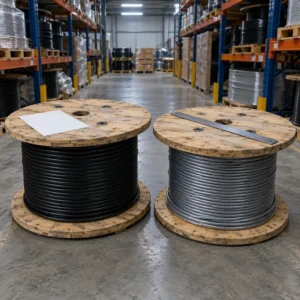
Technical Passport and Factory Documents: The Russian-Style Cable Dossier
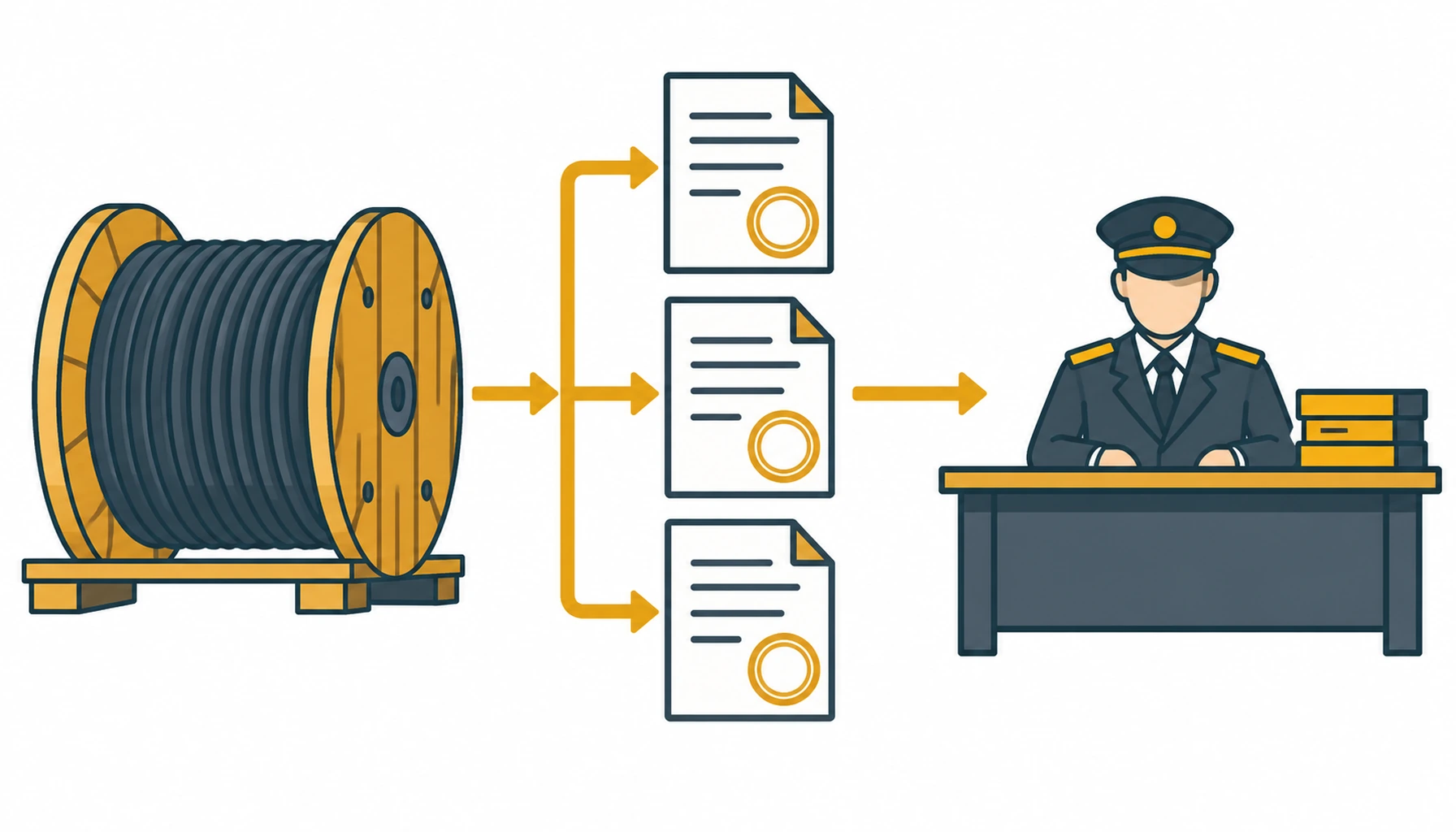
Quick Answer: In the Russian document system every drum travels with a technical passport, a per-drum record naming the maker, the designation, the drum number, the length, the standard and the inspector who released it. On top of it sit a quality certificate for the batch and a protocol of test results. The three answer different questions and a site inspector reads them as one chain. Treat the passport as a formality and a single missing drum number can hold the whole delivery at the gate.
Introduction
A Central Asian tender is usually won on price and lost on paper. The drums arrive, the crane unloads them, and then the site engineer asks for the dossier. If the passport does not name every drum in the consignment, or the test protocol covers a different construction, the delivery stops moving and the delay lands on the supplier’s account.
This guide explains the Russian-style document set for EPC buyers and distributors importing cable into Kazakhstan, Uzbekistan, Kyrgyzstan, Tajikistan and Turkmenistan: what the technical passport contains, what the certificate and the protocol prove, and which fields get checked first. The commercial side of supplier choice sits in our Central Asian cable buying hub; this page stays with the paper that travels with the drums.
What the Technical Passport Is
The passport is the drum’s identity document. It is issued per drum, not per order, and it records that this specific length of cable, wound on this specific reel, was made to a named standard and released by a named inspector. In Russian practice it is the document the passport number gets stamped against, and the drum label repeats its details.
Buyers coming from an IEC background sometimes read it as a packing slip. It is more than that. The passport is a statement of conformity for one physical object, signed inside the factory, and it is the first document an inspector picks up because it ties the paperwork to the reel in front of him.
The passport also outlives the delivery. It goes into the purchaser’s installation record, it is the document quoted when a drum is queried years later, and it is what a warranty claim is measured against. A passport that was incomplete on arrival stays incomplete forever, because nobody reissues one for a drum already buried in a trench.
The Three Documents and What Each One Proves
The set has three working parts. The technical passport proves what this drum is: maker, designation, cross-section, voltage string, length, standard, date, inspector. The quality certificate proves the batch was made under the declared system and names the standards it was built against. The test protocol proves the numbers: the routine test results for conductor resistance, voltage and insulation.
The division matters because each document is attacked differently. A dispute about length goes to the passport. A dispute about which GOST edition governed production goes to the certificate. A dispute about a failed conductor resistance reading goes to the protocol, and the protocol is the one document a third-party engineer will ask to see in full.
What the Passport Contains, Field by Field
A usable passport carries a fixed set of fields. Manufacturer name and works address. Cable designation in the original alphabet. Number of cores and cross-section. Rated voltage written exactly as the standard prints it. Standard number and year. Drum number, gross and net length. Manufacturing date. Quality control stamp and the inspector’s signature or code.
The two fields that cause the most trouble are the drum number and the voltage string. If the passport says drums 1 to 12 and the consignment holds 14, two passports are missing. If the voltage is written 0.66/1 kV on the passport and 1 kV on the tender schedule, somebody has to decide whether that is a discrepancy or a shorthand, and inspectors are not paid to decide in the buyer’s favour.
How the Chain Is Checked at the Site Gate
The check is a comparison, and it runs in one direction: from the reel to the paper. The inspector reads the drum label, opens the passport clipped to the drum or handed over in the folder, and confirms the designation, the drum number and the length agree. Then he checks the batch certificate covers that drum, and the protocol names the same construction.
Three mismatches stop a delivery on the spot. A drum whose number appears on no passport. A protocol issued for a different cross-section than the one on the reel. A certificate naming one standard year while the passport names another. Each is cheap to prevent at the factory and expensive to fix after the drums have crossed a border, which is why the check belongs in the pre-shipment stage. Our notes on cable marking and traceability and cable labelling and documentation list the fields that have to agree.
The Test Protocol and How to Read It
The protocol is the evidence the first two documents only gesture at. A routine protocol per drum or per batch records conductor resistance against the table figure, the voltage withstand result, and for medium voltage the partial discharge figure. The tables behind the figures come from the named standard, which is why a protocol without a standard number and year is half a document.
Read it against the schedule line, not against the cover page. A protocol can be correctly issued and still not cover the line item, because the test was run on a different cross-section. That gap is the single most common reason an evidence pack fails at tender review and again at delivery, and both failures trace back to the same sentence nobody wrote: which construction the tests were performed on.
For medium voltage consignments, ask for the partial discharge figure in the protocol even where the schedule forgets it. A drum that passes voltage withstand can still carry a discharge level that will shorten its life on a network with switching transients, and the protocol is the only place that number exists before the cable is energised.
The Russian Document Set at a Glance
The table lines up the five papers a consignment usually carries, what each one covers and the defect that shows up most often.
| Document | Issued Per | What It States | Who Reads It First | Typical Defect |
|---|---|---|---|---|
| Technical passport | Drum | Maker, designation, drum number, length, standard, date, inspector | Site gate inspector | Drum range on the passport does not match the consignment |
| Quality certificate | Batch or shipment | Standards the batch was built to, system statement, issuance date | Tender review engineer | Standard year differs from the passport and the schedule |
| Test protocol | Drum or batch | Routine results: resistance, voltage, insulation, discharge for MV | Third-party engineer | Tested on a different cross-section than the delivered line |
| Packing list | Consignment | Drums, lengths, gross weights, container or vehicle numbers | Customs broker | Weights rounded so customs value cannot be reconciled |
| Conformity document | Shipment | EAC or national certificate naming the construction and holder | Border officer | Certificate range does not include the shipped sections |
How the Set Differs From an IEC-Style Delivery
An IEC-flavoured dossier leans on a per-drum routine test report and a declaration of conformity, with type test certificates from a named laboratory behind it. The Russian set leans on the passport. Both describe the same delivery, but the documents are not interchangeable and an inspector working to GOST habits will look for the passport before anything else.
The practical difference for a buyer is the order of assembly. IEC practice assembles the dossier around the test reports; Russian practice assembles it around the drums. When a factory offers to “provide IEC documents instead”, the answer is to provide both structures from the same shipment, one dossier per inspection habit. The construction vocabulary behind both is set out in our note on IEC 60502.
Ownership of the dossier also differs. Under Russian practice the passport stays with the drum and is handed to the end user at handover, where it joins the permanent installation record. Buyers who let the forwarder hold the passports discover at handover that the document set for the building file is incomplete, a problem our note on handover documentation describes from the contractor’s side.
Pre-Shipment Check: The Ten Minutes That Save a Month
Before the drums leave the works, one person should lay the dossier out and read it against the order. Every drum number on the packing list appears on a passport. Every passport designation matches the order string in the original alphabet. The certificate names the same standard year as the passports. The protocols cover every cross-section shipped.
Then check the signatures. A stamp that will not photocopy clearly is a stamp that will be questioned at the border, and an inspector’s code that appears nowhere on the factory’s letterhead is a soft spot a reviewer will poke. A third-party check at the works is cheap insurance at this stage, and the scope to give the inspector is in our note on third-party cable inspection.
Dossier Freeze List
These are the fields to settle in the purchase order before production starts, in the order the arguments usually arrive.
| Item to Freeze | How to Write It Into the Order | Evidence to Attach | Cost of Leaving It Blank |
|---|---|---|---|
| Passport fields | Field list annexed to the order, including original-alphabet designation | Sample passport from a previous shipment | Passports issued to the factory's own short format |
| Drum numbering | One passport per drum, number printed on label and passport alike | Packing list reconciled to passports | Drums at the gate with no document behind them |
| Protocol scope | Protocol per drum or per batch, naming each cross-section shipped | Protocol with standard number and year on every page | Protocol that covers the wrong section at delivery |
| Standard year | Same year stated on schedule, passport and certificate | Certificate page quoting the year | Inspector holds the drums over a version mismatch |
| Stamps and signatures | Inspector name or code, stamp impression legible in copy | Scanned passport showing the stamp | Illegible copies queried at the border |
| Language | Original language passport plus agreed translation | Translation with the same field order | Two numbers that disagree only in translation |
| Handover routing | Passports delivered to the buyer, not left with the forwarder | Signed receipt per consignment | Building file incomplete at handover |
When a Passport Is Not the Answer
When the tender asks for certification, not identification. The passport says what the drum is; it says nothing about market access. That question is settled by the EAC or national certificate, and the route differs by country, as our notes on cable import certification by country and the power cable certification checklist lay out.
When the dispute is about performance. A passport proves release, not behaviour. If a delivered length fails in service, the document that matters is the type test report on that construction, and if none exists the passport will not fill the gap.
When the schedule was written to IEC only. A Russian dossier against an IEC-only schedule invites a reviewer to mark gaps that are formatting, not substance. Write the cross-reference clause into the order before shipment, or the argument happens twice.
When the drums are transshipped. Documents that survived one loading can fail the second. Keep a scanned dossier set with the shipment and a printed set with each vehicle, because the copy that reaches the border is the copy that decides.
When nobody checked at the factory. Every defect in this page is visible before loading. The passport chain cannot be repaired in Almaty or Tashkent; it can only be argued about there. Ten minutes at the works is the cheapest document control in the whole project. The routine tests behind the protocol are described in our note on cable factory testing.
RFQ Checklist
- One technical passport per drum, with the drum number printed on label and passport
- Designation in the original alphabet, identical on passport, drum and certificate
- Voltage string written exactly as the tender schedule prints it
- Standard number and year the same on passport, certificate and protocol
- Test protocol covering every cross-section shipped, per drum or per batch as agreed
- Quality certificate for the batch, with the issuing works named
- Legible stamp and inspector code, verified on a scanned copy before dispatch
- Packing list reconciled to the passport drum range
- Agreed translation where the inspector works in a second language
- Passport routing defined: delivered to the buyer, not retained by the forwarder
Conclusion
The Russian-style dossier is not bureaucratic decoration. The passport, certificate and protocol divide the questions a delivery will face into what is this drum, what system made it and what did the tests record, and each document answers one of them. A consignment whose three papers agree moves without conversation.
Kexingyu Cable Group (KXYE) issues a passport per drum with a matching batch certificate and protocol, and ships a scanned dossier set with every Central Asian consignment. Send the schedule and the destination country. A request for quotation is the fastest start, and the document fields we work from are in our industrial cable RFQ checklist.