Mexico Nearshoring: Industrial Parks and Data Centers Drive Cable Demand
Quick Answer: Nearshoring rewires Mexican cable demand — factories electrifying at speed pull data centers behind them, and USMCA-short logistics make Mexico the rare LatAm market where lead times compete, not just price.
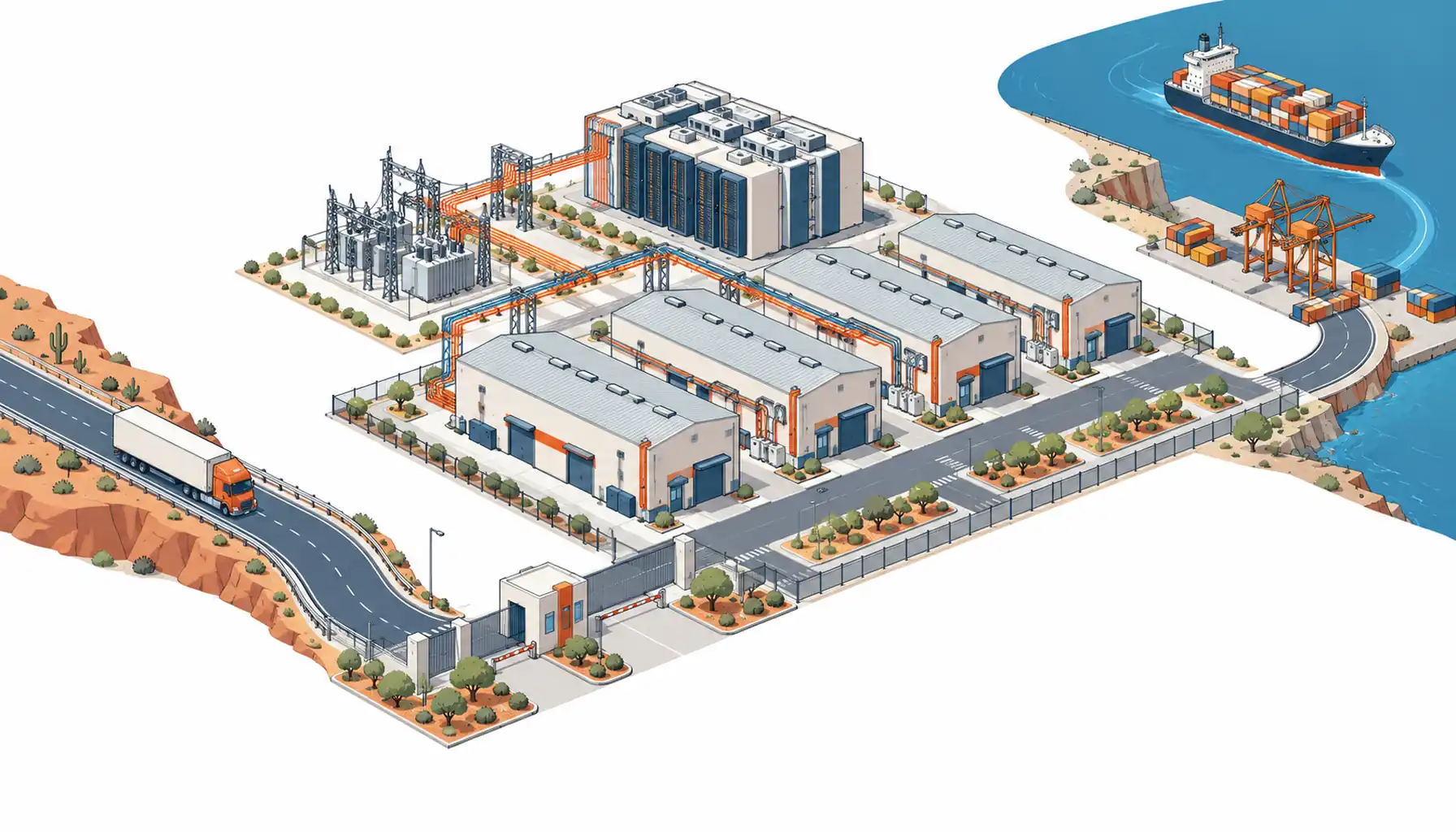
Nearshoring is the most consequential supply-chain story of the decade for North America, and Mexico is where it lands. Factories are relocating or expanding to serve US customers on truck-distance logistics, industrial parks are electrifying whole phases at a time, and the data centers that follow the factories are arriving in Monterrey, Querétaro and the border corridor. The cable demand that results is unusual in shape. Industrial park volume leads, data center volume accelerates behind it, and the USMCA logistics line means a Chinese or Asian supplier competes not only on price but against a genuine speed advantage from regional and US sources. This guide maps the two demand engines, the electrification mechanics that turn factory announcements into cable orders, and the supply posture that wins in a market where the freight quote is part of the product.
Introduction
The park-driven demand pattern is familiar from Asia. Vietnam’s industrial estate growth, tracked in industrial park power demand, reads like a preview of Monterrey’s current curve — tenant fit-outs, phase-by-phase electrification and repeat orders moving on construction schedules. Mexico’s version adds the nearshoring accelerant: US-bound manufacturing relocating at policy speed, each plant bringing the electrical package of industrial power distribution — MV intake, distribution LV, motor and control cabling — and each park phase electrifying like a small city. The data center layer follows the factories: enterprise halls serving manufacturing IT, colocation expanding along the corridor, and edge facilities riding the same construction wave. Two engines feed one cable bill, and a logistics map splits the market between regional supply and long-route import.
Engine One: The Industrial Parks
The parks are the volume. A nearshored plant carries the electrical bill of a mid-size factory — transformer connections, MV feeders, motor circuits, control and instrumentation runs — and a park phase carries dozens of them on overlapping schedules. That’s precisely the demand rhythm that rewards suppliers able to quote the phase as a program: batch-consistent cable, drum marking per lot, and deliveries aligned to construction milestones rather than spot orders. The park developers repeat designs across their own estates, so an approved construction travels from one phase to the next and one park to another — the compounding logic that makes the first approval worth several times its order. Automotive, electronics and appliance manufacturing lead the nearshoring mix, and each carries specification habits from its global parents: IEC and UL references coexisting in the same tender, fire-performance requirements inherited from corporate standards, and batch traceability that survived the customers’ audits on another continent. Suppliers who read the park as a program rather than a market of single factories collect the repeat volume that spot-sellers never see.
| Engine | Demand Character | Cable Bill Emphasis |
|---|---|---|
| Industrial parks | Phase electrification on construction schedules | MV feeders, motor and control cabling, LV at program scale |
| Data centers | Enterprise and colocation following the factories | Hall bill: MV intake, UPS strings, LSZH interiors |
| Grid connection | Utility strengthening behind park demand | MV XLPE, conductor, substation wiring |
| Logistics split | USMCA truck-distance vs long-route import | Freight quote as part of the product decision |
Engine Two: The Data Centers That Follow
Data centers arrive where the factories are — not after them, but with them. Monterrey’s industrial base and Querétaro’s corridor carry the country’s most active hall construction, serving manufacturing IT, nearshored corporate systems and the connectivity that US-bound production requires. The bill is the standard hall architecture — MV intake, LV distribution, UPS strings and PDUs, fire-regulated interiors — engineered to the same consultant and specification culture that US-bound projects import with them, and the reliability architecture follows the regional grid’s profile: diversification, backup depth and the storage integration that industrial-scale solar increasingly provides. The strategic point for cable suppliers is sequencing. The data center volume accelerates behind the industrial volume, and the supplier who wins park programs today is positioned for the hall programs that the same EPCs and developers tender tomorrow. The demand analysis of data center power demand growth shows Mexico as one of the faster-scaling emerging markets — and its growth is geographically pinned to the factory map, which makes the park relationship the data center relationship.
The Logistics Line: Where the Supply Side Splits
Mexico is the rare LatAm market where the supplier question isn’t only price but distance. USMCA moves cable across the northern border on truck timelines measured in days; Asian supply crosses the ocean on schedules measured in weeks — and the nearshoring boom has loaded both routes, with the equipment-family lead times tracked in regional planning guides applying to transformers and switchgear that Mexican projects buy alongside cable. Asian suppliers win where volume, price and program consistency offset the route: park-phase electrification, program-scale MV and the batch-heavy families reward factories that quote the phase, hold the calendar and land the cost honestly per the incoterms framing of FOB vs CIF for power equipment. Regional and US suppliers win the emergency and the small-lot business, where truck-distance beats every other argument. The recurring failure patterns of international power equipment sourcing mistakes carry a Mexican accent: the costliest error is competing on the ocean route’s terms in a market segment whose decisions are made on the truck route’s clock.
| Stage | Action | Classic Trap |
|---|---|---|
| Segment selection | Park-phase volume targeted where program scale offsets route | Fighting truck-distance suppliers for small-lot orders |
| Specification | IEC and UL references mapped per corporate standard | One spec file for tenders that cite both systems |
| Program quoting | Park phases quoted as programs with milestone deliveries | Spot-order pricing into phase-electrification volume |
| Landed cost | Ocean route, customs and inland legs priced honestly | Freight surprises that erase the price advantage |
| Compounding | Park approval carried into the developer's next phases and halls | Treating each factory as a fresh, unconnected sale |
When a Boom Is Not a Blank Check
Two cautions frame the opportunity honestly. Nearshoring demand concentrates where the power and the parks already are — Monterrey, the Bajío, the border corridor — and a supplier modeling Mexico with national averages misreads a market that behaves like a few dense corridors. And the boom imports scrutiny: nearshored plants carry their global parents’ audit culture, so specification drift, batch shortcuts or calendar slippage that commodity markets forgive reach corporate auditors here. Enter through the park developers who repeat their phases, price the program with the logistics honest, and let the factory map — rather than the national map — decide where the volume actually lands.
RFQ Checklist: Mexico Lines for the RFQ
Put the market’s questions in writing:
- Park-phase scope quoted as a program with milestone deliveries
- IEC and UL evidence listed per corporate parent standard
- Motor, control and instrumentation families alongside power cable
- Landed cost with ocean route, customs and inland legs explicit
- Batch identity and drum marking per lot, audit-ready
- Data center hall bill offered to park-adjacent developers
- Framework terms for developer phases and repeat estates
Conclusion
Mexico’s nearshoring wave is electrifying industrial parks at program speed and pulling data centers behind the factories, on a logistics map that splits the supply side between truck-distance and ocean-route competitors. The market rewards suppliers who quote the phase rather than the order, hold batch discipline under corporate audit, and accept that the corridor — not the country — is the unit of demand.
Kexingyu Cable Group (KXYE) serves the nearshoring wave with the posture the corridors reward: park-phase programs quoted as one calendar, IEC-and-UL evidence files matched to corporate parents, landed costs carried honestly across the long route, and batch-identified production that survives the audits nearshoring imported — cable supply for the market where the factories came first and the halls are following.