India Cable Imports: BIS Certification Status and What Buyers Should Plan
Quick Answer: India regulates cable through mandatory BIS certification — the ISI mark earned by type testing and factory audit — with a factory-held license and a lead time measured in months.
India is one of the world’s largest cable markets, and it guards the border with one of the world’s most demanding mandatory schemes. The Bureau of Indian Standards doesn’t check shipments at the port. It certifies factories, marks the product, and revisits both for as long as the license lives. For buyers, BIS changes the sourcing conversation before any money moves: the question isn’t “can the cable be shipped” but “does a factory hold the license for this construction, and can the schedule survive the answer”. This guide maps the scheme and the planning around it.
Introduction
BIS, the Bureau of Indian Standards, operates India’s product certification under the ISI mark, and wire and cable sit among the scheme’s longest-regulated categories. Coverage has grown over the years as more cable types are brought under compulsory certification. The scheme’s architecture is what makes it consequential: product testing proves the design, a factory audit proves the plant, and surveillance keeps both current. That means the license is a property of a specific manufacturing facility, not of a product family or a trading relationship. India’s grid expansion and industrial buildout make it a magnet for cable exporters, and the BIS gate is what separates a market plan from a port story — this cluster’s planning discipline, applied to one of its heaviest gates. The buyer’s task splits in two: verify what the supplier holds today, and plan what the schedule can afford. Both moves belong to the sourcing fundamentals of supplier qualification, sharpened by the market-access matrix from this series’ overview.
How BIS Certification Works for Cable
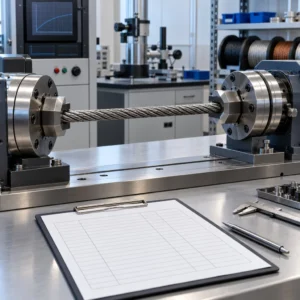
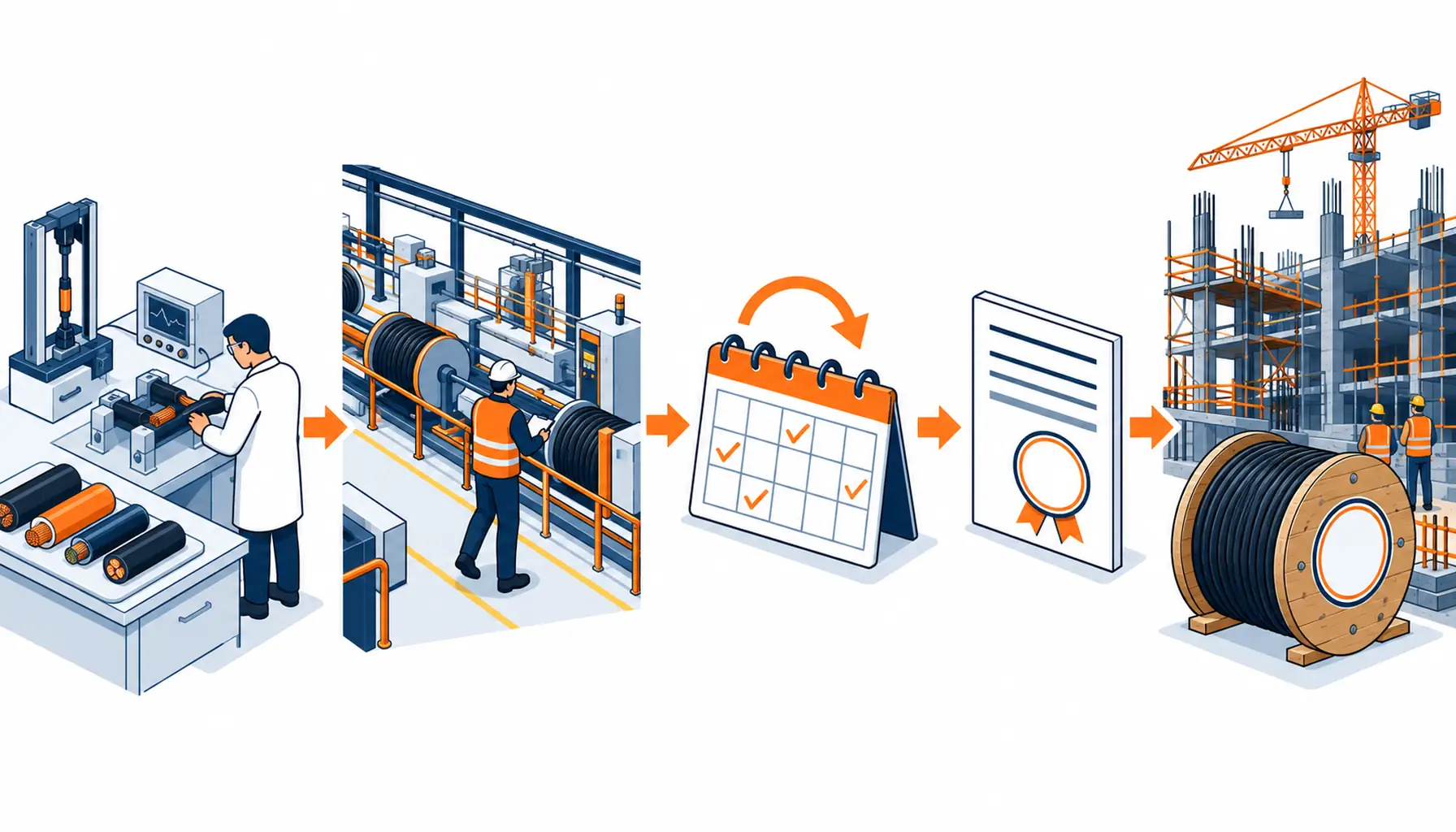
The scheme runs in three movements. Type testing: samples of the exact construction are tested against the relevant Indian Standards at recognized laboratories. The IS standards for cable largely derive from IEC with national parameters, so factories already tested to IEC have a head start, not a passport. Factory audit: BIS assessors visit the plant to verify the quality system, production capability and consistency between the tested samples and serial production. The license is issued to the factory, by name and address. Surveillance: the license lives through recurring surveillance visits and sample testing, and lapses suspend it. The foreign manufacturer route extends the same architecture to plants outside India under the Foreign Manufacturers Certification Scheme — same testing, same audit, same surveillance, plus the logistics of an Indian assessor visiting an overseas plant. The consequence for buyers is structural. A genuine BIS license for cable is one of the strongest factory-credibility signals available anywhere, because the state has visited the plant and keeps coming back. It’s the same depth that makes CCC a trust signal, per the reasoning in the China certification checklist.
What the License Covers — and What It Does Not
A BIS license names a factory, a standard, and a scope of constructions, and all three boundaries matter. The factory boundary: a license held by one plant does not cover another, even within the same group. If your order runs at a different plant, the license question starts again. The standard boundary: the license lists the Indian Standards it covers, and a construction certified under one IS standard doesn’t inherit certification under another. The construction boundary: sizes and voltage classes within the licensed scope are covered; neighbors are not. What BIS doesn’t do is certify fitness for a specific project. The ISI mark proves the scheme’s minimums, and the project’s ampacity, fire strategy and installation requirements remain the specification’s job — that’s the boundary every buyer should hold between market access and project engineering, verified through the evidence regime that travels with the drums in the power cable certifications checklist.
| Movement | What It Proves | Boundary to Check |
|---|---|---|
| Type testing | The construction meets the Indian Standard at a recognized lab | Standard and construction named; versions current |
| Factory audit | The plant can reproduce the design consistently | License holder is the plant that will build your order |
| Surveillance | The license is currently maintained | Status verified in the official database, not by photocopy |
| ISI marking | The shipped product belongs to the licensed scope | Mark and license number on product or label |
Lead Times: The Planning Reality
BIS is where market access meets patience. For a factory that already holds the license for your construction, the BIS question is a verification — days, not months. For a factory that must obtain it, the path is a project: application, testing, audit scheduling, assessment and grant. Months in the ordinary case, and longer when the plant is overseas and the audit travel adds a scheduling dimension. Three planning rules follow. Verify before the delivery date is promised: the BIS status check belongs at RFQ and supplier selection, and a promised delivery that assumes a future license is a wish, not a plan. Budget the license as a project with its own critical path — testing queue, audit window, grant — each with lead time that doesn’t compress with payment. And scope the constructions: multi-construction orders multiply the license scope question, so the market-access matrix, constructions down and markets across, is the working tool, per the sequencing approach in cable sourcing delays and EPC timelines. The economics note is worth stating plainly: BIS lead time is one reason experienced buyers keep panel suppliers already licensed for India, rather than discovering the gate order by order.
Verification: Checking a BIS License Properly
License verification runs on the cluster’s standard four checks, tuned to BIS. Holder: the license names the manufacturing plant — match it to the entity that will produce your order. Coverage: the license’s standards and scope must cover the offered construction — the IS standard, the sizes, the voltage class. Currency: licenses are verifiable in the official BIS database, and the database answer, valid or suspended or expired, is the only one that counts; a photocopy is a starting point for the search, not its conclusion. Marking: licensed product carries the ISI mark with the license number, tying the physical drum to the license — the same identity chain that anchors batch reports. A supplier whose documents pass all four checks is showing you something few documents can: a state-audited, state-revisited factory. A supplier whose answers are vague has told you where the schedule risk lives. The verification habit generalizes across destinations, per the pattern in supplier vetting, but BIS rewards it with unusually high information content.
| Check | How | Red Flag |
|---|---|---|
| Holder match | License names the plant; match to the contracting factory | Holder is a trader or a different plant "in the same group" |
| Scope coverage | IS standard, sizes and voltage classes vs the offered cable | "Similar constructions covered" without naming them |
| Database currency | Official BIS lookup by license number | Only a PDF; status "should be fine" |
| Product marking | ISI mark and license number on product or label | Mark appears nowhere on the shipped cable |
Buyer Planning Moves: Before, During and After the License
The planning comes down to three moves, each timed. Before selection: build the matrix — your constructions against India’s scheme, the supplier’s license status in each cell — and let the gaps drive the decision. Choose a licensed factory, budget the license project, or re-route the order through a market where the gate is lighter. During the order: if a license project runs, anchor it with milestones in the contract — application, test report, audit date, grant — and tie the delivery schedule to the grant, not to optimism. The milestone discipline is the same one that governs the certification clauses in sourcing power equipment for China EPC projects. After the drums: keep the license number with the shipment file, because the mark’s value follows the cable into service — consultants, auditors and insurers can trace it years later. Buyers who run these three moves treat BIS as what it is: a heavy but legible gate, whose weight is stable and whose rules are public. It’s the kind of obstacle that planning beats, per the catalog of avoidable failures in international power equipment sourcing mistakes.
When BIS Is Not the Answer
Two limits frame the scheme. It is a market gate, not an engineering verdict: the ISI mark proves the standard’s minimums at a licensed plant, while project specification, fire strategy and installation quality remain the buyer’s engineering, checked through the per-drum evidence regime. And it is category-specific and evolving. Cable types are brought under compulsory certification over time, and the current status of any category is a database question, not a memory — verify at RFQ time, every time. Where a construction falls outside the scheme’s current scope, absence of the mark isn’t evidence of poor quality. It’s a question the type test reports and batch evidence answer through the standards framework mapped in our MV and LV standards guide.
RFQ Checklist: India Access Lines for the RFQ
Put the BIS questions in writing:
- Destination category confirmed under the scheme’s current scope
- BIS license held for the offered constructions: holder, standards, scope stated
- License currency verified in the official database, number stated
- ISI mark and license number on product or drum label where the license applies
- For unlicensed constructions: license project milestones and cost bearing in the contract
- Delivery schedule tied to license grant, with testing and audit lead times budgeted
- Test reports against the relevant Indian Standards from recognized laboratories
- License number archived with the shipment file for downstream traceability
Conclusion
BIS certifies cable the way India builds: thoroughly, at the factory, and repeatedly. The license names the plant, the mark names the license, and the database names the truth. Buyers who verify holder, scope and currency before promising dates find the gate legible; buyers who treat it as paperwork meet it as a wall. The planning moves are few and public: matrix the constructions, verify the license, schedule the grant.
Kexingyu Cable Group (KXYE) supports India-bound orders with accurate BIS status disclosure, licensed-scope planning and accredited test reports against the relevant Indian Standards — factory-held licenses matched to the constructions that ship.