Nigeria SONCAP and Kenya KEBS: Importing Cables to Africa's Biggest Markets
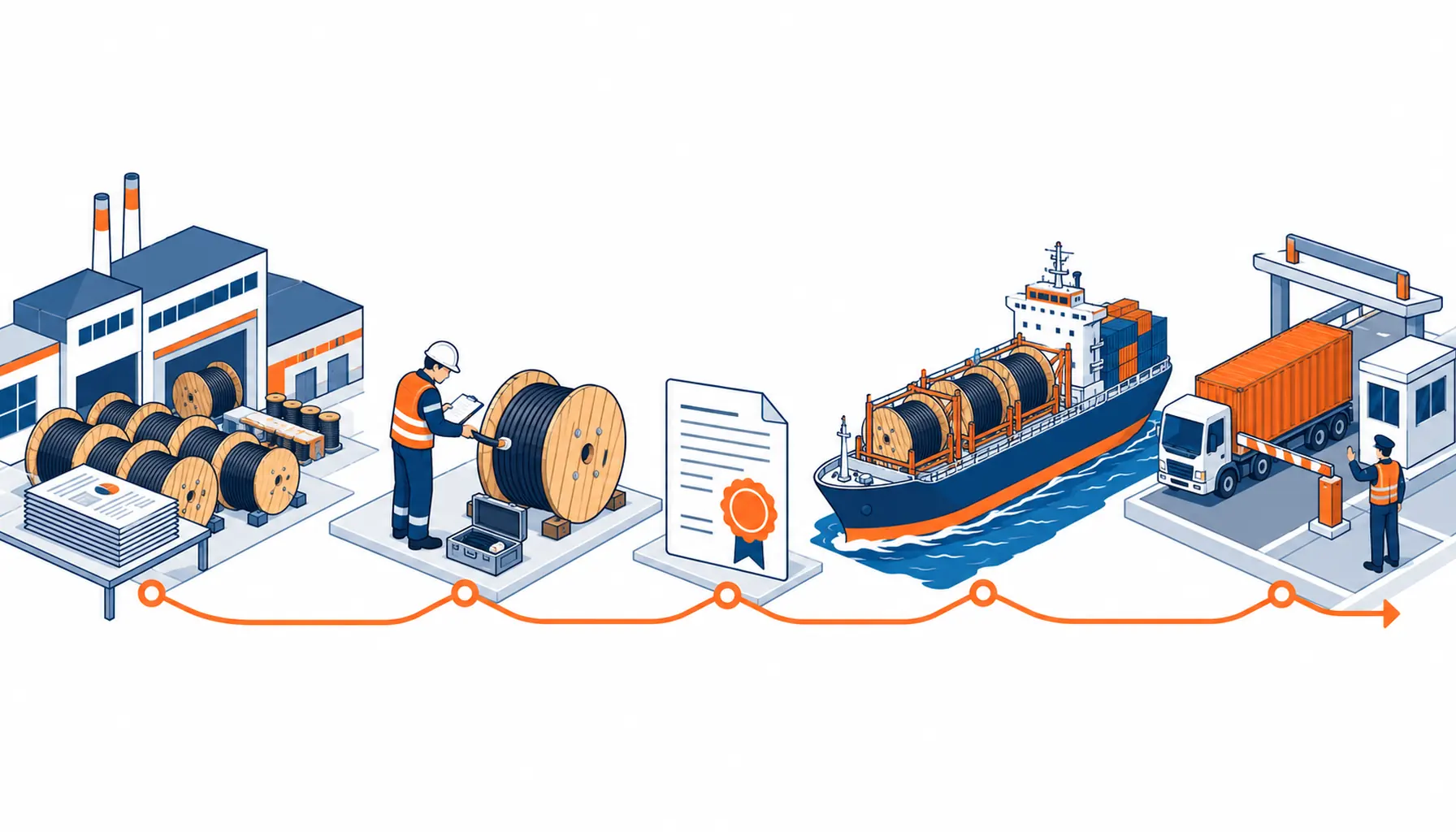
Quick Answer: SONCAP and KEBS PVoC are per-shipment conformity gates — a product certificate plus shipment-by-shipment certificates — so access is built from a verified factory file plus disciplined paperwork.
Nigeria and Kenya are two of Africa’s most consequential cable markets — Nigeria for sheer scale of grid, industrial and mini-grid demand, Kenya for its role as an East African logistics and infrastructure hub. Both regulate imported cable through conformity-assessment programmes that look similar on the surface and reward the same preparation underneath: a verified product file at the factory, and per-shipment certificates that match the goods on the water. This guide walks both gates in one read.
Introduction
The demand context is the strongest argument for getting the paperwork right: Nigeria’s grid extension, industrial estates and off-grid programs — the demand pattern sketched in Nigeria mini-grid equipment — plus the continent-wide electrification buildout that carries cable volumes north and east of it. The regulatory side is where orders are won or lost. Nigeria runs SONCAP, the Standards Organisation of Nigeria Conformity Assessment Programme, for regulated products, cable families among them. Kenya runs the KEBS-administered PVoC — Pre-Export Verification of Conformity — for goods on its regulated list. Both delegate the verification work to accredited inspection bodies operating in the exporting country, and both issue the document that clears the border per shipment, not per year. That per-shipment rhythm is the defining discipline of both markets.
Nigeria: SONCAP in Two Layers
SONCAP is built in two layers with two documents. The first layer is the Product Certificate, issued to the manufacturer against the applicable Nigerian Industrial Standards — which derive from the IEC family for cable — after evaluation of the product file: test reports from accredited laboratories, quality-system evidence, and marking. Product Certificates carry a validity period and are the standing credential that qualifies a factory to export regulated goods to Nigeria. The second layer is the SONCAP Certificate, issued per shipment by an accredited inspection body after it verifies the consignment against the Product Certificate: documents reviewed, and where the route requires, samples drawn or goods inspected before shipment. The SONCAP Certificate is what Nigerian customs processes; it lives and dies with the consignment. The practical consequences: your factory file must be in order once, and your shipment routine must be right every time. The recurring failure is invoice descriptions that drift from the certified scope, the document-drift pattern cataloged in international power equipment sourcing mistakes.
Kenya: KEBS and the PVoC Route
Kenya’s gate runs on the same chassis with its own marks. KEBS, the Kenya Bureau of Standards, administers the PVoC programme: regulated products, cable included, require a Certificate of Conformity issued per shipment by a KEBS-appointed inspection body, after document verification and, where the risk route demands, testing or physical inspection in the exporting country. Goods arriving without the required CoC face destination inspection at the port with penalties and delay — the expensive way to learn the schedule. Repeat importers can deepen the relationship through KEBS import-standardization arrangements, but the planning number for a new supplier is simple: every regulated consignment needs its CoC before the vessel sails. The verification underneath is the cluster’s standard four checks — holder, coverage, currency, marking — against the product file, detailed in the power cable certifications checklist. And the allocation question — who books the inspection body, who pays, who schedules the window against the loading date — belongs in the contract, per the incoterms framing in FOB vs CIF for power equipment.
| Dimension | Nigeria (SONCAP) | Kenya (KEBS PVoC) |
|---|---|---|
| Authority | Standards Organisation of Nigeria (SON) | Kenya Bureau of Standards (KEBS) |
| Standing credential | Product Certificate issued to the manufacturer against NIS standards | Product file maintained for PVoC evaluation; importer-side arrangements for repeat trade |
| Per-shipment document | SONCAP Certificate from an accredited inspection body | Certificate of Conformity from a KEBS-appointed inspection body |
| Verification basis | Test reports, factory file, document match; inspection or sampling by route | Document verification; testing or physical inspection by risk route |
| Cost of missing it | Consignment blocked at Nigerian customs | Destination inspection, penalties and port delay |
The Shared Discipline: One Factory File, Repeating Shipment Routines
Both programmes reward the same operating model. Build the factory file once: test reports against the relevant national standards, the manufacturer’s identity in the plant’s name, markings that tie drums to the file — the verification logic that also underpins the power cable manufacturer checklist. Then industrialize the shipment routine: book the inspection body’s window against the production and loading schedule, generate the commercial documents from one source so descriptions agree, and reconcile drum markings against the certificate scope before the container closes. The schedule consequence is real. Inspection windows and document evaluation add days to the pre-shipment phase, and a first-time supplier should budget them explicitly — the same calendar honesty that governs cable sourcing delays and EPC timelines. The recurring four failures are the same as every per-shipment scheme: scope blur between certificate and goods, holder blur between file and plant, document drift between departments, and importer surprise at the port.
| Stage | Action | Classic Trap |
|---|---|---|
| RFQ | Map constructions to the NIS or KEBS regulated lists; ask for the factory file | "Africa" treated as one regulatory space |
| Selection | Verify Product Certificate: holder plant, standards, validity | Trading-company file accepted for a different plant |
| Contract | Inspection-body booking, costs and schedule responsibility allocated | Inspection window planned after the vessel is fixed |
| Pre-shipment | Documents from one source; inspection or sampling completed; certificate issued | Invoice descriptions drifting from the certified scope |
| Arrival | Customs match; certificate-to-consignment reconciliation | Mixed loads pairing certified and uncertified families |
When a Conformity Certificate Is Not the Answer
Two boundaries frame both programmes. They are market gates, not engineering verdicts: a SONCAP Certificate or a PVoC CoC proves the consignment matches a standards-based file at the point of export, while the project’s ampacity, fire strategy and installation quality remain specification work, evidenced by type test reports and batch data under the IEC-derived framework mapped in our MV and LV standards guide. And they are shipment-bound: neither certificate substitutes for the factory credentials behind it, and neither factory credential clears a shipment on its own. Projects that need deeper assurance than the border scheme provides — batch testing, witnessed production tests, third-party inspection — add those on top, the layered approach described in our third-party inspection guide. The gate clears the goods; the quality lives in the factory.
RFQ Checklist: Nigeria and Kenya Lines for the RFQ
Put both programmes’ questions in writing:
- Nigeria: Product Certificate held — holder plant, NIS standards covered, validity stated
- Nigeria: inspection-body route for the SONCAP Certificate named, with booking responsibility allocated
- Kenya: PVoC route confirmed, CoC per consignment budgeted in the schedule
- Test reports against the applicable NIS or KEBS-referenced standards from accredited laboratories
- Drum markings tied to the certified file on every consignment
- Commercial documents generated from one source, descriptions consistent with the certificate scope
- First-shipment schedule includes inspection and evaluation lead time explicitly
Conclusion
Nigeria and Kenya run the same basic machine with different badges: a standing factory file verified against national standards, and a per-shipment certificate issued by an accredited inspection body that ties the goods on the water to the file on land. Buyers who build the file once and industrialize the shipment routine find both markets routine; buyers who treat the paperwork as a customs formality meet it as a blocked container.
Kexingyu Cable Group (KXYE) supports Nigeria- and Kenya-bound orders with an intact factory file — accredited test reports against the relevant standards, plant-issued product credentials, and shipment routines coordinated with the inspection bodies — so the certificate that clears your port is backed by the factory that built the drums.