Rail Freight via Khorgos and Dostyk: Cable Drums on China-Europe Lines
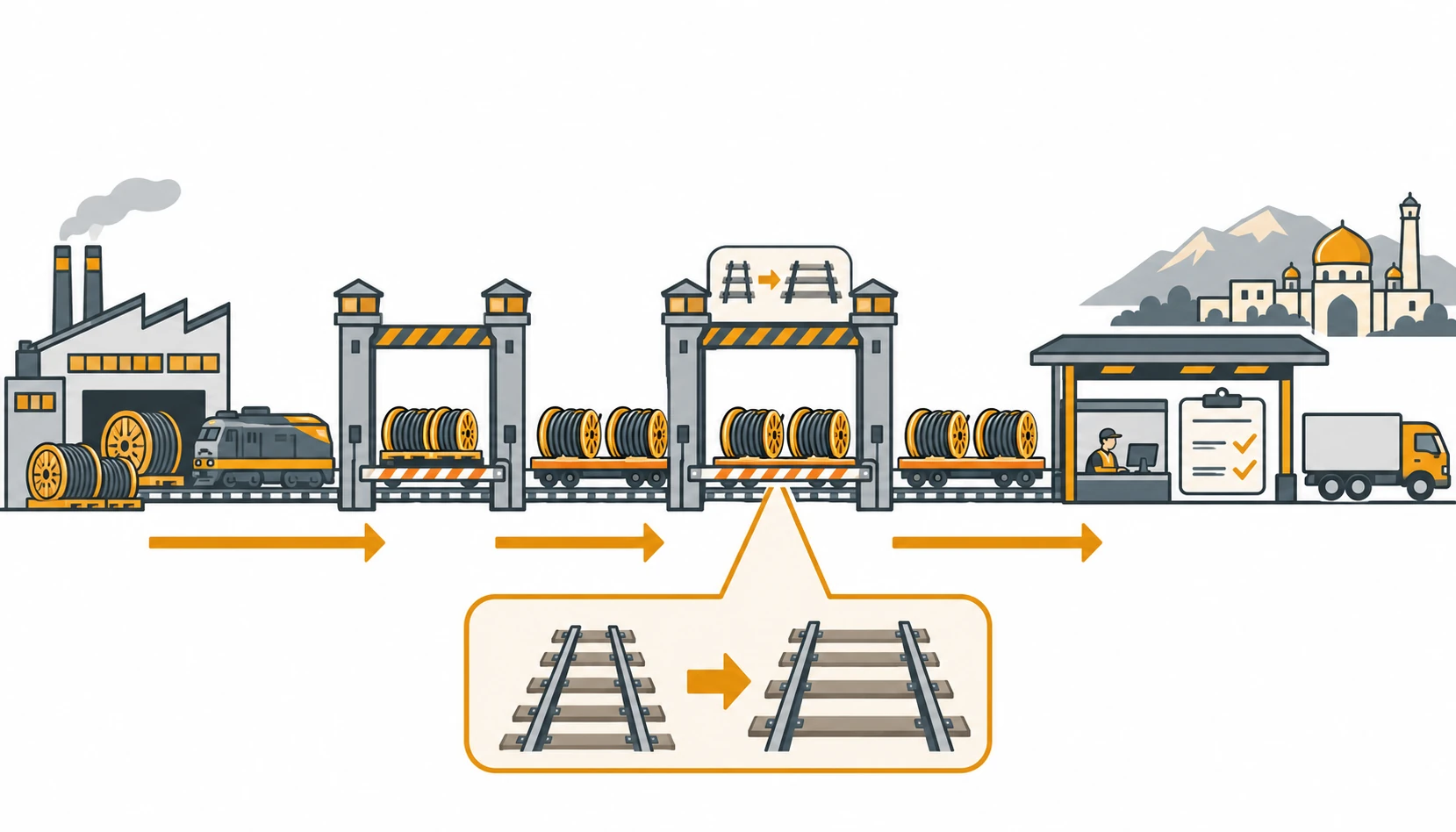
Quick Answer: Most cable that reaches Central Asia by rail crosses at Khorgos or Alashankou, changes gauge at the border, and rides broad-gauge flatcars to Almaty and onward. The lane is reliable when three things are treated as engineering, not as shipping paperwork: the drum securing plan written for the gauge change, the wagon booking made backward from the construction season, and the border papers matched line by line to the drums actually loaded. Miss any of the three and the transit that quoted twelve days becomes three weeks of storage receipts.
Introduction
This page covers the rail lane itself: the two crossings, the booking mechanics on the China-Europe lines, the securing and gauge change that drums must survive, and the papers that move with them. It is written for procurement teams fixing a delivery calendar around cable, not for forwarders, and it stays with the mainline; the last mile off the railhead is a separate decision.
The route alternatives and the terms around this lane are the subject of our China-to-Central-Asia shipping overview, and the ocean option is covered in our note on cable sea freight; this page stays on steel wheels. Regional buying context sits in our Central Asian cable buying hub, and the freight arithmetic inside the quotation is in our note on cable quotations from China to Central Asia.
Why the Rail Lane Carries the Region's Cable
Cable is dense, weather-tolerant and heavy, which is almost a description of rail freight. A wagon block moves project volumes in one economic stroke, the drums ride secured in open wagons where their weight is an advantage, and the transit time from Chinese works to Almaty is short enough to plan a season around. For the volumes a substation or a housing programme consumes, rail is usually the lane the whole delivery calendar hangs from.
The lane’s weakness is concentrated at the border. The gauge change is a handling event, the crossing is a document gate, and wagon supply tightens exactly when the construction season does. None of these is fatal; all of them punish plans that treat the border as something that happens between a factory and a site rather than as the hardest leg of the route.
That is why the rail lane rewards buyers who specify it. The crossing, the wagon type, the securing plan and the paper flow can all be written into the contract’s delivery annex, and a supplier who contracts against a named lane prices the real transit instead of hoping for it.
The Two Crossings: Khorgos and Alashankou
Two gateways connect the Chinese network to the Kazakh broad-gauge system: Khorgos on the southern corridor and Alashankou on the northern classic route, with Dostyk as the Kazakh side of the Alashankou crossing. Both perform the same function, a gauge change from standard to broad gauge, but they queue differently, and the difference matters in the peak season when one crossing congests and the other does not.
Choosing between them is a calendar decision more than a distance decision. Quote both crossings when the delivery window is tight, and let the booking date decide rather than loyalty to one gateway. What the buyer should insist on is that the crossing is named in the delivery plan, because an unnamed crossing is where responsibility for congestion quietly evaporates.
Crossing choice also interacts with destination. Khorgos sits closer to the southern corridor into Uzbekistan and Kyrgyzstan, Alashankou feeds Almaty and the northern lines directly, and the mixed lanes that use rail mainline plus road last mile branch differently from each. The route map in our shipping overview sets the branches; this page concerns what happens at the gates themselves.
Booking Wagons on China-Europe Lines
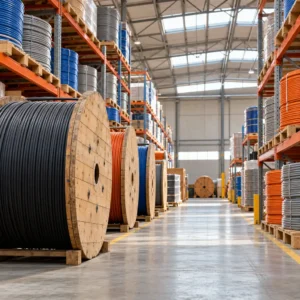
Cable drums move best in block-train formations, where whole wagons are secured to one plan and the drums are not transloaded to make room for mixed cargo. Booking a block is a lead-time exercise: slots are committed weeks ahead, wagon supply tightens in spring and autumn, and a booking made after production ends competes with every other programme that finished the same week.
The workable habit is to plan backward: production complete, then loading, then the crossing, then the site date, with the wagon booking placed as soon as the production calendar is credible. Production lead time for project volumes is set out in our note on cable MOQ and lead time, and the booking belongs on the same Gantt bar, not on the one after it.
Price behaves the same way. Quotations for the land legs carry a validity, and the number moves with fuel, backhaul luck and seasonal demand more than with distance. A freight quote refreshed at booking date, attached to the delivery plan, is worth more than a cheaper number that expired before the wagons were found.
Drum Securing and the Gauge Change
The gauge change is the event the packing must survive. Drums are lifted from standard-gauge wagons, stored briefly in the yard, and re-loaded onto broad-gauge flatcars by crews who did not pack them. A securing plan written for one continuous ride fails at exactly this step, which is why the spec is written for the worst handling, not the average one.
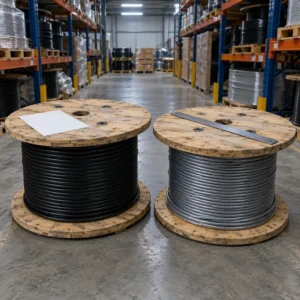
Securing is specified, not improvised: chocking against rolling, lashing to the wagon anchor points by rated straps, drum orientation chosen so the flanges take the load, and weights distributed within wagon limits. The drum itself is the other half of the spec: end seals, weather wrapping and flange strength sized for yard handling. The packaging layer in full is the subject of our note on cable drum packaging for export; the rail lane applies it with the gauge change as the design case.
Document what left the works. A third-party check before departure, the scope in our note on third-party cable inspection, records drum condition, securing and quantities, and that record is what separates a transit damage claim from an argument at the site gate.
Border Papers at the Rail Crossing
The crossing is a document gate before it is a physical one. The export declaration moves on the Chinese side; on the Kazakh side the transit regime opens, and the consignment travels under transit documents to its declared destination or onward border. The invoice, packing list and transit declaration must describe the same drums, and the market access certificate for the destination must cover the constructions actually loaded. The certificate routes are in our note on cable import certification by country.
Mismatches dwell. A packing list line that does not exist on the invoice, a certificate scope that misses one cross-section, a transit declaration that names a different consignee than the contract: each stops the wagons in the yard, and yard time is billed in storage and demurrage while the papers are corrected. Pre-alerting the broker before the train departs is the cheapest day of the whole transit.
The paper flow deserves the same backward planning as the wagons: certificate issued before loading, declarations drafted against the final packing list, broker instructions written before departure. Drum passports and test protocols travel with the consignment, and their alignment with the invoice lines is what lets the acceptance gate at the far end move at train speed.
Transit Time, Validity and the Season
Quote the lane as a range and plan against it. Twelve to eighteen days works for a clean crossing to Almaty; the onward legs to Tashkent add their own days, and a congested crossing in the peak season adds more than any brochure absorbs. The range, not the best case, is what the delivery annex should carry.
Long transits meet long validities, and the metal moves through both. A price basis with a named source and a formula is what keeps a three-week extension from becoming a margin donation, and the clause mechanics are in our note on copper price lock contracts. Validity and transit window are one decision made twice; contracting them separately is how they contradict.
The season brackets everything. Winter slows the yards and thickens the paperwork, the construction season compresses the site end, and the peak freight season squeezes wagon supply in between. A calendar that names its season, books backward and absorbs one congestion event is a plan.
When the Drums Arrive: Railhead to Site
The railhead is not the site. Drums arriving at Almaty or a branch terminal still need unloading equipment, road transport sized to the drum weights, and a site that can receive them. Confirming the arrival capability before choosing the lane is what turns a rail delivery into a delivery, and the arrival checks are set out in our note on site delivery and offloading.
Plan the last mile with the same discipline as the mainline: truck types against drum weight, road permits where heavy loads need them, and a receiving window the site can actually honour. Storage at the terminal is the quiet cost of a missed window, and terminals bill it whether or not the site was ready.
The handover closes the loop. Protocol summaries and passports per drum, the quantity check against the packing list, and a photographed condition record at transfer complete the file that started at the works. Papers aligned at the crossing make the arrival check a formality; papers missed surface there, at the worst negotiating moment.
The Rail Crossing Map
The table lines up the decisions that shape a rail crossing, what each involves, and what getting it wrong costs.
| Decision | What It Involves | What Decides It | Cost of Getting It Wrong |
|---|---|---|---|
| Crossing choice | Khorgos or Alashankou/Dostyk, gauge change at either | Destination branch and which gateway queues | Days added at a congested gate |
| Wagon booking | Block-train slot and wagon type, backward from the season | Production calendar and peak-season supply | Booking after production, at peak rates |
| Securing plan | Chocking, lashing, orientation and wagon weight limits | The gauge change as the design case | Damage discovered at the far yard |
| Border papers | Export declaration, transit regime, certificate scope | Line match between invoice, list and drums | Wagons held in the yard on paperwork |
| Arrival leg | Railhead unloading, road last mile, site receiving window | Site capability and drum weights | Terminal storage billed on a missed window |
The Rail Booking Freeze List
These are the decisions to freeze before the drums are loaded, in the order the risk arrives.
| Item to Freeze | How to Write It | Evidence to Attach | Cost of Leaving It Blank |
|---|---|---|---|
| Named crossing | Gateway named per consignment in the delivery plan | Transit quotes from both gateways | Congestion risk owned by nobody |
| Wagon slot | Booking date tied to the production calendar | Booking confirmation with wagon type | Drums finished, wagons gone |
| Securing spec | Chocking, lashing and orientation per wagon type | Securing plan and packing drawing | Gauge-change damage, unattributable |
| Certificate scope | Market access certificate covering loaded constructions | Certificate copy with scope list | Consignment stopped at the gate |
| Pre-alert duty | Broker briefed before departure, documents pre-checked | Broker instruction with document list | Days of dwell on a correctable line |
| Transit window | Range written into the delivery annex | Quoted transit with validity | Brochure transit promised as fact |
| Arrival capability | Unloading and road leg confirmed at the railhead | Site offloading note | Terminal storage on a stranded drum |
When the Rail Lane Is Not the Answer
When the site is off every branch line. A remote site three hundred kilometres from the nearest railhead pays for the rail efficiency twice: once in terminal handling and once in a road leg that re-runs the securing question. Quote the whole door-to-site chain before committing to steel wheels.
When the volume will not fill a block. Small lots ride per-wagon at rates that erase the rail advantage, and mixed consignments invite the transloading the block train exists to avoid. For those, road or ocean may price the same transit with less handling.
When the calendar has already slipped into the peak. Wagon slots that were cheap in January are scarce in April. If the booking lands in the peak anyway, price the congestion honestly instead of promising a transit the season will not honour.
When the papers cannot be ready in time. A certificate missing one cross-section turns the fastest train into yard storage. If the paper chain is behind the production chain, move the departure, not the paperwork standards.
When the drums need the ocean anyway. Volumes that exceed wagon supply, or programmes on the Caspian side, can suit the sea-rail corridor better; the trade-offs are in our sea freight note. Rail is the default lane, not a duty.
RFQ Checklist
- Crossing named per consignment: Khorgos or Alashankou/Dostyk, with a fallback quoted
- Wagon booking dated against the production calendar, not after it
- Block-train formation requested so drums are not transloaded for mixed cargo
- Securing plan written for the gauge change as the design case
- Market access certificate scope covering every construction loaded
- Invoice, packing list and transit declaration line-matched before departure
- Broker pre-alerted with documents before the train moves
- Transit quoted as a range and written into the delivery annex
- Price validity and transit window contracted as one decision
- Arrival capability at the railhead confirmed before the lane is chosen
Conclusion
The rail lane works because its hard points are known: two crossings, one gauge change, one paper gate. Written into a delivery annex, they become a schedule; left to the freight market’s defaults, they become storage receipts. The drums do not care which; the season does.
Kexingyu Cable Group (KXYE) ships the rail lane as a specification: named crossings, block-train bookings dated to the production calendar, securing plans designed around the gauge change, and papers line-matched before departure. Send the destination and the consignment volumes. A request for quotation is the fastest start, and the certificate layer behind the border gate is in our power cable certification checklist.